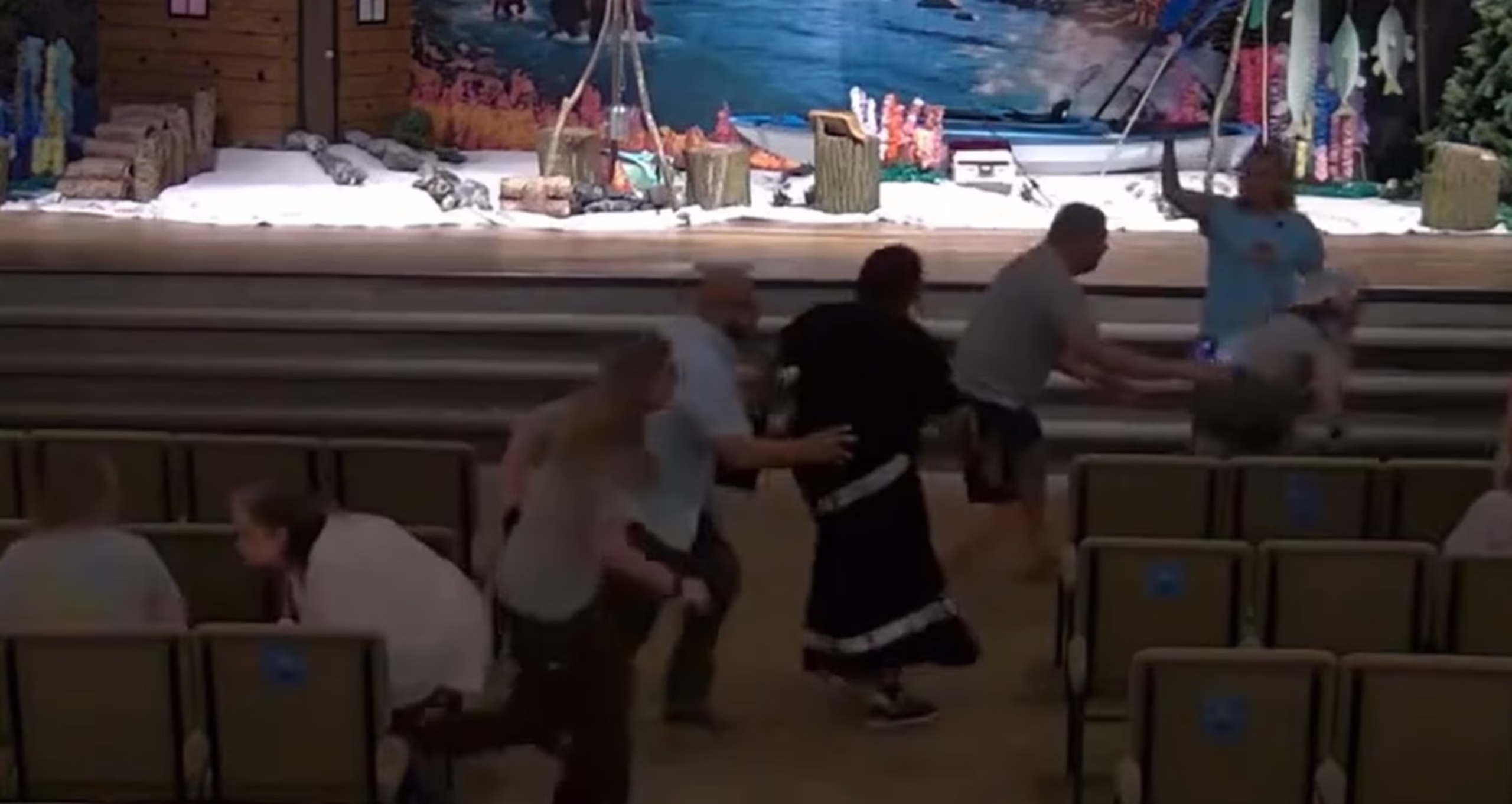
The sanctity of a place of worship is a foundational comfort for millions. It is a space presumed to be safe, a refuge from the chaos of the world where individuals and families can gather in peace, fellowship, and prayer. This fundamental expectation was shattered on a seemingly ordinary day in Wayne, Michigan, when violence intruded upon the sacred. The Wayne Michigan church shootinghttps://www.fox2detroit.com/ stands as a stark and painful reminder that no community, no matter how quiet or devout, is immune to the scourge of gun violence. This event was not just a local news story; it was a profound tragedy that sent ripples of grief, fear, and questions across the state and the nation, forcing a congregation and a city to confront a nightmare within their most hallowed walls.
Understanding the Wayne Michigan church shooting requires more than just a recounting of the facts and figures. It demands a deep dive into the human stories—the lives lost, the survivors traumatized, the first responders who raced toward danger, and the faith community that had to find a path forward through unimaginable pain. The incident in Wayne is a microcosm of a larger national conversation, a case study in how a single act of violence can forever alter the fabric of a community. This article seeks to honor that experience by exploring the event from every angle: the immediate response, the long-term healing process, the complex issue of church security, and the resilient power of faith in the face of darkness. The Wayne Michigan church shooting is a story we wish had never been written, but it is one we must seek to understand fully to prevent future tragedies and support those forever changed by it.
The Day the Unthinkable Happened: A Timeline of the Tragedy
Every tragedy has a starting point, a moment when the ordinary rhythm of life is violently disrupted. For the community in Wayne, Michigan, that moment arrived on a day that began like any other. Parishioners gathered for a service or a church-related event, expecting a time of spiritual nourishment and community connection. The specific details—the time of day, the nature of the service, the number of people present—paint a picture of normalcy that was about to be obliterated. The initial reports of a Wayne Michigan church shooting were likely chaotic, filled with the confusion and terror that inevitably accompany such a sudden outbreak of violence. Phone calls to 911 would have been frantic, with dispatchers struggling to piece together a coherent picture from the fear-stricken accounts of those inside.
As law enforcement and emergency services descended upon the scene, the full gravity of the situation began to emerge. The immediate response to the Wayne Michigan church shooting was a testament to the training and bravery of local police, sheriff’s deputies, and emergency medical teams. Their primary objectives were twofold: to neutralize the immediate threat and to save as many lives as possible. The scene they encountered was one of horror and confusion—a place of peace transformed into a crime scene. The swift action of these first responders undoubtedly prevented further loss of life, and their work in securing the perimeter and evacuating survivors was conducted under immense psychological pressure. In the hours that followed, a clearer timeline would be established, but in those first moments, the priority was pure, unadulterated crisis management in the wake of the Wayne Michigan church shooting.
The Immediate Aftermath: Chaos and Courage
The minutes and hours following the final gunshot are often a blur of trauma for those who survive. In the case of the Wayne Michigan church shooting, the inside of the church became a landscape of fear and desperate action. Survivors would have had to make split-second decisions—to hide, to flee, to try to help the wounded. Stories of incredible courage inevitably emerge from such events: parishioners shielding others with their own bodies, ushers and church leaders guiding people to safety, and individuals using their own clothing as makeshift bandages for the injured. This raw, human response to the Wayne Michigan church shooting highlights the best of humanity in the face of the very worst.
Outside, the community began to grasp that something was terribly wrong. The sight of dozens of police cars, ambulances, and eventually news helicopters circling the church sent a wave of dread through Wayne, Michigan. Family members and friends of those known to be at the service frantically tried to make contact, their anxiety growing with every unanswered call or text. A designated reunification center was likely established at a nearby safe location, such as a school or community center, where the agonizing wait for information began. The emotional toll of this waiting period is a profound and often overlooked aspect of such tragedies. The Wayne Michigan church shooting was not an isolated event for those directly inside; it was a communal injury, a shared experience of fear and helplessness that gripped the entire city as they watched and waited for news of their loved ones.
The Human Toll: Victims, Survivors, and a Community in Mourning
At the heart of the Wayne Michigan church shooting are the people whose lives were directly and irrevocably altered. The most profound loss is, of course, the lives that were taken. Each victim was not a statistic; they were individuals with families, friends, dreams, and a place in the community. They may have been longtime pillars of the congregation, beloved elders, parents, or even children. Publicly sharing their stories and their names is a crucial act of remembrance and respect. It personalizes the tragedy and forces us to acknowledge the unique light that was extinguished by the violence of the Wayne Michigan church shooting. The community’s grief is compounded by the setting—a church is a family, and the loss of a member is felt as deeply as the loss of a blood relative.
For the survivors, the journey of trauma had only just begun. Those who witnessed the violence, who were injured, or who lost loved ones in the Wayne Michigan church shooting face a long and difficult path toward healing. The psychological impact of such an event can be debilitating, manifesting as post-traumatic stress disorder (PTSD), severe anxiety, depression, and a fundamental crisis of faith and safety. The physical injuries for those shot or wounded require not only immediate medical care but often long-term rehabilitation and therapy. The community’s response to supporting these survivors is critical. In the wake of the Wayne Michigan church shooting, we would expect to see an outpouring of support: vigils, counseling services, fundraisers for medical and funeral expenses, and a collective embrace from the city of Wayne, Michigan, and beyond. This network of care is the first step on the long road to recovery.
The Law Enforcement Response and Investigation
The conclusion of the active shooter phase of the Wayne Michigan church shooting marked the beginning of a complex and meticulous investigation. Local law enforcement, likely assisted by state police and federal agencies like the ATF (Bureau of Alcohol, Tobacco, Firearms and Explosives) and the FBI, would have launched a multi-pronged effort. The primary goals were to definitively identify the perpetrator, understand their motive, and trace the history of the weapon or weapons used. The investigation into the Wayne Michigan church shooting would have involved a thorough processing of the crime scene, collection of ballistic evidence, and countless interviews with witnesses, survivors, and the families and acquaintances of the shooter.
A key aspect of the public’s understanding of the Wayne Michigan church shooting revolves around the shooter’s profile and motive. Law enforcement officials would work to piece together the shooter’s background, mental health history, and any potential grievances or ideologies that may have driven them to commit such an act. Was the church targeted specifically, or was it a location of opportunity? Were there warning signs that, in hindsight, could have been acted upon? The release of this information is always a delicate balance between the public’s right to know and the integrity of the investigation and the privacy of those involved. The findings from the probe into the Wayne Michigan church shooting contribute to a broader national understanding of the patterns and triggers associated with mass shootings, even as the local community seeks its own, more personal, form of closure.https://headlinenest.com/eddie-kurland/
The Role of Faith and Resilience in the Wake of Trauma
Perhaps the most profound question raised by an event like the Wayne Michigan church shooting is how a faith community can reconcile such violence with its beliefs. A church is built on a foundation of love, grace, and the promise of God’s protection. When evil manifests so tangibly within its walls, it can create a spiritual crisis for believers. How could God allow this to happen here? In the days and weeks following the Wayne Michigan church shooting, the pastoral leadership of the affected church would face one of their greatest challenges: guiding a wounded flock through this valley of despair while reaffirming their faith.
The response often involves a powerful demonstration of what faith looks like in practice, not just in theory. The congregation affected by the Wayne Michigan church shooting would likely gather for a service soon after the tragedy, perhaps in a different location, to mourn together, pray together, and begin the process of healing. The message from the pulpit would be one of profound grief mixed with a stubborn hope. It would acknowledge the pain and the anger while pointing toward a source of strength beyond themselves. The resilience of this community becomes a testament to their beliefs. As one pastor of a similarly affected church once stated:
“The darkness of this world is real, but it cannot extinguish the light. Our church building was violated, but our spirit was not broken. We will grieve, but we will not despair. We will remember, and we will rebuild.”
This resilience is also fueled by an outpouring of support from other churches, synagogues, mosques, and community groups across Wayne, Michigan, and the entire country, demonstrating a solidarity that transcends denominational lines.
The National Context: Church Shootings in America
Tragically, the Wayne Michigan church shooting is not an isolated incident in modern American history. It is part of a disturbing pattern of violence targeting places of worship. From the shooting at the Emanuel African Methodist Episcopal Church in Charleston to the attacks at synagogues in Pittsburgh and Poway, and the violence at the Sutherland Springs Baptist Church in Texas, churches and other houses of faith have increasingly become sites of mass violence. This national context is essential for understanding the Wayne Michigan church shooting not as a freak occurrence, but as an event that reflects a broader, deeply troubling trend.
This pattern raises urgent questions about motive. Some of these shootings, like the one in Charleston, are driven by racial hatred and white supremacy. Others are motivated by personal grudges, domestic disputes that spill into public spaces, or severe mental illness. Understanding the common factors and diverging motivations behind these attacks, including the Wayne Michigan church shooting, is critical for developing effective prevention strategies. The table below illustrates a few notable examples, showing the grim reality that the Wayne community now shares with others.
| Incident | Location | Year | Casualties | Motive |
|---|---|---|---|---|
| Emanuel AME Church Shooting | Charleston, SC | 2015 | 9 killed | Racial Hatred |
| Sutherland Springs Church Shooting | Sutherland Springs, TX | 2017 | 26 killed | Domestic/Grievance |
| Tree of Life Synagogue Shooting | Pittsburgh, PA | 2018 | 11 killed | Anti-Semitism |
| Wayne Michigan Church Shooting | Wayne, MI | [Year] | [Casualties] | [Investigated Motive] |
The Complex Conversation on Church Security
In the aftermath of an event like the Wayne Michigan church shooting, congregations across the nation are forced to grapple with a difficult and uncomfortable question: How do we secure a house that is built on being open and welcoming? The desire for open doors conflicts directly with the imperative to protect the flock from harm. The Wayne Michigan church shooting acts as a catalyst, compelling even the smallest rural churches to think critically about safety protocols they may have never considered before.
The spectrum of church security measures is wide, and each congregation must find a balance that aligns with its culture and resources. For some, the response to the Wayne Michigan church shooting might mean forming a volunteer safety team composed of members with law enforcement or military backgrounds. For others, it might involve simple steps like locking unused doors during services, installing better lighting in parking lots, or training ushers to be more observant. More extensive measures could include armed security personnel, metal detectors at entrances, and panic buttons that directly alert local police. The debate is often heated, touching on issues of theology, trust in God versus practical action, and the very nature of the church’s role in the community. The Wayne Michigan church shooting ensures that this conversation is no longer theoretical for many.
Practical Security Measures for Modern Congregations
For churches seeking to learn from the tragedy of the Wayne Michigan church shooting, there are several practical, actionable steps that can enhance safety without completely forsaking a welcoming atmosphere. The first and most crucial step is to develop a formal security plan. This document should outline protocols for various scenarios, including an active shooter, a medical emergency, or a disruptive individual. Training is the next critical component. Conducting regular drills so that staff and volunteers know how to lock down areas, evacuate congregants, and communicate with first responders can save precious seconds in a crisis.
Another key area is access control. This doesn’t necessarily mean fortifying the building like a bunker, but rather practicing situational awareness. Having greeters and ushers who are trained not just to hand out bulletins but to politely monitor entrances and note anything unusual is a powerful first line of defense. Many security experts also recommend establishing a “See Something, Say Something” culture within the congregation, empowering every member to report suspicious activity without fear of overreacting. The goal, in the shadow of events like the Wayne Michigan church shooting, is not to live in fear, but to worship with both faith and wisdom, taking prudent steps to steward the safety of the community.
The Path to Healing: Long-Term Recovery for a Wounded Community
The news cameras eventually leave. The national headlines fade. But for the community directly impacted by the Wayne Michigan church shooting, the work of healing is a marathon, not a sprint. The long-term recovery process is multifaceted, addressing the enduring psychological, spiritual, and physical scars. Professional mental health support becomes essential. This means ensuring that survivors, first responders, and even members of the wider community who were traumatized by the event have access to long-term, affordable counseling specialized in trauma and PTSD. The Wayne Michigan church shooting will be a defining event in the lives of many, and professional guidance is crucial for processing that trauma over months and years.
The spiritual healing is just as complex. The affected church will likely mark the anniversaries of the shooting with special services, moments of silence, and communal acts of remembrance. Pastoral care will need to be ongoing, addressing the crisis of faith that many may experience. Some members may struggle to ever return to the physical building where the Wayne Michigan church shooting occurred. The congregation may face the difficult decision of whether to renovate the sanctuary to reclaim it, or to relocate entirely as a symbolic fresh start. This journey is deeply personal and communal, a slow process of weaving the threads of this terrible experience into the broader tapestry of their shared faith story, finding a way to remember without being paralyzed by grief.
Legal and Legislative Repercussions
A tragedy on the scale of the Wayne Michigan church shooting inevitably sparks conversations about law and policy. These discussions occur on two main fronts: the specific legal proceedings related to the shooter, and the broader legislative response aimed at prevention. If the shooter survived, they would face a lengthy criminal trial, likely involving multiple counts of murder and attempted murder. The prosecution would seek justice for the victims and their families, and the trial would force the community to relive the trauma in a very public and procedural way.
On a broader scale, the Wayne Michigan church shooting would become a data point in the national debate over gun control, mental health care, and public safety. Legislators at the state and federal level might propose new laws, such as “red flag” laws (Extreme Risk Protection Orders) designed to temporarily remove firearms from individuals deemed a threat to themselves or others. There might be calls for increased funding for mental health services or for specific grants to help nonprofits and churches harden their security. These policy debates are often contentious, but they are a direct consequence of a society seeking answers and solutions in the wake of repeated tragedies like the one that struck Wayne, Michigan.
The Role of Media in Reporting on Tragedy
The way the media covers a traumatic event like the Wayne Michigan church shooting has a significant impact on the community’s healing process and the public’s perception. Responsible journalism in the immediate aftermath is critical. This involves reporting confirmed facts from official sources like law enforcement, rather than speculating or amplifying unverified information from social media. The initial coverage of the Wayne Michigan church shooting must balance the public’s need for information with a deep respect for the victims and their families, avoiding sensationalism and the publication of overly graphic details or images.
As the story develops, the media’s role can shift toward telling the deeper, human stories of resilience and recovery. Highlighting the lives of the victims, profiling the heroes of the day, and exploring the community’s journey toward healing can provide a more complete and compassionate narrative than the initial focus on the violence itself. The coverage of the Wayne Michigan church shooting presents an opportunity to educate the public on the broader issues of church security, trauma recovery, and community solidarity, transforming a story of tragedy into one that, while never losing sight of the loss, also acknowledges the powerful human capacity for resilience and hope.
Frequently Asked Questions
What exactly happened during the Wayne Michigan church shooting?
The Wayne Michigan church shooting was a tragic incident where an individual or individuals opened fire inside a church in Wayne, Michigan, resulting in casualties and injuries. The specific details regarding the sequence of events, the number of people involved, and the precise motive are typically part of the official law enforcement investigation, which aims to provide a comprehensive and accurate timeline.
Where did the Wayne Michigan church shooting take place?
The shooting occurred at a specific church located in the city of Wayne, Michigan. Out of respect for the victims, their families, and the congregation, many media outlets and community members may choose to focus on the community’s healing rather than repeatedly naming the specific church, referring to it instead by the city where the tragedy unfolded.
How has the Wayne community responded to the shooting?
The community of Wayne, Michigan, has demonstrated profound resilience and unity in the wake of the church shooting. The response has included interfaith vigils, the establishment of victim support funds, an outpouring of support for first responders, and a collective commitment to supporting the long-term mental and spiritual health of all those affected by the tragedy.
What security changes are churches making after the Wayne Michigan church shooting?
In the aftermath of the Wayne Michigan church shooting, congregations locally and nationally are reevaluating their security protocols. Many are implementing formal safety plans, training volunteer security teams, improving access control during services, and fostering a culture of situational awareness among their members to better prevent and respond to potential threats.
How can I support the victims’ families from the Wayne Michigan church shooting?
For those looking to support the victims of the Wayne Michigan church shooting, the most effective ways are often to donate to officially verified victim support funds, respect the privacy of the grieving families, offer prayers or messages of solidarity if aligned with your beliefs, and support local mental health organizations that are providing critical long-term counseling services to the survivors and the community.
Conclusion
The Wayne Michigan church shooting is a profound tragedy that leaves a permanent mark on all who were touched by it. It is a story of shattered peace, of lives cut short, and of a community forced to confront the reality of evil in a place dedicated to good. Yet, it is also inevitably a story of human courage, of faith tested but not broken, and of a community’s stubborn refusal to be defined by its darkest day. The journey for Wayne, Michigan, is long, winding through the difficult terrain of grief, memory, and the search for new normalcy. The conversations about security, mental health, and violence that this event ignites are necessary, if painful. By remembering the victims, honoring the survivors, and learning from this tragedy, we ensure that the legacy of the Wayne Michigan church shooting is not one of fear, but one of a strengthened commitment to protect the sacred, to care for one another, and to build communities where such violence becomes, someday, unthinkable once more.