
Welcome to the vibrant, ever-evolving world of VRChat avatars. More than just a digital costume, your avatar is your passport, your voice, and your primary tool for connection within one of the internet’s most imaginative social landscapes. It’s the first thing others see, the vehicle for your gestures and expressions, and a profound canvas for personal creativity. Whether you dream of becoming a sleek anime protagonist, a fantastical creature, or an abstract embodiment of light and sound, the journey begins with understanding the incredible depth and possibility of VRChat avatars. This guide is your comprehensive companion, designed to demystify the entire process—from finding your first digital skin to crafting a high-performance masterpiece from the ground up. We’ll navigate the bustling marketplaces, dive into the technical essentials of creation, and explore the advanced features that make modern avatars feel truly alive.
The significance of the avatar in VRChat Avatars cannot be overstated. In a space where interaction hinges on non-verbal cues and visual identity, your chosen form directly influences your experience and how you connect with others. It’s a medium for storytelling, artistry, and social exploration. For many, creating and refining their VRChat avatar becomes a hobby as engaging as the social platform itself, blending skills in 3D modeling, animation, and game design. The ecosystem surrounding these digital personas has grown into a thriving economy and a passionate community. This guide will illuminate every corner of that ecosystem, providing you with the knowledge to not just participate, but to excel and express yourself fully in the metaverse.
Finding Your Digital Self: A World of Avatar Sources
Before you can dive into the intricacies of customization and performance, you need an avatar base to call your own. Fortunately, the VRChat community has built numerous pathways for users of all skill levels and budgets to acquire their perfect virtual form. The journey begins with exploring these rich sources of avatars.
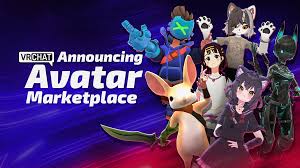
For newcomers, the most straightforward entry point is the official VRChat Avatar Marketplace. This integrated platform is designed for ease of use, allowing you to browse, “try on,” and purchase avatars directly within the VRChat client using VRChat Avatars Credits. It features works from approved creators and spans a wide array of styles, from anime and furry to human and sci-fi. The marketplace’s killer feature is the ability to instantly test an avatar in a preview environment, ensuring it fits your style and proportions before you buy. This system is particularly targeted at making avatar discovery seamless for new users, removing the technical friction of finding files outside the game and manually uploading them.
Beyond the official storefront, a vast ecosystem of independent marketplaces exists. Platforms like BOOTH (a major hub for anime-style avatars) and Gumroad (popular for Western creators, anime, and furry styles) are where many seasoned creators sell their work. Sites like Avatown also position themselves as comprehensive platforms for trading and customizing 3D avatars for use in VRChat and other games. When venturing into these external markets, it’s crucial to pay attention to the seller’s license. Always ensure you have explicit permission to use the model in VRChat, as using content without a proper license violates both the creator’s rights and VRChat’s Terms of Service. Furthermore, be mindful of the model’s specifications, checking that its polygon count is within VRChat’s limits to avoid performance issues right from the start.
For those who prefer a hands-on, creative approach without starting from a blank slate, avatar creation tools offer a fantastic middle ground. Applications like VRoid Studio allow you to sculpt and customize an anime-themed character using intuitive sliders and editors, similar to sophisticated character creators in video games. The output, typically a .vrm file, can then be converted for VRChat using community-made tools like the VRM Converter for VRChat. This method empowers you with a high degree of customization while bypassing the need for advanced 3D modeling knowledge. It represents a perfect first step into the world of personal VRChat Avatars creation.
The Anatomy of a Great Avatar: Technical Foundations and Requirements
Once you have a model, understanding what makes it function—and function well—within VRChat is key. An avatar is far more than a static sculpture; it’s an animated, interactive rigged character that must meet specific technical standards to work properly. Let’s break down the core components.
At its heart, every VRChat Avatars requires a proper rig. This is the digital skeleton—a hierarchy of “bones” or transforms—that allows the 3D mesh to deform and move. VRChat primarily uses Humanoid rigs, which map to a standard bone structure (head, spine, arms, legs, etc.) that the game engine can understand. This standardization is what allows features like inverse kinematics (IK) for realistic arm and leg movement, full-body tracking support, and the use of pre-built animations to work seamlessly. When downloading a model, always verify it is “rigged.” Some stores sell unrigged models, which require you to add a skeleton using tools like Mixamo or Blender’s Rigify—a non-trivial task for beginners.
The bridge between your raw 3D model and VRChat’s systems is the VRChat SDK (Software Development Kit), used within the Unity game engine. This is the essential software environment where you will prepare, configure, and ultimately upload your avatar. The process is greatly streamlined by the VRChat Creator Companion (VCC), an official tool that handles installing the correct version of Unity, setting up your project with the SDK, and managing add-ons. Even if you’re using a pre-made avatar from a marketplace, you’ll likely need to open it in a Unity project to set certain parameters before its first upload.
Critical configuration happens through the VRC Avatar Descriptor component in Unity. This is your avatar’s control panel within the engine. Here, you define the View Position (where the camera sits, ideally between the avatar’s eyes), set up Lip Sync (so the mouth moves when you talk), and configure Eye Look settings for simulated eye movement. You also assign the Playable Layers, which are the Animator Controllers that govern your avatar’s default animations, gestures, and action menu behaviors. Getting these foundational settings right is what transforms a static model into a responsive VRChat avatar.
Table: Key Technical Specifications for VRChat Avatars
| Component | PC Recommended Limit | Quest/Android Recommended Limit | Purpose & Notes |
|---|---|---|---|
| Polygons (Triangles) | < 70,000 | < 20,000 | Overall mesh detail. Exceeding limits leads to “Very Poor” performance rank. |
| Skinned Mesh Renderers | 1 Maximum | 1 Maximum | Meshes that deform with bones. Merging meshes is crucial for performance. |
| Materials | < 10 | < 10 | Each unique material incurs a “draw call.” Use texture atlasing to combine. |
| Bones | As low as possible | As low as possible | Unused bones still cost performance. Delete or merge unused bones. |
From Model to Metaverse: The Step-by-Step Upload Process
The moment of truth—bringing your avatar into VRChat—involves a clear series of steps within Unity. While it can seem daunting at first, following a structured process makes it manageable. We’ll outline the journey from importing your model to seeing it in your VRChat Avatars menu.
Step 1: Project and Model Setup. Begin by using the VRChat Creator Companion to create a new “Unity 2022 Avatar Project”. Once Unity opens, import your 3D model file (common formats are .fbx or .unitypackage) into the Project window’s Assets folder. Drag the model from your Assets into the Scene or Hierarchy window. It’s good practice to position it at the world origin (0,0,0) and ensure it’s standing upright at a reasonable scale—an average human is about 1.65 Unity meters tall. With the model selected in the Hierarchy, you must configure its Rig. In the Inspector window, navigate to the model’s Import Settings, find the Rig tab, and set the Animation Type to “Humanoid.” Click “Configure” or “Apply” to ensure the bone mapping is correct.
Step 2: Adding the VRChat Components. Now, you add the intelligence that makes it a VRChat avatar. With your model selected in the Hierarchy, click “Add Component” in the Inspector and search for “VRC Avatar Descriptor.” This adds the core component. You’ll now fill out its critical fields:
- View Position: Visually place the white sphere between your avatar’s eyes (or where a head would be). This is your in-game camera position.
- Lip Sync: Expand this section. For most avatars with a movable jaw, you can set this to “Jaw Flap Bone” and ensure the jaw bone is assigned in the Humanoid rig configuration. For more detailed mouth shapes, “Viseme Blend Shape” is recommended.
- Eye Look: If your avatar has eye bones or blink blend shapes, you can configure them here to enable simulated eye movement, making your avatar look around naturally.
Step 3: Building, Testing, and Uploading. Before your final upload, take advantage of Avatars 3.0’s powerful “Build & Test” feature. In the VRChat SDK Control Panel’s Builder tab, this option creates a local copy of your avatar that only you can see. You can put it on, test its movements and gestures, and make iterative changes without using an upload slot—a massive time-saver. When you’re finally satisfied, return to the Builder tab for the official upload. You’ll need to fill in the avatar’s name, description, and set its visibility (Private, Friends, or Public). You must also capture a thumbnail image directly in Unity to represent it in your menu. After clicking “Build & Upload,” your avatar will be processed and, if your account has “New User” or higher trust rank, will appear in your VRChat avatar menu, ready to use.
A community creator emphasizes: “The ‘Build & Test’ feature in the SDK made iteration a TON faster. Being able to tweak a setting, build, and re-select the avatar in-game within seconds completely changes the creation workflow.”
The Art of Optimization: Ensuring Performance and Accessibility
In the shared social spaces of VRChat, your avatar’s performance is a matter of communal courtesy. A poorly optimized avatar can cause lag, low frame rates (FPS), and even crashes for other users, especially those on less powerful hardware or standalone VR headsets like the Quest. VRChat’s Avatar Performance Ranking System automatically grades your avatar, and avatars ranked “Very Poor” may be automatically hidden from many users to protect their experience. Therefore, optimization isn’t just a technical exercise—it’s a social responsibility.
The most significant gains often come from simplifying your avatar’s core structure. A cardinal rule is to aim for only one Skinned Mesh Renderer. Many models from different sources are split into many separate meshes (hair, clothes, accessories), each requiring its own render call. Using Blender and plugins like Cats Blender Plugin, you can merge these separate meshes into a single skinned mesh, dramatically reducing rendering overhead. Similarly, you should minimize Material slots. Each unique material is another draw call. By combining textures into a single texture atlas (a large image containing all the smaller textures), you can have one material do the work of many, which is a huge performance win.
Physics and dynamic elements like hair, tails, and clothing are beloved for adding life to VRChat avatars, but they must be implemented wisely. The legacy Dynamic Bones system is deprecated and should be avoided. Instead, use VRChat PhysBones, the modern, performance-oriented system built into the SDK. PhysBones allow for realistic jiggle and swing physics but are designed to be more efficient. Be conservative with their use; every PhysBone chain adds calculation cost. Also, avoid the extremely expensive Unity Cloth component and shaders that use Tessellation (common in some fur shaders), as they can bring even high-end PCs to their knees.
Special consideration must be given to creating Quest-compatible avatars. The Meta Quest has significantly less processing power than a gaming PC, so the limits are stricter: a hard polygon limit of 20,000 (vs. 70,000 on PC) and the use of mobile-friendly shaders. The most effective Quest optimization happens during the initial design phase. Starting with a low-polygon model and using simple, efficient shaders like VRChat’s Mobile Standard Lite is far easier than trying to decimate a high-poly model after the fact. As one VRChat optimization document notes, “You’re going to have problems if you try to take a 120,000 made-for-rendering model and squeeze it into 20,000 polygons. Don’t make things harder than they have to be”.VRChat Avatars
Beyond the Basics: Unleashing Expression with Avatars 3.0
Once you’ve mastered uploading and optimizing a basic avatar, the real magic begins with Avatars 3.0 (AV3). This suite of systems transforms your avatar from a puppet you control into an expressive extension of yourself with rich interactive potential. Diving into AV3 means learning to work with Unity’s Animator Controller, a powerful tool for sequencing animations and behaviors.
The core of AV3 expression lies in its Playable Layers. These are separate Animator layers that control different aspects of your avatar:
- Base Layer: Handles core locomotion like idle, walking, running, and falling.
- Additive Layer: Used for overlaying subtle animations (like breathing or slight sway) on top of the base movement.
- Gesture Layer: Controls the animations played when you use hand gestures on your VR controller or keyboard.
- Action Layer: Powers the interactive Action Menu, allowing you to create toggleable states (like putting on a hat, changing a facial expression, or activating a special effect).
- FX Layer: A general-purpose layer often used for complex visual effects, lip-sync overrides, or response to world events.
A major innovation in AV3 is the Parameter system. You can create custom parameters (booleans, integers, floats) that can be driven by player input, animations, or world logic, and then use them to control almost anything. For example, a “Mood” float parameter could blend between sad and happy facial blend shapes, and that parameter could be controlled by a slider in your Action Menu. This creates a direct link between your intent and your avatar’s expression.VRChat Avatars
Advanced features like Face and Eye Tracking (with supported hardware like the Vive Pro Eye or Quest Pro) integrate seamlessly with a properly configured AV3 avatar. If you’ve defined viseme blend shapes for lip-sync and blink shapes for eye movement, enabling these trackers will make your avatar’s face mirror your own in real-time, adding an unparalleled layer of presence and nuance to social interaction. For full-body tracking (FBT) users, AV3 provides fine-grained control over how locomotion animations interact with your real-world hip and leg movements, allowing for everything from perfectly mimed walking to dancing.VRChat Avatars
The Creator’s Path: From Hobbyist to Marketplace Seller
For many, the journey with VRChat avatars evolves from a personal passion into a creative vocation. The launch of the official Avatar Marketplace has created a legitimate economic pathway for skilled creators. If you aspire to sell your avatars, the first step is to apply for VRChat’s Creator Economy program. The platform is selective at first, looking for talented artists who can provide a high-quality, diverse selection of avatars for users. Once approved, the upload process for a marketplace avatar is similar to a private one, but with an additional review step where VRChat checks the avatar for functionality, policy compliance, and quality before it’s listed.
Successful marketplace creators understand it’s not just about a cool model. They provide value through completeness and optimization. A top-tier avatar for sale is typically uploaded with multiple variants (e.g., different outfits or styles) to give users options while sharing core assets to maintain good performance. It comes fully configured with expressive features like PhysBones, eye tracking, a well-organized Action Menu, and clear documentation. Creators are also free to sell their work on other platforms like BOOTH or Gumroad, as VRChat does not require exclusivity. This allows builders to cultivate their own brand and audience across the wider metaverse ecosystem.VRChat Avatars
The future of avatar creation is tied to broader VR trends. As noted by industry experts, we are moving towards more affordable hardware and ultra-realistic graphics, which will raise user expectations for avatar quality and immersion. The integration of AI could eventually assist in aspects of rigging, animation, and even design. Furthermore, the rise of multi-sensory technology like haptic gloves hints at a future where your VRChat avatar might not just be seen, but felt. For creators, staying informed about these trends and continuously honing skills in tools like Blender and Unity is the key to building the next generation of unforgettable virtual identities.
Conclusion
Your VRChat avatar is more than a collection of polygons and textures; it is the heart of your virtual existence. It is how you laugh, gesture, share a moment of silence, and ultimately connect with a global community. The path from choosing a simple model to crafting a deeply expressive, high-performance avatar is a rewarding journey of creative and technical discovery. This guide has laid out the map: from navigating marketplaces and understanding the essential rig, to the crucial upload process in Unity, the social imperative of optimization, and the expressive power of Avatars 3.0. Whether you remain a curious user collecting digital forms or embark on the path of a creator shaping the metaverse itself, remember that each avatar carries a story. It is a testament to the human desire to explore identity, forge connection, and express the inexpressible. So dive in, start simple, experiment boldly, and let your virtual self shine.
Frequently Asked Questions About VRChat Avatars
What is the easiest way for a complete beginner to get a custom VRChat avatar?
The absolute easiest method is to use an avatar creation tool like VRoid Studio. These tools work like in-depth video game character creators, allowing you to customize a model with sliders and menus without any 3D modeling knowledge. You can then convert the output for VRChat using a plugin. The next easiest way is to purchase a pre-made, pre-configured VRChat avatar from the official Avatar Marketplace inside VRChat itself, where you can try it on before buying and it’s delivered instantly to your account.
Why won’t VRChat let me upload an avatar? What are the account requirements?
To upload a custom avatar using the SDK in Unity, your VRChat account must have a trust rank of “New User” or higher. Brand new accounts start as “Visitors” and cannot upload immediately. You need to spend some time in VRChat, explore worlds, and potentially add friends to increase your trust rank. You will receive an email when your account is allowed to upload avatars. Additionally, ensure your Steam or Meta account is linked to your VRChat.com account if you’re using those platforms.
My avatar causes people to lag. How can I optimize it?
Start by using the performance warnings in the VRChat SDK during upload, which will highlight major issues. Key fixes include: Merging all skinned meshes into one, reducing your material count by using a texture atlas, replacing any Dynamic Bones with PhysBones, and eliminating unused bones. For Quest, ensure you are under 20,000 polygons and using mobile-optimized shaders. Community tools like the Cats Blender Plugin can automate many of these optimization steps.
What’s the difference between an avatar made for PC and one for Quest?
The primary differences are performance constraints. A Quest-compatible VRChat avatar must have a much lower polygon count (under 20,000 vs. 70,000 on PC) and must use simpler shaders that are compatible with the Android-based Quest hardware. Many effects available on PC, like certain complex particle systems or advanced shader features, are not supported on Quest. It’s common practice to create two versions of an avatar—one optimized for PC and a stripped-down, performance-focused version for Quest—and upload them to the same avatar ID so the correct version loads automatically based on the user’s platform.
Can I make money creating and selling VRChat avatars?
Yes. The primary avenue is through the official VRChat Avatar Marketplace. You must first apply and be accepted into the VRChat Creator Economy program. Once approved, you can upload avatars for sale, set a price in VRChat Credits (with a current minimum around $10 USD), and earn revenue from sales. You are also free to sell your VRChat avatars on external platforms like Gumroad or BOOTH without exclusivity. Success requires creating high-quality, well-optimized, and visually appealing avatars that stand out in a growing marketplace.


