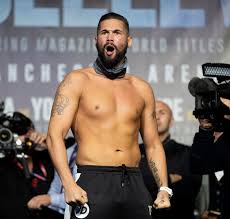
The roar of a packed Goodison Park is a sound that courses through the veins of Liverpool. It’s a roar of passion, history, and unwavering identity. On a cold November night in 2013, that roar was distilled into one man, standing not on the hallowed turf, but in a boxing ring erected at its centre. That man was Tony Bellew. Facing the menacing Adonis Stevenson for the WBC light-heavyweight title, Bellew, the overwhelming underdog, walked to the ring draped in the royal blue of his beloved Everton Football Club, to the thunderous chorus of “Z-Cars” and a city’s hopes. He would lose that night, but the image was cemented: Tony Bellew was more than a boxer; he was a Scouse everyman, a vessel for the dreams of his people.
Tony Bellew’s story is not a sanitized tale of sporting excellence. It is a raw, unfiltered, and profoundly human saga of triumph, failure, redemption, and sheer force of will. It’s about a kid from the Liverpool streets who used boxing to steer away from trouble, who wore his heart and his insecurities on his sleeve, and who fought his way to the very top against logic and expectation. His career is a trilogy of acts: the hungry domestic contender, the world champion against the odds, and the crossover pay-per-view star. Then, of course, there is the Hollywood chapter that introduced “Tony Bellew” to a global audience as “Ricky Conlan” in the Creed films. This is the long-form story of ‘The Bomber’ – exploring the blood, sweat, tears, and razor-sharp wit that defined one of British boxing’s most charismatic and enduring figures.
The Making of a Scouse Fighter: Roots and Early Career
To understand Tony Bellew, you must first understand Liverpool. Born in 1982 and raised in the Wavertree area, Bellew’s environment was one of fierce loyalty, quick wit, and hard knocks. Boxing found him early, a disciplined outlet for a teenager who admitted he was “heading down the wrong path.” The Rotunda ABC in Liverpool became his sanctuary, a place where his natural power and dedication could be channelled. His amateur career was solid, claiming a ABA light-heavyweight title in 2002 and representing England, but it was in the unpaid ranks where he forged a rivalry with another future champion, Nathan Cleverly, beating him twice. These victories hinted at a future professional showdown that would become a cornerstone of his career.
Bellew turned professional in 2007 under the guidance of promoter Frank Warren. He was raw, heavy-handed, and thrillingly aggressive. Early knockouts built his record and his fanbase, particularly in his Liverpool heartland. But it wasn’t just the wins; it was his persona. Bellew was a fantastic talker—eloquent, passionate, and often hilariously scathing. He didn’t just want to beat opponents; he wanted to get under their skin, to build narratives that made fights events. This was evident in his first major domestic clash against the seasoned Ovill McKenzie in 2010. After a brutal and bloody battle that ended in a controversial draw, Bellew showed his mettle in an immediate rematch, stopping McKenzie to claim the Commonwealth light-heavyweight title. The “Bomber” was arriving, and he was doing it the hard way.
The Cleverly Rivalry and World Title Heartbreak
No rivalry defines the first act of Tony Bellew career like his bitter feud with Nathan Cleverly. It was a feud born in the amateurs, fuelled by contrasting personalities—the studious, university-educated Welshman versus the street-smart, emotional Scouser. Their paths were on a collision course for the WBO light-heavyweight title, which Cleverly held. The build-up was pure theatre, featuring a now-infamous staredown on Sky Sports where Bellew’s intensity overflowed, shouting “You’re getting knocked the fuck out!” inches from Cleverly’s face. It was a moment that transcended boxing, showcasing Bellew’s unparalleled ability to sell a fight with genuine emotion.
When they finally met in October 2011 at Liverpool’s Echo Arena, the atmosphere was electric. The fight itself was a tense, technical affair. Bellew boxed better than many anticipated, but Cleverly’s sharper work rate earned him a contentious majority decision. The loss devastated Bellew. It wasn’t just a defeat; it felt like a robbery of his destiny. In a raw post-fight interview, a tearful Bellew displayed his vulnerability, stating, “I’ve trained all my life for that… I just let everybody down.” This moment endeared him further to fans. They saw not a sore loser, but a heartbroken man who had given everything. This setback, however, was not the end. It was a catalyst. He rebuilt with wins, including a crushing stoppage of Edison Miranda, which set up his emotional world title shot at Goodison Park against Adonis Stevenson.
Goodison Park and the Stevenson Dream
The fight at Goodison Park was the pinnacle of Bellew’s sporting fantasy. A boyhood Evertonian, fighting for the world title in the stadium of his dreams. The promotion played perfectly into the fairy tale. However, boxing is often a brutal reality check. Adonis “Superman” Stevenson was a fearsome puncher in his prime. The night was emotionally overwhelming for Bellew, and despite a brave effort, Stevenson’s superior power told in the sixth round, stopping Bellew in front of his people. It was a second world title failure, and at 31, many wondered if Tony Bellew had reached his ceiling. The dream, it seemed, was over.
What followed was a period of reinvention. The light-heavyweight division had offered him two shots, and two painful lessons. In a move that initially raised eyebrows, Bellew decided to move up to the cruiserweight division. The extra pounds suited his frame, which had often been drained to make 175lbs. He felt stronger, healthier, and more powerful. This wasn’t a last roll of the dice; it was a calculated rebirth. Wins at cruiserweight, including a brutal one-punch knockout of Valery Brudov, rebuilt his confidence. He was now campaigning in a division packed with talent, and a new, more dangerous version of Tony Bellew was emerging.
Becoming World Champion: The Cruiserweight Reign
The cruiserweight division became the stage for Tony Bellew’s ultimate redemption. His path led him to Ilunga Makabu, a terrifying puncher from the Congo, for the vacant WBC world cruiserweight title. The fight was held at Goodison Park in May 2016—a second chance at his fairy tale. It started disastrously; Makabu dropped a stunned Bellew in the very first round. The nightmare of Stevenson seemed to be repeating. But this was a different Bellew. He rose, dug deep, and in a stunning turnaround in the third round, unleashed a furious assault to knock Makabu out cold. The explosion of noise was unforgettable. After years of heartbreak, Tony Bellew was a world champion.
“I’ve dreamt of this since I was a ten-year-old boy. This is my world title, for my people, for my city!” – Tony Bellew after knocking out Ilunga Makabu.
He wasn’t done. In two epic domestic showdowns, he defended his title against the legendary, but faded, David Haye. The first fight in 2017 was a monumental event, pitting the heavyweight star against the cruiserweight champion. Bellew, again the underdog, stopped a wounded Haye in the 11th round. The rematch in 2018 was more conclusive, with Bellew stopping Haye in the fifth. These victories were not just about titles; they were about validation. They proved his power at the higher weight, his superior boxing brain, and his immense mental fortitude. Tony Bellew was now a bona fide pay-per-view star and a wealthy man, having secured his family’s future.
The Hollywood Chapter: Ricky Conlan and Global Fame
While Bellew was conquering the cruiserweight division, a unique opportunity arose that would change his public profile forever. Sylvester Stallone, the icon of the Rocky franchise, was producing a spin-off, Creed, focusing on Apollo Creed’s son. They needed a believable, menacing world champion boxer to play the antagonist, “Pretty” Ricky Conlan. Who better than a real, charismatic, and fearsome world champion? Bellew was cast, and he was a revelation. His performance was unnervingly authentic—because it was. He wasn’t acting like a boxer; he was a boxer.
The film’s success introduced Tony Bellew to millions who had never watched a boxing match. His lines, his swagger, and his final fight with Michael B. Jordan’s Adonis Creed were cinematic gold. He reprised the role in Creed II, facing off against Drago’s son. This chapter didn’t just add a line to his bio; it completed the Tony Bellew persona. He was now the rare fighter who transcended the sport, a crossover star who could talk the talk on A League of Their Own as deftly as he walked the walk in the ring. It gave him a platform and financial security that few boxers ever achieve.
The Usyk Challenge and a Warrior’s Farewell
With nothing left to prove, Bellew sought the ultimate challenge. He targeted the undisputed cruiserweight champion, the Ukrainian master Oleksandr Usyk. Usyk, the winner of the World Boxing Super Series, was a virtuoso, an undefeated phenom considered almost unbeatable at 200lbs. For Bellew, this was the final mountain. A win would crown him as the undisputed, linear champion and place him among the all-time greats of the division. The fight, in November 2018 at Manchester Arena, was Bellew’s grand finale.
For the first half of the fight, Bellew executed a near-perfect game plan. Using his experience and power, he boxed smartly, even stunning Usyk at points and taking a lead on some scorecards. He was living the dream, outboxing the boxer. But in the eighth round, Usyk’s relentless pressure, flawless technique, and engine took over. A devastating barrage knocked Bellew out. He had dared greatly and fallen short against a generational talent. There was no shame. In the aftermath, Bellew, surrounded by his family, announced his retirement from boxing. He left on his shield, having given everything in the ring one last time.
Tony Bellew’s Legacy Beyond the Ring
Tony Bellew’s legacy is multifaceted. As a fighter, his record (30-3-1, 20 KOs) shows a world champion who overcame adversity and maximized his talent through sheer will. But his impact runs deeper. He is a blueprint for how a fighter can build a career with intelligence and showmanship. His honesty about mental health, his struggles with weight, and his fears before fights broke down the stereotypical tough-guy image. He showed it was okay to be vulnerable, to cry after a loss, and to openly express love for his family.
His role as a pundit for DAZN and talkSPORT has been a natural progression. His analytical mind, honed from years of studying opponents, and his fearless opinions make him one of the best in the business. He continues to be a passionate voice for Liverpool and Everton, a family man, and a successful businessman. The kid from Wavertree did good, and he never let anyone forget where he came from.
Tony Bellew’s Career Highlights Table
| Achievement | Date | Opponent | Significance |
|---|---|---|---|
| Commonwealth Light-Heavyweight Title | Dec 2010 | Ovill McKenzie (RTD 8) | Won first professional title in rematch after brutal draw. |
| WBC World Cruiserweight Title | May 2016 | Ilunga Makabu (KO 3) | Won world title after being knocked down, fulfilling Goodison dream. |
| First David Haye Victory | Mar 2017 | David Haye (TKO 11) | Huge domestic PPV win over former heavyweight champion. |
| Creed Film Release | Nov 2015 | N/A | Played Ricky Conlan, achieving global Hollywood recognition. |
| Final Fight vs. Oleksandr Usyk | Nov 2018 | Oleksandr Usyk (KO 8) | Brave challenge for undisputed title in his retirement fight. |
Frequently Asked Questions About Tony Bellew
What is Tony Bellew doing now after retiring from boxing?
Since hanging up his gloves, Tony Bellew has remained a prominent figure in the sports world. He works as a leading boxing analyst and pundit for broadcasters like DAZN and is a regular on talkSPORT radio, where his insight and humour are hugely popular. He’s also involved in various business ventures and spends significant time with his family. Occasionally, he appears on television entertainment shows, leveraging the fame he gained from his Hollywood role. Retirement for Tony Bellew has been a busy transition into media and business, staying connected to the sport he loves from the other side of the ropes.
How did Tony Bellew get the nickname ‘The Bomber’?
The nickname ‘The Bomber’ was a natural fit given Tony Bellew’s aggressive, power-punching style in the ring. Early in his professional career, his propensity to seek knockouts with heavy, concussive shots reminded fans and commentators of a bomber dropping explosives. The moniker stuck perfectly, encapsulating his fight-ending power and exciting approach. It also resonated with his Evertonian roots, with fans often chanting “Bomber! Bomber!” in reference to the legendary Everton striker Duncan Ferguson, creating a powerful dual association for his supporters.
What was Tony Bellew’s record in his professional boxing career?
Tony Bellew finished his professional boxing career with a record of 30 wins, 3 losses, and 1 draw. Of his 30 victories, 20 came by way of knockout, a testament to his significant power, particularly at cruiserweight. His losses came against high-calibre opponents: Nathan Cleverly (a close majority decision), Adonis Stevenson (for the WBC light-heavyweight title), and Oleksandr Usyk (for the undisputed cruiserweight title in his final fight). Each loss was a world title fight, highlighting that Tony Bellew consistently competed at the very highest level.
Did Tony Bellew actually win a world championship title?
Absolutely yes. Despite the early setbacks, Tony Bellew achieved his dream of becoming a world champion. He won the WBC world cruiserweight title on May 29, 2016, by dramatically knocking out the feared Ilunga Makabu at Goodison Park. He successfully defended this title twice in high-profile grudge matches against David Haye. This world championship reign is the crowning achievement of Tony Bellew’s fighting career, proving his resilience and ability to reinvent himself after the disappointments at light-heavyweight.
How true to life was Tony Bellew’s character in the Creed movies?
While “Pretty” Ricky Conlan is a fictional character, Tony Bellew brought a massive amount of his real-life persona and experience to the role. The swagger, the trash-talking, the mindset of a confident world champion—that was all Bellew. The training scenes and boxing sequences were authentic because he was a genuine elite fighter. However, the character’s specific backstory and personality traits were written for the film. The authenticity of his performance is what made it so compelling; audiences were essentially watching a real champion play a heightened version of himself on screen.
Conclusion
The story of Tony Bellew is the ultimate parable of sporting resilience. It teaches us that the path to a dream is rarely a straight line, but a series of hard rights, crushing lefts, and the occasional knockout blow—both given and received. From the emotional defeats against Cleverly and Stevenson to the glorious redemption at Goodison Park against Makabu, his career was a masterclass in perseverance. Tony Bellew never had the sleek, untouchable aura of a Floyd Mayweather; instead, he offered something more relatable. He was the fan who became a fighter. He wore his nerves, his love for his city, and his devotion to his family as badges of honour. He conquered the cruiserweight division, triumphed in Hollywood, and retired on his own terms after a warrior’s last stand. Tony Bellew’s legacy is not just etched on a championship belt; it’s woven into the fabric of Liverpool and remembered in the hearts of fans who saw in him a reflection of their own fights, their own struggles, and their own capacity to get back up. The Bomber’s journey was never perfect, but it was always authentically, unforgettably, his own.