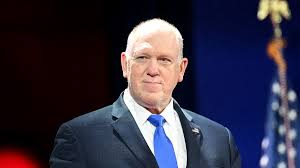
Tom Homan is a name that commands immediate attention in any conversation about American immigration and border security. For over three decades, he has been a central figure in shaping and enforcing U.S. policy, rising from a local police officer in West Carthage, New York, to the powerful role of White House Border Czar. His career trajectory—marked by decisive action, political controversy, and unwavering commitment to a specific vision of border enforcement—naturally leads to public curiosity about the man behind the policies. People want to know: what is the financial outcome of such a high-stakes, high-profile career in public service? Understanding Tom Homan net worth requires peeling back the layers of a complex financial picture, one built on government salaries, a lucrative post-retirement career, and strategic investments that have sparked as much debate as his policy positions.
Estimating the wealth of a figure like Homan is challenging, as definitive numbers are not publicly released. However, by examining his career earnings, post-government activities, and financial disclosures, a clear range emerges. Most credible analyses place his total net worth in 2026 between $3 million and $9 million. This wealth was not accumulated overnight through a single windfall but represents the culmination of a lifetime of work. It reflects the standard, albeit comfortable, compensation of a senior federal official, dramatically amplified by the private-sector opportunities that opened up after his first retirement. His story is a modern case study in how top-level government expertise can be monetized in the media and consulting worlds, raising important questions about the intersection of public service, personal wealth, and potential conflicts of interest in the high-stakes arena of national security contracting.
From Small-Town Cop to Federal Enforcer: Building a Career Foundation
Tom Homan net worth professional journey began far from the corridors of Washington power. Born in 1961 into a family with deep law enforcement roots—his father and grandfather were both police officers—he started his career as a police officer in his hometown of West Carthage, New York, in 1983. This foundational experience in community policing was brief but formative. The following year, in 1984, he made the pivotal decision to join the federal immigration service, then known as the U.S. Immigration and Naturalization Service (INS). He began as a Border Patrol agent, working on the front lines in California and Arizona, an experience that gave him a ground-level perspective on the challenges of border security that would define his entire career.
Homan’s rise through the federal ranks was steady and driven by a reputation for aggressive enforcement. He served as a special agent, investigator, and supervisor, building a career that spanned the transition of immigration enforcement from the INS to the newly created U.S. Immigration and Customs Enforcement (ICE) after 9/11. His expertise did not go unnoticed, even across political aisles. In a notable bipartisan endorsement of his capabilities, President Barack Obama’s administration appointed him as ICE’s Executive Associate Director of Enforcement and Removal Operations in 2013. It was during this period that he first articulated the logic behind what would later become one of the most controversial policies in modern immigration history. He argued that separating children from their parents at the border could be an effective deterrent to illegal crossings, telling a journalist, “I’d be lying to you if I didn’t think that would have an effect”. For his service, the Obama administration awarded him the Presidential Rank Award as a Distinguished Executive in 2015.
The Pinnacle of Public Service: Compensation as ICE Director
The election of Donald Trump in 2016 catapulted Tom Homan into the national spotlight and to the apex of his government career. On January 30, 2017, he was appointed as the Acting Director of ICE. In this role, he oversaw a massive agency with approximately 20,000 employees and an annual budget exceeding $6 billion. His tenure was defined by a dramatic escalation in enforcement actions and public rhetoric. He announced a 38% increase in arrests in the first few months and famously stated that undocumented immigrants “should be afraid”. He was a key architect and public defender of the administration’s “zero-tolerance” policy, which formally institutionalized the family separation practices he had previously advocated.Tom Homan net worth
Financially, this top-tier government position came with a salary commensurate with other Senior Executive Service (SES) roles. As the acting director of ICE, Homan earned an annual salary between $170,000 and $185,000. While this is a substantial income, it pales in comparison to the multimillion-dollar compensation packages of private-sector CEOs managing organizations of similar scale. The true financial value of a long federal career lies in its benefits package and long-term security. For someone with Homan’s tenure, this includes:
- A Federal Pension: Based on his highest earning years and over 30 years of service, this likely provides him with annual payments estimated between $80,000 and $120,000 for life.
- Comprehensive Health Insurance: Federal health benefits that continue into retirement with significant government premium subsidies.
- The Thrift Savings Plan (TSP): A government-sponsored retirement savings plan similar to a 401(k), which allows for tax-advantaged savings and growth.
Over his entire 34-year federal career (1984-2018), his cumulative salary earnings are conservatively estimated to be between $3 million and $4.5 million before taxes. This formed the solid, if unspectacular, financial foundation upon which his later wealth was built.
The Post-Government Pivot: A Lucrative Second Act
When Tom Homan net worth retired from ICE in June 2018, he did not fade from public view. Instead, he embarked on a second act that proved to be far more financially lucrative than his decades of government service. This transition from public enforcer to private commentator and consultant is the primary engine behind the significant growth in his net worth after 2018.
His most visible platform became Fox News, where he joined as a regular contributor, offering sharp criticism of the Biden administration’s border policies and solidifying his status as a conservative authority on immigration. This media presence opened the door to a highly profitable circuit of paid speaking engagements. Reports indicate he could command between $10,000 and $30,000 per speaking event, addressing conferences, political gatherings, and organizations aligned with his views.
Beyond the spotlight, Homan engaged in more discreet and potentially more profitable work: consulting. He founded his own consulting firm and developed financial relationships with companies operating in the border security and detention sector. These relationships have become a central focus of ethics inquiries. Federal disclosure forms reveal that in the years before his return to government in 2025, he received consulting payments from at least two key entities:
- GEO Group: The largest private prison and immigration detention operator in the U.S. disclosed paying Homan more than $5,000 between 2023 and early 2025.
- SE&M Solutions and USA Up Star: A consulting firm and a company specializing in temporary facilities, both led by Pennsylvania businessman Charles Sowell, also paid Homan consulting fees during this period.
This private-sector work transformed his finances. In 2017, his financial disclosure listed assets totaling a maximum of just $250,000. By the time he filed disclosures to re-enter government in 2025, his net worth had ballooned to an estimated range of $3 million to $9 million. This staggering growth underscores how valuable his expertise and connections became in the private marketplace, particularly for companies poised to benefit from stricter immigration enforcement.
Table: The Growth of Tom Homan Net Worth and Income Streams
| Period | Primary Role | Estimated Annual Income | Key Wealth Drivers | Reported Net Worth Range |
|---|---|---|---|---|
| 2017-2018 | Acting ICE Director | $170K – $185K (salary) | Federal salary, benefits, and pension accrual | Foundation built on career earnings |
| 2019-2024 | Media Contributor & Consultant | $500K+ (combined streams) | Speaking fees ($10K-$30K/event), media, consulting contracts | $1.2M (2018) → $2.7M (2025) |
| 2025-2026 | White House Border Czar | $140K – $180K (salary) + Pension | Border Czar salary, ongoing pension, asset growth | $3M – $9M (2026) |
Wealth in Land and Assets: Beyond the Paycheck
While income from salaries, speeches, and consulting forms the core of Homan’s wealth, a significant portion of Tom Homan net worth is tied up in tangible assets, particularly real estate. This moves his financial profile beyond that of a typical retired bureaucrat and into the realm of strategic investing.
The most substantial of these holdings is a reported 300 acres of farmland in Ohio. This isn’t just a hobby farm; it’s a major income-producing asset. Agricultural land of this scale generates substantial annual rental income from farmers. Some analyses suggest his property and real estate investments could be providing him with up to $500,000 in annual income, a figure that dwarfs his old government salary and provides a steady, reliable cash flow. This kind of investment demonstrates a clear strategy of converting the high income from his post-retirement activities into long-term, stable wealth.
His lifestyle and personal assets reflect this accumulated wealth. He is reported to own a collection of vehicles, including a Ford F-150 truck, and his wife is said to drive a Porsche Cayenne SUV. The family also owns a Mercedes S-Class sedan. These assets, while not critical to his net worth calculation, are indicative of the comfortable financial position he has achieved. They are the visible markers of a net worth built on a foundation of government security, amplified by private-sector opportunity, and solidified through savvy investment in land.Tom Homan net worth.
https://headlinenest.com/matthew-stafford-wife/
Controversies and Conflicts: The Ethics of Wealth Accumulation
The path to Tom Homan net worth has not been without serious controversy. His financial dealings, particularly during his time as a private citizen preparing for a potential return to power, have sparked federal investigations and ongoing ethical debates. The central question is whether he leveraged his future government influence for personal gain.
The most explosive allegation came in 2024, when it was reported that Homan was the subject of a federal bribery investigation. NBC News reported that he was allegedly recorded accepting a bag containing $50,000 in cash from undercover FBI agents posing as business executives seeking future government contracts. Homan vehemently denied the allegations, calling the story “bull—-“. The Department of Justice ultimately closed the investigation in September 2025, citing insufficient evidence. However, the cloud of the allegation remains part of his public narrative.
More concrete and documented are his consulting ties to companies like GEO Group and the network around businessman Charles Sowell. These relationships create a clear perception of a conflict of interest. GEO Group stands to profit enormously from the mass deportation policies Homan now helps execute; its CEO estimated the company could make an additional $400 million annually from Trump’s plans. Similarly, Sowell’s firms advised companies seeking a piece of the administration’s massive detention camp contracts. While Homan has stated he is recused from contracting decisions, ethics experts argue that his previous financial relationships can taint the entire process. As former government ethics counsel Don Fox stated, discussing contracts with industry players after such relationships would be a “clear-cut violation” of federal ethics rules.
These controversies highlight the tension inherent in his financial story. The very expertise that makes him valuable to media outlets and private companies—his deep knowledge of immigration enforcement and his political connections—is what creates ethical red flags when he returns to a position of public power. His wealth growth is intrinsically linked to policies he advocates for, creating a circular relationship that critics argue undermines public trust.
The Border Czar Role: Power, Policy, and Future Wealth
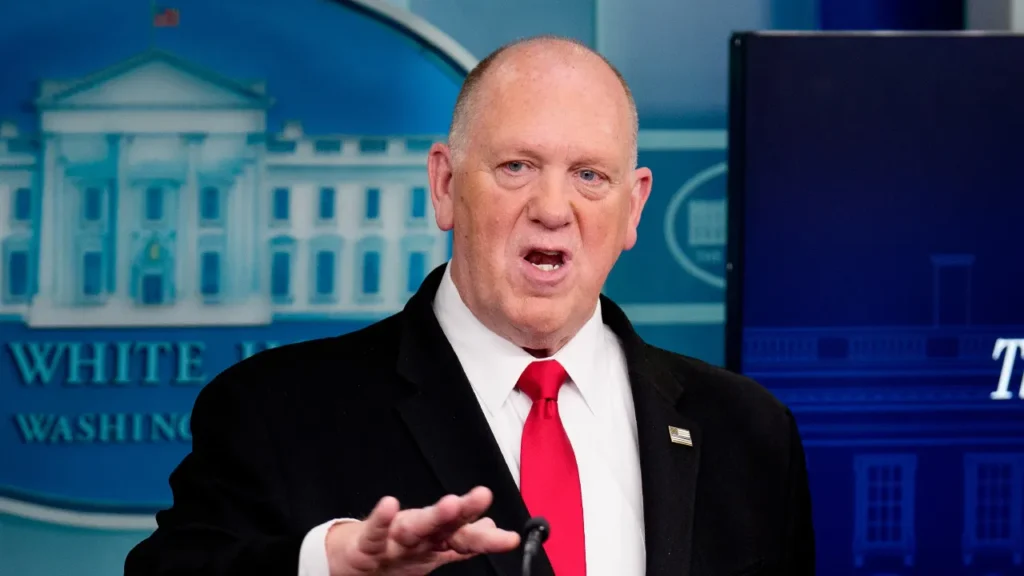
In November 2024, President-elect Donald Trump announced that Tom Homan would return to the administration with the title “Border Czar,” a role specifically created to oversee the ambitious and aggressive deportation agenda of Trump’s second term. Trump declared that “Homan will be in charge of all deportation of illegal aliens back to their country of origin”. This position granted Homan a sweeping coordination role over border security and immigration enforcement efforts, though its exact placement within the government hierarchy is less traditional than a cabinet secretary role.
The compensation for this high-profile appointment is believed to be in line with other senior White House advisors, likely in the range of $140,000 to $180,000 per year. While this salary contributes to his current income, its true significance for Homan’s long-term net worth may be less about the paycheck and more about the power and platform it provides. The Border Czar role represents the culmination of his career philosophy, allowing him to implement the policies he has long championed. Furthermore, holding such a prominent position typically amplifies one’s value in the post-government marketplace. The connections made, and the authority wielded, often translate into even more lucrative speaking deals, book contracts, and board memberships after leaving office.
Homan has embraced this role with characteristic force. He has promised to run “the biggest deportation force this country has ever seen” and has publicly clashed with political opponents like Representative Alexandria Ocasio-Cortez. His actions, such as proceeding with deportations despite court orders, demonstrate a commitment to an enforcement-first approach that aligns perfectly with the interests of the private detention and security companies he previously consulted for. This alignment ensures that his policy success and his potential future financial success remain closely intertwined.Tom Homan net worth
Conclusion: The Financial Legacy of a Polarizing Figure
In 2026, Tom Homan net worth stands as a testament to a unique American career path: decades of government service followed by a highly profitable private-sector leveraging of that same expertise. The estimated $3 million to $9 million fortune is not the result of corruption in the traditional sense, but rather the product of a system where specialized government knowledge and political influence have immense market value. His wealth was built on a solid foundation of a federal salary and pension, supercharged by media fame and consulting fees from industries directly affected by the policies he helped shape, and secured through investments in income-generating assets like Ohio farmland.
Homan’s financial story is inextricably linked to his policy legacy. It is impossible to separate the growth of his personal wealth from the debates over family separation, private detention centers, and mass deportation. For his supporters, his net worth is evidence of the deserved rewards for a lifetime of tough, thankless work protecting the nation’s borders. For his critics, it is a glaring symptom of a “revolving door” culture where public service becomes a stepping stone to private enrichment, creating troubling conflicts of interest that can influence life-and-death policies.
Ultimately, Tom Homan net worth financial profile offers more than just a number. It provides a lens through which to examine the complex intersections of public service, political ideology, media, and capitalism in modern America. His net worth is a figure shaped by conviction, controversy, and the considerable monetary value placed on the power to decide who is allowed to stay in the United States.
Frequently Asked Questions About Tom Homan Net Worth
What is Tom Homan net worth in 2026?
Based on an analysis of his career earnings, post-government consulting, speaking fees, and real estate holdings, Tom Homan net worth in 2026 is estimated to be between $3 million and $9 million. The most commonly cited and credible figures center around $5 to $7 million. This represents significant growth from his time as a federal employee, driven largely by his private-sector work after 2018.
How did Tom Homan make his money?
Tom Homan net worth built his wealth through three primary phases. First, through a 34-year federal career capped by a salary of $170,000-$185,000 as ICE Director, which also earned him a lifetime pension. Second, through a lucrative post-retirement career as a Fox News contributor, paid speaker (earning $10,000-$30,000 per event), and consultant for companies like GEO Group. Third, through investments, most notably approximately 300 acres of income-generating farmland in Ohio.
What was Tom Homan’s salary as ICE Director?
As the Acting Director of U.S. Immigration and Customs Enforcement (ICE) from 2017 to 2018, Tom Homan was part of the federal Senior Executive Service (SES). His annual salary was between $170,000 and $185,000. This compensation included the full suite of federal benefits, including health insurance, a retirement savings plan, and, most importantly, eligibility for a substantial federal pension based on his length of service.
Did Tom Homan’s consulting work create conflicts of interest?
Ethics experts and government watchdogs have raised serious concerns about potential conflicts of interest. Before returning as Border Czar, Homan was paid as a consultant by GEO Group, a major private prison company that profits from immigration detention, and by firms connected to businessman Charles Sowell, who advised companies seeking federal detention contracts. While Homan has recused himself from contracting decisions, critics argue these prior financial relationships create a perceived conflict, as the policies he now vigorously implements directly benefit his former clients.
How has Tom Homan’s role as Border Czar affected his net worth?
The direct salary from his role as Border Czar, estimated at $140,000-$180,000, adds to his annual income but is not the primary driver of his net worth. The greater financial impact of the role is likely long-term. The high-profile position and the powerful connections it fosters typically significantly increase a former official’s earning potential for speaking engagements, book deals, and corporate board positions after they leave government service. The role solidifies his brand, which has proven to be his most valuable asset.