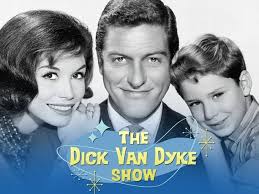
The Dick Van Dyke Show isn’t just another classic sitcom gathering dust in the archives of television history. It is a vibrant, living blueprint for modern comedy that, more than sixty years after its premiere, continues to influence how stories are told on the small screen. Premiering on CBS in 1961, this groundbreaking series chronicled the work and home life of television comedy writer Rob Petrie, portrayed by the incomparable Dick Van Dyke. It was the brainchild of Carl Reiner, who channeled his real-life experiences writing for Sid Caesar into a show that felt astonishingly authentic. Over five brilliant seasons and 158 episodes, The Dick Van Dyke Show masterfully blended sharp, intelligent writing with impeccable physical comedy, all while presenting one of television’s first truly believable and passionate married couples in Rob and Laura Petrie. It didn’t just make America laugh; it broke the rigid rules of its era, introduced a revolutionary narrative structure, and set a standard for character-driven humor that countless shows have tried—and often failed—to match ever since.
The Revolutionary Premise of a Duel-Life Sitcom
Before The Dick Van Dyke Show, sitcoms largely existed in two separate boxes. You had family comedies like Leave It to Beaver, where the father mysteriously vanished to an unseen office each day, and you had workplace comedies. Reiner’s genius was to smash these boxes together. For the first time, audiences were given a full, integrated portrait of a man’s life. We saw Rob Petrie not just as a bumbling dad or a harried employee, but as a complete person, with the pressures and joys of each world crashing hilariously into the other. This “duel-life” structure was more than a novel gimmick; it was a narrative engine that doubled the comedic possibilities. A problem brewing at the office with Buddy’s incessant bald jokes aimed at producer Mel Cooley could follow Rob home to New Rochelle, where he’d try to explain the feud to a baffled Laura. Conversely, a domestic crisis involving Ritchie or a misunderstanding with the neighbors could spill into the writers’ room, becoming fodder for the next Alan Brady Show sketch.
This premise was deeply personal, drawn directly from Reiner’s own career. The fictional Alan Brady Show was a direct descendant of real 1950s variety giants like Your Show of Shows. Rob Petrie was essentially a fictionalized version of Reiner himself—the calm, sometimes exasperated head writer trying to manage talented but volatile colleagues and a towering ego of a star. This insider’s perspective gave the show an authenticity that was completely new. Viewers weren’t just watching generic jokes; they were getting a privileged, behind-the-scenes look at how television comedy was actually made, from brainstorming sessions to network interference. The show demystified the creative process, portraying writers as real people with insecurities, rivalries, and creative blocks, all while firing off some of the sharpest one-liners ever written.
The Creative Mastermind and a Cast Forged in Comedy
The show’s unparalleled success was not a happy accident; it was the result of a perfect alignment of visionary leadership and once-in-a-lifetime casting. At the helm was Carl Reiner, who served as creator, head writer, producer, and eventually the on-screen face of the terrifying star Alan Brady. His guiding principle was truth. He insisted on humor that sprang from recognizable human behavior rather than contrived wackiness. As one critic noted, the show’s greatness lies in the fact that “none of the regulars… were created as Comedy Characters—all are essentially realistic”. Reiner surrounded himself with a writing room that became a comedy legend factory, including future giants like Garry Marshall and Jerry Belson, who would go on to shape American television for decades.
The ensemble they wrote for was nothing short of magical. At the center was Dick Van Dyke, whose background in Broadway (Bye Bye Birdie) and deep love for silent film clowns like Laurel Hardy informed his every move. He wasn’t just delivering lines; he was a physical comedian of the highest order, using his lanky frame and elastic expressions to turn a simple trip over an ottoman into an iconic moment of television history. As Laura, Mary Tyler Moore was his perfect match. She shattered the mold of the bland sitcom wife. Laura was stylish, witty, emotionally intelligent, and Moore’s chemistry with Van Dyke was electric. They played a couple genuinely in love, who argued, danced, schemed, and kissed with a passion that made the network-mandated twin beds in their bedroom look utterly ridiculous.
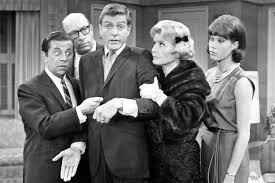
The supporting cast had no weak links. Morey Amsterdam, as the needle-sharp joke machine Buddy Sorrell, brought a stand-up comic’s timing and was known to improvise legendary insults, often aimed at the “gloriously bald” Mel Cooley (Richard Deacon). Rose Marie’s Sally Rogers was a groundbreaking character in her own right—a successful, unmarried career woman openly looking for love but defined by her talent, not her desperation. Together, this core family, both at home and at work, created a dynamic where every combination of characters sparked comedy gold.
Groundbreaking Episodes and Storytelling Innovation
The Dick Van Dyke Show was fearless in its storytelling, constantly pushing the boundaries of what a half-hour sitcom could do. It regularly employed inventive narrative devices like flashbacks, fantasy sequences, and direct address to the camera long before they became common tools. This adventurous spirit produced a catalog of episodes that remain masterclasses in comedic writing.
Some of the most legendary episodes include:
- “Coast to Coast Big Mouth” (Season 5): The iconic episode where Laura accidentally reveals on a national game show that Alan Brady wears a toupee. The escalating panic and Brady’s terrifying rage (finally showing Reiner’s full face on screen) build to a perfectly timed comedic climax.
- “It May Look Like a Walnut” (Season 3): A surreal, brilliant parody of The Twilight Zone where Rob dreams of an alien invasion led by Danny Thomas, who steals everyone’s thumbs and fills the world with walnuts. It showcased the show’s willingness to dive into the bizarre.
- “That’s My Boy??” (Season 3): A fan and cast favorite, this flashback episode involves Rob becoming convinced the hospital switched babies at birth. The climactic reveal is considered one of the hardest the live studio audience ever laughed.
- “The Night the Roof Fell In” (Season 2): An innovative episode told through conflicting flashbacks from both Rob and Laura’s perspectives after a huge fight, complete with a talking fish in their aquarium providing commentary.
The series also excelled at quieter, more nuanced stories that tackled surprisingly modern themes. Episodes dealt with workplace equality, parental anxieties, social jealousy, and the pressures of marriage with a sophistication that was decades ahead of its time. The show proved that comedy could be smart and heartfelt without sacrificing a single laugh.
The Legacy of Laughter: Cultural Impact and Influence
The cultural footprint of The Dick Van Dyke Show is immense and enduring. Its most immediate legacy was its awards success, racking up an impressive 15 Emmy Awards over its five-season run. But its true influence is seen in the DNA of virtually every sophisticated sitcom that followed.
The Dick Van Dyke Show established the model for the modern, character-driven workplace comedy. Shows like The Mary Tyler Moore Show (a direct descendant), Cheers, 30 Rock, and The Larry Sanders Show all owe a debt to its pioneering “show-within-a-show” structure and its focus on the quirky family dynamics of colleagues. Furthermore, it redefined the television marriage. By presenting Rob and Laura as equal partners in love and humor, it paved the way for the relatable, bickering-but-devoted couples in shows from Mad About You to Modern Family.
Even its iconic title sequence—featuring Dick Van Dyke’s famous trip over the ottoman—changed television. As detailed by historians, creator Carl Reiner specifically designed it to be a mini-comedy sketch that would grab viewers’ attention from the very first second. This idea of using the opening credits to establish tone and character, rather than just list names, inspired everything from the animated couch gags on The Simpsons to the thematic montages of countless shows that followed.
The show’s legacy is also carried forward by its timeless availability. From decades of syndication to the release of complete DVD and Blu-ray sets, new generations continue to discover its humor. In an age of rapidly shifting tastes, the fact that The Dick Van Dyke Show feels as fresh and funny today as it did in the 1960s is the ultimate testament to its quality. Its humor is not rooted in topical references or shock value, but in the universal truths of human nature—vanity, pride, love, and the daily absurdity of just getting through life.
The Unforgettable Ensemble: A Character Legacy
The immortality of The Dick Van Dyke Show is inextricably linked to the unforgettable characters brought to life by its peerless cast. They were not mere joke delivery systems but fully realized individuals whose personalities created the friction that sparked comedy.
Rob Petrie (Dick Van Dyke): The charismatic anchor. Rob was the everyman—a loving husband, a devoted (if occasionally perplexed) father, and a talented professional trying to keep the peace between his eccentric writing staff and his volatile boss. Van Dyke imbued him with a relatable, good-natured charm and a physical grace that made his famous clumsiness a work of art.
Laura Petrie (Mary Tyler Moore): The revolutionary. Laura was the heart of the home and often the smartest person in the room. Moore broke the mold with her portrayal of a stylish, capri-pants-wearing wife who was an emotional and intellectual equal to her husband. Her plaintive “Oh, Rob!” became a trademark, and she proved she could handle both slapstick and poignant moments with equal skill.
Buddy Sorrell (Morey Amsterdam): The human joke cannon. A veteran comic, Amsterdam often improvised Buddy’s rapid-fire, often cruel insults. His endless barrage of jokes about Mel Cooley’s lack of hair (“a glare from Cooley is blinding”) defined a hilarious, antagonistic relationship that became a cornerstone of the office scenes.
Sally Rogers (Rose Marie): The pioneering professional. In an era where female characters were often defined by their relationship to men, Sally was a talented, confident career woman. While her search for a husband was a running gag, it never undermined her competence or her vital role on the writing team. She was a friend and peer to Rob and Buddy, holding her own in their fast-paced banter.
Mel Cooley (Richard Deacon): The perfect straight man. As the pompous, long-suffering producer and brother-in-law to Alan Brady, Deacon’s Mel was the ideal foil. His bald head and dignified exasperation were the eternal targets for Buddy’s wrath, and his reactions were a masterclass in comedic timing.
Alan Brady (Carl Reiner): The terrifying, unseen force who became a legend. For most of the series, Alan Brady was only a heard voice or a turned-back, a source of terror for the staff. When Reiner finally revealed himself in the fourth season, he created an iconic megalomaniacal star whose towering ego and toupee-driven insecurities provided some of the show’s greatest storylines.
This table summarizes the core cast and their lasting impact:
| Character | Actor | Role | Lasting Legacy |
|---|---|---|---|
| Rob Petrie | Dick Van Dyke | Head Comedy Writer | Redefined the likable TV father/husband; master of physical comedy. |
| Laura Petrie | Mary Tyler Moore | Wife & Former Dancer | Shattered the “sitcom wife” stereotype; created a model for intelligent, equal partners on TV. |
| Buddy Sorrell | Morey Amsterdam | Comedy Writer | Archetype of the quick-witted, insult-hurling colleague; influenced decades of sidekick characters. |
| Sally Rogers | Rose Marie | Comedy Writer | Pioneering portrayal of an independent, career-focused single woman on television. |
| Mel Cooley | Richard Deacon | Producer | The quintessential straight man and perpetual target; perfected the art of the flustered reaction. |
| Alan Brady | Carl Reiner | TV Star/Boss | Iconic “unseen” character; the ultimate egotistical boss whose mere presence inspired fear and comedy. |
Conclusion: The Eternal Trip Over the Ottoman
In the final analysis, The Dick Van Dyke Show endures not as a relic, but as a revelation. It demonstrated that television comedy could be both uproariously funny and genuinely intelligent, that it could portray a marriage with warmth and realism, and that it could pull back the curtain on its own industry with wit and affection. Carl Reiner’s genius, Dick Van Dyke’s peerless performance, Mary Tyler Moore’s groundbreaking role, and the stellar ensemble created something truly timeless.
The show’s legacy is echoed in the words of Carl Reiner himself, who considered it the proudest achievement of his career for how it inspired generations. It is a legacy seen every time a sitcom balances home and work life, every time a TV couple shares a genuinely romantic moment, and every time a comedy finds humor in the truthful quirks of human behavior rather than easy punchlines. More than sixty years after Rob Petrie first tripped over that ottoman, The Dick Van Dyke Show continues to remind us that the best comedy comes from life itself—perfectly timed, beautifully performed, and forever timeless.
Frequently Asked Questions About The Dick Van Dyke Show
Q: Why did The Dick Van Dyke Show end after only five seasons?
Carl Reiner, the show’s creator, had a specific artistic vision from the start. He believed that a television comedy series could maintain its peak quality for about five seasons before running out of fresh ideas or becoming repetitive. Despite the show being highly popular and still successful in its fifth season (ranking #16 in the ratings), Reiner, along with stars Dick Van Dyke and Mary Tyler Moore, decided to end the series on a high note, making it one of the first sitcoms to have a formally planned finale rather than ending due to cancellation.
Q: Was The Dick Van Dyke Show based on a real show or real people?
Yes, very directly. The show was created by Carl Reiner, who based it heavily on his own experiences as a writer for Sid Caesar’s legendary 1950s variety programs, Your Show of Shows and Caesar’s Hour. The fictional Alan Brady Show is a stand-in for those real shows. The character of Rob Petrie is essentially a fictionalized version of Reiner himself, while the dynamics between the writers and the egotistical star were drawn from real-life industry relationships.
Q: What was so controversial about Mary Tyler Moore’s pants on the show?
In the early 1960s, it was uncommon and somewhat daring for a leading female character on a mainstream TV show to wear form-fitting capri pants instead of dresses or skirts. CBS executives and some viewers initially complained about Laura Petrie’s wardrobe, considering the pants too casual and even too revealing. However, the pants quickly became a signature of Laura’s modern, active, and relatable character, symbolizing a subtle shift toward more realistic and less formal portrayals of American women on television.
Q: Did they ever film episodes of The Dick Van Dyke Show in color?
The entire original series was filmed and broadcast in black-and-white. However, decades later, several classic episodes were digitally colorized by West Wing Studios and aired on CBS as holiday specials, starting in 2016. Episodes like “Coast to Coast Big Mouth” and “That’s My Boy??” have been presented in color, offering a new way for audiences to experience the show.
Q: How did the famous opening credits with Dick Van Dyke tripping over the ottoman come about?
For the first season, the show had a simple title sequence with still photos. Before the second season, creator Carl Reiner wanted a more dynamic opening that showcased Dick Van Dyke’s physical comedy. He suggested the bit of Van Dyke entering his living room and tripping over the ottoman. They filmed two versions: one where he trips and falls, and one where he gracefully sidesteps it. The two versions were alternated randomly, making it a fun, unpredictable signature that immediately captured the show’s spirit and helped it stand out from all other comedies on the air.