Picture this: a vehicle that is equal parts status symbol, impenetrable fortress, and high-tech weaponized supercomputer. It glides through rain-slicked, noir-inspired streets with a predatory grace, its silhouette unmistakable against the glow of a Gotham City neon sign. This is no ordinary car. It is, in its most iconic and grandest interpretations, the Batmobile limousine—a rolling manifestation of justice, fear, and unparalleled automotive fantasy. More than just Batman’s ride, it is a central character in the legend, a four-wheeled extension of the Dark Knight’s psyche. To trace the evolution of the Batmobile limousine is to trace the evolution of superhero mythmaking itself, from humble comic book beginnings to the pinnacle of Hollywood fabrication. It represents the ultimate custom car, a limousine not of luxury, but of purpose—lengthened, lowered, and loaded for a singular mission: to terrify criminals and protect the innocent.
The very term “limousine” conjures images of stretched elegance, VIP treatment, and extended wheelbases. Apply that concept to the world’s greatest detective, and you get something profoundly unique. The Batmobile limousine takes the idea of a “personal vehicle” and warps it into a mobile command center, a tank disguised as a muscle car, a stealth jet on wheels. Its elongated form isn’t for champagne service; it’s to house an arsenal of crime-fighting gadgets, from battering rams and deployable shields to cutting-edge forensic labs and, of course, the iconic bat-symbol projector. This isn’t transportation; it’s transformation. It is Bruce Wayne’s most audacious piece of theater, a psychological weapon designed to announce that Batman’s reach is long, his resources vast, and his arrival inevitable. As we explore its history, design, and cultural footprint, we’ll see how the Batmobile limousine shifted from a simple red convertible to a symbol of dark, technological might, forever changing how we envision the superhero vehicle.
The Humble Beginnings: Before the Limousine Era
Long before it became the armored behemoth we know today, Batman’s wheels were surprisingly… normal. In his 1939 comic book debut, Batman was a creature of the urban shadows, and his transportation reflected the era’s pulp influences. He drove a simple, unmarked red convertible, often depicted as a Cord 812 or similar sleek vintage roadster. It was fast and stylish, befitting the persona of a wealthy socialite like Bruce Wayne, but it bore no special markings or overt weaponry. The car was a tool, not a trademark. For years, through the 1940s, the vehicle remained largely a standard—if high-end—automobile, occasionally depicted in dark colors but lacking the distinct bat-themed iconography. It was, in essence, a blank canvas.
The shift began subtly. Artists started to elongate the car’s lines, giving it a lower, sleeker profile that hinted at speed and secrecy. The first significant nod toward its future identity came with the addition of a small bat’s head ornament on the grille, akin to the hood ornaments of luxury cars of the day. This was the seed from which the legend would grow. The 1943 serial Batman featured a 1939 Cadillac Series 75 convertible with a bat emblem added to the grille, further cementing the connection. Throughout the 1950s and into the early 1960s, the comic book Batmobile slowly evolved, gaining more pronounced fins and a darker, more mysterious aura. But it was still recognizably a car one might see on the street, albeit a custom one. This all changed irrevocably in 1966. The cultural earthquake of the Batman television show demanded a vehicle that was no longer just a car, but a star in its own right. The show’s campy, pop-art aesthetic required a machine that was both futuristic and instantly recognizable. The call went out: Gotham needed a Batmobile limousine.
The 1966 Lincoln Futura: The Birth of an Iconic Silhouette
When custom car legend George Barris was tasked with creating the Batmobile for the ABC television series, he had a mere three weeks and a shoestring budget of $15,000. His solution was not to build from scratch, but to transform. His starting point was a one-of-a-kind concept car: the 1955 Lincoln Futura, a bubble-topped, Italian-designed vehicle he had purchased for $1. It was already a vision of the future, with wild fins, a double-bubble canopy, and a dramatic, shark-like profile. Barris and his team went to work, lengthening the body, adding a bat-ram bumper, turbine-style wheels, and, most famously, a host of comic-book gadgetry like the Bat Ray Projector, Batphone, and rear-mounted parachutes. The car was painted in a brilliant “Bastard Black” with red trim.
The result was not just a car, but the definitive Batmobile limousine for a generation. Its elongated, low-slung form perfectly fit the “limousine” descriptor—it was stretched, exclusive, and designed for a singular VIP: Batman. While its gadgets were often silly (the Bat-Turn Lever!), they established the crucial precedent that the Batmobile was a rolling arsenal. The 1966 Batmobile’s impact cannot be overstated. It transcended the show, becoming a toy, a poster, and the image of the Batmobile for decades. It proved that the vehicle could be a character with personality—flamboyant, witty, and cool. This version established the core design language that all future iterations would either build upon or react against: the elongated nose, the central fin, the sweeping tailfins, and the purposeful, aggressive stance. It was the first true Batmobile limousine, a custom fabrication that turned a car into a cultural touchstone.
“I knew it had to be like a rolling sculpture. It had to have fins, it had to be long, it had to be low, and it had to say ‘Batman’ even when it was standing still.” – George Barris, on designing the 1966 Batmobile.
The Dark Knight Returns: The Tim Burton Reinvention
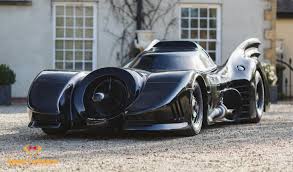
The next seismic shift arrived in 1989 with Tim Burton’s Batman. Burton’s Gotham was a Gothic, Deco-infused nightmare, a far cry from the sunny pop-art of the 60s. His Batman was a brooding creature of vengeance. The car had to reflect this new, darker tone. Out went the candy-red trim and playful gadgets; in came jet-black armor, menacing angles, and implied firepower. Production designer Anton Furst and concept artist Julian Caldow looked to military aircraft and exotic sports cars for inspiration. The 1989 Batmobile was built on a Chevrolet Impala chassis but was almost entirely a custom fabrication. It featured a massive turbine intake at the front, a cockpit that recalled a fighter jet, and a rear section dominated by a pronounced afterburner. It was less a “limousine” in the traditional sense and more like a land-based attack fighter.
Yet, the limousine DNA was still present in its dramatic length and singular purpose. This Batmobile was a tank, a stealth bomber, and a psychological weapon. Its most famous feature, the shield-forming canopy, further emphasized its role as a mobile fortress. When Burton’s Batman emerged from the shadows and fired up the colossal engine of this beast, it redefined cinematic cool. It made the 1966 version look like a toy. This iteration emphasized the “mobile” in Batmobile—it was fast, deadly, and packed with serious ordinance like machine guns, bombs, and grappling hooks. It set the template for the modern, militarized Batmobile limousine, proving that the vehicle could be a central component of the Dark Knight’s intimidating aura. The 1992 sequel, Batman Returns, introduced a slightly modified version with a more pronounced canine-like front end, further cementing its status as a predatory animal on wheels.
The Tumbler: Breaking the Mold with Radical Function
For decades, the Batmobile silhouette was defined by length, sleekness, and a low profile. Then came Christopher Nolan’s The Dark Knight Trilogy. Director Nolan and production designer Nathan Crowley approached the problem from a standpoint of absolute realism. If a man were to become a vigilante in a modern, gritty city, what would he actually drive? Their answer was the Tumbler, and it threw out the Batmobile limousine rulebook entirely. Inspired by Lamborghini sports cars and military bridging vehicles, the Tumbler was a wide, low-slung, armored assault vehicle. It looked like a cross between a tank and a stealth fighter that had been squashed. It had no traditional windows, a cockpit that ejected to become the motorcycle-like Batpod, and was powered by a jet engine.
The Tumbler was a revolution. It wasn’t styled; it was engineered. Its form followed brutal, undeniable function. It could leap across rooftops, scale walls, and withstand rocket-propelled grenades. Nolan’s genius was in explaining its origin: it was a prototype military “bridging layer” vehicle developed by Wayne Enterprises, repurposed by Batman. This gave it a plausibility never before seen. While it abandoned the classic stretched elegance of previous versions, it embraced a different kind of limousine concept—it was a personalized, heavily modified, one-of-a-kind armored personnel carrier for one very specific VIP. The Tumbler recontextualized the Batmobile not as a custom car, but as tactical hardware. It was arguably the most influential design since 1989, shifting the aesthetic for an entire generation toward a more rugged, militarized, and practical look in all superhero vehicles. It proved the Batmobile could be completely reinvented and still be instantly recognizable as Batman’s primary mode of transport.The Batmobile Limousine
Comparative Evolution of Key Batmobile Designs
| Era / Film | Base Vehicle / Inspiration | Key Design Features | Gadget Highlight | Design Philosophy |
|---|---|---|---|---|
| 1966 TV Series | 1955 Lincoln Futura Concept | Red trim, bubble canopy, bat-ram bumper, tailfins | Batphone, Bat-Ray Projector, Parachutes | Pop-Art Camp & Cool |
| 1989 / 1992 Films | Custom Fabrication (Chevy Impala chassis) | Turbine intake, jet fighter cockpit, afterburner tail | Shield-forming canopy, machine guns, bombs | Gothic Deco & Menace |
| 2005-2012 Dark Knight Trilogy | Custom Fabrication (Inspired by Lamborghini & tanks) | Armored exoskeleton, jet engine, no traditional windows | Ejecting cockpit (Batpod), missile launchers, stealth mode | Real-World Military Tech |
| 2016-2023 Snyder / Affleck Version | Custom Fabrication | Muscular, wide-body, exposed machinery, twin rear fins | .50 caliber guns, grenade launcher, remote control | Brutalist Attack Vehicle |
| 2022 The Batman | Custom Fabrication (Inspired by 1970s muscle cars) | Exposed jet turbine, armor plating, pronounced bat-nose | Forensic lab, bulletproof shield, afterburner boost | Raw, Analog Punk |
The Modern Era: Muscular Might and Analog Grit
The post-Nolan era saw two distinct and powerful interpretations. Zack Snyder’s Batman v Superman: Dawn of Justice (2016) presented a Batmobile for a weary, battle-hardened Dark Knight. This version, driven by Ben Affleck, was perhaps the most explicitly weaponized yet—a hulking, wide-bodied beast that looked like a heavily modified tank crossed with a drag racer. It featured massive tires, a cockpit surrounded by heavy armor, and an array of exposed weaponry, including .50 caliber machine guns and a grenade launcher. It was less about stealth and more about overwhelming force, a bulldozer of vengeance. This iteration took the Tumbler’s militarization and amplified it, creating a Batmobile limousine that was essentially a small armored fighting vehicle, reflecting Batman’s more brutal, less principled methods in that film.The Batmobile Limousine
In stark contrast, Matt Reeves’ The Batman (2022) offered a brilliant and grounded reinvention. For his Year Two Batman, Reeves envisioned a car that was built, not designed. The inspiration was a 1970s American muscle car, specifically a Dodge Charger, but amplified into a menacing, raw machine. This Batmobile was revealed not through glamorous beauty shots, but through the terrifying glow of its single, exposed jet turbine in a pitch-black tunnel. It was covered in welded armor plates, had a pronounced, almost mammalian nose, and a thunderous, unmuffled engine roar. Its gadgets were analog and practical: a powerful winch, a bulletproof shield that deployed from the front, and an afterburner-like nitrous boost. This was a Batmobile limousine in the sense of a personal, heavily customized hot rod, built by hand in a garage. It felt real, dangerous, and perfectly suited to a Batman who was still figuring out his mission. It married the muscularity of the Snyder version with a gritty, DIY aesthetic that felt wholly new and thrillingly authentic.The Batmobile Limousine
Beyond the Car: Cultural Impact and Custom Car Legacy
The influence of the Batmobile limousine extends far beyond cinema parking lots. It is the holy grail of custom car culture, representing the ultimate “what if” project. It has inspired countless real-world replicas, from meticulous, road-legal copies of the 1966 model to ambitious garage builds of the Tumbler. Entire businesses are dedicated to crafting and selling Batmobile kits and finished vehicles, catering to superfans with six-figure budgets. At car shows and Comic-Cons around the world, a Batmobile replica is always a headline attraction, drawing crowds just as large as any celebrity. It has blurred the line between movie prop, automotive design, and functional art. The car’s evolution mirrors broader trends in design and technology, from the space-age optimism of the 60s to the cyberpunk and militarized aesthetics of today.
Furthermore, the Batmobile limousine has fundamentally shaped the archetype of the superhero vehicle. Before Batman, heroes might have had a cool car. After the Batmobile, a vehicle became an essential extension of the hero’s identity and power set. It set the standard for all that followed: James Bond’s gadget-laden Aston Martins, Knight Rider’s KITT, and even the DeLorean from Back to the Future owe a debt to the Batmobile’s concept of a character-driven vehicle. It proved that a car could be a narrative device, not just a way to get from Scene A to Scene B. It creates moments—the thrilling chase, the dramatic reveal, the miraculous escape. In toy aisles, it is perpetually one of the best-selling items, introducing new generations to its iconic shapes. The Batmobile isn’t just a piece of Batman’s world; it is a pillar of global pop culture, a testament to the power of visionary design.
The Anatomy of a Legend: Design Elements Explained
What are the consistent threads that make a Batmobile recognizable, despite its wildly different iterations? Several key design elements persist, evolving with each new vision but always serving the same core purpose. First is the elongated silhouette. Whether it’s the 1966 Futura or the 2022 muscle car, the Batmobile is almost always longer and lower than a conventional vehicle. This limousine-like proportion conveys speed, stability, and presence. It makes the vehicle look like it’s moving fast even when stationary and provides the internal space for all its legendary gadgetry. Second are the fins and wings. From the graceful tailfins of the 60s to the jagged, angular wings of the 90s and the twin rear fins of the Snyder version, these elements break up the profile and echo the shape of a bat’s wings, reinforcing the thematic connection.The Batmobile Limousine
The third critical element is the cockpit and canopy. Often treated as a separate pod or a heavily protected zone, the cockpit is Batman’s sanctum. Designs range from the open bubble of the 60s to the fully enclosed, armored capsules of the modern era. Its placement and protection speak to the level of threat Batman expects. Finally, there is the lighting and signature details. The sweeping, bat-shaped front light pattern has become a signature, from the simple dual headlights of the 89 model to the intricate LED patterns of later versions. The use of the bat-symbol, whether as a projected light, a grille emblem, or a physical battering ram, is the final, non-negotiable stamp of identity. Together, these elements—the stretched form, the winged motifs, the protected cockpit, and the bat-signal cues—combine to create the instantly recognizable, ever-evolving legend of the Batmobile limousine.
“The Batmobile is the most important car in the world. It’s not about transportation; it’s about aspiration. It’s the car every kid, and every adult who remembers being a kid, dreams of driving.” – Jay Leno, automotive enthusiast and collector.
Conclusion: The Eternal Symbol on Wheels
From a simple red roadster to a tank-like Tumbler, the journey of the Batmobile limousine is the journey of Batman himself, constantly being reimagined for new times and new anxieties. It is a mirror held up to our changing ideas of technology, heroism, and style. It has been camp, gothic, militaristic, and punk. Yet, through every iteration, its core purpose remains unchanged: it is the ultimate tool for a singular mission. It is Batman’s moving sanctuary, his first line of defense, his most intimidating prop, and his fastest escape route. More than any other piece of equipment, even the Batsuit, the Batmobile completes the iconography of the Dark Knight. It is the punctuation mark on his sentence of justice.
The Batmobile limousine endures because it represents a perfect fantasy: the ultimate custom car, built without compromise for the ultimate purpose. It fuels our imagination, inspires artists and engineers, and remains a testament to the power of great design. As long as the legend of Batman persists, there will be a new version of his car waiting in the shadows of the Batcave, ready to roar to life and tear through the streets of Gotham, reminding us that a vehicle can be so much more than metal and engine—it can be a symbol, a story, and a dream given form. It is, and will always be, the most famous and most extraordinary car in all of fiction.
Frequently Asked Questions
What makes a Batmobile a “limousine”?
The term “limousine” in the context of the Batmobile limousine refers not to luxury chauffeuring, but to the vehicle’s classic design characteristics: an elongated wheelbase, a stretched silhouette, and a singular, customized purpose for its sole occupant. Unlike a traditional limo for comfort, this length historically housed an array of crime-fighting gadgets, gave the car a commanding road presence, and created its iconic, low-slung profile. It’s a limousine in the sense of a bespoke, extended vehicle built for a VIP—in this case, the VIP is Batman and his mission.The Batmobile Limousine
Which Batmobile was actually built on a real car?
The most famous example is the original 1966 television Batmobile, which was custom-built by George Barris using the chassis and body of the one-of-a-kind 1955 Lincoln Futura concept car. Other versions, like the 1989 Tim Burton Batmobile, used a Chevrolet Impala chassis as a mechanical foundation but were almost entirely custom fabrications on top. Later versions like the Tumbler and the 2022 The Batman model were built from the ground up as custom movie props, with no direct production car base.
How many gadgets does a typical Batmobile have?
The number and complexity of gadgets vary wildly by iteration. The 1966 version was loaded with whimsical devices like the Batphone, Bat-Ray, and parachutes—perhaps two dozen named gadgets. The 1989 version had more militarized features like machine guns, bombs, and the shield canopy. Modern versions like the Tumbler or the Snyder Batmobile focus on integral weapon systems (missiles, guns) and transformative abilities (ejecting cockpit, remote control). The 2022 version from The Batman had fewer but more analog gadgets, like a forensic lab and a winch. The common thread is that the Batmobile limousine is always more arsenal than automobile.
Can you legally drive a Batmobile on the street?
It depends on the replica and local laws. Some meticulously built replicas of the 1966 Batmobile, incorporating modern lighting, seat belts, and emissions-compliant engines, are fully street-legal and registered as kit cars or specially constructed vehicles. These are often seen at shows and even used for charity events. However, most later, more radical designs (like the Tumbler or armored later models) are far less likely to be street-legal due to their width, lack of standard safety features, visibility issues, and non-compliant lighting. They are essentially movie props or off-road vehicles.
Why does the Batmobile design change so drastically with each new Batman?
The Batmobile is a direct reflection of the filmmaker’s vision for Batman and his world. A campy 1960s Batman needs a pop-art car. A Gothic 1989 Batman needs a menacing, sculptural vehicle. A realistic 2005 Batman needs a military-inspired tumbler. Each new director uses the Batmobile limousine as a key tool to establish the tone, technology level, and personality of their Batman. The car’s design tells the audience, before a word is spoken, what kind of hero they are about to follow—whether he’s a detective, a soldier, or a vengeful myth.