
In an age where social media often amplifies the most fleeting trends, Shirley Raines used its power to spotlight humanity’s most enduring need: dignity. Known to millions as Ms. Shirley, she was not born into royalty but built a kingdom of compassion on the streets of Los Angeles, crowning those society had forgotten as “Kings” and “Queens.” Her journey from profound personal grief to becoming the CNN Hero of the Year and a social media phenomenon is a modern parable about the transformative power of turning pain into purpose. Through her nonprofit, Beauty 2 The Streetz, Raines redefined charity, proving that a hot meal, a fresh haircut, and a dose of unwavering respect could be revolutionary acts of love. Her story, tragically cut short in January 2026, is not one of a distant saint but of a “very broken woman” who showed the world that broken people are still profoundly useful.
The landscape of her work was Skid Row, a 50-block area in downtown LA that epitomizes America’s homelessness crisis, where on any given night, hundreds live in makeshift tents and shanties. Into this landscape of neglect, Shirley Raines brought not just supplies but a radical philosophy. She understood that while makeup wouldn’t end homelessness, the act of caring for oneself could provide a crucial “escape from this terrible reality”. She challenged the very notion of who deserved beauty and care, asking, “If you lose your home, do you also have to lose your humanity?” This article traces the arc of an extraordinary life, exploring how a mother’s loss forged an icon of empathy, how social media scaled intimate kindness into a global movement, and how the legacy of Shirley Raines continues to insist that every single person is worthy of being seen, celebrated, and served.
The Formative Years: From Compton’s Streets to a Mother’s Grief
To understand the depth of Shirley Raines’s empathy, one must start in Compton, California, where she was born on December 29, 1967. Growing up in this community, she was not a sheltered observer of urban hardship but a product of its resilient ecosystem. She often credited her upbringing for instilling the strength and street-smart authenticity that would later define her outreach. Life presented early challenges that grounded her in reality. Her father, a former LAPD officer, died following medical complications, adding personal loss to her lived experience of community struggle. This background meant that when she later walked onto Skid Row, she did not come as a savior from a different world, but as someone who could genuinely say, “I get it. I understand”.
However, the pivotal event that shattered and ultimately reshaped her life’s trajectory was the unimaginable loss of her two-year-old son, Demetrius. In 1990, he died from an accidental poisoning while in the care of a family member. This tragedy plunged Raines into decades of profound grief and financial instability. She described herself as a “very broken woman,” navigating life as a mother without her child. For years, she worked a demanding 26-year career in medical billing, all while raising her six other children. This period was marked by survival, but the pain of Demetrius’s absence created a hollow space—a reservoir of compassion that would later find its purpose. She discovered that small acts of self-care and beautification became a crucial tool for managing her own grief, a personal insight that would become the cornerstone of her future mission. She was, in her own words, being prepared for a “fair exchange”: her maternal love, with no place to go, would eventually find its home in a community of people longing for exactly that.
The Birth of Beauty 2 The Streetz: A Mission Forged in Compassion
The genesis of Beauty 2 The Streetz was not a strategic business plan but an organic response to a moment of shared humanity. In 2017, Raines was volunteering with a church group, handing out food on Skid Row. As she served, her own vibrant personal style—her hair, her makeup—caught the attention of the women she was there to help. They weren’t just asking for food; they were asking about her lipstick. In that instant, she saw a deeper need. “Of course makeup is not going to take them off the streets,” she would later explain, “but it’s a small escape from this terrible reality they’re living in. They look in the mirror and see something other than homelessness. It just brings them back to who they were”. She had found the “purpose for her pain”.
What began as personal, informal visits—where she would return alone to do hair and makeup—quickly evolved into a disciplined commitment. Every Saturday, without fail, she was there. She started cooking massive meals in her own one-bedroom apartment in Long Beach, preparing food for 400-600 people weekly. The logistics were staggering: a full-time job, six children, and this all-consuming labor of love. “Monday through Friday, someone is saying ‘Get out of the way, you bum,’” she noted. “On Saturday, someone is saying, ‘You’re important. You’re special’”. This unwavering consistency was key to building the vital trust with a community accustomed to broken promises. “The reality of Skid Row is that it took a long time to earn that trust,” she told ABC7. “I’m asking someone to close their eyes, lay their head back and be vulnerable. It took years of coming back every single Saturday”. By 2019, this grassroots effort formalized into the registered 501(c)(3) nonprofit, Beauty 2 The Streetz.
Table: The Evolution of Beauty 2 The Streetz
| Phase | Timeframe | Key Activities | Scale & Impact |
|---|---|---|---|
| Personal Outreach | 2017 | Informal food distribution with church; solo beauty services on Skid Row. | Building individual relationships and trust. |
| Grassroots Commitment | 2017-2019 | Weekly Saturday services; cooking for hundreds in personal kitchen. | Serving 400-600 meals weekly. |
| Formal Nonprofit | 2019 | Registered as 501(c)(3); organized volunteer efforts. | Structured operations, wider donor outreach. |
| Pandemic Pivot | 2020-2021 | Added COVID testing/vaccination sites, PPE, hygiene education. | Adapted to critical public health needs on the streets. |
| National Recognition | 2021 Onwards | CNN Hero of the Year; massive social media growth; expanded to Nevada. | Millions of followers; services expanded geographically. |
Philosophy in Action: More Than a Makeover
Shirley Raines’s work was often visually captured in the stunning before-and-after makeover photos she shared, but to reduce it to aesthetics would be to miss its profound psychological and social core. Her philosophy was built on a simple, radical premise: dignity is a fundamental human right. She believed that if people felt better about how they looked, they could start to feel better about who they were, creating a psychological foothold to tackle other challenges. Crushow Herring of the Sidewalk Project, a fellow advocate, observed this effect directly: “What most people need is just feeling dignity about themselves, because if they look better, they feel better”.
This mission of dignity manifested in intentionally royal treatment. Raines never used terms like “homeless person” or “client”; to her, everyone was “King” or “Queen.” This wasn’t just semantics; it was a deliberate act of re-humanization. In a video from just days before her passing, her cheerful “God is good! Look at you!” celebrated a man who had secured an apartment. Another poignant clip showed her stopping to hand her own shoes to a barefoot child waiting for a meal. Her outreach was also notably inclusive and personal. She made a special effort to reach transgender and queer individuals who were often marginalized even within the homeless community, remembering people’s birthdays and life stories. Furthermore, she practiced “dignity through employment,” regularly inviting people from the streets to work alongside her team, distributing goods or assisting with beauty services. Herring noted this transformative cycle: “By the time a year or two goes by, they’re part of the organization — they have responsibility, they have something to look forward to”. In this way, Beauty 2 The Streetz wasn’t a handout; it was an invitation back into a community of purpose and value.
https://headlinenest.com/tyreek-hill-fantasy/
The Platform and The Spotlight: Scaling Compassion in the Digital Age
Shirley Raines’s genius lay in her ability to harness social media not for vanity, but for advocacy. She began documenting her work on Instagram and TikTok, showing the raw reality of Skid Row alongside the transformative moments of beauty and connection. Her authenticity resonated powerfully. She wasn’t a polished celebrity; she was a working mother with a dazzling smile and a heart on her sleeve, speaking directly to the camera from the front lines. This propelled her to amass over 5 million followers on TikTok, creating a digital community invested in the lives of people they would otherwise never encounter. The platform became a bridge, turning distant statistics into human stories with names and hopes.
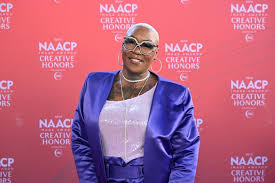
This massive digital footprint translated into tangible support and monumental recognition. Licensed stylists, barbers, and major beauty brands reached out to donate supplies and volunteer. In 2021, this wave of attention culminated in her being named the CNN Hero of the Year. On that national stage, her emotional acceptance speech crystallized her mission for millions: “It’s important you know that broken people are still very much useful… I am a mother without a son, and there are a lot of people in the street that are without a mother — and I feel like it’s a fair exchange”. The award came with a $100,000 grant to further her work. The accolades continued, including being invited by Lizzo to share the stage at the People’s Choice Awards in 2022 and, in 2025, winning the NAACP Image Award for Outstanding Social Media Personality and being named to the TIME100 Creators list. Raines used every bit of this spotlight not for self-promotion, but as a megaphone for the voices of the unhoused, forever changing how a massive audience perceived homelessness.
“I’m a woman who actually lived this life in the streets, buried a child, went through traumatic relationships, was almost homeless myself, picked myself up… I’m still very much ghetto, but I survived that. I’m able to say, ‘I get it. I understand. But you’ve got to just get through it.’” — Shirley Raines, in an interview with ABC7.
A Lasting Legacy and a Community in Mourning
The news of Shirley Raines’s death on January 27, 2026, sent shockwaves through the vast and varied communities she touched. She was found unresponsive in her home in Henderson, Nevada, at the age of 58. While the cause of death was not immediately released, her family confirmed they did not suspect foul play. The official statement from Beauty 2 The Streetz spoke of “profound sorrow” and honored her “immeasurable impact”. The outpouring of grief was a testament to her reach. Fellow activists like Melissa Acedera of Polo’s Pantry simply said, “It’s hard not to think of Shirley when I’m there”. Social media creator Alexis Nikole Nelson captured the collective sentiment, calling her “truly the best of us, love incarnate”.
Her physical passing raised an immediate and urgent question: what would happen to her mission? The answer lies in the resilient structure and philosophy she built. Beauty 2 The Streetz was never a one-woman show, even if her charisma was its engine. She had built a team and a model that empowered the very community it served. Immediately following her death, a GoFundMe campaign was established to ensure the organization’s continuity, quickly raising over $200,000. This financial support, coupled with the army of volunteers she inspired, suggests her work will endure. More importantly, her legacy is etched in a shifted cultural consciousness. Shirley Raines challenged the public to see homelessness through a lens of shared humanity rather than judgment or fear. She demonstrated that advocacy could be joyful, that service could be stylish, and that dignity is the first and most powerful gift you can give. She redefined what it means to be a “hero” in the modern age, proving it is not about having no cracks, but about letting your light shine brilliantly through them for the benefit of others.
Conclusion: The Unfading Crown of Compassion
The story of Shirley Raines is a compelling narrative of transformative empathy that resonated in the digital age. From the depths of personal tragedy in Compton to the demanding streets of Skid Row, she channeled her profound grief into a sustainable mission of dignity and beauty. Through Beauty 2 The Streetz, she demonstrated that compassion must be practical—delivered through hot meals, hygiene kits, and stunning makeovers—and that it must also be profound, recognizing the inherent worth of every individual she called “King” or “Queen.” Her strategic use of social media platforms like TikTok amplified this intimate work to a global scale, earning her prestigious honors like CNN Hero of the Year and fundamentally changing how millions perceive homelessness.
Though her life ended suddenly in January 2026, the legacy of Shirley Raines is far from over. It lives on in the ongoing work of her nonprofit, the continued donations from a mobilized public, and the permanent shift she created in advocacy philosophy. She proved that effective help is not just about providing shelter but about restoring the spirit; that brokenness can be a source of unparalleled strength; and that in a world often focused on building walls, the most revolutionary act is to build a chair, invite someone to sit, and say, “You are seen, you are beautiful, and you matter.” The crown of compassion she offered to thousands remains an unfading symbol, reminding us that everyone deserves to feel like royalty, no matter their address.
Frequently Asked Questions About Shirley Raines
What was Shirley Raines’s early life like?
Shirley Raines was born and raised in Compton, California, an upbringing that she often credited for her resilience and deep understanding of urban struggle. Her early adulthood was marked by the devastating loss of her two-year-old son, Demetrius, to accidental poisoning in 1990—a tragedy that left her heartbroken for decades but ultimately helped shape her profound empathy.
What exactly did Beauty 2 The Streetz do?
Beauty 2 The Streetz was the nonprofit founded by Shirley Raines that provided comprehensive support to people experiencing homelessness, primarily on LA’s Skid Row. Its services went far beyond just beauty, including distributing hot meals, hygiene kits, clothing, and PPE. The organization also offered haircuts, makeup, and styling services—what Raines called “dignity therapy”—and even operated as a COVID-19 testing and vaccination site during the pandemic.
How did Shirley Raines become so famous?
Raines gained fame by authentically documenting her work on TikTok and Instagram, where she amassed over 5 million followers. Her viral content, which showed the real people and stories of Skid Row, led to major recognition. This included being named the 2021 CNN Hero of the Year, sharing the stage with Lizzo at the People’s Choice Awards, and winning a 2025 NAACP Image Award.
What was Shirley Raines’s philosophy behind helping people?
Shirley Raines believed that dignity was a fundamental human right and a catalyst for change. Her philosophy was that if people could look in the mirror and see something other than homelessness, it could restore a sense of self-worth needed to tackle other challenges. She treated everyone as royalty, using terms like “King” and “Queen,” and focused on inclusion, personal connection, and empowering those she served by inviting them to work alongside her.
What is the legacy of Shirley Raines after her passing?
Following her death in January 2026, Shirley Raines’s legacy continues through the sustained operations of Beauty 2 The Streetz, supported by strong donor funding and her trained team. Her most enduring impact is the cultural shift she inspired, teaching millions to see homelessness through a lens of humanity and dignity. She proved that personal pain could be transformed into public purpose and that radical compassion can be scaled in the modern world.