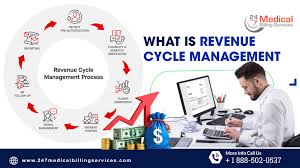
Imagine running a healthcare practice where your primary focus is entirely on patient care. The administrative chaos of billing, coding, claims, and denials fades into the background, handled seamlessly by a well-oiled machine. Meanwhile, your revenue steadily grows, your days in accounts receivable shrink, and your practice enjoys unprecedented financial stability. This isn’t a far-fetched dream; it’s the tangible outcome of a highly effective revenue cycle management strategy. In today’s complex and demanding healthcare landscape, mastering the financial heartbeat of your organization is not just an administrative task—it’s a critical component of survival and growth. This is where specialized revenue cycle management services come into play, offering the expertise, technology, and strategic focus needed to transform your practice’s financial operations from a source of stress into a driver of success.
The journey of a single dollar from a patient’s initial appointment to it finally landing in your practice’s bank account is longer and more fraught with obstacles than most people realize. It involves a intricate dance of patient scheduling, insurance verification, medical coding, claim submission, payment posting, and denial management. A single misstep at any point—a wrong code, a missed pre-authorization, an incomplete patient detail—can delay payment for weeks or cause it to vanish entirely. For many providers, navigating this cycle feels like a constant battle against declining reimbursements, rising patient financial responsibility, and ever-changing regulatory requirements. The goal of this definitive guide is to demystify revenue cycle management services, breaking down what they are, why they are indispensable for modern healthcare providers, and how to choose the right partner to fortify your practice’s financial foundation for years to come.
What Are Revenue Cycle Management Services?
At its core, revenue cycle management (RCM) is the financial process that healthcare facilities use to manage the administrative and clinical functions associated with claims processing, payment, and revenue generation. Think of it as the entire lifecycle of a patient account. It begins the moment a patient schedules an appointment and only concludes when every single dollar owed for provided services has been collected. This end-to-end process encompasses everything from insurance eligibility checks and medical billing to handling patient payments and appealing denied claims. In essence, RCM is the backbone of a healthcare provider’s financial viability, ensuring that the critical work of healing patients is accurately translated into sustainable revenue.
So, what exactly are revenue cycle management services? They are the specialized, often outsourced, solutions that manage this entire complex cycle on behalf of a healthcare provider. Instead of maintaining a large, in-house team of billers, coders, and collectors, practices can partner with an expert RCM company. These service providers bring a concentrated level of expertise, advanced technology, and proven processes to the table. They act as an extension of your practice, taking on the heavy lifting of the financial side so that your doctors, nurses, and staff can redirect their energy back to what they do best: delivering exceptional patient care. Whether it’s a small private practice, a large hospital system, or an ambulatory surgery center, these services are tailored to streamline financial operations and maximize cash flow.
The Critical Importance of Effective Revenue Cycle Management
Why does effective revenue cycle management warrant such intense focus? The answer lies in the direct connection between a healthy revenue cycle and a healthy practice. Inefficient RCM processes are like a slow leak in your financial tank. You might still be moving, but you’re constantly losing fuel, and eventually, you’ll stall. Denied claims represent one of the most significant sources of revenue loss. The American Medical Association (AMA) has found that anywhere between 1-5% of all claims are denied initially by payers. While some denials are inevitable, a high percentage points to systemic issues in your RCM process that, if left unaddressed, can cripple your practice’s profitability.
Beyond just denials, an ineffective revenue cycle leads to increased administrative costs, longer payment cycles, and frustrated staff. When your team is constantly chasing down payments, correcting errors, and dealing with irate patients confused by their bills, morale plummets and burnout increases. Furthermore, in an era of high-deductible health plans, patients are responsible for a larger portion of their medical bills than ever before. This shift makes patient-centric billing and clear communication essential. A robust revenue cycle management strategy addresses all these challenges holistically. It ensures clean claims are submitted the first time, accelerates reimbursement, enhances the patient financial experience, and provides the data-driven insights needed for strategic decision-making, ultimately securing the practice’s long-term financial health.
The Core Components of the Revenue Cycle
Understanding the revenue cycle requires breaking it down into its fundamental stages. Each stage is a critical link in the chain, and the strength of the entire process depends on the integrity of each individual link. A failure at any single point can disrupt the flow of revenue and create a cascade of administrative problems. A sophisticated revenue cycle management services provider will excel in managing each of these components with precision and expertise, creating a seamless and efficient workflow from start to finish.
The first stage, pre-service, includes all the activities that occur before a patient ever walks through the door. This involves patient registration, insurance verification, and pre-authorization or pre-certification. Accurate patient data collection—including correct spelling of names, dates of birth, and insurance ID numbers—is paramount. Verifying insurance eligibility and benefits in real-time prevents surprises later on, confirming that the patient is covered for the planned services and understanding their copay, deductible, and coinsurance responsibilities. Obtaining necessary pre-authorizations is equally crucial, as services rendered without a required authorization are almost guaranteed to be denied, leaving the provider unable to collect payment.
The mid-service and post-service components focus on the capture and translation of clinical care into billable claims. This includes the charge capture process, where all services and procedures provided are accurately documented and recorded. Then comes medical coding, a highly specialized task where trained coders translate the patient’s diagnosis and treatment into standardized alphanumeric codes (like ICD-10, CPT, and HCPCS). The accuracy of this coding is non-negotiable; it must perfectly reflect the medical record to justify the medical necessity of the service. Finally, the claim is scrubbed for errors using advanced software and then submitted electronically to the payer. After submission, the cycle moves into payment posting, denial management, and patient collections, where payments are reconciled, denied claims are appealed, and patient balances are collected.
Key Benefits of Partnering with a Professional RCM Service
Engaging a specialized provider for your revenue cycle management needs is not an expense; it’s a strategic investment that yields a significant return. The benefits extend far beyond simply getting bills out the door. They touch every aspect of your practice’s operations, from financial performance and staff satisfaction to patient loyalty and compliance. By leveraging the scale, expertise, and technology of a dedicated RCM firm, practices can achieve a level of efficiency and effectiveness that is difficult to replicate with an in-house team.
One of the most immediate and measurable benefits is a substantial increase in net collections and a reduction in days in Accounts Receivable (A/R). Professional revenue cycle management services employ teams of experts who are adept at submitting clean claims the first time, aggressively following up on unpaid claims, and systematically managing and appealing denials. They know the intricacies of various payer policies and how to navigate them successfully. This expertise directly translates into faster payments and more money collected for the services you’ve already rendered. Furthermore, their focused approach and advanced analytics can identify trends and root causes of denials, allowing for proactive process improvements that prevent future revenue leakage.
“Outsourcing RCM is no longer just about cost savings; it’s about gaining a strategic partner that provides financial clarity, operational stability, and the freedom to focus on patient care.” — Healthcare Financial Management Association (HFMA)
Another profound benefit is the operational efficiency and cost savings gained. Managing an in-house billing department is expensive, requiring salaries, benefits, training, software licenses, and hardware. By outsourcing, you convert these fixed costs into variable ones, paying a predictable percentage of your collections. This also alleviates the burden of recruiting, training, and retaining specialized billing staff in a competitive job market. Your existing clinical and administrative staff are freed from billing-related tasks, allowing them to be more productive and focused on their core responsibilities. This leads to higher job satisfaction, reduced burnout, and a better overall patient experience, as staff are not distracted by complex financial matters.
How to Choose the Right Revenue Cycle Management Partner
Selecting an revenue cycle management services provider is one of the most critical decisions a practice leader can make. This partner will have direct access to your financial data and will be a primary driver of your revenue stream. Therefore, the selection process must be thorough, deliberate, and focused on finding a true collaborator, not just a vendor. A misstep in this choice can lead to financial disaster, while the right partnership can propel your practice to new levels of success and stability.
The first step is to conduct a deep dive into the potential partner’s expertise and technology. Don’t just ask if they have experience in healthcare; inquire about their specific experience with your specialty, practice size, and the specific payers you work with. Do they have certified coders on staff? What kind of technology platform do they use? Is it a modern, cloud-based system that offers you real-time transparency into your financial performance? You need a partner that provides robust analytics and reporting dashboards, giving you clear insights into key performance indicators (KPIs) like net collection rate, denial rate, and A/R days. Ask for a demo of their reporting tools—if you can’t easily understand your own data, the partnership will be frustrating and ineffective.
Transparency, communication, and cultural fit are equally important selection criteria. The best revenue cycle management companies operate with complete transparency. They should be willing to provide references from current clients and have a clear, understandable fee structure—beware of hidden fees or long, rigid contracts. Assess their communication style and responsiveness. Who will be your main point of contact? How often will you receive reports and updates? Finally, consider the cultural fit. This organization will be an extension of your practice. Do their values align with yours? Do they demonstrate a commitment to patient satisfaction and ethical billing practices? The goal is to find a partner you can trust and build a long-term relationship with.
The Role of Technology in Modern RCM Services
It is impossible to discuss contemporary revenue cycle management services without highlighting the pivotal role of technology. The days of manual data entry, paper claims, and filing cabinets are long gone. Today, advanced software platforms powered by Artificial Intelligence (AI), Machine Learning (ML), and automation are revolutionizing the revenue cycle, driving unprecedented levels of efficiency, accuracy, and intelligence. A best-in-class RCM provider will not just use technology; they will leverage it as a core differentiator to deliver superior results for their clients.
Automation is a game-changer, particularly in the front-end of the revenue cycle. Intelligent systems can now automate tasks like insurance eligibility checks, flagging discrepancies in real-time before the patient is even seen. They can automatically verify the need for pre-authorizations and even initiate the process. Robotic Process Automation (RPA) can handle repetitive tasks like payment posting and claim status checks, freeing human staff to focus on more complex, value-added activities like resolving denials. This not only speeds up the process but also drastically reduces human error, which is a leading cause of claim rejections. By automating these routine tasks, revenue cycle management firms can ensure a higher degree of consistency and accuracy.
AI and predictive analytics represent the next frontier. AI-powered claim scrubbing tools can analyze claims before submission with a level of detail that surpasses human capability, predicting the likelihood of a denial and suggesting specific corrections. Predictive analytics can model patient payment behavior, helping practices tailor their patient collection strategies. Furthermore, these technologies provide deep, actionable business intelligence. They can analyze vast amounts of data to identify denial trends by payer or by reason, pinpoint coding inefficiencies, and provide benchmarks against industry standards. This transforms the RCM function from a reactive administrative cost center into a proactive, strategic asset that drives continuous financial improvement.
Comparative Table: In-House RCM vs. Professional RCM Services
| Feature | In-House RCM Team | Professional RCM Services |
|---|---|---|
| Expertise & Training | Requires continuous investment in training and certification for staff on changing codes and payer rules. | Provides immediate access to a dedicated team of specialists and certified coders. |
| Technology & Software | Requires capital investment in purchasing and maintaining expensive software and IT infrastructure. | Includes access to state-of-the-art, often AI-powered, platforms as part of the service. |
| Cost Structure | High fixed costs (salaries, benefits, software licenses). | Variable, predictable cost typically based on a percentage of collections. |
| Denial Management | Can be reactive; internal staff may be overwhelmed with daily tasks. | Proactive and systematic denial prevention and appeals management. |
| Scalability | Difficult to scale quickly up or down with practice volume fluctuations. | Inherently scalable to handle growth or seasonal changes seamlessly. |
| Focus | Staff may be distracted by other office duties. | 100% focused on maximizing revenue and efficiency. |
Common Challenges in Revenue Cycle Management and How Services Help
Even with the best intentions, healthcare providers face a myriad of challenges in managing their revenue cycle internally. These challenges are often systemic and can feel insurmountable without external help. Understanding these pain points is key to appreciating the value that professional revenue cycle management services bring to the table. They are specifically designed to target and overcome these common obstacles.
Claim denials and rejections are arguably the most pervasive challenge. The root causes are varied: coding errors, lack of medical necessity documentation, missing or incorrect patient information, or failure to obtain pre-authorization. For an in-house team, managing denials is a time-consuming and complex process that requires specialized knowledge to appeal successfully. Many practices simply write off denied claims because they lack the resources to fight them. A professional RCM service institutes a robust denial management protocol. They analyze denial data to identify patterns, implement front-end fixes to prevent repeat denials, and have a dedicated team of experts who specialize in crafting effective appeals, recovering revenue that would otherwise be lost forever.
The shift towards high-deductible health plans has created a significant challenge in patient collections. Patients are now direct payers, but many practices are not equipped with the tools or training to handle collections sensitively and effectively. This often leads to high bad debt and patient dissatisfaction. Furthermore, keeping up with constantly changing regulations and payer requirements is a full-time job in itself. From annual ICD-10 and CPT code updates to changing quality payment programs like MIPS, the regulatory landscape is a minefield. Revenue cycle management services address both issues head-on. They offer patient-friendly payment options, clear communication, and flexible financing plans to improve collection rates. Simultaneously, they have compliance experts and certified coders whose sole job is to stay current on all regulatory changes, ensuring your practice remains compliant and avoids costly penalties.
The Future of Revenue Cycle Management Services
The field of revenue cycle management is not static; it is dynamically evolving in response to technological innovation and shifts in the healthcare economy. The RCM services of the future will be even more integrated, intelligent, and patient-centric. Understanding these trends is crucial for providers looking to stay ahead of the curve and ensure their financial operations are future-proofed against coming changes. The leading revenue cycle management services are already investing in and adopting these next-generation capabilities.
The move towards price transparency and consumerism will continue to accelerate. Regulations now require providers to give patients easy-to-understand pricing information upfront. This shift is turning patients into informed healthcare consumers who shop for value. Future-focused RCM platforms will integrate patient estimation tools that provide accurate, real-time out-of-pocket cost estimates before service. This not only meets regulatory demands but also builds trust and improves the likelihood of collecting patient responsibility at the point of service. The entire financial communication process will become more streamlined and digital, mirroring the retail experience that patients have come to expect in other aspects of their lives.
Interoperability and data integration will also be key. The future of RCM lies in seamlessly connecting the clinical, administrative, and financial worlds. Electronic Health Records (EHRs), practice management systems, and RCM platforms will become more deeply integrated, allowing data to flow freely and securely between them. This breaks down information silos that cause errors and delays. Furthermore, the use of AI and machine learning will move from being a competitive advantage to a standard expectation. Predictive analytics will become more sophisticated, offering prescriptive insights—not just telling you what will likely happen, but also recommending the best course of action to optimize financial outcomes. This will cement the role of revenue cycle management services as an indispensable, intelligence-driven partner in healthcare delivery.
Conclusion
In the final analysis, the financial vitality of a healthcare practice is inextricably linked to the efficiency and effectiveness of its revenue cycle management. What may seem like a back-office function is, in reality, the central nervous system of your practice’s economic well-being. Ignoring it, or allowing it to operate sub-optimally, is simply not an option in today’s challenging environment. The complexities of medical coding, the burden of claim denials, the rise of patient financial responsibility, and the relentless pace of regulatory change create a perfect storm that can easily overwhelm even the most dedicated in-house team.
Partnering with a professional revenue cycle management services provider is a powerful strategic decision that allows you to weather this storm. It is a commitment to transforming a major operational headache into a source of strength and stability. By leveraging their specialized expertise, cutting-edge technology, and proven processes, you can unlock hidden revenue, reduce administrative burdens, enhance the patient experience, and secure the financial future of your practice. This partnership grants you the freedom to redirect your focus, energy, and resources to the fundamental mission of healthcare: delivering exceptional and compassionate patient care. In doing so, you ensure that your practice is not only surviving but truly thriving.
Frequently Asked Questions (FAQs)
What is the main goal of revenue cycle management services?
The primary goal of revenue cycle management services is to optimize the entire financial process of a healthcare practice, from patient registration and appointment scheduling to the final payment of a account balance. This is achieved by ensuring that claims are submitted cleanly and accurately the first time, payments are collected promptly from both insurers and patients, and any denials are managed and appealed effectively. The ultimate objective is to maximize the practice’s net revenue, minimize days in accounts receivable, and reduce administrative costs, thereby ensuring long-term financial stability and health.
How do RCM services improve the patient experience?
Modern revenue cycle management services significantly enhance the patient experience by streamlining financial interactions. They facilitate clear, upfront communication about costs through accurate patient eligibility verification and pre-service cost estimates. This eliminates surprise bills and reduces financial anxiety. Furthermore, they enable simplified billing statements and offer multiple, convenient payment channels (online portals, payment plans), making it easier for patients to understand and settle their bills. By handling the complex back-end billing processes smoothly, the clinical staff at the practice can also provide a more focused and less administrative-heavy patient encounter.
What is the typical cost structure for outsourcing RCM?
The cost structure for revenue cycle management services can vary, but the most common and aligned model is a percentage-of-collections fee. This means the RCM company charges a pre-negotiated percentage of the net revenue they successfully collect on your behalf. This model is popular because it directly aligns the service provider’s incentives with your own—they only make more money when you do. Other models can include flat-fee per claim or hourly rates, but these are less common. It’s crucial to understand all potential fees, including any setup or one-time costs, before entering an agreement.
Can small practices benefit from RCM services, or are they only for large hospitals?
Absolutely. Small and mid-sized practices often benefit the most from outsourcing revenue cycle management. While large hospitals may have the resources to maintain a dedicated, large-scale internal department, small practices typically do not. They often struggle with the cost of advanced billing software, the challenge of hiring and retaining certified coding specialists, and the distraction of managing denials and payer relationships. For a small practice, a professional RCM service provides access to enterprise-level expertise and technology at a scalable, affordable cost, which can be a game-changer for their profitability and operational focus.
How long does it take to see results after implementing a new RCM service?
The timeline for seeing tangible results can vary depending on the initial state of your practice’s revenue cycle and the implementation process of the RCM partner. However, most practices begin to see positive indicators within the first 60 to 90 days. Early signs of improvement often include a reduction in the number of rejected claims at submission, faster payment posting from insurers, and a slight decrease in the average age of accounts receivable. More significant results, such as a sustained drop in denial rates and a measurable increase in net collection rate, typically become evident within six months as the new processes and proactive denial management strategies take full effect.