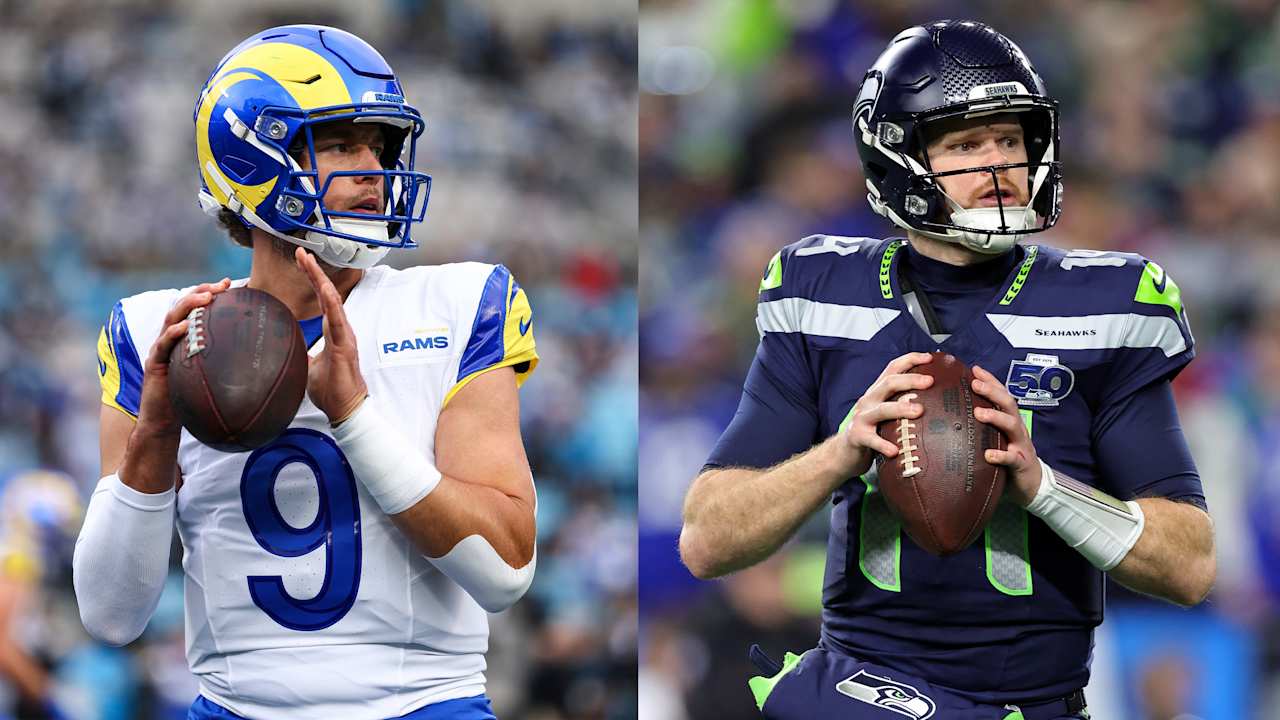
The rivalry between the Los Angeles Rams and the Seattle Seahawks is not merely a divisional game; it’s a generational conflict that has defined modern NFC West football. Born from league realignment, forged in the fire of contrasting philosophies, and punctuated by some of the most iconic moments of the 21st century NFL, the Rams vs Seahawks matchup consistently delivers high-stakes drama. With the series separated by a single game—Seattle leading 30-28 all-time—every contest feels like a pendulum swing for control of the division. This is a story of two franchises, separated by 1,100 miles of Interstate 5 but bound by a shared pursuit of supremacy, where Hall of Fame talents, legendary coaches, and improbable plays have all left their indelible mark.
The rivalry’s intensity comes from its perfect competitive balance. Each team has hoisted the Lombardi Trophy since 2010, and their battles often serve as a direct pipeline to the playoffs. From the defensive slugfests of the Legion of Boom era to the offensive fireworks of the Sean McVay and Matthew Stafford-led Rams, the clash of styles creates a captivating chess match. It’s a rivalry where a fake fair catch can decide a game, where a -7-yard offensive performance is a historic footnote, and where the transfer of a Super Bowl MVP like Cooper Kupp from one side to the other adds delicious new layers of intrigue. At its core, when the Rams and Seahawks meet, more than just a win is on the line; it’s about validation, legacy, and the very identity of the NFC West.
The Roots of a Modern Feud: How Geography and Realignment Created a Clash
The Rams vs Seahawks rivalry is a product of the modern NFL landscape, a feud engineered by league structure and later supercharged by consistent excellence. While their first game was a Halloween blowout in 1976—a 45-6 Rams victory over the expansion Seahawks—the true animosity didn’t ignite until decades later. For much of the early history, with the Seahawks in the AFC West, the teams were little more than occasional interconference opponents. The seismic shift occurred in 2002 with the NFL’s realignment to 32 teams, which moved the Seahawks into the NFC West alongside the Rams. This simple administrative decision guaranteed two meetings per season, transforming sporadic contests into a sustained, high-stakes battle for divisional real estate.
Geography plays a subtle but powerful role. As the two major West Coast NFL cities connected by the I-5 corridor, a natural, if distant, regional tension exists. However, the rivalry is steeped in an even deeper historical irony that Seattle fans have never forgotten. In the mid-1990s, as both franchises faced stadium issues, Seahawks owner Ken Behring attempted to relocate the team to Los Angeles. In a stunning move, he moved team operations to the Rams’ old facility in Anaheim and explored playing in the Rose Bowl. The specter of the “Los Angeles Seahawks” was only extinguished when the league intervened, leading to the team’s sale to Paul Allen. This brush with losing their team to their rival’s city created a permanent undercurrent of resentment in Seattle, adding a layer of territorial defiance to every matchup. The stage was set not just for competition, but for a deeply personal feud over identity and place.
A Tapestry of Titans: The Coaches and Quarterbacks Who Defined the Rivalry
The soul of the Rams vs Seahawks rivalry for over a decade has been personified by the sideline duel between two coaching savants: Pete Carroll and Sean McVay. Separated by 35 years in age, they represented contrasting yet supremely effective football philosophies. Carroll, with his energetic “always compete” mantra, built the Seahawks in the image of the legendary “Legion of Boom” defense—a physically imposing, loud, and relentless unit. McVay, the offensive wunderkind, countered with a revolutionary scheme that stressed motion, misdirection, and exploiting defensive matchups with surgical precision. For seven seasons (2017-2023), their chess matches were a highlight of the NFL calendar, a battle of wills between defensive identity and offensive innovation. Though Carroll has since moved on, his blueprint remains deeply embedded in Seattle’s culture.
On the field, the quarterback showdown has been equally compelling. The modern era was long defined by Russell Wilson’s magic against the Rams’ ferocious pass rush, a dynamic that produced countless heart-stopping finishes. That torch has since passed to Matthew Stafford, whose veteran poise and cannon arm have given the Rams a formidable counterpunch. The significance of this rivalry to a quarterback’s legacy is profound. Both Wilson and Stafford won their first—and to date, only—Super Bowl rings while leading their respective teams in this feud, cementing their places in franchise lore. The following table highlights how these central figures have shaped the rivalry’s narrative across two distinct eras:
Eras of the Rams vs Seahawks Rivalry
| Era | Defining Seahawks Figure | Defining Rams Figure | Character of Play | Notable Outcome |
|---|---|---|---|---|
| The Carroll-Wilson Era (2012-2021) | Pete Carroll (HC), Russell Wilson (QB) | Jeff Fisher / Sean McVay (HC), Aaron Donald (DT) | Defensive domination, low-scoring grinds, Wilson’s 4th-quarter heroics | Seahawks’ “Legion of Boom” wins Super Bowl XLVIII |
| The McVay-Stafford Era (2021-Present) | Mike Macdonald (HC), Sam Darnold (QB) | Sean McVay (HC), Matthew Stafford (QB) | High-octane offensive clashes, strategic shootouts | Rams’ Stafford & Kupp connection wins Super Bowl LVI |
| The Current Chapter (2025-Present) | Mike Macdonald (HC), Sam Darnold (QB) | Sean McVay (HC), Matthew Stafford (QB) | Balanced attack vs. defensive resilience, new coaching schemes | Seahawks’ win 2025 NFC Championship, advance to Super Bowl |
Adding a fascinating new twist to the plot is the 2025 offseason move of Cooper Kupp from the Rams to the Seahawks. Kupp, who achieved the rare receiving Triple Crown and Super Bowl MVP honors with Stafford in Los Angeles, switching sides adds a complex layer of personal and strategic intrigue to an already rich storyline. It’s the kind of player movement that turns a rivalry into a true saga.
Iconic Games and Unforgettable Plays: Where Legends Are Forged
The history of the Rams vs Seahawks is written in a series of unforgettable games, each contributing a unique chapter to the legend. These contests are more than just entries in the win-loss column; they are cultural touchstones that define seasons and careers.
One of the rivalry’s earliest and most bizarre entries came in 1979, when the Rams defense delivered what is arguably the most dominant performance in NFL history. They held the Seahawks to a staggering -7 total net yards, a statistical absurdity that has stood the test of time as a testament to defensive prowess. Decades later, the rivalry would produce one of its most ingenious moments. In 2014, the Rams executed a legendary special teams trick play against Seattle. Returner Tavon Austin pretended to call for a fair catch on one side of the field, drawing the entire Seahawks coverage unit. Meanwhile, the ball was punted to the opposite side, where Stedman Bailey caught it and sprinted 90 yards for an uncontested touchdown. This play, a masterpiece of deception, exemplifies the creative lengths teams go to in order to gain an edge in this series.Rams vs Seahawks
The stakes are always highest in the playoffs, and this rivalry has delivered postseason classics. In the 2004 NFC Wild Card game, the Rams completed a rare three-game seasonal sweep of the Seahawks with a tense 27-20 victory. More recently, the 2020 Wild Card round saw the Rams, led by a Jared Goff playing with a surgically repaired thumb, go into Seattle and snap the Seahawks’ impressive 10-game home playoff winning streak with a 30-20 win, fueled by a relentless pass rush that sacked Russell Wilson five times. The most dramatic recent chapter was written in the 2025 NFC Championship game. In a back-and-forth thriller for a trip to Super Bowl 60, the Seahawks mounted a stunning 16-point fourth-quarter comeback. The rally was punctuated by a surreal, reviewed lateral play for a two-point conversion that forced overtime, where Seattle ultimately prevailed 31-27. As one analysis noted of the championship clash, “Whichever teams win the NFC Championship on Sunday could still be feeling it next season,” highlighting the long-term psychological impact these battles can have.
https://headlinenest.com/david-blough-wife/
By The Numbers: The Statistical Story of a Perfectly Balanced Rivalry
The essence of the Rams vs Seahawks rivalry is captured in its breathtakingly close statistics. This isn’t a lopsided affair; it’s a half-century-long tug-of-war where neither side has been able to maintain a firm grip for long. The all-time series stands at 30 wins for Seattle, 28 for Los Angeles. In the regular season alone, Seattle holds a similarly narrow 29-26 edge. This near-perfect parity over 57 total meetings is a statistical marvel in the NFL and speaks to the consistently competitive nature of the matchup.
A look at the last decade (2016-2025) reveals the same pattern of closely contested games. During this period, which encompasses the peak of the Carroll-McVay and Stafford-Wilson battles, the Seahawks hold a 12-8 advantage. The average score in these games is separated by mere fractions of a point, with both teams averaging nearly identical points per game (21.5 for Seattle, 21.4 for LA) over the entire history of the series. The rivalry has seen dramatic swings, however. The Seahawks once enjoyed a dominant 10-game winning streak from 2005 to 2009, while the Rams’ longest streak sits at four games. In the playoffs, the Rams have held the upper hand, winning two of the three postseason meetings, including both Wild Card games in 2004 and 2020. The 2025 NFC Championship, however, gave Seattle its first playoff victory in the series, a win that will undoubtedly fuel the next chapter.
The Keys to Victory: Strategy and Matchups in the Modern Rivalry
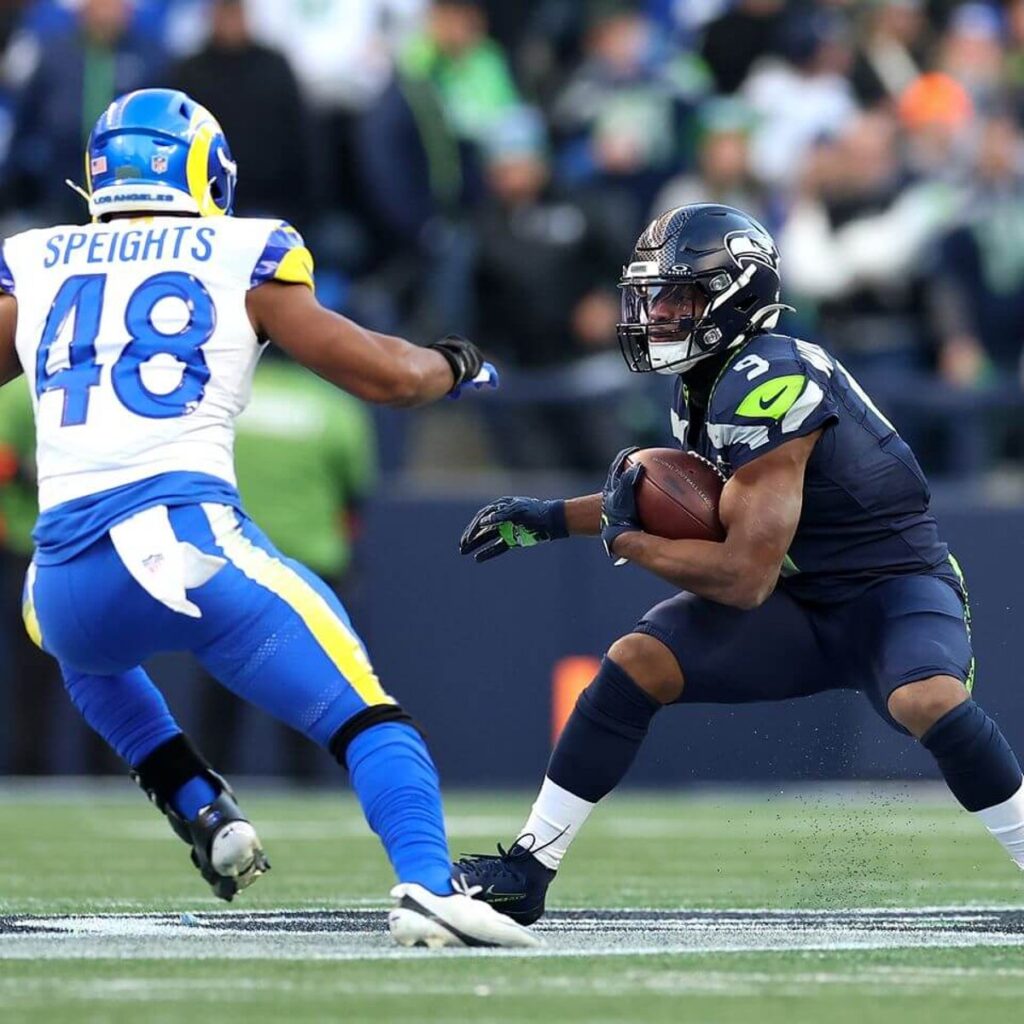
As the Rams and Seahawks evolve, the strategic battles within the game become increasingly complex. For the Rams, success often hinges on the performance of Matthew Stafford and the health of his supporting cast. With star receiver Davante Adams showing signs of decline—catching only 25 of 55 targets in a recent seven-game stretch—the emergence of tight end Colby Parkinson (375 yards and 7 TDs in the last nine games of 2025) has become crucial. Protecting Stafford is paramount, making backup right tackle Warren McClendon Jr. a key figure if starter Rob Havenstein is unavailable. Defensively, the Rams must shore up tackling issues that plagued them late in the 2025 season, particularly from linebacker Nate Landman, and find a way to contain explosive Seahawks running back Kenneth Walker III.
The Seahawks’ formula under coach Mike Macdonald has emphasized a balanced, possession-oriented attack and a stifling defense. The key is not asking quarterback Sam Darnold to win the game single-handedly but to manage it efficiently. In the three games leading to the 2025 NFC Championship, Darnold attempted just 70 passes, focusing on short, high-percentage throws to control the clock. The real offensive engine is Kenneth Walker. With his backup Zach Charbonnet injured, Walker is primed for a heavy workload, especially against a Rams run defense that ranked 31st in stopping runs between the tackles during the 2025 regular season. As one pre-game analysis stated, “if Seattle can run the ball straight down L.A.’s defensive throats, it’s going to be a long night for the Rams”. Defensively, Seattle’s task is to pressure Stafford and contain Puka Nacua, while cornerbacks like Tre Brown must handle the Rams’ receiving threats.
The chess match extends to special teams, where the Rams’ punter Ethan Evans has proven adept at flipping field position, a critical factor in what are often one-possession games. Every phase of the game is magnified, every individual matchup scrutinized, because in the Rams vs Seahawks rivalry, the margin for error is virtually nonexistent.
Beyond the Gridiron: A Cultural Clash of Fanbases and Cities
The passion of the Rams vs Seahawks rivalry extends far beyond the white lines of the field, deeply embedded in the cultures of the two fanbases and their cities. Los Angeles, a global metropolis of glitz and glamour, meets Seattle, the proud, gritty, rain-soaked city of the Pacific Northwest. This cultural dichotomy plays out in the stands and in the team identities. The Rams’ return to LA in 2016 brought a Hollywood sheen to the franchise, attracting a celebrity-laden sideline and embracing a more showy persona. In contrast, the Seahawks’ “12th Man” fanbase at Lumen Field is renowned as one of the loudest, most intimidating, and most unified home-field advantages in all of sports—a blue-collar roar that embodies the city’s resilient spirit.
This cultural clash fuels a fierce and sometimes humorous animosity. Seahawks fans have never forgotten the 1990s threat of becoming the “LA Seahawks,” viewing every victory over the Rams as a defense of their city’s identity. Rams fans, meanwhile, often see the Seahawks’ success as a temporary challenge to the natural order of a major market franchise. The intensity is palpable in the stands and online, where every game sparks passionate debate. The rivalry even influenced uniform design, with the Seahawks debuting a special “Rivalries” uniform specifically for a 2025 matchup against the Rams. This deep-seated cultural component ensures that the rivalry is not just a sporting event, but a clash of regional pride, making each win sweeter and each loss more painful for the communities involved.
The Future of the Feud: New Chapters in an Enduring Saga
As the NFL moves forward, the Rams vs Seahawks rivalry is poised for another fascinating evolution. The departure of iconic figures like Pete Carroll and the retirement of foundational players like Aaron Donald marks the end of a defining era. However, the core elements for sustained conflict remain firmly in place. Sean McVay continues to pilot the Rams with Matthew Stafford directing an explosive offense, while the Seahawks have transitioned under Mike Macdonald, who maintains Carroll’s defensive principles while implementing his own vision.
The rivalry’s future will be shaped by a new generation of stars. For Seattle, the health and dominance of running back Kenneth Walker III is a primary offensive concern, while the development of receiver Jaxon Smith-Njigba adds a new weapon. The Rams will look to build around the spectacular Puka Nacua for years to come. The quarterback dynamic has also shifted, with Sam Darnold now leading Seattle against Stafford’s veteran mastery. Furthermore, the extraordinary subplot of Cooper Kupp playing for the Seahawks after his historic run with the Rams adds an immediate and personal tension that will color their next several meetings. With both franchises committed to winning and residing in the brutal NFC West, the biannual clash is guaranteed to carry playoff implications. The 2025 NFC Championship game, won by Seattle in dramatic fashion, wasn’t an ending; it was the opening of a new volume. The geographical distance, the competitive balance, and the shared history of triumph ensure that the Rams vs Seahawks will continue to be one of the NFL’s most compelling and must-watch rivalries for years to come.
Conclusion: More Than a Game, A Defining NFL Tradition
The Rams vs Seahawks rivalry transcends the typical divisional matchup. It is a multifaceted saga born from league realignment, fueled by geographical and cultural contrasts, and elevated by generations of elite talent and coaching genius. From the defensive mastery of the Legion of Boom to the offensive fireworks of the McVay-Stafford connection, this rivalry has mirrored the evolution of the NFL itself. Its hallmark is an almost supernatural balance—a one-game difference over five decades—which guarantees that every meeting is fraught with tension and consequence. It’s a rivalry where legends like Shaun Alexander, Todd Gurley, Russell Wilson, and Matthew Stafford have crafted their legacies, and where moments of sheer brilliance, like the fake fair catch or the -7-yard game, become permanent NFL lore. As new coaches, new players, and new strategies emerge, the foundational elements of pride, competition, and a direct path to the Super Bowl remain constant. For fans of hard-nosed, strategic, and emotionally charged football, the clash between the Los Angeles Rams and Seattle Seahawks is not just a game on the schedule; it is an appointment, a tradition, and the very heartbeat of the NFC West.
Frequently Asked Questions About the Rams vs Seahawks Rivalry
Who currently has the better record in the Rams vs Seahawks rivalry?
The Seattle Seahawks hold a narrow lead in the all-time series. As of 2026, Seattle leads 30 wins to 28 wins against the Los Angeles Rams. This includes both regular season and playoff games. In the regular season alone, the Seahawks lead 29-26. The series is famously close, with the cumulative points scored over nearly 60 games being nearly identical as well.
What was the most one-sided game in the history of the rivalry?
The most statistically dominant performance was the Rams’ 24-0 victory on November 4, 1979. In that game, the Rams’ defense held the Seattle Seahawks to a record-setting -7 total net yards of offense, a figure that remains one of the most extraordinary defensive accomplishments in NFL history.
How did the rivalry between the Rams and Seahawks truly begin?
While the teams first played in 1976, the intense, twice-a-year rivalry began in 2002 when the NFL realigned and moved the Seattle Seahawks from the AFC West to the NFC West. This forced them to play the Rams (who were in St. Louis at the time) twice every season, instantly creating a battle for divisional supremacy. Historical animosity was also fueled in the 1990s when Seahawks owner Ken Behring tried to move the team to Los Angeles, even using the Rams’ old facilities.
Which team has had more success in playoff games between the Rams and Seahawks?
The Los Angeles Rams have historically had the edge in the postseason. The teams have met three times in the playoffs, with the Rams winning two of those matchups. They won NFC Wild Card games in the 2004 and 2020 seasons. However, the Seattle Seahawks secured a monumental playoff victory in the most recent meeting, winning the 2025 NFC Championship game 31-27 to advance to Super Bowl 60.Rams vs Seahawks
What makes the Rams vs Seahawks matchup so consistently competitive and compelling?
Several factors converge to create a perfect rivalry. First, the consistent competitiveness of both franchises—each has won a Super Bowl since 2010 and regularly fights for the NFC West title. Second, the clash of coaching and playing philosophies, from defensive-minded Pete Carroll vs. offensive guru Sean McVay, to the contrasting styles of quarterbacks like Russell Wilson and Matthew Stafford. Finally, the high stakes, where games often decide division crowns or playoff seeding, and the presence of future Hall of Fame players ensure every matchup has major implications.