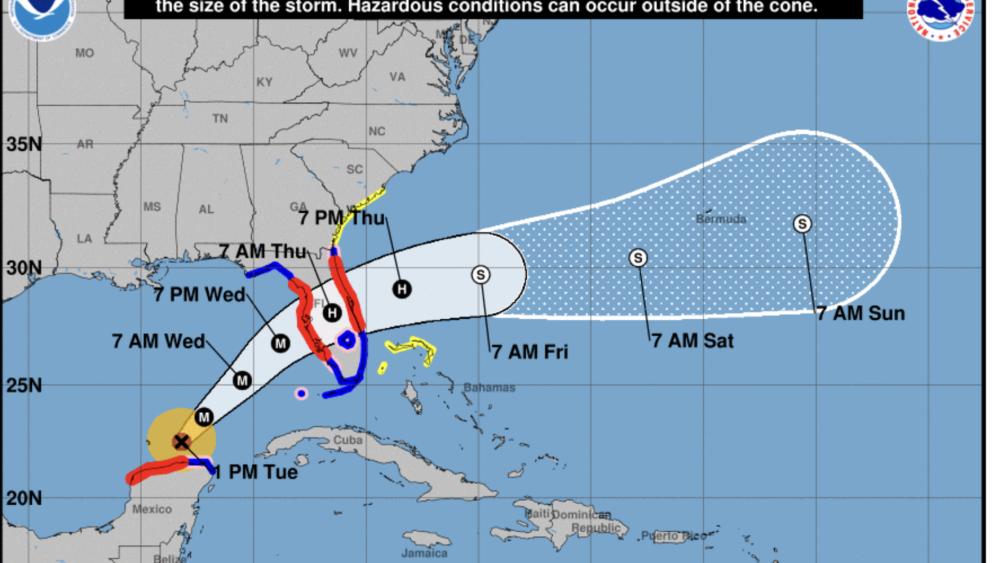
When a storm like Hurricane Milton forms and begins its ominous journey across the ocean, the single most important tool for anyone in its potential path is a reliable Milton hurricane tracker. This isn’t just about watching a line on a map; it’s about understanding the complex and critical data that informs life-saving decisions. A Milton hurricane tracker provides a real-time window into the storm’s soul—its current location, its projected path, its terrifying intensity, and the myriad of potential impacts it could unleash upon coastlines and communities. In an age of information overload, knowing how to use a Milton hurricane tracker effectively can mean the difference between panic and preparedness, between confusion and clarity. This guide is designed to be your definitive resource, transforming you from a passive observer into an informed individual capable of interpreting the storm’s signals and taking appropriate action.
The journey of a hurricane is a story written in atmospheric pressure, wind speeds, and ocean temperatures. A Milton hurricane trackerhttps://groundtap.com/ is the tool that translates this complex scientific narrative into a format we can all understand and act upon. But not all tracking resources are created equal, and understanding the nuances behind the data is crucial. This article will delve deep into the world of hurricane tracking, specifically focused on Hurricane Milton. We will explore the official sources like the National Hurricane Center, break down the various forecast models that predict Milton’s future, and explain the key terms you’ll encounter. We’ll also provide a practical guide on how to use a Milton hurricane tracker to monitor the storm’s progression, understand the cone of uncertainty, and prepare for the specific hazards it may bring, from storm surge to high winds. Our goal is to empower you with knowledge, ensuring that when you check a Milton hurricane tracker, you are fully equipped to understand what you’re seeing and what you should be doing.
The Anatomy of a Storm: Understanding Hurricane Milton’s Data
Before you can effectively use a Milton hurricane tracker, you need to understand the basic components that define the storm. Every hurricane is measured by a set of key metrics that describe its power and structure. The first and most critical is its location, given as a set of coordinates that place the storm’s eye on the map. This is the foundational data point for any Milton hurricane tracker. Closely tied to location is the storm’s forward speed and direction, which tells you how quickly it is moving and its general heading. A storm that slows down can be particularly dangerous, as it prolongs the duration of its impact over a given area, leading to catastrophic rainfall and flooding.https://headlinenest.com/milton-hurricane-tracker/
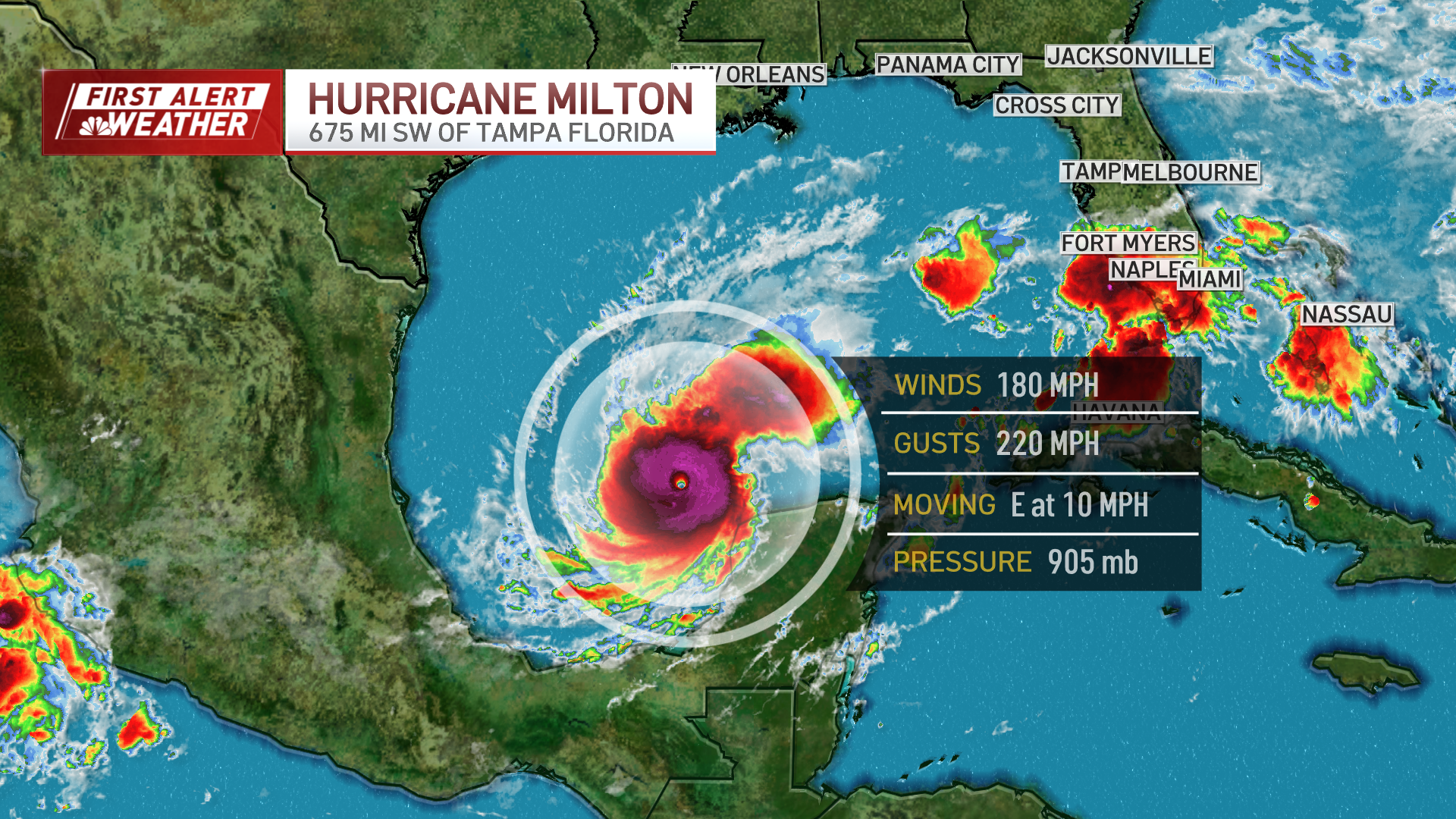
The next set of data points describes the storm’s intensity. Maximum sustained winds are the highest average wind speed measured within the hurricane. This number is what categorizes the storm on the Saffir-Simpson Hurricane Wind Scale, from a Category 1 (74-95 mph) to a catastrophic Category 5 (157 mph or higher). However, wind speed alone doesn’t tell the whole story. Central barometric pressure is a crucial indicator of a hurricane’s strength; lower pressure generally signifies a more powerful and intense storm. A Milton hurricane tracker will also provide the extent of hurricane-force and tropical-storm-force winds, showing how far out from the center these dangerous conditions extend. This wind field determines the size of the area that will experience the storm’s direct impacts, which can be vast even if the eye itself remains offshore.
Official Sources: The Gold Standard for Your Milton Hurricane Tracker
When a storm like Milton is active, your primary and most trusted source of information must always be the National Hurricane Center (NHC), a division of the National Weather Service. The NHC is the official U.S. government agency responsible for tracking and forecasting tropical cyclones in the Atlantic and Eastern Pacific basins. Their website is the definitive Milton hurricane tracker, providing the most accurate and authoritative forecasts available. The skilled meteorologists at the NHC synthesize data from satellites, hurricane hunter aircraft, buoys, and radar to create their forecasts. They issue comprehensive advisories every six hours, with more frequent updates as the storm approaches land.
These NHC advisories are the backbone of all reliable tracking. They include the official forecast track, known as the “cone of uncertainty,” a detailed discussion of the storm’s current state and forecast reasoning, and a breakdown of associated hazards. Relying on the NHC for your primary Milton hurricane tracker ensures you are getting vetted, scientific information free from hype or sensationalism. Other crucial official sources include your local National Weather Service Forecast Office, which provides hyper-localized warnings and impacts for your specific county or region, and your state and local emergency management agencies. These organizations translate the NHC’s broader forecast into actionable directives for your community, such as evacuation orders and shelter information. Bookmarking these official sites is the first and most important step in your hurricane preparedness plan.
Decoding the Forecast: Models, Spaghetti Plots, and the Cone of Uncertainty
One of the most common sights on a sophisticated Milton hurricane tracker is the “spaghetti plot.” This is a collection of lines from different computer forecast models, each showing a slightly different potential path for the hurricane’s center. It’s called a spaghetti plot because the numerous lines can look like a tangled pile of noodles on the map. These models are complex mathematical simulations of the atmosphere, and they don’t always agree. Some models are better at handling certain aspects of a storm’s behavior than others. The key for anyone using a Milton hurricane tracker is to understand that no single model should be trusted exclusively. The NHC forecast track is created by human forecasters who interpret and weight the various models based on their known biases and performance.
The most important visual tool on any Milton hurricane tracker is the “cone of uncertainty.” This cone, issued by the NHC, represents the probable path of the storm’s center. It is vital to understand what this cone does and does not mean. The cone represents the historical margin of error in the NHC’s track forecasts over the previous five years. The storm’s center is expected to remain within the cone about two-thirds of the time. However, the cone says nothing about the storm’s impacts. Dangerous winds, storm surge, and torrential rain can extend hundreds of miles from the center, well outside the boundaries of the cone. A common and dangerous mistake is to believe you are safe simply because you live outside the cone. A reliable Milton hurricane tracker should always be used in conjunction with local warnings that detail the specific hazards you face, regardless of the cone’s outline.
Real-Time Tracking Tools: From Satellite to Hurricane Hunters
Modern hurricane tracking is a technological marvel that relies on a fleet of tools to gather real-time data. The most familiar of these is satellite imagery, which provides a continuous, bird’s-eye view of the storm’s structure, size, and organization. Satellite loops on a Milton hurricane tracker can show you the evolution of the eye, the symmetry of the rainbands, and the overall health of the hurricane. This imagery is crucial for identifying trends, such as whether the storm is intensifying or weakening. However, satellites can only see the top of the storm; to understand what is happening at the surface and within the hurricane, we need to look deeper.
This is where the heroic “Hurricane Hunters” come in. Operated by the U.S. Air Force Reserve and NOAA, these crews fly specially equipped aircraft directly into the heart of the storm. They deploy instruments called dropsondes, which fall through the storm and radio back data on pressure, humidity, temperature, and wind speed from the surface all the way up. This data is fed directly into the forecast models, dramatically improving their accuracy. A sophisticated Milton hurricane tracker will often incorporate this real-time data, showing the latest dropsonde readings and reconnaissance fixes. This information provides a ground-truth that satellites cannot, giving forecasters an unparalleled look inside the storm and allowing for more precise predictions on its intensity and track.
Hazards Beyond the Wind: What Your Milton Hurricane Tracker Doesn’t Show in a Single Line
While the track of the storm’s eye is the focal point of any Milton hurricane tracker, it is a grave error to focus on it exclusively. Hurricanes are complex systems that produce multiple, life-threatening hazards, and the most dangerous one is often not the wind. Storm surge is the abnormal rise in seawater level caused by a hurricane’s winds pushing water onshore. It is historically the deadliest and most destructive aspect of a hurricane, capable of causing catastrophic flooding in coastal and low-lying areas. A Milton hurricane tracker should always be used alongside the NHC’s Storm Surge Watch/Warning graphic, which shows areas at risk of life-threatening inundation.
Inland flooding from torrential rainfall is another major killer. A hurricane can dump feet of rain, causing rivers and streams to overflow their banks well after the storm’s strongest winds have passed. This hazard can affect communities hundreds of miles inland. Furthermore, tornadoes are a frequent and dangerous spin-off of landfalling hurricanes, often forming quickly in the storm’s outer rainbands. A comprehensive approach to using a Milton hurricane tracker involves looking at the bigger picture: checking the local forecast for expected rainfall totals, staying tuned for tornado watches, and, most importantly, heeding evacuation orders for storm surge zones. The path of the eye is just one piece of a very dangerous puzzle.
Preparing with Purpose: From Tracker to Action Plan
A Milton hurricane tracker is not a passive entertainment device; it is a call to action. The information it provides should directly inform your preparedness timeline. When a storm like Milton is still days away from potential impact, your focus should be on finalizing your plans. This is the time to review your evacuation zone, confirm your evacuation route, and ensure your vehicle is fueled and ready. Use the information from the Milton hurricane tracker to make a informed decision about whether you will evacuate or shelter in place. If you are in a mandatory evacuation zone or a mobile home, your plan should always be to evacuate, regardless of the storm’s exact category.
As the storm draws closer, your actions should become more concrete. This is when you execute your plan. If evacuating, leave early to avoid traffic, flooding, and the loss of gasoline availability. If sheltering in place, complete your final preparations: secure your home by boarding up windows or installing storm shutters, bring in all outdoor furniture and objects that could become projectiles, and charge all electronic devices. Your Milton hurricane tracker now becomes a tool for timing. Pay close attention to the expected arrival time of tropical-storm-force winds, as this is when outdoor preparedness activities become dangerous and should be complete. The final checks on your emergency kit—including water, non-perishable food, medications, and important documents—should be done during this period. The table below outlines a sample preparedness timeline based on the storm’s projected arrival.
| Time Before Arrival of Tropical-Storm-Force Winds | Recommended Actions |
|---|---|
| 120-72 Hours (5-3 Days) | Monitor the Milton hurricane tracker closely. Finalize your evacuation plan. Check your emergency kit and gather supplies. Fuel your vehicle. |
| 72-48 Hours (3-2 Days) | Execute your plan. If evacuating, leave. If staying, begin securing your property (bring in outdoor items). Communicate your plan to family. |
| 48-36 Hours (2-1.5 Days) | Complete all storm preparations. Board up windows. Expect long lines and shortages at stores. Follow instructions from local officials. |
| 36-0 Hours (1.5 Days – Landfall) | Stay indoors. Your preparedness activities should be complete. Rely on your emergency kit. Stay tuned to official weather alerts and warnings. |
The Aftermath: Using Information for Recovery and Safety
The role of a Milton hurricane tracker does not end once the storm’s eye passes or it is downgraded to a tropical depression. The post-storm environment is often just as dangerous as the storm itself. Your Milton hurricane tracker will likely be replaced by local news and official government sources providing information on damage assessments, road closures, flooding, and the restoration of power and water. It is critical to continue monitoring these sources for updates. Avoid traveling until authorities have declared it safe to do so. Roads may be blocked by debris or downed power lines, and floodwaters can hide numerous dangers, including sharp objects and contaminants.
In the days and weeks that follow, the information you gathered from your Milton hurricane tracker can also be useful for insurance claims and recovery efforts. Understanding the storm’s official track and intensity can help in discussions with your insurance company. Furthermore, staying informed about community resources, distribution points for food and water, and disaster assistance programs is part of the recovery process. A well-informed individual is not only better prepared for the storm but is also better equipped to navigate the challenges of the recovery phase. The discipline of tracking the storm from formation to dissipation fosters a mindset of resilience and proactive management of a crisis. As one experienced emergency manager famously stated:
“The forecast track is a forecast, but preparedness is a choice. The most sophisticated hurricane tracker in the world is useless if the person watching it hasn’t taken the steps to protect their family. Use the information to make a plan, and have the courage to act on it.”
Frequently Asked Questions
What is the most accurate Milton hurricane tracker?
The most accurate and authoritative Milton hurricane tracker is the one provided by the National Hurricane Center (NHC) at hurricanes.gov. Their forecasts are based on a comprehensive analysis of data from satellites, hurricane hunter aircraft, and sophisticated computer models, synthesized by expert forecasters.
How often is the Milton hurricane tracker updated?
The National Hurricane Center issues full official advisories for systems like Hurricane Milton every six hours at 5 AM/PM and 11 AM/PM EDT. As the storm approaches landfall, these updates can become more frequent, occurring every three hours or even hourly, providing a constantly refreshed Milton hurricane tracker.
What is the difference between a Hurricane Watch and a Hurricane Warning?
A Hurricane Watch means that hurricane conditions (sustained winds of 74 mph or higher) are possible within the specified area, typically issued 48 hours before the anticipated first occurrence of tropical-storm-force winds. A Hurricane Warning means that hurricane conditions are expected somewhere within the specified area, typically issued 36 hours in advance. You should complete all preparations and evacuate if ordered upon the issuance of a warning.
Why should I not focus solely on the storm’s category?
The Saffir-Simpson scale only categorizes a hurricane based on its maximum sustained winds. It does not account for other deadly hazards like storm surge, rainfall flooding, and tornadoes. A lower-category storm can be incredibly destructive and deadly due to these other factors, which is why a comprehensive Milton hurricane tracker that shows all hazards is essential.
Where can I find information on local impacts and evacuations for Hurricane Milton?
While the National Hurricane Center provides the broad forecast, your best source for local impacts, evacuation orders, and shelter information is your local National Weather Service office and your county or city emergency management agency. Their social media feeds and websites provide hyper-local guidance that complements the national Milton hurricane tracker.
Conclusion
In the face of a powerful and unpredictable force like Hurricane Milton, knowledge is not just power—it is protection. A reliable Milton hurricane tracker is your window into the storm, providing the critical data needed to make informed decisions for the safety of yourself, your family, and your property. However, this tool’s true value is realized only when coupled with understanding and action. By learning to interpret the cone of uncertainty, respecting all the hazards a hurricane presents, and adhering to a clear preparedness timeline, you transform raw data into a life-saving strategy. Remember, the goal of tracking Hurricane Milton is not to witness a spectacle but to navigate a threat. Trust the official sources, prepare early, and have the wisdom to heed the warnings of local officials. Let your use of the Milton hurricane tracker be a disciplined, purposeful process that guides you safely through the storm and into recovery.