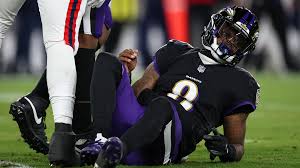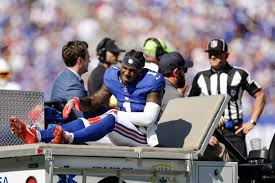
The collective gasp at MetLife Stadium on September 28th, 2025, was almost audible. New York Giants’ star wide receiver Malik Nabers, fresh off a record-breaking rookie campaign, went down in a heap during a Week 4 victory over the Los Angeles Chargers. The non-contact nature of the play and the immediate way he clutched his right knee told the story before any official announcement was made. The diagnosis—a torn ACL and meniscus—confirmed the worst fears of Giants fans and fantasy football managers alike. This wasn’t just a loss for a single game; it was the premature end of a promising sophomore season for a player many believed was on the cusp of NFL stardom. The Malik Nabers injury suddenly shifted the trajectory of the Giants’ entire 2025 season and cast a shadow of uncertainty over one of their brightest young talents.
In the moments after the injury, as Nabers was carted off the field with a towel draped over his head, the focus was on the immediate devastation. The Giants had just secured their first win of the season, spearheaded by rookie quarterback Jaxson Dart in his first NFL start, but the victory felt hollow. The long road ahead, however, began not with surgery, but with patience. In a deliberate process common for such injuries, Nabers and the Giants’ medical team embarked on a month of “pre-hab”—a critical period of rest, strengthening, and reducing swelling around the knee to ensure the best possible outcome for the surgery and subsequent rehabilitation. This article will walk you through every step of that road: from the devastating moment on the turf, through the successful surgery and grueling rehab, to the optimistic outlook for a triumphant return in 2026. We will explore not just the medical journey, but the personal resilience Nabers has shown, his humorous public response, and what his eventual comeback means for the future of the New York Giants’ offense.
The Devastating Play and Initial Diagnosis
The play itself was a cruel twist of football fate. In the midst of a game where the Giants’ new era with Jaxson Dart was taking its first steps, malik nabers injury ran a deep route along the right sideline. As he leaped for a pass, his foot planted and his knee buckled in a way it was never meant to. He landed awkwardly, immediately reaching for his right leg while still on the ground. There was no violent collision, no tangled pile of defenders—just the simple, brutal mechanics of an athlete’s body failing at full speed. Teammates and coaches knew instantly it was serious; the cart was summoned, and Nabers left the field, his head covered, marking a stark visual contrast to the electric energy he had brought to the field just weeks prior.
Official scans soon confirmed the initial fears: Malik Nabers had suffered a torn anterior cruciate ligament (ACL) in his right knee, an injury often accompanied by damage to other structures. In his case, it was a combined injury involving both the ACL and the meniscus. This diagnosis carries a standard recovery timeline of approximately nine months, effectively ending a player’s season the moment it occurs. For Nabers, the timing was particularly brutal. He was in the midst of building upon a spectacular rookie year where he set a franchise record with 109 receptions. Through just four games in 2025, he was already on a blistering pace with 18 catches for 271 yards and two touchdowns, proving his first year was no fluke and that he was ready to establish himself as one of the league’s premier young receivers. The Malik Nabers injury didn’t just rob the Giants of their top weapon; it halted the ascent of a potential superstar.
The Impact on a Young Giants Offense
The ripple effect of losing Nabers was immediate and profound. Rookie quarterback Jaxson Dart, who had just been handed the keys to the offense, saw his primary target vanish. “It stings not to have him out there,” Dart would later say, acknowledging Nabers as a “safety” target who could “beat anybody in the world”. The Giants’ offense, which had shown flashes of promise, was suddenly stripped of its most dynamic element. The loss was compounded weeks later when rookie running back Cam Skattebo, another key piece of the young offensive core, also suffered a season-ending injury. The table below illustrates the production vacuum created by these twin injuries:
| Player | Injury | Week Injured | 2025 Production Before Injury | Team Record After Injury |
|---|---|---|---|---|
| Malik Nabers | Torn ACL & Meniscus | Week 4 | 18 rec, 271 yds, 2 TD | 2-11, 9-game losing streak |
| Cam Skattebo | Dislocated Ankle, Fractured Fibula | Week 8 | 9 total TDs (combined with Nabers) | Offense struggled with consistency |
As the season wore on, the absence of Nabers became a defining theme. The Giants, who had been competitive in close games, spiraled into a nine-game losing streak, highlighting how crucial his playmaking ability was to their overall functionality. While other players like Wan’Dale Robinson stepped up to fill the statistical void, the gravity-defying catches and game-breaking speed that Nabers provided were irreplaceable. The Malik Nabers injury forced a premature evaluation of the Giants’ depth and pushed Dart into a trial-by-fire situation without his most reliable weapon, a challenge that would shape both his and the team’s development for the remainder of a difficult season.
The Surgical Process and the Road to Rehabilitation
Following the initial diagnosis, the path to recovery for malik nabers injury was methodical and carefully planned. Contrary to what some might expect, surgery was not the first step. Instead, Nabers spent the month of October in a phase known as “pre-hab.” This critical period involves targeted exercises and treatments to reduce swelling, restore a basic range of motion, and strengthen the muscles surrounding the injured knee—particularly the quadriceps. The logic is sound: entering surgery with a stronger, more stable knee lays a far better foundation for the intense rehabilitation that follows. For an athlete of Nabers’ caliber, maximizing every variable in the recovery equation is paramount.
On October 28th, exactly one month to the day after the injury occurred, Malik Nabers finally underwent surgery to repair his torn ACL and meniscus. The procedure was performed by renowned surgeon Dr. Daniel E. Cooper, the head team physician for the Dallas Cowboys, and was reported as a success. The deliberate wait was a standard and prudent part of the protocol, allowing the acute inflammatory phase of the injury to pass. Nabers was discharged from the hospital the following day, and his formal, post-operative rehabilitation began immediately on October 29th. This marked the true beginning of the long journey back to the field.
Understanding the ACL Recovery Timeline
For fans and fantasy managers eagerly awaiting Nabers’ return, understanding the typical recovery arc is key. A torn ACL is no longer the career-threatening injury it once was, thanks to modern surgical techniques and advanced rehab protocols, but it remains a major ordeal with a well-defined timeline. The standard expectation is a recovery window of approximately nine months. This timeline, however, is not a straight line. It progresses through distinct stages: initial post-surgery healing and restoring basic motion, regaining strength and neuromuscular control, introducing sport-specific movements, and finally, achieving full clearance for contact.malik nabers injury
Given that Nabers’ surgery took place in late October, the nine-month window points toward a return by late July or early August of 2026. This aligns perfectly with reports from NFL insiders like Ian Rapoport, who stated that Nabers is “expected to be ready for the 2026 season” and should be on track for training camp. The Giants’ organization and fans are undoubtedly holding onto this timeline. As one report succinctly put it, “With it occurring so early in the season, there wasn’t a rush to have the procedure done… Nabers… should be ready before the start of the season next September”. This forward-looking optimism is the silver lining of an early-season injury—it provides the maximum amount of time for a complete and uncompromised recovery before the next campaign begins.malik nabers injury
Malik Nabers’ Personal Recovery and Mindset
Beyond the clinical reports and projected timelines, the human element of Malik Nabers’ recovery is perhaps the most compelling part of the story. Facing a daunting nine-month rehabilitation process is as much a mental challenge as it is a physical one, especially for a 22-year-old coming off the high of a record-breaking rookie year. Fortunately, all indications suggest Nabers is attacking his rehab with the same intensity and focus he brings to the football field. In a December interview, he provided a positive update, stating, “It’s been coming along pretty well… Been doing all the right things, going in and out and doing rehab. So everything is moving well according to trainers, doctors, and staff”.
His presence around the Giants’ facility has been a constant, a sign of his commitment to staying connected with the team even while sidelined. This allows him to not only focus on his physical rehab but also to mentally stay engaged with the playbook and continue building a relationship with quarterback Jaxson Dart. Nabers has acknowledged that their on-field time was cut tragically short, saying, “We had a short time to build a connection… I never really got time to be around (Dart) a lot, and learn how he throws the ball”. His time in the facility now is an investment in that future partnership, studying Dart’s tendencies and staying locked into the offensive system so that when he is physically cleared, the mental synchronization can click into place faster.malik nabers injury
Finding Humor in Adversity: The IHOP Campaign
Perhaps the most telling sign of Nabers’ resilient mindset is how he chose to publicly address the disappointment of his injury—with humor. In a clever and self-deprecating move, Nabers partnered with IHOP for a commercial that aired around Christmas, poking fun at the impact his season-ending injury had on fantasy football managers. The ad plays on the common fantasy punishment where the last-place finisher has to spend 24 hours at an IHOP. In the spot, a young fan approaches Nabers, who is sitting with his crutches, and exclaims, “I wasted my first-round pick on you!”.
The commercial was a hit, showcasing Nabers’ ability not to take himself too seriously and to connect with fans on a relatable level. Teammate Jaxson Dart found it funny, and Nabers himself saw the positive side, joking that last-place fantasy finishers still come out as winners because they get “unlimited pancakes”. This move did more than just promote a brand; it demonstrated a mature and healthy perspective. Instead of hiding from the narrative of the “bust” fantasy pick, he leaned into it, disarming the disappointment and reminding everyone that he’s a person first, an athlete second. This positive and engaged attitude is a fantastic predictor for a successful rehabilitation, proving his mental fortitude is as strong as his physical gifts.malik nabers injury
The 2026 Outlook: What Nabers’ Return Means for the Giants
As the 2025 season fades into a memory marked by injury and losing streaks, the entire focus for the New York Giants and their fanbase has pivoted to 2026. The return of a healthy Malik Nabers isn’t just about adding back a good player; it’s about reigniting the potential of an entire offensive vision. The core pieces of that vision are tantalizingly young and talented: second-year quarterback Jaxson Dart, a now-healthy Nabers, running backs Cam Skattebo and Tyrone Tracy, and tight end Theo Johnson. Together, they represent a foundation built entirely through the draft, offering the Giants years of cost-controlled, high-ceiling talent.
Nabers himself is bullish on what this group can achieve. He has spoken openly about the team’s potential, stating, “We have a lot of great players–young talent… If you continue to do the right things… then yes, I do feel like the sky is the limit”. This sentiment is echoed by his quarterback. Dart, who has had to navigate his rookie year without his top target, is already looking ahead with excitement: “We’ll for sure continue to be together and light it up… we’ve got a long future together, and there’s going to be a lot of great moments”. The chemistry they began to build in their brief time together in Week 4 is just a preview. A full offseason and training camp to work together could unlock a dynamic and explosive passing attack that the Giants have been missing for years.
Integrating a Star into a New System
An important variable in the 2026 equation will be the Giants’ new coaching staff. With the 2025 season concluding, the team is expected to hire a new head coach and offensive coordinator. This means Nabers won’t just be returning from injury; he’ll be learning a new system. However, his raw talent—the route-running, the contested-catch ability, and the yards-after-catch explosiveness he displayed as a rookie—is scheme-transcendent. Any competent offensive mind will design plays to get the ball into his hands. The key will be how the new staff utilizes him in conjunction with Dart’s development and the other weapons, like the shifty Wan’Dale Robinson, who emerged in Nabers’ absence.
The table below outlines the key milestones on the road to the 2026 season for Nabers and the Giants’ recovering offensive core:
| Timeline (2026) | Milestone for Malik Nabers | Importance for the Giants |
|---|---|---|
| April | Potential participation in limited drills (depends on clearance). | Start of offseason program; first chance for Nabers, Dart, Skattebo to be on field together. |
| May-June (OTAs) | Increased on-field work, route-running, non-contact integration. | Critical for building timing with Dart and learning new offensive system under fresh coaching staff. |
| Late July (Training Camp) | Full clearance for contact expected; normal camp participation. | The true test. Return to full-speed, competitive practices against teammates. |
| September | Starting WR for Week 1 of the 2026 NFL regular season. | Ultimate goal. Nabers returns to the lineup, completing his recovery journey and elevating the offense. |
The anticipation for this comeback story is already building. For the Giants, it represents hope and a tangible reason for optimism. For fans, it’s the return of a must-watch playmaker. And for Malik Nabers, it’s a chance to reclaim the momentum of a career that was so violently interrupted, to prove that the Malik Nabers injury was merely a chapter, not the defining theme of his story.
Conclusion
The journey from the devastating moment Malik Nabers’ knee buckled on the MetLife Stadium turf to his anticipated return for the 2026 season opener is a testament to modern sports medicine, personal resilience, and the unwavering optimism that defines professional sports. The Malik Nabers injury was a sobering setback, not just for a phenomenal young athlete but for a franchise banking on his talents to lead a new offensive era. We’ve followed the deliberate path from diagnosis through pre-hab, successful surgery, and the ongoing grind of rehabilitation. We’ve seen Nabers tackle the challenge with a positive mindset, even finding the humor in the situation to connect with fans. Most importantly, we look ahead to a future where his return, alongside a young and hungry offensive core, makes the “sky the limit” for the New York Giants. The road back is long and demanding, but every report indicates Nabers is on track. When he finally straps on his helmet for a regular-season game again, it will mark the triumphant end of one difficult journey and the thrilling beginning of the next.
Frequently Asked Questions About Malik Nabers’ Injury
What exactly was Malik Nabers’ injury?
Malik Nabers suffered a combined knee injury during a Week 4 game in the 2025 season. The specific diagnosis was a torn anterior cruciate ligament (ACL) and damage to the meniscus in his right knee. This is a significant but common sports injury that requires surgical repair and an extensive rehabilitation process.
When did Malik Nabers have surgery, and why did he wait a month?
Nabers underwent successful surgery to repair his torn ACL and meniscus on October 28, 2025. This was exactly one month after the injury occurred on September 28th. The wait was a deliberate and standard part of the treatment protocol called “pre-hab,” which allows swelling to subside and lets the athlete strengthen the muscles around the knee before surgery, leading to better post-operative outcomes.
What is the expected return timeline for Malik Nabers after his injury?
The standard recovery timeline for a torn ACL is approximately nine months. Given that his surgery was in late October 2025, the expectation from the team and NFL insiders is that Malik Nabers will be fully ready for the start of the 2026 NFL season, including training camp in late July. Barring any setbacks, he is projected to be the starting wide receiver in Week 1 of the 2026 campaign.
How did the Malik Nabers injury affect the New York Giants’ 2025 season?
The impact was severe and immediate. Nabers was the team’s most dynamic offensive weapon, and losing him in the same game rookie QB Jaxson Dart made his first start crippled the offense’s development. Combined with a later injury to rookie RB Cam Skattebo, the Giants’ offense struggled for consistency, contributing directly to a long losing streak and a difficult season record. The Malik Nabers injury fundamentally altered the course of the Giants’ 2025 year.
How is Malik Nabers handling his recovery mentally and physically?
By all accounts, Nabers is attacking his rehabilitation with a professional and positive attitude. He has been regularly at the Giants’ facility, and in December 2025 reported that his rehab was “coming along pretty well” and that he was doing “all the right things”. He also showed remarkable humor and resilience by starring in a self-deprecating IHOP commercial about his injury hurting fantasy football teams, indicating a healthy mental approach to the challenge.