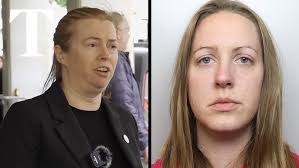
The case of Lucy Letby stands as one of the most harrowing and complex criminal sagas in modern British history—a deeply disturbing narrative that challenges our understanding of trust, justice, and institutional failure. A former neonatal nurse at the Countess of Chester Hospital, Letby was convicted of murdering seven infants and attempting to murder seven others between June 2015 and June 2016, crimes that earned her a whole life order, meaning she will never be released from prison. Her conviction painted a portrait of a trusted caregiver turned prolific child serial killer, a “calculating and devious” opportunist who, prosecutors alleged, “gaslighted” colleagues while harming the most vulnerable patients in her care.
Yet, almost from the moment the verdict was read, a parallel narrative began to emerge—one that questions the very foundation of the medical and statistical evidence used to convict her. An international panel of distinguished medical experts, including the author of a key research paper cited by the prosecution, has since argued that there is no definitive evidence of deliberate harm and that the infants’ deaths and deteriorations were due to natural causes or suboptimal medical care. This has ignited a fierce and painful debate, creating what some describe as “two parallel universes” of understanding: one where Lucy Letby’s guilt is a settled, monstrous fact, and another where she is a victim of a catastrophic miscarriage of justice. This article explores the intricate layers of this case, from the initial incidents and the protracted hospital investigation to the dramatic trial, the subsequent expert challenges, and the profound questions it raises about healthcare governance, expert testimony, and the criminal justice system.
The Making of a Neonatal Nurse
Lucy Letby’s path to the neonatal unit was, by all early accounts, unremarkable and even admirable. Born on 4 January 1990 in Hereford, she was the only child of John, a furniture salesman, and Susan, an accounts clerk. Friends described her as quiet, career-driven from a young age, and harboring a long-standing desire to work with children. A childhood friend told the BBC that Letby was inspired to become a neonatal nurse due to gratitude for her own difficult birth and the nurses who helped save her life. She attended local schools and Hereford Sixth Form College, choosing A-level subjects she believed would support her career ambitions.
Letby became the first in her family to attend university, studying nursing at the University of Chester. Her training included placements at the Liverpool Women’s Hospital and the Countess of Chester Hospital, where she would later work. Her journey was not without academic struggle; she initially failed her final-year student placement but passed a retrieval placement after requesting a new assessor. Notably, her first assessor, Nicola Lightfoot, reported in 2011 that Letby needed more experience in clinical knowledge and picking up on parents’ non-verbal cues, later describing her as “cold” during a 2024 inquiry. Despite this, she graduated in September 2011 with a Bachelor of Science in Nursing, specializing in child nursing.
She began her career as a registered nurse at the Countess of Chester Hospital’s neonatal unit on 2 January 2012. In a 2013 staff profile, she expressed her passion for the work: “I enjoy seeing [the babies] progress and supporting their families”. She furthered her qualifications, completing a neonatal specialization course in 2014 and qualifying to care for intensive care infants in early 2015. Outside work, she lived a typical life for a young professional—renting flats, attending salsa classes, going on holidays with friends, and eventually buying a house near the hospital in 2016. Her home contained ordinary touches like a “No.1 Godmother” poster from her godson and Winnie the Pooh cuddly toys on her bed. This portrait of normalcy would later make the allegations against her all the more incomprehensible to the public.
A Unit in Crisis: The Rising Tide of Collapses
The neonatal unit at the Countess of Chester Hospital was, like many in the NHS, a place of intense pressure where dedicated staff fought for the lives of extremely premature and sick newborns. In 2015, however, the unit experienced a devastating and inexplicable shift. Typically, the unit saw two to three infant deaths per year. But beginning in June 2015, a cluster of “unexpected collapses” occurred, several leading to fatalities. By the end of the period in June 2016, the neonatal death total for 2015 had doubled from the previous year, and independent reports would later note a mortality rate at least 10% higher than expected.
The initial response within the hospital was one of confusion and internal review. Lead neonatologist Dr. Stephen Brearey and unit manager Eirian Powell conducted an informal review after four collapses in June 2015. Brearey observed a disturbing pattern: nurse Lucy Letby had been on shift for all these incidents. At the time, he considered this a coincidence, attributable to staffing shortages and Letby’s frequent extra shifts, and stated, “Nobody had any concerns about her practice”. The hospital’s serious incident committee initially classed the deaths as medication errors.
As months passed and more tragedies unfolded, suspicions among some consultants grew. The situation reached a critical point in June 2016. Dr. Brearey, after two more deaths coincided with Letby’s return from a holiday, phoned the duty executive on 24 June demanding her immediate removal from the unit. The executive refused, insisting she was safe to work. Hospital executives discussed involving the police but decided against it. Instead, they commissioned a general review from the Royal College of Paediatrics and Child Health (RCPCH) and finally removed Letby from clinical duty on 30 June 2016, assigning her to an administrative role in the hospital’s risk and patient safety office. Simultaneously, the hospital downgraded the unit on 7 July, reducing cot numbers and raising the gestational age for admission, a tacit admission that the unit was not safe for the most vulnerable infants.
The subsequent RCPCH review, completed in October 2016, could not find a definitive explanation for the increased mortality but cited “insufficient staffing and senior cover”. Notably, it praised Letby’s nursing skills and called the concerns about her a “subjective view with no other evidence”. A separate, brief case review by neonatologist Jane Hawdon of 17 deaths concluded that 13 could be explained by natural causes or preventable care issues, while four might benefit from a “local forensic review”. Hospital management, however, reportedly presented these findings to the board in a way that emphasized leadership failures over criminal suspicion.
During this period, Letby herself raised a formal grievance about her removal from the unit. In a staggering turn of events, the hospital board upheld her grievance in January 2017, determining her removal had been “orchestrated by the consultants with no hard evidence”. The medical director commented that the trust’s intention was to “protect Lucy Letby from these allegations”. The chief executive had previously met with Letby and her parents to apologize, assuring them the accusing doctors would be “dealt with,” and later ordered those same consultants to write Letby a letter of apology, which they did in February 2017. This institutional reluctance to confront the possibility of a murderer in their midst, prioritizing reputation over investigation, would later be condemned as a catastrophic failure.
https://headlinenest.com/gavin-mckenna/
The Police Investigation and Build-Up to Trial
Frustrated by the hospital’s inaction, the consultant paediatricians took the extraordinary step of going directly to the police. In May 2017, nearly two years after the initial cluster of deaths, the Countess of Chester Hospital NHS Foundation Trust finally contacted Cheshire Police. Operation Hummingbird was launched, a massive investigation that would at its peak involve nearly 70 officers and staff. Their remit was to investigate the “greater number of baby deaths and non-fatal collapses than normally expected” between June 2015 and June 2016.
The investigation took a decisive turn when Dr. Dewi Evans, a retired consultant paediatrician, contacted the police. Having read about the case, he emailed a contact, saying, “Sounds like my kind of case”. Evans became the prosecution’s lead medical expert. He reviewed medical notes and identified 25 “suspicious incidents,” proposing novel medical theories for the deaths, primarily involving air embolism (injecting air into the bloodstream) or insulin poisoning. Crucially, as pointed out in a UK Parliament debate, none of the prior reviews—coroner’s inquests, internal hospital reviews, or the RCPCH inspection—had found any evidence of deliberate harm. Evans’s interpretations would form the bedrock of the prosecution’s medical case.
Lucy Letby’s life was upended on an early morning in July 2018 when she was first arrested at her home in handcuffs. She was released on bail, then arrested again in June 2019 and a final time in November 2020, when she was formally charged. The charges were staggering: eight counts of murder and ten counts of attempted murder, later refined to seven murders and eleven attempted murders across 17 babies. During searches of her home, police found handwritten notes that would become a focal point at trial. Phrases included, “I am a horrible evil person,” “I AM EVIL I DID THIS,” and “I killed them on purpose because I’m not good enough to care for them”. The prosecution would label these as confessions, while the defense argued they were the anguished writings of a woman in deep distress, advised by hospital counselling to write down her thoughts.
The Trial and Conviction of Lucy Letby
The trial of Lucy Letby began at Manchester Crown Court in October 2022, becoming one of the longest-running murder trials in British history. Presided over by Mr. Justice Goss, it unfolded over ten months before a jury of seven women and four men. The courtroom heard harrowing, detailed evidence about the final moments of tiny infants, described through the anonymised letters of the alphabet to protect their identities.
The prosecution, led by Nick Johnson KC, painted a picture of a “calculating and devious” opportunist who used multiple methods to harm babies. They alleged she injected air into the bloodstream or stomachs of infants, poisoned two with insulin, and overfed another with milk. Johnson argued she “enjoyed playing God” and got a “thrill” from her actions, often targeting multiples—twins and triplets. A key pillar of the prosecution’s case was a shift pattern chart, showing Letby was on duty for all the alleged incidents. They also pointed to her alleged suspicious behavior, such as searching for parents of victims on Facebook and removing nursing handover sheets from the hospital.
The medical evidence was complex and highly technical. Dr. Dewi Evans testified that the babies showed signs of air embolism, citing a 1989 academic paper on the subject. For the two insulin cases (Babies F and L), prosecutors pointed to abnormal blood test results as clear evidence of poisoning. The handwritten notes were presented as a direct confession of guilt.
The defense, led by Ben Myers KC, countered that the entire case was built on coincidence and flawed science. They argued the babies died of natural causes—common complications of extreme prematurity like infections, lung problems, and birth trauma—compounded by a unit in crisis with serious staffing and leadership failures. Myers suggested Letby was a “scapegoat” for a hospital that needed someone to blame for its own systemic failures. Regarding the notes, he described them as the “anguished outpouring of a young woman in fear and despair”.
Letby herself took the stand, consistently denying all charges. “I only ever did my best to care for them,” she testified. She broke down when shown pictures of her home, her former life a stark contrast to the dock in which she sat.
After 110 hours of deliberation, the jury returned its verdicts on 18 August 2023. They found Lucy Letby guilty of the murder of seven babies and the attempted murder of seven others. They found her not guilty of two counts of attempted murder and could not reach verdicts on six other attempted murder charges. The courtroom was tense as the verdicts were read; Letby refused to appear for her sentencing hearing.
Mr. Justice Goss imposed a whole life order, the most severe punishment in the English legal system. “There was premeditation, calculation and cunning in your actions,” he told the empty dock. Letby joined a group of only four British women to ever receive such a sentence. A retrial was ordered for one of the outstanding charges, the attempted murder of Baby K, and in July 2024, she was found guilty, receiving an additional life sentence. All her applications for permission to appeal have been rejected to date.
Mounting Controversy: The Scientific and Legal Debate
While the legal process seemed to have reached a conclusion, a profound and escalating controversy was brewing within the medical and scientific communities. In the months following the conviction, an unprecedented number of experts began to publicly voice grave concerns.
The catalyst was a press conference in February 2025, where an international panel of 14 clinicians, led by Canadian neonatologist Dr. Shoo Lee, presented their findings. Dr. Lee, significantly, was the lead author of the very 1989 research paper on air embolism that the prosecution’s expert, Dr. Dewi Evans, had relied upon. Lee stated unequivocally that his work had been misused and misinterpreted. He argued that skin discolouration—a sign prosecutors pointed to—had not featured in any reported cases of venous air embolism in babies, directly undermining a key prosecution claim. His panel’s sweeping conclusion was: “We didn’t find any murders… In all cases death or injury were due to natural causes or just bad medical care”.
This panel and other experts have since launched a multi-pronged critique of the prosecution’s case:
- Flawed Medical Theories: Experts have contested the air embolism and insulin evidence. Professor Neena Modi, a panel member, stated the air embolism theory was “highly speculative”. Regarding insulin, defense experts argue the test used can yield false positives and should have been verified.
- Alternative Explanations: For individual cases, experts propose natural causes. Regarding Baby O, whose liver injuries were described by the prosecution as “impact-type,” experts suggest they could have resulted from birth trauma or even from resuscitation efforts, including a misplaced needle or hyperinflation of the lungs. A parliamentary debate highlighted claims that a doctor—one of Letby’s principal accusers—may have accidentally punctured Baby O’s liver with a needle during desperate resuscitation attempts.
- Misuse of Statistics: Critics argue the prosecution’s use of shift pattern data was statistically flawed and misleading. Professor Jane Hutton, a statistician initially consulted by police, warned them that their approach—focusing on one staff member from the outset—was invalid. This advice was allegedly not pursued after prosecutors instructed police to stop. The case has drawn comparisons to the wrongful conviction of Sally Clark, which also hinged on flawed statistical evidence.
- Questions Over Expert Witnesses: Serious questions have been raised about the prosecution’s key experts. Dr. Dewi Evans faced criticism; a judge in a prior case had called a report of his “worthless” and “makes no effort to provide a balanced opinion,” information that was brought to the attention of the Letby trial judge. Another prosecution expert, Dr. Sandie Bohin, is the subject of formal complaints by eight families to the General Medical Council.
This scientific dissent has translated into legal action. Letby’s barrister, Mark McDonald, has submitted “new evidence” from these experts to the Criminal Cases Review Commission (CCRC), the body that investigates potential miscarriages of justice. The CCRC is currently considering whether to refer the case back to the Court of Appeal.
The debate has even touched those closest to the tragedy. In a Netflix documentary released in 2026, one of the accusing consultants, Dr. John Gibbs, expressed a “tiny, tiny, tiny guilt: did we get the wrong person?… just in case: a miscarriage of justice”. This was the first public admission of doubt from within the hospital team.
Systemic Failure and the Quest for Accountability
Beyond the question of individual guilt or innocence, the Lucy Letby case has become a devastating case study in systemic failure within the NHS and the profound difficulties of whistleblowing in a hierarchical medical culture.
The timeline reveals a shocking pattern of institutional reluctance. From June 2015 to May 2017, senior doctors raised repeated concerns, only to be ignored, rebuffed, or actively challenged by hospital management. The British Medical Association (BMA) captured the fury of the medical profession, stating the case “epitomises systemic flaws” where staff are not heard when flagging serious risks. Dr. Phil Banfield, BMA council chair, wrote: “This is the unbelievable worst-case scenario that has turned out to be true… It epitomises systemic flaws and failings in our health service where doctors and healthcare staff are not appreciated for flagging that there is something seriously wrong”.
Key institutional failures included:
- Management Prioritizing Reputation over Safety: Executives dismissed consultant concerns as a “subjective view,” commissioned reviews that downplayed criminal suspicion, and even forced doctors to apologize to Letby.
- Lack of Clinical Voice in Management: The hospital board later claimed it was “misled” because it lacked specialist medical knowledge to assess the doctors’ warnings. The BMA argues this highlights the dangerous absence of senior doctors in executive NHS roles.
- A Toxic Culture Against Whistleblowers: Doctors described feeling “worried or even threatened” for raising concerns, with the potential of a vexatious referral to the General Medical Council (GMC) used as a deterrent.
- Regulatory Gap for Managers: While clinical staff are regulated by bodies like the GMC and NMC, there is no equivalent statutory regulation for senior non-clinical NHS managers, leaving them largely unaccountable.
In response to these failures, the government commissioned an independent statutory inquiry chaired by Lady Justice Thirlwall. The Thirlwall Inquiry, which began public hearings in September 2024, is tasked with uncovering the full circumstances surrounding the deaths, how concerns were handled, and the conduct of the hospital, regulators, and police. Its findings, expected in 2026, are anticipated to recommend sweeping changes to NHS governance and whistleblowing protections.
Parallel to this, coronial inquests into the deaths of the babies have been reopened. At a hearing in February 2026, the coroner’s officer stated for each child that “there is reason to suspect an unnatural death,” a formal finding that paves the way for a full exploration of the facts. Letby has been granted interested person status in these inquests.
Life After Conviction and the Unending Story
Lucy Letby now exists in the cloistered, high-security world of the prison system. Currently held at HMP Bronzefield in Surrey, she is a Category A prisoner, deemed the highest risk. Her notoriety makes her a target. Former prison governor Vanessa Frake noted that in a female prison, “women who have had children, who are carers and nurturers, will see the likes of Letby as lower than low”. Reports suggest she has tried to establish a routine, becoming a “model prisoner” and even working as a unit librarian, a coveted role. She is said to have formed a friendship with another high-profile inmate, Beinash Batool, convicted of killing her stepdaughter.
Despite her conviction, the legal and public narrative is far from static. The Crown Prosecution Service announced in January 2026 that it would not pursue any further charges against Letby after police investigated additional cases, concluding the evidential test was not met. This, however, does not affect her existing convictions.
The story continues to permeate public consciousness through media. A Netflix documentary, The Investigation of Lucy Letby, released in February 2026, revisits the evidence and includes the first interview with a parent of a victim outside of court. Multiple podcasts and documentaries present the competing narratives, ensuring the debate remains alive.
At the heart of this ongoing saga are the bereaved families, for whom the constant questioning of the verdict is a source of renewed anguish. They maintain there is no doubt about Letby’s guilt. For them, the legal conclusion was a horrific but definitive endpoint. The scientific controversy, while a legitimate pursuit of truth, forces them to relive their trauma in a public arena where the certainty of justice is once again thrown into doubt.
Conclusion
The case of Lucy Letby is a modern tragedy of almost incomprehensible scale and complexity. It is a story of shattered trust, of tiny lives lost in the place meant to protect them, and of families enduring unimaginable grief. The jury’s verdict, reached after meticulous consideration, stands as a legal truth: Lucy Letby is a convicted serial killer. Yet, the subsequent emergence of sustained, credible expert criticism has created a second, powerful narrative—one that suggests a potential miscarriage of justice born from flawed science, statistical error, and a healthcare system desperate for a culprit.
Whether one views Lucy Letby as a monstrous perpetrator or a tragic scapegoat, her case undeniably exposes profound flaws. It reveals how institutional cowardice and a culture hostile to whistleblowers can allow suspicion to fester for years without action. It demonstrates the immense power—and potential peril—of expert medical testimony in a courtroom. And it highlights the fragile balance the justice system must maintain between delivering closure for victims and remaining open to legitimate scientific dispute.
The final chapters are still being written by the Criminal Cases Review Commission, the Thirlwall Inquiry, and the ongoing inquests. Their findings may bring a form of resolution, but they cannot undo the loss. The Lucy Letby case will forever serve as a grim benchmark—a reminder of the vulnerability of the innocent, the heavy responsibility of institutions, and the enduring human quest for truth, even when that truth is multifaceted, painful, and relentlessly contested.
Frequently Asked Questions About the Lucy Letby Case
What was Lucy Letby convicted of?
Lucy Letby was convicted of murdering seven infants and attempting to murder seven others while working as a neonatal nurse at the Countess of Chester Hospital between June 2015 and June 2016. She received a whole life order, meaning she will never be released from prison. In a subsequent retrial in 2024, she was convicted of an additional count of attempted murder.
Why do some experts believe Lucy Letby might be innocent?
Since her conviction, a panel of international medical experts has argued that the prosecution’s medical evidence was flawed. They contend that the infants’ deaths and deteriorations were due to natural causes or suboptimal care, not deliberate harm. Key criticisms include the alleged misuse of a medical study on air embolism, questions over insulin test results, and the proposal of alternative natural explanations for each baby’s collapse. These experts have submitted their findings to the Criminal Cases Review Commission.
How did the hospital respond to initial concerns about Lucy Letby?
The hospital’s response has been widely criticized as a catastrophic failure. Senior consultants raised alarms as early as June 2015, but hospital management dismissed their concerns, resisted removing Letby from the unit, and commissioned reviews that downplayed criminal suspicion. In a stunning reversal, the hospital upheld Letby’s grievance against her removal and forced the accusing doctors to apologize to her in 2017. This delay and obstruction prompted a major statutory public inquiry.
What is the current status of Lucy Letby’s legal appeals?
Letby has had two applications for permission to appeal against her convictions rejected by the Court of Appeal. However, her defense team has submitted new evidence from critical medical experts to the Criminal Cases Review Commission (CCRC). The CCRC is an independent body that investigates potential miscarriages of justice and has the power to refer cases back to the Court of Appeal. They are currently considering her application.
Where is Lucy Letby now, and what is her life in prison like?
Lucy Letby is serving her sentence at HMP Bronzefield, a high-security women’s prison in Surrey. As a Category A prisoner, she is under constant supervision. Reports indicate she has tried to adapt, taking on a job as a unit librarian and is described as a “model prisoner”. Due to the nature of her crimes, she is considered a target by other inmates and is kept under protective measures by prison staff.