In the theater of American politics, where every detail is scrutinized, a curious point of public fascination often emerges around the physical attributes of our leaders. For South Dakota Governor Kristi Noem, a prominent and often controversial figure on the national stage, one such persistent point of curiosity is her height. A simple online search for “Kristi Noem height” reveals not just a quest for a number in feet and inches, but a deeper, often unspoken interest in how physical presence translates to political presence. How tall is the governor, and why does it seem to matter to people? This article delves beyond the basic statistic to explore the intersection of physical stature, public perception, and political branding in the modern era. We’ll examine the available facts, discuss the role height plays in shaping public image, and contextualize this curiosity within broader societal trends. While a politician’s policies, character, and record are undoubtedly paramount, the human inclination to size up a leader—literally—offers a fascinating lens through which to understand political communication and persona crafting.
The Official Record and Public Persona of Kristi Noem
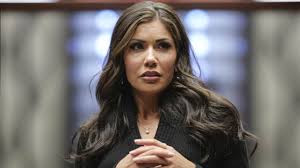
When seeking a definitive answer, most reputable biographical sources list Kristi Noem height as approximately 5 feet 6 inches tall. This places her close to the average height for American women, which is around 5 feet 4 inches. This detail, while seemingly minor, is a foundational piece of her physical identity in the public eye. It’s a datum that occasionally surfaces in media profiles, not as a point of policy, but as part of the composite sketch of the individual serving as governor. In person, those who have met her often describe a presence that feels more substantial than the number might suggest, a testament to the other factors—posture, demeanor, confidence—that contribute to one’s perceived stature.
Understanding Kristi Noem height, however, is merely a starting point for understanding her public persona. Governor Noem has meticulously cultivated an image deeply tied to South Dakota’s rural and agricultural identity. She is frequently photographed in working settings—on a ranch, with livestock, or in casual attire—projecting an aura of rugged individualism and hands-on capability. This branding is intentional and powerful. In these contexts, her height becomes irrelevant next to the symbolism of the tractor, the horse, or the policy podium. She leverages a narrative of toughness and resilience, qualities not measured in inches but demonstrated through action and rhetoric. This persona has made her a standout figure in the Republican Party, someone who leans into cultural archetypes that resonate with a significant portion of her base.
Why Does a Politician’s Height Even Matter?
The persistent public curiosity about figures like kristi noem height and their height is not an anomaly; it is rooted in deep-seated psychological and sociological biases. Numerous studies in social psychology, often referred to as the “height premium,” have shown a correlation between height and perceived leadership capability, authority, and even income potential. This bias is historically gendered and often more pronounced for men, but it undeniably influences the perception of all public figures. We subconsciously associate taller stature with strength, command, and dominance, traits traditionally linked to leadership. This is why, in political debates and staged photographs, subtle manipulations like podium height, shoe choice, and camera angles are carefully considered—they are tools to manage perceived stature and power.
In the media landscape, physical descriptions are a standard part of profiling a public figure. Descriptors like “commanding,” “stately,” “diminutive,” or “towering” are laden with subconscious judgment. When the media mentions Kristi Noem height, even in passing, it is fitting her into a narrative. Is she portrayed as an underdog, or as someone who stands tall among her peers? The context matters immensely. Furthermore, in the digital age, every public appearance is dissected. A photograph of Governor Noem standing next to another well-known politician inevitably leads to online discussions comparing their heights, as if this metric offers some insight into their political power or debate performance. This fixation, while superficial, is a real aspect of how image is constructed and consumed in politics.
Kristi Noem’s Stature in the Political Arena
Beyond physical measurements, the term “stature” in politics refers to the standing, influence, and respect a politician commands. By this definition, kristi noem height has undeniably sought to build significant political stature on the national stage. Her actions during the COVID-19 pandemic, where she resisted stringent lockdowns and marketed South Dakota as a “free” state, catapulted her into the national spotlight. Her subsequent policy moves, advocacy for conservative causes, and the controversial promotion of her memoir have kept her there. In this sense, her political stature—her ability to attract attention, set agendas, and influence conversation—is what truly defines her presence in American politics.
This constructed political stature often interacts with her physical presence in deliberate ways. Her communication style is frequently direct and confrontational, a rhetorical choice that amplifies her presence regardless of her height. The settings she chooses for announcements—often expansive South Dakota landscapes or agricultural settings—serve to magnify her role as a steward of a way of life, making physical dimensions secondary to symbolic power. When discussing Kristi Noem height, it is almost impossible to separate the number from this larger project of image-building. She represents a case study in how a politician can leverage personal narrative and cultural symbolism to craft a formidable public identity that transcends simple physical attributes.
Comparative Perspectives: Height and Other Political Figures
To contextualize the discussion around Kristi Noem height, it is useful to glance at the heights of other contemporary and historical political figures. This comparison quickly reveals that effective leadership comes in all physical packages. For instance, former President Donald Trump is frequently listed at 6’3″, while President Joe Biden is around 6’0″. On the other hand, former U.N. Ambassador and South Carolina Governor Nikki Haley is often noted as being around 5’6″. The dynamic between height and perceived power is often most visually apparent in group photographs or debates, where physical logistics become a metaphor for political dynamics.
The history of American politics is replete with leaders whose physical stature became part of their legend, for better or worse. President Abraham Lincoln’s exceptional height (6’4″) was a defining part of his image, while President James Madison’s shorter stature (5’4″) was noted by contemporaries. The key takeaway is that while height may contribute to an initial impression, it is the force of personality, the power of ideas, and the strength of character that cement a legacy. Kristi Noem height of 5’6″ places her in a common range, making her reliance on other attributes—political messaging, media savvy, and ideological clarity—all the more critical to her public identity. The focus on her measurement is, in many ways, a distraction from the more substantive engine of her political career.
The Role of Media and Symbolism in Shaping Perception
The media plays an indisputable role in framing our perception of a politician’s physicality. Camera angles, photo cropping, and the choice of comparative imagery are all editorial decisions that can subtly influence perception. A low-angle shot can make a subject appear more dominant, while a wide-shot placing a figure against a vast backdrop can emphasize either their control over or their smallness within the environment. For a figure like kristi noem height, whose brand is connected to mastering the land, these choices are particularly significant. Is she shown commanding the frame, or is she integrated into it? Each approach tells a different story.
Furthermore, symbolism is a potent tool in Kristi Noem’s arsenal. Her frequent association with boots, jeans, livestock, and firearms is a deliberate semiotic code. These items symbolize toughness, practicality, autonomy, and a connection to a foundational American ethos. In this carefully constructed symbolic universe, her specific height becomes largely irrelevant. What matters is the totality of the image: a capable, no-nonsense leader from the heartland. This packaging is designed to convey substance and authenticity, aiming to shift the audience’s focus from appearance to action. The success of this strategy is evident in her strong support base, for whom these symbols resonate far more deeply than any biometric data.
Public Fascination vs. Political Substance
The enduring public search for details like “Kristi Noem height” highlights a timeless tension in political life: the human fascination with the personal versus the democratic necessity to focus on the substantive. Voters are naturally curious about the individuals who represent them; they build a composite understanding from policy positions, public speeches, personal history, and, yes, observable traits. This curiosity is amplified by the 24/7 media cycle and the visual nature of modern platforms like social media, where imagery is paramount. A politician’s appearance is an accessible, if shallow, entry point for public engagement.
However, the danger lies in allowing this fascination to eclipse the examination of governance, policy outcomes, and ethical conduct. A politician’s height, weight, or hairstyle has no bearing on their ability to craft sound legislation, manage a crisis, or exercise judgment. The challenge for the engaged citizen is to acknowledge this natural curiosity while consciously prioritizing more meaningful metrics of evaluation. For Kristi Noem, this means her record on economic development in South Dakota, her handling of state resources, her stance on educational policy, and her ethical stewardship should occupy the center of public discourse, not the measurement of her physical frame. Distinguishing between personality and persona, between image and outcome, is crucial for a healthy political culture.
Beyond the Number: The Cultivation of an Image
Ultimately, the query about Kristi Noem height is a gateway into the much larger and more intentional project of personal branding in modern politics. Governor Noem has not left her public image to chance. From her attire to her backdrop, from her memoir’s title to her social media content, every element is curated to reinforce a specific identity: the rugged, independent, conservative rancher-governor. This image is powerful because it feels coherent and authentic to her background, even as it is professionally polished for mass consumption. In this context, her height is a neutral fact that is incorporated into a broader visual and rhetorical strategy.
This cultivation extends to how she navigates both praise and controversy. Whether promoting South Dakota tourism or addressing criticism of her personal narratives, her public demeanor is consistent—assured, unwavering, and combative when necessary. This performance of confidence does more to shape her perceived “stature” than any physical metric ever could. It reminds us that in politics, perceived strength is often more impactful than physical strength. The relentless focus on a simple figure like height underscores our sometimes-reductive attempts to quantify and categorize the complex, performative art of political leadership.
A Table of Notable Political Heights for Context
| Political Figure | Role | Height (Approx.) |
|---|---|---|
| Abraham Lincoln | 16th U.S. President | 6’4″ |
| Joe Biden | 46th U.S. President | 6’0″ |
| Donald Trump | 45th U.S. President | 6’3″ |
| Kristi Noem | Governor of South Dakota | 5’6″ |
| Nikki Haley | Former Governor & U.N. Ambassador | 5’6″ |
| Nancy Pelosi | Former Speaker of the House | 5’5″ |
| James Madison | 4th U.S. President | 5’4″ |
Quotes on Perception and Leadership
“Leadership is not about being in charge. It is about taking care of those in your charge.” – Simon Sinek. This quote underscores that true stature comes from action and responsibility, not physical presence.
“In politics, perception is reality.” – Anonymous. This oft-cited adage explains why politicians, including Kristi Noem, invest so heavily in managing every aspect of their public image, from rhetoric to backdrops.
“It’s not the size of the dog in the fight, it’s the size of the fight in the dog.” – Mark Twain. A proverbial reminder that determination and tenacity, qualities Kristi Noem seeks to project, often outweigh physical attributes.
Frequently Asked Questions About Kristi Noem’s Height
How tall is Kristi Noem exactly?
Most credible biographical sources and public records indicate that Kristi Noem stands at approximately 5 feet 6 inches tall. This is a common height for an American woman and is frequently cited in media profiles. It’s important to note that without an official, recent measurement, such figures are always best estimates, but 5’6″ is the widely accepted and reported statistic when discussing Kristi Noem height.
Why do people frequently search for Kristi Noem’s height?
Public curiosity about a politician’s physical attributes, including Kristi Noem’s height, stems from a mix of psychological bias and media-driven image consumption. Height is subconsciously linked to authority and leadership in many cultures. Additionally, in a highly visual political environment, people naturally notice and compare physical traits, especially when politicians stand together. For a figure as prominent and visually branded as Governor Noem, this curiosity is amplified, making basic details like her height common search queries.
Has Kristi Noem ever commented on her own height?
There is no widely circulated public statement where Kristi Noem has directly addressed or made an issue of her own height. Her political brand is built on substantive themes like freedom, resilience, and conservative governance, not physical characteristics. She focuses her public commentary on policy, political battles, and her personal narrative as a rancher and state leader, allowing her perceived political stature to be defined by her actions rather than her physical measurements.
How does Kristi Noem’s height compare to other female governors?
Kristi Noem’s height of around 5’6″ is quite typical among her peers. For example, former Michigan Governor Gretchen Whitmer is also approximately 5’6″, and former Alabama Governor Kay Ivey is around 5’4″. This demonstrates that effective state leadership encompasses a wide range of physical statures. The focus among these leaders is invariably on their political agendas and leadership styles, not on comparative physical height.
Does Kristi Noem’s height impact her political image or strategy?
While her specific height likely does not directly impact her strategy, the overall management of her physical presence and image certainly does. Kristi Noem’s team leverages settings, attire, and props (like boots, tractors, or guns) to craft an image of rugged, hands-on capability and toughness. This visual storytelling is designed to transcend mere physical dimensions, creating a perceived stature rooted in cultural symbolism and political conviction. In this way, her image strategy is about amplifying qualities that resonate with her base, making her actual height a minor component of a much larger narrative.
Conclusion
The question of Kristi Noem’s height, while a simple query for a factual number, opens a window into the complex dynamics of modern political image-making. At 5 feet 6 inches, she is of average height, but in the political arena, she has worked diligently to project a larger-than-life stature through a powerful combination of personal narrative, cultural symbolism, and uncompromising rhetoric. The public’s fascination with this metric reveals our ingrained biases and the visual nature of our politics, but it also serves as a reminder to look beyond the superficial. Kristi Noem’s political influence, for her supporters and detractors alike, is not a function of inches but of her policy decisions, her communication skills, and the potent brand she has built. In the end, the most meaningful measure of any leader is found in their legacy of governance, the substance of their character, and the impact of their work on the people they serve—a calculus where physical height plays no part.