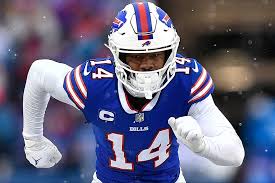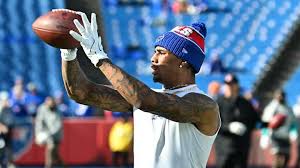
The story of Buffalo Bills wide receiver Keon Coleman Injury has been a turbulent one. A promising 2024 second-round draft pick whose career has been marked by flashes of brilliance and frustrating setbacks. While his wrist injury in 2024 was a significant physical hurdle, the more complex narrative surrounding Coleman involves a series of off-field maturity issues, public questioning from team ownership, and an ongoing battle to meet the lofty expectations placed upon him. This article delves deep into the multifaceted challenges that have defined Keon Coleman’s young NFL career, examining the interplay between injury, discipline, team dynamics, and unrealized potential that has kept his future in Buffalo a topic of intense speculation.
The Promising Beginning and the First Major Hurdle
Keon Coleman Injury entered the NFL with the pedigree of a dynamic playmaker. Standing at 6’4″ and 215 pounds, his physical profile and collegiate success at Florida State, where he was a First Team All-ACC selection, made him an enticing prospect for a Buffalo Bills team looking to reload its receiving corps. The Bills, holding the 28th pick in the 2024 draft, traded down before ultimately selecting Coleman with the first pick of the second round (33rd overall). His rookie season showed immediate glimpses of that potential. He led the team in receiving in his very first game and by Week 7 had recorded a breakout 125-yard performance against the Tennessee Titans, earning Pepsi NFL Rookie of the Week honors.
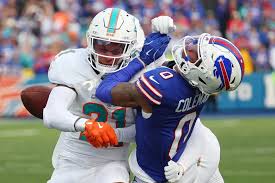
However, the first major disruption to his momentum came in Week 9 of that rookie year against the Miami Dolphins. Coleman suffered a wrist injury after a hit from Dolphins safety Jordan Poyer, a play that drew a penalty and, more consequentially for Coleman, forced him to miss several weeks of action. This Keon Coleman injury was a classic example of the physical toll of the NFL, abruptly halting his development and rhythm. He managed to return later in the season, finishing his first year with 29 receptions for 556 yards and four touchdowns in 13 games—a solid, if interrupted, foundation to build upon. The expectation was that a full offseason of recovery and training would allow him to step into a featured role in 2025.
The 2025 season opener seemed to confirm all the optimism. Fully recovered from his wrist issue, Coleman exploded onto the field, catching eight passes for 112 yards and a touchdown in a thrilling comeback win over the Baltimore Ravens. A highlight reel from that game showcased his ability to make contested catches and be a reliable target for quarterback Josh Allen. It appeared the Keon Coleman injury woes were behind him and that he was poised for a true breakout sophomore campaign. Yet, that spectacular Week 1 performance proved to be the peak of his season, not the launching pad. What followed was a steep and puzzling decline in production and availability, rooted not in physical health, but in other, more complicated issues.
Beyond the Physical: Discipline, Maturity, and “Sleep Issues”
The dramatic drop-off after Week 1 was not due to another major Keon Coleman injury. Instead, Coleman’s season was derailed by a recurring pattern of disciplinary actions that raised serious questions about his professional maturity. This was not a new problem; even during his rookie year, he was forced to sit out the first quarter of a Week 3 game for being late to a team meeting. The pattern intensified in his second year. He was benched for the opening drive of a Week 5 loss to New England for disciplinary reasons and later fumbled in that same game. A month later, the situation reached a new low when he was declared a healthy scratch for a game against the Tampa Bay Buccaneers after missing another team meeting.
These repeated incidents of lateness led to speculation about the root cause. A report from Nick Underhill of NewOrleans.Football suggested a potential explanation, citing sources who indicated Coleman has a “sleep issue”. While not explicitly confirming this was the direct cause of his tardiness, the report connected the dots, implying that oversleeping might be a contributing factor to his recurring punctuality problems. This revelation adds a layer of complexity to the situation, framing it not necessarily as simple defiance, but potentially as a personal health or routine challenge that was impacting his professional life. General Manager Brandon Beane addressed these incidents by separating Coleman’s on-field ability from his off-field habits, stating, “His issues have not been on the field. They’ve just been maturity things that he owns… He doesn’t make excuses, which I appreciate”.Keon Coleman Injury
The statistical impact of these absences and disruptions was stark. After his 112-yard opening game, Coleman failed to reach 50 receiving yards in any of his final 14 regular-season and playoff appearances. He finished the 2025 regular season with only 38 catches for 404 yards and four touchdowns, a significant step back from his rookie production on a per-game basis. The table below illustrates the tangible decline in his performance following the disciplinary interventions:Keon Coleman Injury
Keon Coleman’s 2025 Season Before and After Disciplinary Benchings
| Performance Metric | Weeks 1-4 (Before Benching) | Weeks 6-17 (After Benching) |
|---|---|---|
| Games Played | 4 | 9 |
| Receptions per Game | 4.0 | 2.8 |
| Receiving Yards per Game | 62.0 | 21.1 |
| Total Touchdowns | 2 | 2 |
| Key Incident | Week 1: 112-yard game | Week 5: Benched vs. NE; Week 10: Healthy scratch vs. TB |
Owner Intervention and a Clouded Future in Buffalo
The narrative around Coleman took an unprecedented turn in January 2026, following the Bills’ decision to fire head coach Sean McDermott. During a joint press conference with GM Brandon Beane, owner Terry Pegula unexpectedly interjected as reporters questioned the team’s receiving corps and Coleman’s development. “Can I interrupt? I’ll address the Keon situation,” Pegula stated. He then revealed a behind-the-scenes rift, asserting, “The coaching staff pushed to draft Keon. I’m not saying Brandon wouldn’t have drafted him, but he wasn’t his next choice”.Keon Coleman Injury
This public comment was extraordinary. It not only threw a spotlight on Coleman’s struggles but also exposed potential friction in the Bills’ draft process. Pegula’s intention appeared to be to deflect criticism from Beane, whom he had just promoted to President of Football Operations, by suggesting the GM was simply being a collaborative “team player” in following the coaches’ strong recommendation. However, the effect was to publicly label Coleman as someone the top football executive might not have been fully sold on, potentially undermining the player’s standing within the organization. Beane quickly attempted to clarify, affirming, “He was my pick. I made the pick… Ultimately, I’m not turning a pick for a player that I don’t think we can succeed with”.Keon Coleman Injury
The fallout from this press conference placed Coleman’s future with the Bills in serious jeopardy. Media analysts immediately pegged him as a prime trade candidate. The rationale is that a change of scenery might benefit both parties, but the Bills would be selling at a significant loss. Having used a valuable second-round pick (33rd overall) to acquire him, the team would be fortunate to recoup a fourth- or fifth-round selection in return. As one analyst noted, Coleman still represents a “low-cost, low-risk option” for receiver-needy teams willing to bet on his raw talent and youth (he was only 22 at the end of the 2025 season). The entire episode left Coleman in a difficult limbo, caught between an owner who publicly questioned his acquisition and a GM who, while supportive, must now weigh his value against the growing distractions.
The Path Forward: Resilience in the Face of Adversity
Where does Keon Coleman Injury go from here? His career arc is a testament to the fact that professional challenges are rarely just about physical talent or recovering from an injury like his 2024 wrist ailment. The path to redemption and fulfilling his potential is now multifaceted. First and foremost, he must demonstrably conquer the maturity and reliability issues that have plagued him. This likely involves developing unshakeable daily routines and, if reports are accurate, proactively managing any underlying sleep-related health concerns. Consistency off the field is the prerequisite for consistency on it.
Secondly, Coleman must rebuild trust within the building, whether that is in Buffalo or elsewhere. Actions will speak louder than words. As Beane outlined, the message to Coleman was clear: “Attack this offseason the way you did… and don’t let these maturity issues get in the way of your playing time and your production on this team”. This means exemplary attendance at voluntary workouts, flawless punctuality, and a visible dedication to his craft. The raw tools are not in question—his size, catch radius, and big-play ability have all been showcased. The missing piece has been the professional foundation to apply those tools week in and week out.
Finally, his future may hinge on the perspective of new leadership. With Sean McDermott fired, the next head coach of the Buffalo Bills will have a significant say in whether Coleman remains part of the team’s core. A new coach might see a talented reclamation project and believe he can be the one to unlock Coleman’s discipline. Conversely, the new regime might prefer to clean the slate and use Coleman’s roster spot for a player they select. As analyst Sal Maiorana pointed out during the season, when the Bills’ receiver room was hit by injuries, the team needed Coleman to “step up in a big way”. His inability to reliably be that player when called upon is the central dilemma of his young career. The coming months will reveal whether Keon Coleman can author a comeback story defined not by injury recovery, but by personal growth and professional resilience.
Conclusion
The story of Keon Coleman Injury early NFL career is a complex tapestry woven with threads of immense potential, physical setback, self-inflicted obstacles, and organizational drama. While his 2024 wrist injury was a straightforward hurdle, the more enduring challenge has proven to be a struggle with the professional demands of the league. From repeated disciplinary benches rooted in punctuality issues to the extraordinary moment when his own owner publicly questioned the decision to draft him, Coleman’s journey has been anything but smooth. The key question now is one of response. The physical tools that made him a second-round pick remain. The path forward requires translating accountability into action, rebuilding trust through unwavering reliability, and seizing the next opportunity—wherever it may be—with a refined professionalism. For Keon Coleman, the most important play of his career is no longer a catch or a route; it’s the daily decision to build a foundation strong enough to support his undeniable talent.
Frequently Asked Questions
How did Keon Coleman perform after his rookie-year wrist injury?
Coleman recovered from Keon Coleman Injury and started his second season (2025) spectacularly, with an 8-catch, 112-yard, one-touchdown performance in Week 1 against the Ravens. However, his production sharply declined afterward. Following disciplinary issues, he failed to reach 50 receiving yards in any of his final 14 games, finishing the year with 38 catches for 404 yards.
What did Bills owner Terry Pegula say about drafting Keon Coleman?
In a January 2026 press conference, owner Terry Pegula interjected to state that the team’s coaching staff had “pushed to draft Keon.” He clarified that while GM Brandon Beane wasn’t necessarily against the pick, Coleman “wasn’t his next choice,” and Beane was being a “team player” by following the coaches’ strong recommendation. This unusual public comment fueled widespread speculation about Coleman’s future with the team.
What are the reported “sleep issues” related to Keon Coleman’s discipline problems?
According to a report from Nick Underhill of NewOrleans.Football, sources indicated that Keon Coleman has a “sleep issue”. This report emerged in the context of Coleman being benched multiple times for being late to team meetings. While not definitively stated as the cause, the implication is that this issue may have contributed to his punctuality problems, offering a potential explanation beyond simple negligence.
Was Keon Coleman ever a healthy scratch for reasons other than injury or discipline?
Yes. While most of his missed playing time was due to either his 2024 wrist injury or disciplinary benches for lateness, there were instances in his second season where he was a healthy scratch for what appeared to be performance-related reasons. After his production dipped significantly following the early disciplinary actions, he was made a healthy inactive for multiple games.
What is Keon Coleman’s contract status, and could he be traded?
Keon Coleman is under contract with the Buffalo Bills through the 2027 season, having signed a standard four-year rookie deal after being drafted in 2024. Following the owner’s comments and his disappointing second season, many analysts have identified him as a likely trade candidate in the 2026 offseason. However, due to his diminished value, the Bills would likely receive a mid-to-late round draft pick (e.g., a 4th or 5th-rounder) in return, not the 2nd-round value they used to select him.