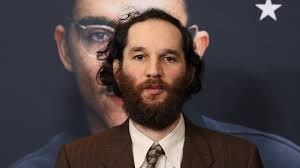
Josh Safdie stands as one of the most distinctive and provocative American filmmakers of his generation. For years, his identity was inextricably linked with that of his younger brother, Benny, as the duo known as the Safdie brothers crafted a series of raw, frenetic urban tales that redefined independent cinema. Films like Good Time and Uncut Gems were more than movies; they were immersive, anxiety-inducing experiences that captured the frantic pulse and desperate souls of New York City. Theirs was a filmmaking built on vérité authenticity, a chaotic alchemy of professional actors and non-professional “real people” that created a signature style both celebrated and criticized. However, in early 2024, the film world was stunned by the announcement that the brothers would no longer direct together, each pursuing a solo career. This split, which coincided with Josh Safdie’s emergence as an Academy Award-nominated director for his solo project Marty Supreme, unveiled a complex narrative of artistic ambition, fraternal partnership, and sobering controversy. The story of Josh Safdie is not just one of cinematic triumph but a fraught examination of the ethical boundaries of art and the personal cost of an uncompromising vision.
The Early Roots and Collaborative Genesis
Josh Safdie’s path to filmmaking was, in many ways, predestined by his childhood environment. Born and raised in the contrasting boroughs of New York City—splitting time between his father in Queens and his mother in Manhattan after their divorce—the city’s relentless energy became his foundational texture. His Jewish heritage, with a father of Syrian-Jewish descent raised in France and Italy and a mother of Russian-Jewish descent, contributed to a unique perspective on identity and outsider status. Crucially, the act of recording and performance was introduced early. His father was not a filmmaker by trade but was an obsessive documentarian who filmed his sons constantly with a Super 8 camera. This experience of being perpetually observed, of life framed as performance, planted the seeds for the brothers’ future artistic preoccupations.
His formal training came at Boston University’s College of Communication, where he graduated in 2007. It was there he began forming the creative collective that would fuel his early work. More importantly, this period solidified his partnership with his brother Benny. Together, with friends like Sam Lisenco and Ronald Bronstein—who would become a perennial co-writer and editor—they formed the collective Red Bucket Films. Their collaborative ethos was total; they lived and worked together in New York, producing each other’s projects. Their first feature, The Pleasure of Being Robbed (2008), was a Josh-led solo effort, but it established their shared fascination with New York’s eccentric characters. Their breakthrough, however, was 2009’s Daddy Longlegs (originally titled Go Get Some Rosemary). Premiering in the Directors’ Fortnight at the Cannes Film Festival, the film was a fictionalized, semi-autobiographical portrait of their own father—a man of chaotic love and irresponsible charm. Critics immediately recognized a fresh, observant voice, with a talent for extracting profound drama from the messiness of ordinary life. This film cemented their modus operandi: mining their personal histories and New York surroundings to create stories that felt painfully, beautifully real.
The Rise of the Safdie Brothers and Their Signature Style
The 2010s marked the meteoric rise of the Safdie brothers as a singular directorial force. They followed Daddy Longlegs with the documentary Lenny Cooke (2013), a tragic portrait of a once-can’t-miss basketball prospect, which continued their exploration of faded American dreams. Then came Heaven Knows What (2014), a harrowing, unsentimental dive into the world of homeless heroin addicts in Manhattan, based on the memoirs of its star, Arielle Holmes. The film was a critical sensation, premiering at the Venice Film Festival and showcasing the brothers’ increasing confidence in orchestrating a specific, overwhelming atmosphere. Their method was intensifying: a commitment to location shooting that bordered on invasion, sound design that assaulted the senses, and a camerawork style that felt less like observation and more like pursuit.
This style reached its first commercial and critical apex with 2017’s Good Time. Starring Robert Pattinson against type as a small-time criminal racing through a neon-drenched New York night to save his brother, the film was a pure adrenaline shot. It premiered in competition for the Palme d’Or at Cannes, announcing the Safdies as major players on the world stage. The film was a masterclass in sustained tension, but its production also exemplified their controversial approach to casting. They famously blended stars like Pattinson with non-actors plucked from the city’s margins, most notably Buddy Duress (real name Michael Stathis), who brought his own history of incarceration to his role. This commitment to “authenticity” became a hallmark, creating electrifying performances but also raising questions about duty of care on set.
Their next film would become their defining work: 2019’s Uncut Gems. Teaming with Adam Sandler in a career-redefining dramatic performance as Howard Ratner, a manic, gambling-addicted New York City jeweler, the Safdies crafted what many consider a modern masterpiece of anxiety. Executive produced by Martin Scorsese, the film was a colossal success, earning the brothers the Independent Spirit Award for Best Director and winning Sandler widespread acclaim. Uncut Gems was the full realization of the Safdie aesthetic—a cascading waterfall of overlapping dialogue, looming financial disaster, and chaotic urban symphony. It cemented their reputation as the premier chroniclers of a certain kind of desperate, striving New York life. The film’s success opened Hollywood’s doors wider, but within the brothers’ partnership, fissures were beginning to form, stemming from the very methods that fueled their art.
The Fracture: Unpacking the Split from Benny Safdie
For years, Josh and Benny Safdie were perceived as an inseparable creative unit. Their public persona was that of two halves of a whole, finishing each other’s sentences and sharing a unified vision. This made the 2024 announcement of their split so jarring. Initially, the separation was described as an amicable “natural progression,” with Benny stating each brother wanted to explore individual interests. The industry speculated about creative differences or divergent political views. However, a clearer, more troubling picture emerged from reports by outlets like Page Six, which tied the rupture directly to a long-buried incident on the set of Good Time in 2017.
According to multiple sources, a 17-year-old actress was cast in a scene involving nudity and simulated sex with non-professional actor Buddy Duress. Duress, who had a lengthy criminal record and was reportedly under the influence during filming, allegedly behaved inappropriately toward the teen, with Josh Safdie, who was directing the scene, watching from the monitor without immediately intervening. An on-set source told Page Six, “Any director who had seen that should have yelled ‘Cut!’ and stopped the scene, but Josh let it continue”. The scene was ultimately cut from the film before its Cannes premiere, with sources close to the brothers at the time citing “creative reasons”. However, the ethical breach had occurred.
Reports indicate that Benny Safdie was not fully aware of the details or the actress’s age until years later, around 2022, when the information surfaced amidst unrelated personal dramas involving their former producing partner. This revelation created what one friend called a “wedge” between the brothers. For Benny, this incident seemingly represented a fundamental ethical line that had been crossed in pursuit of their gritty aesthetic. The split became final in early 2023, leading to the collapse of a planned Netflix film with Adam Sandler and sending the brothers on their separate paths. This fracture laid bare the central tension in Josh Safdie’s work: the conflict between an uncompromising pursuit of visceral realism and the ethical responsibilities of a filmmaker, especially when working with vulnerable individuals.
Josh Safdie’s Solo Ascent: “Marty Supreme” and Oscar Recognition
Emerging from the shadow of the partnership and its associated controversy, Josh Safdie embarked on his first solo directorial feature since 2008. The project was Marty Supreme, a film loosely based on the life of Marty Reisman, the charismatic and rebellious “Needle” table tennis champion of the 1950s and 60s. With a reported $70 million budget, it became the most expensive film ever produced by the indie powerhouse A24, signaling immense confidence in Safdie’s vision. He assembled a formidable team: frequent collaborator Ronald Bronstein returned as co-writer and editor, renowned cinematographer Darius Khondji was behind the camera, and production designer Jack Fisk built the world. In front of it, Safdie cast Timothée Chalamet as the hustler-turned-champion, alongside Gwyneth Paltrow.
Released on December 25, 2025, Marty Supreme was a departure in subject but not in directorial intensity. While trading the diamond district for the ping-pong parlor, the film still thrived on the kinetic energy, obsessive focus, and high-stakes competition that defined Safdie’s earlier work. It was a critical and awards-season smash. In early 2026, Josh Safdie’s solo prowess was unequivocally validated with four Academy Award nominations: Best Picture, Best Director, Best Original Screenplay, and Best Film Editing. He also earned a Golden Globe nomination for Best Screenplay and a Directors Guild of America nomination for Best Director. This cascade of nominations, particularly when contrasted with his brother Benny’s single nomination for his solo film The Smashing Machine, underscored Josh’s successful transition to a standalone auteur in the eyes of the industry.
https://headlinenest.com/debby-ryan-wedding/
However, even this moment of triumph was tinged with echoes of past controversies. During the awards season press for Marty Supreme, Timothée Chalamet recounted a chilling on-set incident where a background performer, a non-actor with a reported prison history, threatened him. This anecdote highlighted that Safdie’s penchant for blending volatile, real-world elements with professional filmmaking had not abated. It prompted renewed scrutiny and criticism from advocates for safer sets, questioning the cost of his artistic “authenticity”. The awards recognition for Marty Supreme thus presented a complex duality: a celebration of directorial brilliance alongside an ongoing debate about the methods employed to achieve it.
The Contentious Ethos: Method, Controversy, and the “Authenticity” Debate
Josh Safdie’s filmmaking philosophy is built on a foundation of hyper-realism, a pursuit that often deliberately blurs the line between fiction and documentary. This ethos is the source of both his greatest artistic power and his most severe criticism. His technique involves a deep, almost anthropological immersion in subcultures, from the heroin addicts of Heaven Knows What to the diamond dealers of Uncut Gems. He casts non-professionals alongside A-list stars, believing their lived experience brings an irreplicable texture to the film. Cinematographically, he favors close-ups, handheld cameras, and layered, cacophonous sound design that places the viewer directly inside the protagonist’s frantic headspace.
This pursuit of authenticity, however, has repeatedly sparked ethical concerns. The Good Time incident is the most severe allegation, suggesting a failure in the fundamental duty to protect a minor on set. But other reports have painted a pattern. During the shooting of a music video in 2017, Safdie was allegedly criticized for keeping a child actor on a rooftop far beyond legal working hours, with the child reportedly crying from exhaustion. The recent incident on Marty Supreme, where a background actor with a violent past threatened Timothée Chalamet, raises questions about vetting and safety protocols for non-professional cast members.
Advocates for actors, like Anne Henry of BizParentz, argue that such practices belong to a bygone, reckless era. “It is troubling that just a few years later Josh Safdie is being honored as a director,” Henry stated. “I don’t consider a director who… skirts safety protections for minors, has a girl do a surprise nude scene, to be stellar. I would have hoped Oscar-nominated directors would be judged for their methods and professionalism as well”. This criticism frames Safdie’s methods not as bold artistry but as a potentially exploitative negligence, privileging a raw result over the well-being of collaborators.
Table: Key Controversies vs. Artistic Justifications in Josh Safdie’s Career
| Reported Incident/Controversy | Artistic Intention / Defense | Source of Criticism |
|---|---|---|
| Alleged failure to stop inappropriate behavior toward a minor actress on Good Time set (2017). | Pursuit of vérité realism; using non-actors for authentic performances. | Breach of duty of care, potential SAG rule violations, ethical failure. |
| Keeping a child actor on a music video shoot past 1 a.m., violating labor laws. | Capturing a specific, gritty night-time atmosphere. | Exploitation of a minor, disregard for child labor protections. |
| Casting non-actors with violent criminal histories (e.g., Buddy Duress; background actor on Marty Supreme). | Achieving unparalleled authenticity and raw, unpredictable energy on screen. | Creating unsafe or volatile working environments for the cast and crew. |
| General ethos of “create entertainment at all costs.” | Commitment to an uncompromising, immersive artistic vision. | Prioritizing the final product over the safety and morality of the production process. |
The debate ultimately centers on a classic artistic quandary: how far is too far? Safdie’s defenders see a brave artist willing to dismantle Hollywood’s sanitized, risk-averse processes to capture something true. His detractors see a director whose obsession with “realness” has, at times, overridden basic professional ethics and human decency. This tension is not incidental to his work; it is woven into its very fabric, making any assessment of his legacy inherently complex.
The Future of a Solo Auteur
As of 2026, with the accolades for Marty Supreme solidifying his status, the trajectory of Josh Safdie’s solo career is a subject of intense industry fascination. He has proven he can command major budgets, attract top-tier talent, and deliver films that resonate with both critics and awards bodies, all without his brother as a co-pilot. His style remains potent and identifiable. However, the controversies of the past are now an indelible part of his story. The question is whether the film industry, in an era increasingly conscious of set safety and ethical production practices, will continue to embrace his methods unconditionally.
Future projects will likely be scrutinized not just for their artistic merit but for their production climate. Will A24 and other financiers impose stricter safeguards? Will A-list actors, drawn to his undeniable directorial genius, demand more controlled environments? Josh Safdie stands at a crossroads. He can continue to push his signature style to its limit, betting that the power of the final film will always justify the means of its creation. Alternatively, he may evolve, finding new ways to harness his visceral, immersive aesthetic within a more conventionally responsible framework. His filmography, from the early, personal Daddy Longlegs to the sprawling, anxious Uncut Gems and the focused, competitive Marty Supreme, shows an artist constantly refining his craft. The next phase of his career will test whether he can refine his ethics with the same precision.
One thing is certain: Josh Safdie will not become a conventional filmmaker. His entire body of work rebels against convention. The raw energy, the chaotic soundscapes, the fixation on obsessional characters—these are his trademarks. The challenge ahead is whether he can translate that rebellious spirit into a sustainable and ethically sound practice that protects the people who help bring his unforgettable visions to life. The legacy of his partnership with Benny is now a foundational part of cinema history. The legacy of Josh Safdie alone is still being written, one tense, uncompromising frame at a time.
Conclusion
Josh Safdie’s journey from a New York kid filmed by his father to an Oscar-nominated auteur is a quintessentially American story of artistic obsession. His work, first in tandem with his brother Benny and now on his own, has left an undeniable mark on the landscape of film, injecting it with a dose of frantic, unvarnished reality that few others dare to attempt. The success of Marty Supreme and its award-season coronation have decisively answered one question: Josh Safdie is a formidable and complete filmmaker in his own right. However, his career arc also serves as a compelling case study in the enduring conflict between artistic ambition and ethical responsibility. The very methods that birthed his most celebrated works have also spawned his most profound controversies, leading to a fraternal rift and raising urgent questions about the price of authenticity. As he moves forward, Josh Safdie carries with him both the gleaming validation of the Academy and the shadow of past on-set incidents. His future films will undoubtedly be events, anticipated for their sheer directorial force. But they will also be watched closely, serving as the next chapters in the ongoing debate about where the line falls between groundbreaking art and the duty of care required to create it. In the end, Josh Safdie remains cinema’s most compelling and contentious adrenaline dealer, and the audience’s heart is still racing.
Frequently Asked Questions About Josh Safdie
Why did the Safdie brothers break up?
While initially presented as an amicable decision to pursue solo projects, subsequent reports indicate the primary cause was a serious ethical breach on the set of their 2017 film Good Time. According to sources, a scene involving a minor actress and non-professional actor Buddy Duress was handled inappropriately, with Josh Safdie, who was directing, failing to intervene promptly. Benny Safdie reportedly learned the full extent of the incident years later, which created an irreparable rift between them.
What is Josh Safdie’s most successful solo film?
Josh Safdie’s most successful solo film to date is Marty Supreme (2025). The film, starring Timothée Chalamet, earned him four Academy Award nominations in 2026: Best Picture, Best Director, Best Original Screenplay, and Best Film Editing. This marked his definitive arrival as a major director outside of the partnership with his brother.
What is Josh Safdie’s filmmaking style known for?
Josh Safdie’s style is renowned for its hyper-realistic, anxiety-driven intensity. Key hallmarks include frenetic, handheld camerawork; dense, overlapping sound design; stories about obsessive characters in high-pressure situations; and a controversial casting approach that mixes professional actors with non-professionals to achieve raw, authentic performances.
Has Josh Safdie won any major awards?
Yes, both as part of the Safdie brothers and as a solo artist. With his brother Benny, he won the Independent Spirit Award for Best Director for Uncut Gems. As a solo director for Marty Supreme, he has received nominations for the Oscar, Golden Globe, BAFTA, and Directors Guild Award for Best Director, among many others.
What are the main criticisms of Josh Safdie’s work methods?
The main criticisms focus on ethics and set safety. He has been accused of prioritizing gritty authenticity over the well-being of cast, particularly when working with minors or non-actors with troubled backgrounds. Specific incidents include the alleged mishandling of a minor on the Good Time set and creating volatile environments by casting individuals with violent criminal histories without adequate safeguards.