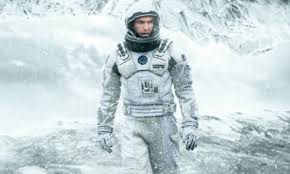
When Christopher Nolan’s Interstellar blasted into theaters in 2014, it didn’t just arrive as another sci-fi film; it landed as a cultural event, a scientific conversation starter, and a deeply emotional familial drama wrapped in a cosmic blanket. The discourse it ignited was as vast as the wormhole at its center. To examine interstellar reviews is to take a journey through a fascinating constellation of critical admiration, scientific debate, public awe, and polarized opinion. This article isn’t just a retrospective of what critics said; it’s an exploration of why Interstellar continues to captivate, confound, and command discussion nearly a decade later. We’ll navigate the black holes of its plot, the shining stars of its performances, the complex equations of its scientific ambition, and the enduring legacy it has carved into the annals of cinematic history.
The initial wave of interstellar reviews set the stage for everything that followed. Critics approached the film with immense anticipation, given Nolan’s pedigree with mind-bending blockbusters like Inception and The Dark Knight trilogy. The early consensus was one of overwhelming respect for its ambition. Here was a film that dared to visualize a five-dimensional tesseract, that wrestled with the physics of relativity in a way that made audiences ponder time as a tangible dimension, and that paired these colossal ideas with the intimate story of a father leaving his children, potentially forever. This blend of the cosmically grand and the painfully human became the central thread in almost every piece of criticism, for better or worse. Some saw it as a profound synthesis; others viewed it as a narrative that strained under the weight of its own conceptual gravity.
The Critical Event Horizon
The critical reception of Interstellar formed a fascinating spectrum, much like the light bending around Gargantua. It was met with a significant number of stellar accolades and thoughtful, measured critiques, creating a dialogue that extended far beyond simple star ratings.
On one end, many publications hailed it as a monumental achievement. Reviews celebrated its visual grandeur, orchestrated by Hoyte van Hoytema’s breathtaking cinematography, and its emotional core, driven by Matthew McConaughey’s raw performance as Cooper. The film was praised for its earnest attempt to grapple with real scientific concepts, guided by the expertise of theoretical physicist Kip Thorne. This scientific backbone gave the narrative a weight and a sense of wonder that felt fresh and intellectually stimulating. As one critic noted, it was a film that “made astrophysics feel urgently human.” The sheer scale of its ambition was often its greatest selling point; in an era of safe franchise filmmaking, Interstellar was seen as a bold, original, and intellectually risky endeavor.
Conversely, another strand of interstellar reviews pinpointed what some saw as the film’s weaknesses. A common critique focused on the dialogue, particularly in the film’s latter half, where exposition about love being a quantifiable, trans-dimensional force left some viewers and critics cold. They argued that Nolan’s clinical, plot-driven style occasionally clashed with the story’s emotional beats, making moments intended to be profound feel overly explanatory or sentimental. The character of Dr. Mann, played by Matt Damon, was sometimes cited as a narrative misstep—a twist that felt more like a conventional thriller element inserted into a otherwise unconventional epic. These reviews didn’t dismiss the film’s power but suggested its reach sometimes exceeded its grasp, creating a divisive but intensely engaging cinematic object.
The Science of Spectacle
Perhaps no aspect of Interstellar generated more post-screening discussion than its dedication to scientific authenticity. This wasn’t just set dressing; it was a narrative engine. The interstellar reviews from both film critics and scientific communities created a unique crossover event.
Nolan and Thorne’s collaboration aimed for a depiction of space travel and cosmic phenomena that was as accurate as possible, given the story’s speculative elements. The rendering of the supermassive black hole Gargantua, for instance, was a landmark achievement. The visual effects team, led by Double Negative, developed new software to accurately model the gravitational lensing of light around a rotating black hole, leading to a scientifically informed image that was later used in actual academic research. The depiction of time dilation on Miller’s planet, where one hour equals seven years on Earth, became a central, heartbreaking plot device that viscerally demonstrated Einstein’s theory of general relativity in a way textbooks never could. This commitment earned the film immense praise from scientists and educators for popularizing complex physics.
However, this scientific rigor lived alongside clear fictional liberties, and interstellar reviews often debated this balance. The film’s third act ventures firmly into the realm of science fiction speculation with the tesseract—a higher-dimensional space allowing Cooper to perceive and interact with his daughter’s past. While rooted in theoretical ideas like bulk beings and closed timelike curves, this narrative resolution divided audiences. Purists of hard sci-fi found it a jarring shift from the relatively grounded physics of the wormhole and black hole. Others, however, defended it as a necessary metaphorical leap, arguing that the film always positioned love and human connection as fundamental, if not yet understood, forces in the universe. This tension between quantifiable science and qualitative human experience is the very heart of the film’s thematic struggle.
A Universe of Emotion
Beneath the quantum physics and interstellar travel, Interstellar is, at its core, a story about parents and children. The critical and audience response to its emotional engine is what ultimately gives the film its lasting resonance.
Matthew McConaughey’s Cooper is not a traditional hero on a mission to save humanity; he is a father painfully aware that his journey may cause him to miss his children’s entire lives. The scene where he watches 23 years of backlogged video messages from a weeping, aging son and a daughter who has given up on him is a masterclass in silent performance, conveying a universe of regret and sorrow. Jessica Chastain, as the adult Murph, delivers a steely, resentful intensity that grounds the Earth-bound storyline. The relationship between Cooper and Murph is the fragile thread that ties the cosmic to the kitchen-sink, making the stakes feel unbearably personal. Many interstellar reviews highlighted this dynamic as the film’s greatest triumph, the element that prevented its grand ideas from floating away into cold abstraction.
Hans Zimmer’s score is an inseparable character in this emotional landscape. Moving away from his brass-heavy themes for the Dark Knight films, Zimmer crafted an intimate, organic sound centered around pipe organs and clocks. The music doesn’t just accompany the action; it articulates the film’s central themes of time, gravity, and connection. The track “Stay,” used during the heart-wrenching launch sequence, and the thunderous, awe-inspiring organs of “Mountains” on Miller’s planet, are perfect examples of sound and image merging to create profound emotional and sensory experiences. This auditory component was almost universally praised in interstellar reviews, noted for its ability to elevate the narrative’s emotional and spiritual dimensions.
Visualizing the Unseeable
From a purely cinematic standpoint, Interstellar is a landmark of visual storytelling. Nolan’s insistence on using practical effects, miniatures, and real locations wherever possible gives the film a tangible, gritty reality that many CGI-heavy spectacles lack.
The spacecraft Endurance was a meticulously detailed physical model. The dustbowl landscapes of future Earth were shot in real agricultural fields in Alberta, Canada, with practical dust and dirt. Even the zero-gravity effects were achieved through ingenious in-camera techniques, including building rotating sets. This commitment to practicality pays off in every frame; you feel the weight, the grit, and the scale. The visual effects, when used, serve to extend this reality into the impossible, rather than create a wholly synthetic world. The results are sequences of unparalleled majesty: the silent, terrifying spin toward Gargantua, the skyscraper-high waves of Miller’s planet, and the mind-bending interior of the tesseract. Interstellar reviews consistently applauded this visual philosophy, noting how it created a sense of awe that felt earned and authentic.
The film’s aspect ratio shifts also became a point of discussion. Nolan shot the Earth-based scenes in a standard widescreen format but expanded to the full IMAX 70mm ratio for the space sequences. This wasn’t a mere gimmick; it was a deliberate directorial choice to make the audience physically feel the shift in perspective—from the confined, troubled life on a dying planet to the overwhelming, boundless scope of the cosmos. In theaters, especially IMAX, this transition was breathtaking, literally opening up the top and bottom of the frame to reveal staggering vistas. This technical decision underscored the film’s theme of transcendence and remains a benchmark for how format can serve narrative.
The Legacy and Ongoing Debate
The true measure of a film’s impact is not its opening weekend gross, but the conversations it sparks years later. By that metric, Interstellar is a titan. The landscape of interstellar reviews has evolved from initial reactions to a sustained analysis of its place in culture, science, and cinema.
In the years since its release, the film has cultivated a massive and devoted following. It is frequently cited in online forums, social media, and academic settings as a transformative viewing experience. Its quotes—”Do not go gentle into that good night,” “Murph!,” “Love is the one thing we’re capable of perceiving that transcends dimensions of time and space”—have become ingrained in popular culture. It has inspired countless video essays, scientific explainers, and philosophical discussions. This afterlife is a testament to its richness; it is a film that rewards, and arguably demands, repeat viewings. New audiences continue to discover it, often finding its environmental warnings and themes of human connection more relevant with each passing year.
The debate over its final act and its core messages continues with undiminished passion. Is it a flawed masterpiece or a perfectly realized vision? The very existence of this vibrant, ongoing debate is perhaps the strongest indicator of the film’s success. It is not forgettable. It challenges, provokes, and moves people in equal measure. As one later retrospective interstellar review put it, “The films we argue about are often the ones we care about the most. Interstellar is not a comfortable, easily categorized experience. It is an emotional and intellectual journey that leaves a gravitational pull on the viewer, long after the credits roll.”
Beyond the Critical Consensus
To understand Interstellar fully, one must also look at the elements that resonated on a human level, beyond critical analysis. The film’s philosophical underpinnings and its bold narrative structure have made it a subject of deep personal reflection for many.
The film poses fundamental questions about humanity’s role in the universe. Is our purpose merely to survive, or is it to connect, to love, and to ensure a future for the next generation? Cooper’s journey reframes the “hero’s quest” not as a path to conquest, but as a desperate act of salvation for his children. The film’s ultimate solution is not a weapon or a political treaty, but the transfer of quantum data—a gift of knowledge from father to daughter, across dimensions and time. This reframing of the climax as a deeply personal act, rather than a grand, public victory, is what makes the story so profoundly affecting. It suggests that the most universe-altering forces are not found in nebulae or black holes, but in the bonds between people.
Furthermore, Nolan’s non-linear storytelling, a hallmark of his work, finds perhaps its most emotional expression here. Time is the true antagonist of Interstellar. The film’s structure makes us feel its passage in a deeply subjective way—agonizingly slow during Cooper’s wait on the Endurance after Miller’s planet, and heartbreakingly fast in the montage of Murph’s life on Earth. We experience time as the characters do: as a resource, a prison, and a mystery. This structural genius ensures that the high-concept science is always in service of the human drama, creating a cohesive and unforgettable narrative experience.
A Comparative Look at Critical Reception
To visualize the spectrum of critical opinion, we can look at how different major outlets framed their interstellar reviews upon release. The table below captures this diversity of perspective.
| Publication | Overall Tone | Key Praise | Key Critique |
|---|---|---|---|
| The Guardian | Largely Positive | “A spectacular visionary.” Visual grandeur, emotional power. | “Overreaching and sentimental.” The third-act metaphysics. |
| Variety | Mixed | “A daring cosmic adventure.” Scale, McConaughey’s performance. | “A chilly, sterile experience.” Emotional beats feel calculated. |
| The New York Times | Positive | “A sweeping, futuristic adventure.” Intelligence, awe-inspiring scenes. | The plot “buckles under its own weight” in final stretches. |
| RogerEbert.com | Highly Positive | “One of the most emotional film experiences.” The father-daughter heart. | Acknowledges the “silly” elements but embraces the ambition. |
| The Telegraph | Highly Positive | “A film of grand ideas and profound emotion.” A masterpiece of scale. | The science may lose some viewers in the final act. |
Voices from the Void
The film is also rich with dialogue that has fueled its legendary status. Here are a few quotes that encapsulate its themes and are frequently highlighted in interstellar reviews and fan discussions:
“We used to look up at the sky and wonder at our place in the stars. Now we just look down and worry about our place in the dirt.” – Cooper
This line perfectly sets up the film’s central conflict: the struggle between humanity’s myopic survivalism and its innate, exploratory destiny.“Love isn’t something we invented. It’s observable, powerful. It has to mean something.” – Brand
This is the line that most divides audiences. For some, it’s a beautiful thesis statement; for others, it’s an overly simplistic solution to a complex scientific puzzle.“Mankind was born on Earth. It was never meant to die here.” – Cooper
This embodies the film’s spirit of existential hope and its argument for the necessity of space exploration as an evolutionary imperative.
Conclusion
The journey through the vast and varied galaxy of interstellar reviews reveals a simple truth: Interstellar is a film that defies easy categorization and passive consumption. It is a monumental technical achievement, a heartfelt family drama, a rigorous scientific thought experiment, and a philosophical inquiry into love and time, all woven into a single cinematic tapestry. Its initial reception, a mix of awe and critique, has matured into a recognition of its unique and enduring place in film history. The debates over its scientific accuracy and narrative choices are not signs of failure, but proof of its ambition—it aimed for the stars and, in doing so, created a gravitational pull that continues to draw audiences into deep reflection. Whether viewed as a flawed masterpiece or a perfect one, Interstellar stands as a bold testament to the power of cinema to explore the biggest questions we can ask, reminding us that in the vast, cold calculus of the cosmos, the most powerful force may indeed be our connection to each other.
Frequently Asked Questions About Interstellar
What is the general consensus in interstellar reviews?
The general consensus from interstellar reviews is that the film is a breathtakingly ambitious and visually stunning achievement that blends hard science with emotional storytelling. While most critics and audiences praised its scale, performances, and intellectual depth, a common point of division is the film’s third act, where some found the embrace of love as a transcendent, quantifiable force to be a jarring or sentimental shift from its earlier scientific rigor. Overall, it is widely regarded as a thought-provoking and emotionally resonant epic, even among those who critique its narrative choices.
How scientifically accurate is Interstellar, according to experts?
Interstellar reviews from scientific circles have been notably positive regarding its accuracy, thanks to physicist Kip Thorne’s involvement. The depiction of the black hole Gargantua, gravitational time dilation on Miller’s planet, and the visual representation of the wormhole are considered remarkably accurate based on current physics. However, experts are clear that the film takes speculative liberties, particularly with the tesseract and the idea of manipulating gravity through love. It’s praised for being “the most scientifically accurate Hollywood film” on many points while freely venturing into science fiction for its plot’s climax.
Why do some people find the ending of Interstellar confusing?
Many interstellar reviews and audience discussions point to the film’s ending as a point of confusion because it transitions from relatively grounded astrophysics to abstract, higher-dimensional concepts. Cooper entering the tesseract—a physical manifestation of five-dimensional space built by “future humans” behind the bookshelf—allows him to interact with gravity across time. This idea, combining theoretical physics (bulk beings, closed timelike curves) with a metaphysical concept (love as a communicable force), requires a significant narrative and philosophical leap that not all viewers are prepared to make, leading to interpretations that range from brilliant to baffling.
How did Matthew McConaughey’s performance impact interstellar reviews?
Matthew McConaughey’s performance as Cooper was almost universally highlighted as a standout element in interstellar reviews. His portrayal of a brilliant pilot and devoted father grounded the film’s cosmic scale in raw, relatable emotion. Critics noted that his ability to convey longing, regret, and determination—especially in silent moments like watching his children’s video messages—provided the essential human heart that kept the narrative from feeling cold or overly clinical. His performance is frequently cited as the emotional anchor that makes the film’s grand themes resonate on a personal level.
Has the perception of Interstellar changed since its release?
Absolutely. A fascinating trend in retrospective interstellar reviews and cultural discourse is the film’s significant reappraisal and growing stature. Initially met with a mix of admiration and critique, it has since developed a massive and devoted following. Many who found it overwhelming or confusing in theaters have revisited it, finding new layers of meaning and emotional depth. Its themes of environmental decay, human resilience, and love feel increasingly prescient. Today, it is often cited not just as a great sci-fi film, but as one of the most ambitious and discussion-worthy films of the 21st century, with a legacy that continues to expand.