
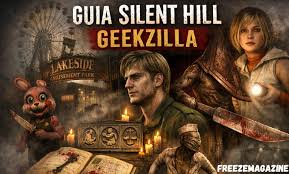
The world of horror video games is vast, but one name has stood above the fog for over two decades, whispering unsettling truths about the human psyche: Silent Hill. More than a collection of jump scares and grotesque monsters, it’s a meticulously crafted journey into personal trauma, guilt, and the darkest corners of our subconscious. This guia silent hill geekzilla serves as your definitive companion through this haunting universe. Whether you’re a curious newcomer drawn by the legendary reputation or a veteran survivor returning to the town’s fog-shrouded streets, this guide offers more than just puzzle solutions and boss strategies. It’s a deep dive into the artistry, symbolism, and psychological mastery that transformed a 1999 PlayStation title into a cultural touchstone, a franchise that has collectively sold over 14 million copies and redefined an entire genre.
This guia silent hill geekzilla is designed to enhance your understanding and appreciation of the series. We will explore the origins and key titles that built the legacy, decode the profound symbolism of its monsters and locations, master the survival tactics crucial for navigating its horrors, and examine the creative vision that continues to inspire new projects. Consider this your map, your radio, and your flashlight—essential tools for illuminating the dark path ahead and surviving the unforgettable experience that is Silent Hill.
The Birth of a Nightmare: Understanding the Silent Hill Franchise
To truly grasp the depth of the guia silent hill geekzilla, one must start at the beginning. The Silent Hill franchise was born from a desire to create a different kind of horror. Konami, seeking a hit in the Western market, assembled “Team Silent,” an internal group of developers with a passion for psychological terror and cinematic storytelling. The first game, released in 1999 for the PlayStation, broke away from the campy, B-movie aesthetics of its contemporaries. Instead of trained special forces agents, players controlled Harry Mason, an everyman searching for his missing daughter in a mysterious, fog-choked town. This focus on an ordinary protagonist was revolutionary, making the horror feel more intimate and relatable.
The series is primarily set in the fictional, abandoned resort town of Silent Hill, Maine. However, its true setting is the human mind. The town acts as a mirror or a psychic amplifier, manifesting the inner turmoil, guilt, and fears of those who enter it. While some games, like the first, Silent Hill 3, and Origins, are tied to a central cult mythology involving a deity and a burned girl named Alessa, others are intensely personal. Silent Hill 2, widely considered the pinnacle of the series, is a standalone story about a man named James Sunderland confronting the truth about his wife’s death. This dual narrative approach—intertwining a larger, supernatural lore with intimate, character-driven tragedies—is a cornerstone of the franchise’s enduring appeal, a key point in any comprehensive guia silent hill geekzilla.
Table: The Core Silent Hill Series at a Glance
| Game & Release Year | Protagonist | Central Theme | Developer |
|---|---|---|---|
| Silent Hill (1999) | Harry Mason | Parental love, cult mythology | Team Silent (Konami) |
| Silent Hill 2 (2001) | James Sunderland | Grief, guilt, punishment | Team Silent |
| Silent Hill 3 (2003) | Heather Mason | Identity, destiny, legacy | Team Silent |
| Silent Hill 4: The Room (2004) | Henry Townshend | Isolation, voyeurism, trauma | Team Silent |
| Silent Hill: Origins (2007) | Travis Grady | Paternal failure, personal demons | Climax Studios |
After Team Silent disbanded following Silent Hill 4, development shifted to Western studios, leading to a mixed reception for titles like Homecoming (2008) and Downpour (2012). The franchise entered a long period of silence, broken only by the groundbreaking but canceled “P.T.” demo in 2014. However, Konami has recently revived the series with new projects, including the Silent Hill 2 remake by Bloober Team, the all-new Silent Hill f, and a remake of the original game. This revival underscores the timeless power of the series’ core concepts and ensures that the lessons of this guia silent hill geekzilla remain as relevant as ever.
Decoding the Fog: Symbolism and Psychological Horror in Silent Hill
If there is one element that every expert analysis in a guia silent hill geekzilla must emphasize, it is the franchise’s masterful use of symbolism. Silent Hill is not about external monsters; it’s about internal ones. The town and its horrors are physical manifestations of a character’s psychological state. This transforms the gameplay from a simple fight for survival into a harrowing journey of self-confrontation. The iconic fog, born from technical limitations of the original PlayStation, became the perfect metaphor for confusion, the unknown, and the murky depths of memory. Similarly, the shift to the “Otherworld”—a rusted, bloody, and industrial version of reality—represents a descent into a character’s personal hell, a nightmare landscape shaped by their trauma.
The monsters are the most potent examples of this symbolic storytelling. They are not randomly designed to be scary; they are meticulously crafted to reflect a protagonist’s specific psychological wounds. In Silent Hill 2, Pyramid Head is not just a terrifying pursuer. He is the embodiment of James Sunderland’s need for punishment and self-loathing, a silent judge and executioner born from his guilt. The infamous Nurses, with their grotesque, twitching forms, symbolize James’s sexual frustration and the medical trauma associated with his wife’s illness. Even the lesser creatures, like the crawling “Mannequins,” connect to James’s fractured psyche and repressed desires. As one fan on the Silent Hill Wiki noted, understanding these connections is key to appreciating the game’s artistry: “The monsters aren’t just threats; they reflect the inner turmoil of characters”.
This psychological depth extends to the environments and narrative structure. Locations like Brookhaven Hospital or Toluca Prison are not just scary levels; they are extensions of the characters’ minds, filled with symbolic puzzles and imagery. The series is also famous for its multiple endings, which are directly tied to the player’s actions and how they guide the protagonist through their emotional journey. Will James accept the truth or reject it? Will Heather embrace her destiny or defy it? Your choices matter, and the ending you receive is a direct reflection of the character’s (and by extension, your) psychological resolution. This focus on “corruption in the world, humanity, society” and the idea that humans are the true monsters sets Silent Hill apart as a work of profound psychological horror.
“What truly sets Silent Hill apart from other survival horror games is its psychological depth and the symbolism hidden throughout the series. The guide goes beyond the plot and explains the deeper meanings of the story, characters, and settings.”
A Survivor’s Handbook: Core Gameplay Mechanics and Essential Strategies
Navigating the guia silent hill geekzilla requires more than just courage; it demands strategic thinking and an understanding of the franchise’s unique survival mechanics. Unlike action-oriented horror games, Silent Hill prioritizes atmosphere, exploration, and resource management over combat. Your character is almost always an underpowered everyman, making direct confrontation a risky last resort. The first rule of survival is to conserve your resources. Ammunition and healing items are notoriously scarce. Engaging every enemy you encounter is a sure path to an early grave. The guia silent hill geekzilla encourages using melee weapons when possible and learning when to simply run away. Your flashlight and radio are your most vital tools—the former illuminating treacherous paths and hidden clues, the latter emitting static to warn of unseen dangers lurking in the fog.
Exploration is not optional; it is the heart of the experience. Silent Hill’s towns, buildings, and otherworldly corridors are dense with secrets, essential items, and narrative clues. A critical tip from any seasoned guia silent hill geekzilla is to search every room thoroughly and revisit locations with new items or keys. Maps, often found on walls or in drawers, are lifesavers for navigating the maze-like streets and buildings. Furthermore, puzzle-solving is a cornerstone of gameplay. These aren’t simple lock-and-key affairs but often cryptic, thematic brain-teasers that require careful observation of the environment and note-taking. From deciphering poetic riddles to assembling obscure items, patience and attention to detail are your greatest allies.
Combat, when unavoidable, is clunky and stressful by design—this is intentional, reinforcing your character’s vulnerability. Aiming is unsteady, and swinging a pipe leaves you open to attack. The key is observation: learn enemy patterns, use doorways to funnel threats, and prioritize targets. Boss battles often require understanding the symbolic weakness of the creature rather than just emptying bullets into it. Managing your inventory is a constant mini-puzzle, forcing you to make tough choices about what to carry. As one guide succinctly puts it: “Inventory management is crucial in Silent Hill. Only carry essential items and be strategic when using healing items”. By internalizing these principles—conservation, exploration, observation, and puzzle-solving—you transform from a helpless victim into a determined survivor, ready to face whatever psychological horrors the town manifests.
The Unseen Character: Sound Design, Music, and Visual Atmosphere
Any complete guia silent hill geekzilla would be remiss if it did not dedicate significant space to the elements you feel as much as see: the sound and visual design. These are not mere background features; they are active, essential components of the horror, often called the “invisible character” of Silent Hill. Composer Akira Yamaoka’s legendary work defines the series’ auditory soul. His scores blend melancholic melodies, industrial noise, and unsettling ambient soundscapes that get under your skin. The music doesn’t just accompany the action; it dictates the emotional tone, building dread, offering fleeting moments of somber beauty, and then shattering the silence with terrifying cues.
The sound design is a masterclass in psychological tension. The incessant static of your radio, growing more frantic as danger approaches, is a unique mechanic that creates unparalleled anxiety. Distant, unidentifiable sounds—a child’s laughter, a dragging chain, a sudden slam—fill the fog with imagined terrors. The oppressive silence can be even more frightening, making every footstep you take echo with vulnerability. This meticulous audio work ensures you are never comfortable, keeping your nerves constantly on edge. As highlighted in many analyses, “The sound design in Silent Hill is particularly noteworthy. The subtle sound effects, such as creaking doors and distant footsteps, add to the overall sense of isolation and impending doom”.
Visually, the series pioneered an aesthetic of decay and unease. The ubiquitous fog, initially a technical workaround, became the franchise’s signature, limiting visibility and creating a palpable sense of claustrophobia and mystery. The transition to the Otherworld is a visceral shock, replacing the gray fog with rust, blood, chain-link fences, and pulsating flesh. The lighting is crucial, with your flashlight carving a fragile cone of vision through overwhelming darkness, revealing horrors piece by piece. The creature design, as discussed, is symbolic and disturbing, avoiding generic zombies for forms that feel deeply wrong on a psychological level. Together, this cohesive audio-visual philosophy creates an atmosphere that is consistently immersive and terrifying, proving that true horror is crafted not just with monsters, but with mood, sound, and shadow.
The Legacy and Future: Silent Hill’s Enduring Influence and Revival
The impact of Silent Hill on the horror genre and gaming culture at large is the final, crucial chapter of any authoritative guia silent hill geekzilla. The franchise’s legacy is immense. It demonstrated that video games could deliver sophisticated, adult-oriented psychological horror on par with literature and film. By prioritizing atmosphere, symbolism, and character trauma over visceral action, it carved a distinct path separate from series like Resident Evil, inspiring countless developers to explore deeper, more personal fears. Games like Forbidden Siren, Dead Space, and modern indie darlings like Layers of Fear (developed by Bloober Team, who are now shepherding the remake of Silent Hill 2) all owe a clear debt to the groundwork laid by Team Silent.
The series’ influence extends beyond games into films, comics, and a deeply passionate global fan community. The fan-driven guia silent hill geekzilla itself is a testament to this engagement. Forums, wikis, and social media are alive with theory-crafting, analysis, and fan art, dissecting every detail of the lore and symbolism. This community kept the flame alive during the franchise’s long dormancy. Today, Silent Hill is experiencing a significant renaissance. Konami’s revival initiative includes the critically examined Silent Hill: Ascension, the free teaser The Short Message, the highly anticipated Silent Hill 2 remake, and entirely new entries like Silent Hill f and Townfall. This new wave introduces the series to a new generation while testing how its core themes translate with modern technology and development sensibilities.
The future of Silent Hill is once again shrouded in fog, but it is a future filled with possibility. The core philosophy that defines the series—that horror is a personal, psychological journey—remains its greatest strength. Whether through remakes that reintroduce the classics or new stories that expand the mythos, the town of Silent Hill continues to call to those with darkness in their hearts. This guia silent hill geekzilla equips you not just to survive that call, but to understand it, to appreciate the profound artistry behind the terror, and to see why, decades later, the sirens of Silent Hill still echo so powerfully in the world of horror.
Frequently Asked Questions (FAQs)
What is the best order to play the Silent Hill games for a new fan using this guia silent hill geekzilla?
For newcomers, the best entry point is often the original Silent Hill (or its upcoming remake) or Silent Hill 2. Starting with the first game establishes the core town mythology and cult story, which is continued directly in Silent Hill 3. Silent Hill 2 is a standalone masterpiece of psychological horror and is considered the series’ peak by many. This guia silent hill geekzilla recommends either starting with SH1 for the overarching plot or SH2 for the most impactful personal horror experience. The Western-developed titles like Homecoming and Downpour are best approached after the Team Silent classics.
How does the guia silent hill geekzilla recommend dealing with the limited combat resources?
The guia silent hill geekzilla stresses that combat is a last resort. Your primary strategy should be evasion. Use your radio’s static to detect enemies and navigate around them when possible. If you must fight, use melee weapons (like the pipe or plank) on weaker foes to conserve precious ammunition for bosses or unavoidable groups. Always explore thoroughly to find every possible resource, and don’t be afraid to run from a fight you can’t win. Managing fear is as important as managing your inventory.
What’s the significance of the multiple endings, and how do I achieve them?
The multiple endings are a direct narrative reflection of the protagonist’s psychological journey and your choices as a player. They can range from “Good” endings offering redemption or escape to “Bad” endings steeped in tragedy or denial, and even joke “UFO” endings. Achieving them depends on specific, often subtle actions: how you treat other characters, examining key items, your combat behavior, and even your overall play style (e.g., being injured often). A complete guia silent hill geekzilla will provide spoiler-free hints, but part of the magic is discovering these paths yourself on subsequent playthroughs.
Why is the sound design and music so important in Silent Hill, as highlighted in this guide?
The sound design and Akira Yamaoka’s music are fundamental to the horror. They create the atmosphere of dread, isolation, and tension before you ever see a monster. The radio static is a unique gameplay mechanic that creates proactive fear. The music shifts seamlessly between haunting melodies and industrial noise to mirror and manipulate your emotional state. As this guia silent hill geekzilla emphasizes, playing with headphones is highly recommended to fully experience this masterful, “invisible” layer of the game’s design.
With the new remakes and games coming out, is the original guia silent hill geekzilla still relevant?
Absolutely. The core principles explored in this guia silent hill geekzilla—understanding psychological symbolism, mastering survival-horror resource management, appreciating atmospheric design—are timeless and form the foundation of the entire franchise. While specific puzzle solutions or controls may differ in remakes like the upcoming Silent Hill 2, the thematic heart, enemy meanings, and strategic mindset remain unchanged. This guide prepares you to understand and appreciate any entry in the series, old or new, on a deeper level.
https://headlinenest.com/the-land-of-saints-and-sinners/
Conclusion
This comprehensive guia silent hill geekzilla has journeyed through the fog, from the franchise’s groundbreaking origins to its symbolic depth, from essential survival tactics to its unparalleled atmospheric craft. Silent Hill is more than a game; it is an experience that lingers, a psychological exploration that uses the medium of interactive horror to ask difficult questions about guilt, trauma, and the self. The town’s power lies not in its monsters, but in its mirror, reflecting what we fear most within ourselves. With the insights from this guide—the maps, the strategies, and the deeper understanding of the artistry at play—you are now equipped to step into the fog not just as a player, but as an interpreter. You are ready to face the personal horrors of Silent Hill, to listen to its unsettling truths, and to emerge with a profound appreciation for one of the most influential and enduring masterpieces of horror in any medium. The siren is calling. Your journey awaits.
