There’s something timeless and welcoming about the gentle crunch of a gravel driveway under your tires as you arrive home. For generations, homeowners have chosen gravel for its classic aesthetic, rustic charm, and undeniable practicality. But a gravel driveway is far more than just a pile of stones; it’s a carefully engineered system that, when done correctly, provides a durable, cost-effective, and beautiful surface that can last a lifetime. Whether you’re looking to install a new driveway or revitalize an old one, understanding the complete picture—from material selection and proper base construction to long-term maintenance—is the key to success. This comprehensive guide will walk you through every step of the journey, transforming the complex into the achievable and helping you create a driveway that not only looks fantastic but functions perfectly for years to come. The journey to a perfect gravel driveway begins long before the first stone is laid, starting with a vision for your home’s entrance and a solid plan to make it a reality.
Why a Gravel Driveway Might Be Your Perfect Choice
Choosing the right surface for your home’s entrance is a significant decision, impacting everything from daily convenience and maintenance chores to your property’s overall curb appeal and value. Gravel stands out as a compelling option for a wide range of homes and lifestyles, offering a unique blend of benefits that are hard to match with other materials. While every driveway material has its place, understanding the inherent advantages of gravel helps clarify if it’s the right fit for your needs and budget.
One of the most immediate and persuasive benefits of a gravel driveway is its cost-effectiveness. Compared to poured concrete or asphalt, the initial installation cost is significantly lower. Nationally, the average cost for installing a gravel driveway is around $1,500, with many projects falling in the $600 to $1,800 range. This stands in stark contrast to the typical $3,090 to $7,910 for an asphalt driveway or even higher costs for concrete. This affordability makes a high-quality, attractive entrance accessible without a massive upfront investment. Beyond the initial price, gravel driveway offer excellent permeability. Unlike solid surfaces, water drains naturally through the stones and the sub-base, replenishing groundwater and dramatically reducing stormwater runoff that can contribute to local flooding. This natural drainage also means you’re less likely to face issues with standing water, ice patches, or the cracking and heaving caused by freeze-thaw cycles under impermeable surfaces.
Furthermore, gravel is incredibly versatile in its aesthetic appeal. It’s not a one-look-fits-all solution. You can choose from a palette of colors—from warm golds and browns to cool grays, stark whites, or even bold slate chips—to complement your home’s exterior and landscaping. The texture and sound of gravel add a layer of sensory charm that hard surfaces lack. When it comes to longevity, a well-constructed gravel driveway is a long-term asset. With proper foundational work and basic maintenance, these driveways are known to last for decades, with some even reaching a century of service. The repairability is also a major plus; if a rut or pothole develops, the fix is often as simple as raking and adding a bit of fresh stone, a task far easier and cheaper than repairing cracked concrete or broken asphalt.
Selecting the Right Gravel for Your Driveway
The term “gravel” encompasses a wide variety of crushed stone and rock, and not all types are created equal for driveway use. Making the wrong choice can lead to a host of problems, from stones getting stuck in tire treads and tracked into your home to a surface that shifts and ruts excessively. Your choice in gravel will influence the driveway’s functionality, durability, maintenance needs, and final appearance, so it’s a decision worth careful consideration.
The most critical factor is the stone’s shape and size. For the surface layer of a driveway, angular gravel is vastly superior to rounded pebbles. Crushed stone, with its jagged, fractured edges, interlocks when compacted, creating a stable surface that resists displacement under vehicle weight. Popular angular options include crushed granite, limestone, and certain types of slate. In contrast, rounded stones like pea gravel or river rock roll and shift freely, making them poor, unstable choices for driving surfaces, though they can be lovely for decorative borders or footpaths. For size, a 14mm to 20mm (roughly 1/2 to 3/4 inch) stone is widely recommended. Stones smaller than 10mm can easily become embedded in tire treads, while stones much larger than 20mm can be uncomfortable to walk on and may not compact as effectively.
Table: Common Gravel Types for Driveways
| Gravel Type | Typical Size | Key Characteristics | Best For |
|---|---|---|---|
| Crushed Granite | 14mm-20mm | Angular, very hard, durable, excellent drainage. | High-traffic driveways, areas needing maximum stability. |
| Crushed Limestone | 14mm-20mm | Angular, compacts well, often lighter in color. Can break down over time. | General-purpose driveways, cost-effective option. |
| Pea Gravel | 6mm-10mm | Small, smooth, and rounded. Unstable for driving surfaces. | Decorative paths, playgrounds, garden beds—not driveways. |
| “Crush and Run” | Mixed (Stone & Dust) | A mix of crushed stone and stone dust. Compacts into a very solid, hard surface. | Driveway base layers or sub-base material. |
Material hardness is another key consideration. Harder stones like granite, flint, or basalt will withstand the pressure and abrasion of vehicle traffic far better than softer stones like limestone. A harder stone will maintain its shape and size longer, meaning your driveway surface will last longer before needing a top-up. Finally, color is the personal touch. Beyond aesthetics, consider practicalities: lighter-colored gravel can brighten a shady area, while multi-tonal gravels are excellent at disguising dirt and debris. Be mindful that darker colors, like black slate, will absorb more heat. As one landscaping expert notes, choosing the right gravel is about balancing “what you’re building and how you want it to look and feel”.
The Critical Importance of a Solid Foundation
If the gravel you see is the “show,” then the foundation you don’t see is the “go.” Arguably, the most important part of any gravel driveway project happens before a single decorative stone is placed. A weak or improperly built foundation is the primary reason gravel driveways fail, leading to ruts, potholes, sinkholes, and weed infestations. Investing time and resources into this stage is non-negotiable for a durable, long-lasting result. The foundation system is a multi-layered engineering feat designed to bear weight, manage water, and prevent the intermixing of materials.
The process begins with excavation. You must dig out the entire driveway area to remove all organic topsoil, which is poor at bearing weight and retains water. The total depth of your excavation will depend on your final design but typically ranges from 200mm to 300mm (8 to 12 inches) to accommodate both the sub-base and the surface gravel. A critical safety warning: Before any digging, you must locate all underground utilities—gas, water, electricity, sewer, and communication lines. Contact your local utility locating service (often called “Call Before You Dig”) to have them marked. Excavating without this knowledge is dangerous and can be incredibly costly. Once excavated, the exposed soil should be compacted with a mechanical plate compactor or roller to create a firm starting point.
Next comes the geotextile membrane, a permeable fabric often mistaken as a simple weed barrier. Its primary role is separation. It is laid directly on the compacted soil to prevent the sub-base material above from mixing with the soft soil below, especially under wet conditions. This separation maintains the structural integrity of the sub-base, which is the true workhorse of the driveway. The sub-base, typically made of a material like MOT Type 1 or Type 3 aggregate, is a graded mix of crushed stone ranging from 40mm down to dust. It is installed in layers, with each layer being thoroughly compacted. A minimum depth of 100-150mm (4-6 inches) is recommended for domestic driveways. When compacted, the different-sized particles interlock to form a incredibly strong, load-bearing layer that distributes the weight of vehicles and resists deformation. This layer is also highly permeable, allowing water to drain straight through. It’s on top of this engineered, compacted sub-base that your beautiful decorative gravel will finally be laid.
A Step-by-Step Guide to Installing Your Gravel Driveway
Turning a planned excavation into a finished, functional gravel driveway is a step-by-step process that rewards patience and attention to detail. While it is a project a determined DIYer can tackle, understanding the scope of each phase helps in planning, whether you’re doing it yourself or hiring a professional. The process blends heavy labor with precise finishing work, culminating in the satisfying final layer of stone. Proper execution at each stage ensures your hard work translates into a driveway that performs beautifully for years.
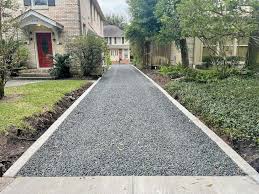
After the sub-base has been fully compacted and leveled, it’s time to address edging. Edging is not merely decorative; it is a functional necessity that contains the gravel, defines the driveway’s shape, and prevents the stones from spilling onto lawns or gardens. Options range from formal brick or concrete curbs to natural boulders or pressure-treated timber. The edging should be installed and secured (often with concrete or stakes) so its top is slightly higher than the final gravel level, creating a lip that holds everything in place. For driveways on a slope, a gravel stabilization grid system is highly recommended. These are interlocking plastic or geocell grids laid on the sub-base and filled with gravel. They lock the stones in place, preventing them from washing or sliding downhill, and are a game-changer for sloped installations.
Now, for the final and most rewarding step: laying the gravel. Dump piles of your chosen decorative stone onto the prepared base and use a landscape rake or shovel to spread it evenly. The target depth for the gravel surface layer is about 50mm (2 inches). A common mistake is laying the gravel too deep; this doesn’t add strength (the sub-base handles that) and can actually lead to excessive rutting as tires sink in. Once spread, use the rake to create a gentle crown—a slight rise in the center of the driveway that slopes down to the edges. This crown is crucial for directing rainwater runoff off the surface and preventing puddles from forming. Finally, a light spraying with a garden hose can help settle the dust and bring out the vibrant colors of the stone. As the team at This Old House summarizes, the goal is to combine “the aesthetic appeal of gravel with the durability of paved surfaces”.
Understanding the Costs: From Budget to Premium
One of gravel’s biggest attractions is its affordability, but “affordable” can mean a wide range of numbers. The total cost of a gravel driveway isn’t a single price but a sum of variables, including size, materials, site conditions, and labor. Creating a realistic budget requires a clear understanding of these factors, allowing you to make informed choices that align with your financial plan. Whether you’re covering a small parking pad or a long country lane, knowing what drives the cost helps you prioritize and potentially find areas for savings.
The single largest cost driver is the size of the driveway. Costs are frequently calculated per square foot or square meter. For a basic gravel driveway, you can expect to pay between $1 to $3 per square foot for materials and professional installation. To put that in perspective, a standard two-car driveway (roughly 600 sq. ft.) might cost between $1,500 and $1,800 on average, while a single-car drive could be around $600. For very long driveways, like a quarter-mile lane, the total can range from a few thousand dollars to tens of thousands, heavily dependent on local material and excavation costs.
Table: Cost Breakdown for a Gravel Driveway
| Cost Factor | Typical Cost Range | Notes & Considerations |
|---|---|---|
| Gravel Material | $25 – $100 per ton | Varies by type (pea gravel is cheaper, crushed marble more expensive). Color can affect price. |
| Site Preparation | $100 – $6,000+ | Includes grading, excavation, tree/old driveway removal. Highly variable based on site complexity. |
| Sub-Base Material | $30 – $60 per ton | Essential for longevity. MOT Type 1 or similar is standard. |
| Professional Labor | $20 – $60 per hour | Can be 50%+ of total cost on complex sites. DIY saves this but requires time/equipment. |
| Additional Features | Varies Widely | Edging, drainage systems (French drains), gravel grids, and weed membrane add cost but also value and durability. |
Beyond simple size, site preparation is a major variable. If your land is flat, clear, and stable, costs will be at the lower end. If it requires extensive grading, excavation of rocky soil or clay, removal of trees, or demolition of an old concrete driveway (which can cost $2-$6 per sq. ft. to remove), your price will rise significantly. Your choice between DIY and hiring a pro also dramatically affects the bottom line. DIY can save thousands in labor but requires renting equipment (plate compactors, excavators), investing significant physical effort, and accepting the risk of mistakes. Professionals bring expertise, efficiency, and access to commercial-grade materials and equipment, often ensuring a better and longer-lasting result.
Low-Maintenance Gravel Solutions and Innovations
For some, the classic loose gravel driveway, with its need for occasional raking and topping up, is part of its charm. For others, the desire for the gravel aesthetic without the maintenance has driven innovation. Modern solutions now offer the best of both worlds: the natural, permeable look of gravel combined with the stability and low upkeep of a hard surface. Exploring these options can help you decide if a traditional or modernized gravel driveway is right for your lifestyle.
The standout innovation is the chip seal (or tar-and-chip) driveway. This is not a loose stone surface but a paved one. The process involves applying a layer of hot liquid asphalt (bitumen) to a prepared base, immediately followed by a layer of clean, uniform gravel chips. The chips are then rolled into the asphalt, where they become permanently embedded. The result is a textured, gravel-like surface that is completely stable—no loose stones to rake or scatter. It can be plowed in winter (with care), produces almost no dust, and requires virtually no maintenance beyond occasional sealing every few years. While the upfront cost is higher than traditional gravel (typically $2-$5 per sq. ft.), it bridges the gap between gravel and full asphalt, offering superior durability with the desired aesthetic.
For those committed to a traditional loose gravel driveway but wanting to minimize upkeep, gravel stabilization grids are the essential tool. As mentioned for slopes, these grids are equally valuable on flat driveways, especially in high-traffic areas like parking spots. The plastic honeycomb structure confines the gravel, preventing it from shifting laterally under tires and drastically reducing the formation of ruts and the need for frequent raking. They also help distribute vehicle weight more evenly, protecting the sub-base. Another key to low maintenance is robust edging. Strong, well-installed borders keep the gravel contained, eliminating the tedious task of raking stones back from the lawn edges. Finally, choosing the right gravel type from the start—a hard, angular stone in the 20mm size—will naturally resist displacement and last longer before breaking down, reducing the frequency of top-ups. A commitment to these foundational and material choices upfront pays dividends in reduced chores for decades.
Essential Maintenance for a Pristine Gravel Driveway
Even the best-installed gravel driveway requires some care to keep it looking sharp and functioning well. The good news is that gravel driveway maintenance is straightforward, non-technical, and can often be done with common garden tools. A little regular attention prevents small issues from becoming big problems and extends the time between major refreshes. Think of it as periodic grooming rather than hard labor.
The cornerstone of maintenance is regular raking. Using a landscape rake or a spring-tine rake, go over the driveway every few months and seasonally in the fall. This serves multiple purposes: it breaks up compacted areas from tires, redistributes gravel that has gathered in ruts or along the edges, and removes leaves, twigs, and other organic debris. Removing debris is crucial because it prevents a layer of decomposing matter from forming, which can block drainage and become a seedbed for weeds. For light debris like dry leaves, a leaf blower on a low setting can be effective. Weed control is the other ongoing task. Despite a quality geotextile membrane underneath, wind-blown seeds can still find a home in the surface gravel. The easiest method is to pull young weeds by hand as soon as you see them. For more persistent issues, a spot treatment with a glyphosate-based herbicide is effective. Keeping up with raking also helps uproot tiny weed seedlings before they establish.
Every few years, you will likely need to add fresh gravel. Traffic and weather naturally cause some stone loss through displacement, tracking, and gradual breakdown. This is normal. The solution is to keep a bag or two of your original gravel in storage for this purpose. Simply rake the driveway to even it out, then spread a thin, fresh layer (about an inch or two) over the top to replenish the surface. This instantly revives the color and fullness of the drive. For driveways without grids, paying attention to drainage is key. Ensure the crown is maintained so water runs off and doesn’t pool. Check that any drainage ditches or catch basins along the drive are clear of gravel and debris. After a heavy storm, rake gravel back from the edges if it was washed. This simple, cyclical care will keep your gravel driveway in “pristine” condition year-round with minimal effort.
Troubleshooting Common Gravel Driveway Problems
No driveway is immune to issues, and gravel is no exception. However, most problems with a gravel surface are identifiable, understandable, and fixable. Recognizing the signs of common ailments and knowing their remedies empowers you to keep your driveway in top shape, preventing minor annoyances from escalating into costly repairs. Proactive troubleshooting is a hallmark of a well-cared-for property.
The most frequent issue is the formation of ruts and potholes. This is almost always a symptom of an inadequate or failing sub-base, not a problem with the surface gravel itself. If ruts appear soon after installation, the sub-base likely wasn’t compacted sufficiently in layers. The fix is more involved: the affected area must be excavated down to the sub-base, additional sub-base material added and properly compacted, and then topped with fresh gravel. For minor surface ruts from parking in the same spot, simple raking can often redistribute the gravel to level the area. Weed infestations point to a compromised weed membrane or, more commonly, a buildup of organic matter (dirt, leaves) on top of the gravel that acts as soil. The solution is a two-pronged attack: manually remove as many weeds as possible, including roots, and then improve your raking routine to prevent organic buildup. A gravel grid system can also significantly reduce areas where wind-blown soil can collect.
Poor drainage and puddling indicate that the driveway’s slope or crown has flattened. Over time, traffic can press the center down. The remedy is to rake and reshape the driveway, pulling gravel from the edges toward the center to re-establish a gentle crown that sheds water. If water is flowing onto the driveway from a bank or lawn above, you may need to dig a shallow diversion ditch uphill to redirect the flow. Gravel migration, where stones constantly spill over onto adjacent lawns or walkways, is a clear sign of insufficient edging. The long-term fix is to install or repair physical edging that is tall and strong enough to contain the stones. Finally, if the gravel surface seems to be disappearing quickly or turning into mud, you may have chosen a stone that is too small or too soft, which breaks down under pressure. The fix here is to remove the inadequate gravel and replace it with a harder, properly sized (20mm) angular stone. Addressing these issues promptly keeps your driveway safe, functional, and beautiful.
Conclusion
A gravel driveway is more than just a practical necessity; it’s a statement of style, a testament to practical planning, and a long-term investment in your home’s functionality and curb appeal. From the initial crunch of stone underfoot to the natural drainage that protects your property, the benefits are both sensory and substantive. This journey through the world of gravel driveways—from selecting the perfect stone and engineering a rock-solid base to understanding costs and committing to simple maintenance—reveals that a successful project hinges on knowledge and preparation. By respecting the importance of the unseen foundation and choosing materials wisely, you create not just a path for your car, but a durable, attractive, and welcoming entrance that can serve your home beautifully for generations. Whether you choose the classic charm of loose stone or the modern stability of a chip-seal finish, the result is a driveway that blends timeless appeal with everyday practicality.
Frequently Asked Questions About Gravel Driveways
What is the best size gravel for a driveway?
The best size for driveway gravel is typically 14mm to 20mm (about 1/2 to 3/4 inch). This size is large enough that it won’t easily get stuck in car tire treads and tracked into your home, yet small enough to compact into a relatively smooth, stable surface. It’s crucial to choose angular, crushed stone (like crushed granite) over rounded pebbles, as the jagged edges interlock to prevent excessive shifting. Smaller stones like pea gravel (6-10mm) are unstable for driveways and are better suited for footpaths or decorative areas.
How deep should a gravel driveway be?
A complete gravel driveway system should be quite deep to ensure stability. The total excavation is typically 200-250mm (8-10 inches). This space is filled first with a compacted sub-base (like MOT Type 1) to a depth of 100-150mm (4-6 inches), which provides the load-bearing strength. On top of that, the final layer of decorative gravel should be about 50mm (2 inches) deep. Laying the gravel too deep is a common mistake that can lead to increased rutting without adding strength.
Can you install a gravel driveway on a slope?
Yes, you can install a gravel driveway on a slope, but it requires special measures to prevent the gravel from washing or sliding downhill. The most effective solution is to use a gravel stabilization grid system. These interlocking plastic grids are laid on the prepared sub-base and filled with gravel, locking the stones in place. Ensuring proper drainage across (not down) the slope with cross-drains or water bars is also critical to control runoff and prevent erosion.
Is a gravel driveway cheaper than asphalt or concrete?
Almost always, yes. A gravel driveway is one of the most cost-effective options available. The national average installation cost is around $1,500, compared to $3,090-$7,910 for asphalt and even more for concrete. Gravel costs an average of $1-$3 per square foot for materials and installation, while asphalt ranges from $2-$5 per square foot and concrete from $4-$8 per square foot. The lower initial cost makes gravel an attractive choice for many homeowners.
How do I stop weeds from growing in my gravel driveway?
A multi-layered approach works best. First, ensure you installed a quality geotextile membrane beneath the sub-base during construction; this is your primary barrier against weeds growing up from the soil. For weeds that sprout from seeds blown into the surface gravel, regular raking disturbs and uproots seedlings. Pull any established weeds by hand. For persistent problems, a spot treatment with a glyphosate-based herbicide is effective. Keeping the driveway free of organic debris (leaves, dirt) also removes the “soil” weeds need to take root.