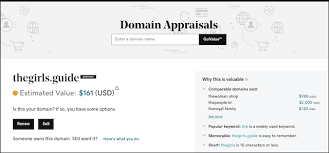
In the sprawling digital universe, your domain name is more than just a web address; it’s your virtual real estate, your brand’s cornerstone, and, potentially, a significant financial asset. But how do you determine the worth of this intangible property? Is that catchy, short name you registered years ago sitting on a goldmine, or is it just another URL in a sea of millions? This is where the world of domain valuation comes into play, and for millions of website owners and investors, the journey to an answer often begins with a GoDaddy domain appraisal. This tool has become a first stop for anyone curious about the market value of their digital address, offering a glimpse into the complex and often opaque world of domain sales. But what exactly lies behind that estimated value? Is it the final word, or just the starting point of a deeper investigation? This comprehensive guide will dive into every facet of GoDaddy domain appraisal, stripping away the mystery and equipping you with the knowledge to understand, leverage, and critically assess the valuations it provides. We’ll explore its mechanics, its strengths, its limitations, and how it fits into the broader landscape of buying and selling digital assets. Whether you’re a seasoned domain investor, a small business owner evaluating your brand, or someone who stumbled upon a potentially valuable URL, understanding this tool is your first step towards making informed, strategic decisions in the domain marketplace.
Understanding the Engine Behind the Estimate
A GoDaddy domain appraisal is not a random number generator; it’s an automated valuation model powered by data and machine learning. To truly grasp what the tool is telling you, you need to peek under the hood. The system analyzes a vast array of factors drawn from GoDaddy’s immense database of historical domain sales, current market listings, and global web trends. It’s akin to a real estate comparative market analysis but for digital property. The algorithm considers elements such as the length of the domain (shorter is generally better), the top-level domain or TLD (.com reigns supreme, while others like .io or .app have niche value), keyword relevance and search volume, and overall linguistic appeal. It also assesses potential commercial intent—does the domain include high-value words like “insurance,” “loans,” or “tech”? Furthermore, it looks at technical metrics like the domain’s age, which can lend authority, and its history, checking for any red flags like previous use for spam that could hurt its value.
However, it’s crucial to remember that this is an algorithmic estimate. While incredibly sophisticated, it cannot capture every nuance. As one industry expert notes, “Automated appraisals are a compass, not a GPS. They give you direction, but they can’t navigate every twist and turn of a negotiation.” The tool doesn’t know your specific plans for the domain, the emotional value to a particular end-user buyer, or the exact timing of a nascent market trend. It provides a data-driven baseline, a snapshot of perceived market value based on comparable sales. This baseline is invaluable, especially for newcomers, as it demystifies a process that was once solely the realm of seasoned brokers. It puts a starting number on the table, helping to curb unrealistic expectations—both overly optimistic and unfairly pessimistic—and grounds the conversation in tangible market data. Understanding this foundation allows you to use the GoDaddy domain appraisal not as an absolute decree, but as a powerful piece of evidence in your overall valuation portfolio.
The Multifaceted Factors That Shape Your Domain’s Worth
When you receive a GoDaddy domain appraisal, that single figure is the culmination of dozens of intersecting variables. Let’s break down the primary categories that influence this automated judgment. First and foremost is the domain extension. The .com TLD is the undisputed king of the hill, carrying a premium for its universal recognition and trust. Country-code TLDs like .co.uk or .de can be extremely valuable within their regions, while newer extensions like .ai or .io have gained traction in tech circles but generally don’t command the same broad-market value as .com. The domain name itself is then dissected. Length is critical; single-word .com domains are the holy grail, followed by two-word combinations. Hyphens and numbers are almost always detrimental, as they are harder to remember, type, and brand.
Beyond structure, the semantic meaning is parsed. The algorithm evaluates keyword strength. A domain containing a high-search-volume, commercially valuable keyword (e.g., “hotels.com” or “cars.com”) will score highly due to its inherent traffic potential and brandability. The tool also considers linguistic factors: is it easy to spell, pronounce, and remember? Is it brandable—that is, catchy, unique, and evocative of a business or idea? A name like “Zillow.com” or “Google.com,” while originally nonsensical, scores high on brandability for its brevity and distinctiveness. Historical data plays a role, too. An aged domain, particularly one with a clean backlink profile and a history of legitimate use, can be seen as more authoritative and trustworthy, thus more valuable. Conversely, a domain with a penalized history or association with spam can be virtually worthless. The GoDaddy domain appraisal synthesizes all these data points, weighing them against millions of past transactions to arrive at its figure. The table below outlines some of these core factors and their general impact:
| Factor | High-Value Indicator | Low-Value Indicator |
|---|---|---|
| TLD (Extension) | .com | Obscure, new TLDs |
| Length | 1-2 words, short characters | Long, multiple words with hyphens/numbers |
| Keywords | High commercial intent, high search volume | Generic, low-search, or non-commercial words |
| Brandability | Memorable, pronounceable, unique | Confusing, misspelled, generic |
| Age & History | Old, clean backlink history | New, or penalized/spam history |
Recognizing the Inherent Limitations of Automated Tools
While a GoDaddy domain appraisal is an excellent starting point, a savvy domain owner or buyer must be acutely aware of its limitations. The most significant caveat is that it cannot account for subjective, human-driven value. The algorithm doesn’t feel. It can’t understand the perfect alignment between a domain name and a specific startup’s vision, a brand’s emotional resonance, or a buyer’s urgent need to acquire a particular asset for strategic reasons. For example, a company named “Alpha Technologies” might pay a substantial premium for AlphaTech.com, far above its automated appraisal, because it is their exact brand name. This “end-user value” is where the largest domain sales often occur, and it exists outside the bounds of pure data analysis.
Another limitation is the reliance on historical data. The market is dynamic. A sudden technological shift, a new cultural trend, or a change in Google’s algorithm can dramatically alter a domain’s value almost overnight. An automated tool is always slightly behind, calibrating based on what has happened, not necessarily what will happen. Furthermore, these appraisals typically don’t deeply analyze current website metrics if the domain is parked. They aren’t thoroughly crawling the site to assess its traffic, revenue potential, or existing business infrastructure, which are massive value drivers for developed websites. The tool appraises the domain name itself as an asset, not the business operating on it. Therefore, treating the GoDaddy domain appraisal as a definitive sale price is a mistake. It is a benchmark, a conversation starter, and a piece of due diligence. It should be cross-referenced with other automated appraisals, recent sales of comparable domains (available on sites like NameBio), and, for high-value assets, the opinion of a professional human broker. The estimate shines a light, but it’s up to you to explore the full landscape it reveals.
Strategic Uses in Buying and Selling Domains
So, how should you practically apply a GoDaddy domain appraisal in real-world scenarios? For sellers, it’s an indispensable tool for setting initial expectations and pricing strategy. If you list a domain with a wildly inflated price based on no data, you’ll scare off serious buyers and waste time. The appraisal gives you a credible, third-party figure to anchor your listing. Many sellers choose to list their domains slightly above the appraised value to leave room for negotiation, while others might use a figure at or below the appraisal to encourage a quick sale. It also helps in negotiations; being able to cite a GoDaddy domain appraisal provides objective support for your asking price, moving the discussion from “I think it’s worth this” to “Market data suggests it’s worth this.”
For buyers, the appraisal is a critical reality check. In a negotiation, if a seller is asking $50,000 for a domain that appraises for $2,000, it signals you need to ask serious questions or walk away. It helps you identify potential bargains or, conversely, recognize when a seller’s price is actually quite fair based on market comps. It’s also a fantastic research tool for investors scanning the aftermarket or drop-catching services. By quickly appraising large lists of available domains, an investor can filter for those that show promising estimated value for further, in-depth due diligence. The key is to integrate the appraisal into a broader process. Use it to screen, to benchmark, and to inform—not to make your final decision in a vacuum. A smart strategy involves getting the GoDaddy domain appraisal, checking other estimators like EstiBot, searching for comparable sales data, and then synthesizing that information into a coherent bid or asking price that reflects both the data and your specific goals.
Beyond the Estimate: The Ecosystem of Domain Services
The GoDaddy domain appraisal doesn’t exist in isolation; it’s a gateway into GoDaddy’s larger ecosystem designed to facilitate domain transactions. Once you have an estimate, the platform actively encourages you to list the domain for sale on its premium marketplace, where it becomes visible to GoDaddy’s massive customer base. This integrated approach is powerful. The appraisal tool generates interest and provides a value, and the marketplace provides the platform to monetize it. GoDaddy also offers brokerage services for high-value domains, where human experts step in to negotiate and manage the sale—a logical next step if your automated appraisal reveals a truly premium asset.
Furthermore, understanding your domain’s appraised value can influence other business decisions. It can inform branding choices, guide merger and acquisition discussions where digital assets are involved, and even affect business valuations for financing or sale. The GoDaddy domain appraisal is thus more than just a number; it’s the first step in a journey of asset management. It encourages domain owners to think of their URLs not as mere annual fees, but as potential capital. This mindset shift is crucial in today’s digital economy. By leveraging the appraisal and the services linked to it, you transition from a passive registrant to an active asset manager, poised to capitalize on the latent value in your digital portfolio.
The Human Element: When to Seek Professional Guidance
Despite the power of automation, the human element remains irreplaceable in high-stakes domain dealings. A GoDaddy domain appraisal might indicate your domain is worth $10,000. But what if its true value to a strategic buyer is ten times that? This is where professional domain brokers and consultants add immense value. They bring market intuition, negotiation skills, and an extensive network of buyers that no algorithm can replicate. They understand the stories behind sales, the quiet desperation or excitement of buyers, and the timing of industry trends. If your domain receives a high appraisal, or if you have strong independent reasons to believe it’s valuable, engaging a professional is a wise investment.
A good broker will conduct a far more nuanced valuation, considering factors the automated tools miss. They might identify a perfect-fit end-user buyer you’d never find on your own, structure complex payment terms, and handle all the escrow and transfer logistics securely. They act as a buffer and an advocate, ensuring you get the best possible price with minimal hassle. Think of the GoDaddy domain appraisal as the initial medical check-up that gives you your vital stats. If those stats look unusual or exceptionally promising, you then go see a specialist—the domain broker—for a deeper diagnosis and a tailored treatment plan to maximize your asset’s health and return.
Frequently Asked Questions
What exactly is a GoDaddy domain appraisal and how does it work?
A GoDaddy domain appraisal is an automated, data-driven estimate of a domain name’s market value. It works by analyzing a multitude of factors using machine learning algorithms trained on GoDaddy’s vast database of historical domain sales and market listings. It evaluates elements like the domain’s length, top-level domain (.com, .net, etc.), keyword popularity and commercial intent, linguistic brandability, and age. By comparing these characteristics against millions of past transactions, the tool generates a estimated value range, providing a quick, free benchmark for anyone curious about what their domain might be worth in the current marketplace.
Is the value from a GoDaddy domain appraisal the price I will definitely get if I sell?
Absolutely not. The GoDaddy domain appraisal is an estimate, not a guaranteed sale price. It represents a data-informed prediction of market value based on comparable sales. The actual final sale price can be significantly higher or lower based on factors the tool can’t fully assess, such as a specific buyer’s urgent need (end-user value), the exact timing of the sale, your negotiation skills, and how effectively you market the domain. It is best used as a strong starting point and a reality check, not as a definitive price tag.
How does a GoDaddy domain appraisal compare to getting a professional human appraisal?
An automated GoDaddy domain appraisal is fast, free, and provides a solid baseline derived from big data. It’s excellent for initial screening and for domains of low to moderate value. A professional human appraisal, often conducted by a domain broker, is a bespoke, in-depth service. The broker considers the automated data but also adds layers of human insight: niche market knowledge, direct buyer networks, understanding of intangible brand value, and sophisticated negotiation strategy. For domains with high estimated value or unique characteristics, a professional appraisal is highly recommended to ensure you capture the full potential of your asset.
Can I use the GoDaddy domain appraisal tool for any domain, even if it’s not registered with GoDaddy?
Yes, you can. The GoDaddy domain appraisal tool is publicly accessible and can be used to get an estimate for virtually any domain name, regardless of where it is currently registered. You do not need to be a GoDaddy customer or have the domain in your GoDaddy account to use the basic appraisal feature. This makes it a universal tool for buyers, sellers, and curious parties to evaluate any domain on the internet.
After getting a GoDaddy domain appraisal, what are the next steps if I want to sell?
The GoDaddy domain appraisal is designed to seamlessly lead into GoDaddy’s selling ecosystem. After receiving your estimate, the platform will typically prompt you to list the domain on the GoDaddy Premium Domain Marketplace. This makes it visible to millions of potential buyers. For domains with very high appraisals, you might consider contacting GoDaddy’s Domain Brokerage Service. Independently, you should use the appraisal figure to research comparable sales on sites like NameBio, consider listing on other marketplaces (like Sedo or Afternic), and potentially set up a dedicated landing page for the domain to attract direct buyer inquiries.
Conclusion
Navigating the domain aftermarket can feel like traversing uncharted territory, but tools like the GoDaddy domain appraisal provide the essential map and compass. It democratizes access to valuation knowledge, empowering everyday website owners and aspiring investors to make data-informed decisions about their digital assets. From understanding the algorithmic factors that craft the estimate to recognizing its place within a larger strategy of buying, selling, and investing, this tool is a cornerstone of modern domain commerce. However, its greatest power is unlocked when used wisely—not as an oracle of final truth, but as the robust starting point of a more comprehensive journey. Pair its data-driven insights with market research, trend analysis, and, for premium assets, human expertise. Whether you’re sitting on a dormant digital gem or scouting for your next big opportunity, let the GoDaddy domain appraisal be your guide to asking the right questions, setting realistic expectations, and ultimately, unlocking the true hidden value in the world of domain names.