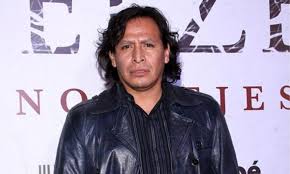
The world of cinema lost a formidable and captivating talent with the sudden passing of Gerardo Taracena on January 31, 2026. At the age of 55, Taracena left behind a legacy that stretched far beyond the borders of his native Mexico, resonating with international audiences and fellow artists alike. While many knew him as the ferocious warrior Middle Eye in Mel Gibson’s Apocalypto or the formidable drug lord Pablo Acosta in Narcos: Mexico, his artistic journey was a rich tapestry woven from the threads of theater, dance, and deeply human storytelling. This article explores the life and career of an actor who embodied the very essence of character acting—a performer whose intensity was matched only by his versatility, and whose quiet dedication to his craft made every role, large or small, distinctly memorable. Gerardo Taracena’s path demonstrates how profound artistic impact is built not on celebrity, but on an unshakeable commitment to truth in performance.
Born in Mexico City in 1970, Gerardo Taracena’s artistic sensibilities were shaped from the ground up. He was not an overnight success forged in Hollywood but a classically trained performer who honed his skills in the rigorous world of theater. He studied Dramatic Arts at the prestigious Centro Universitario de Teatro (CUT) of the National Autonomous University of Mexico (UNAM), a program known for its demanding integration of physical, vocal, and emotional technique. Even before his screen career began, he was a working artist, performing with theater troupes and touring Latin America as a dancer with the Peruvian group Integro. This foundational period was crucial; it instilled in him a physical discipline and a profound understanding of narrative that would become the hallmarks of his screen presence. He learned that a character’s truth could be communicated through a glance, a posture, or a controlled movement, long before a line of dialogue was spoken. This background set him apart in an industry often focused on surface, preparing him to bring depth and authenticity to every role he would later inhabit.
The Foundation of a Performer: Stage, Dance, and Early Screen Work
Gerardo Taracena’s artistic identity was cemented long before he appeared on an international film set. His time at the University Center of Theater (CUT) was not merely an education; it was an immersion into a holistic philosophy of performance. The curriculum there moved beyond simple acting technique, demanding mastery over one’s physical instrument. Students engaged in intensive workshops focusing on body conditioning, voice projection, improvisation, and the analytical breakdown of text. This training in diverse methodologies, from Stanislavski’s system to contemporary Latin American physical theater, equipped Taracena with a versatile toolkit. It taught him that character begins in the body—a principle that would make his later screen performances, particularly as warriors and men of action, viscerally believable. He learned to build a role from the inside out, ensuring that even the most antagonistic characters felt driven by authentic, if dark, motivations rather than mere scripted villainy.
This stage-centric beginning seamlessly blended with his parallel career in dance. His work with the dance group Integro from 1992 to 1996 was not a separate pursuit but an extension of his physical artistry. Touring festivals across Latin America, he engaged in performances that married narrative with movement, further refining his sense of rhythm, spatial awareness, and expressive physicality. This unique combination of actor and dancer gave him a distinct advantage. In an industry where physical presence is paramount, Taracena’s movement was always purposeful and character-specific. This foundation directly fed into his early screen work in Mexican cinema. In films like La hija del puma (1994) and To and Fro (2000), he played roles rooted in the realities of indigenous and rural Mexican life. These parts required a grounded, authentic presence that his theater and dance training provided, allowing him to portray everyday struggles with a dignity and realism that avoided cliché. These early projects were the proving ground where the disciplined artist from the stage learned the specific language of the camera.
Breakthrough and International Acclaim: Defining Roles on the Global Stage
The year 2006 marked a pivotal turning point for Gerardo Taracena, catapulting him from a respected Mexican actor to an international figure. His casting as Middle Eye (also referred to as Zero Wolf) in Mel Gibson’s ambitious epic Apocalypto was a career-defining moment. The film, a relentless chase story set in the declining Maya civilization, demanded a physicality and intensity that few actors could muster. Taracena, drawing deeply from his dance and stage background, delivered a performance of terrifying brutality. Middle Eye was not a one-dimensional monster; through Taracena’s portrayal, he became a symbol of systemic violence—a product of a crumbling, desperate society. His commitment was absolute, from the menacing body paint and scarification to the fierce, wordless expressions of predatory intent. The performance was so powerful it earned him the Imagen Award for Best Supporting Actor, recognizing positive portrayals of Latinos in media. Apocalypto introduced the global audience to Taracena’s unique ability to command the screen through sheer physical and emotional force, making him an unforgettable face in international cinema.
However, to define Gerardo Taracena solely by this ferocious role would be to overlook the nuanced versatility he displayed in the same period. Just a year prior, he had delivered a performance of quiet strength and resilience in Francisco Vargas’s acclaimed Mexican film The Violin (2005). He played Genaro, the son of an elderly musician who uses his violin case to smuggle ammunition for a peasant uprising. In stark contrast to the explosive Middle Eye, Genaro was a character of simmering restraint, deep familial loyalty, and cautious courage. This performance showcased Taracena’s remarkable range and earned him one of his profession’s highest honors: the Ariel Award, Mexico’s equivalent of the Oscar, for Best Supporting Actor. This duality—the capacity for both explosive intensity and profound subtlety—became the hallmark of his career. He further demonstrated this range in Cary Joji Fukunaga’s gripping migrant story Sin Nombre (2009), playing Horacio, a father trying to protect his daughter on a perilous journey north. Here, his performance was anchored in paternal vulnerability and fear, proving that his emotional power was not reserved for antagonists alone.
Table: Key Film Roles Showcasing Taracena’s Range
| Year | Film | Role | Character Type & Significance |
|---|---|---|---|
| 2005 | The Violin | Genaro | Quiet Resister: Earned him the Ariel Award; showcased subtle, dramatic strength. |
| 2006 | Apocalypto | Middle Eye/Zero Wolf | Physical Antagonist: International breakthrough; Imagen Award winner for fearsome intensity. |
| 2009 | Sin Nombre | Horacio | Vulnerable Father: Emotional core in a migrant drama; displayed deep paternal vulnerability. |
| 2013 | Potosí | Javier | Domestic Antagonist: Complex portrayal of an abusive husband; showcased psychological depth. |
| 2023 | Sound of Freedom | El Alacrán | Modern Villain: Menacing human trafficker; proved continued relevance in hard-hitting dramas. |
Mastery of the Small Screen: From Telenovelas to Streaming Supremacy
As television entered its new golden age, characterized by complex serialized narratives, Gerardo Taracena seamlessly transitioned his talents to the small screen. He understood that television offered a different canvas—one where a character could evolve over time, revealing layers across multiple episodes. His early TV work in Mexican series like El Pantera and the HBO prison drama Capadocia allowed him to explore sustained narratives. However, it was in the popular genre of narco-dramas that he found roles which perfectly matched his intensity. In El Señor de los Cielos, he played the mystical and intimidating enforcer known as “El Chamán,” and in Perseguidos, he took on the substantial role of Gustavo “Tavo” Benítez, a corrupt official, for 30 episodes. These roles honed his ability to maintain a character’s menacing presence while navigating long-form story arcs, a skill that would soon be showcased on a global platform.
That global platform arrived with Netflix’s Narcos: Mexico. His portrayal of Pablo Acosta Villarreal, the real-life drug lord known as the “Zorro de Ojinaga,” was a masterclass in character complexity. Taracena did not play Acosta as a simple monster. Instead, he humanized him, capturing the kingpin’s rough-hewn charisma, his shrewd business acumen, his volatile temper, and even his moments of genuine affection. He showed a man who was both a ruthless criminal and a product of his environment, whose rise and fall had a tragic dimension. This performance was pivotal, introducing Taracena to a massive, binge-watching international audience and cementing his status as a powerhouse actor capable of elevating prestige television. He continued this success in other streaming projects, such as USA Network’s Queen of the South, and was actively working up until his passing, with roles in the 2025 series Celda 211 and Cometierra. Through these roles, Gerardo Taracena proved that the depth and discipline of a classically trained stage actor could profoundly enrich the world of serialized streaming drama.
A Legacy of Craft: The Artist Behind the Characters
The outpouring of tributes that followed the news of his passing revealed a consistent theme: Gerardo Taracena was revered not just for his on-screen results, but for the profound professionalism and dedication he brought to the process. Co-stars, directors, and industry peers spoke of a man deeply committed to his craft, a generous scene partner, and an artist who valued collaboration over individual glory. This was the inevitable product of his theater roots, where ensemble work is paramount. He approached every role, whether a lead or a supporting part, with the same level of preparation and integrity. As one tribute highlighted, he exemplified the principle of “craft over fame,” focusing on creating work that resonated with truth rather than simply seeking recognition. This attitude ensured that his performances, regardless of the genre’s popularity, maintained a consistent quality and authenticity that critics and audiences came to rely upon.
His legacy also lies in his unique synthesis of physical and dramatic art. In an era where screen acting can sometimes be overly reliant on dialogue and close-ups, Taracena remained a performer who told stories with his entire being. His dance training was never a separate skill but was fully integrated into his acting methodology. Whether it was the predatory stance of Middle Eye, the weary resilience of Genaro, or the authoritative swagger of Pablo Acosta, his physical choices were always in service of the character’s inner life. He demonstrated that physical discipline—control over movement, posture, and gesture—is not a specialty for action stars but a fundamental tool for any serious dramatic actor seeking to convey unspoken history and motivation. For a generation of younger actors, particularly in Mexico and Latin America, Gerardo Taracena stands as a powerful example: proof that rigorous training, versatility across mediums, and unwavering respect for the work itself are the true foundations of a lasting and respected career.
https://headlinenest.com/demond-wilson/
Conclusion
Gerardo Taracena’s journey from the stages of Mexico City to the forefront of international cinema and television is a testament to the enduring power of dedicated artistry. He was an actor who defied easy categorization, moving fluidly between the brutal warrior, the resistant peasant, the vulnerable father, and the charismatic kingpin, investing each with a humanity that made them unforgettable. His sudden departure at the age of 55 leaves a palpable void in the artistic community, a loss felt from local theater groups to global streaming sets. Yet, the legacy of Gerardo Taracena is securely etched in the canon of his work. He showed that true impact comes from a deep commitment to craft, a mastery of the physical language of performance, and the courage to explore the full spectrum of human experience, both light and dark. He was not just an actor for Mexico, but an actor of the world, whose powerful presence will continue to inspire and captivate audiences for generations to come.
Frequently Asked Questions About Gerardo Taracena
What were Gerardo Taracena’s most famous roles?
Gerardo Taracena was internationally renowned for two major roles. His breakthrough to a global audience was as the fearsome Mayan warrior Middle Eye (also called Zero Wolf) in Mel Gibson’s 2006 epic Apocalypto. Later, he reached an even wider audience with his nuanced portrayal of real-life drug lord Pablo Acosta Villarreal in the hit Netflix series Narcos: Mexico. These two roles bookended a career filled with powerful performances in both Mexican and Hollywood cinema.
Did Gerardo Taracena win any major awards for his acting?
Yes, Gerardo Taracena’s skill was recognized with several prestigious awards. He won Mexico’s highest cinematic honor, the Ariel Award for Best Supporting Actor, for his role as Genaro in the 2005 film The Violin. For his performance in Apocalypto, he won the Imagen Award for Best Supporting Actor in Film, which honors positive portrayals of Latinos in media. These awards highlight the high esteem in which he was held by both the Mexican film industry and broader cultural institutions.
How did his background in dance and theater influence his screen acting?
Taracena’s formal training in dramatic arts at UNAM and his professional work as a dancer were fundamental to his screen presence. This background gave him exceptional physical discipline, control, and expressiveness. He understood how to use his body to tell a story, which made his characters—especially those of action and intensity like Middle Eye—viscerally authentic. The theater training also instilled in him a deep respect for character analysis, ensemble work, and the disciplined process of building a role from the ground up, qualities that distinguished him on set.
What was Gerardo Taracena’s impact on Mexican and international cinema?
Gerardo Taracena served as a bridge between robust Mexican cinema and international productions. He brought the depth and authenticity of Latin American storytelling to global Hollywood projects while using his international platform to highlight the quality of Mexican actors. He demonstrated that a classically trained theater actor could excel in large-scale epics, intimate independent films, and prestige television, thereby expanding the perception of what Mexican performers could achieve on the world stage.
What projects was he working on at the time of his passing?
Gerardo Taracena remained artistically active until the very end. According to reports, his final on-screen appearances were in the 2025 series Celda 211 and Cometierra. Furthermore, his IMDb page indicated several projects in various stages of production at the time of his death, including the films Gringo Hunter and Podcast, Rapaces Nocturnos, suggesting audiences may see posthumous releases of his work.