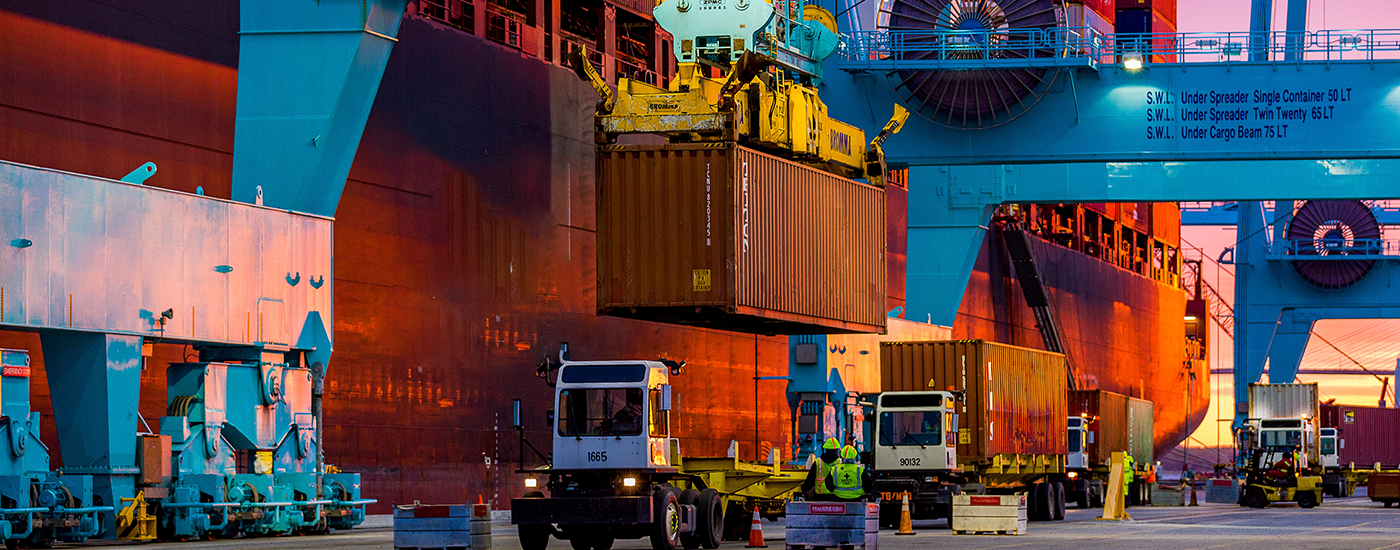
In the complex, fast-moving world of global trade, the intersection of cutting-edge technology and strategic geography is where true competitive advantage is forged. This is the story of Flexport JAX – the dynamic fusion of a digital-first freight forwarder with one of the most strategically vital ports in the United States. Jacksonville, Florida, often called the “River City by the Sea,” has long been a workhorse of Southeastern logistics. But the arrival and expansion of Flexport, a company that has redefined freight forwarding for the digital age, has catalyzed a transformation. This isn’t just about a company opening an office; it’s about the evolution of a port, a region, and the very flow of goods connecting American businesses to the world. The Flexport Jax operation represents a paradigm shift, blending physical infrastructure with data-driven intelligence to create a more resilient, transparent, and efficient supply chain gateway. For any importer, exporter, or logistics professional, understanding the significance of Flexport Jax is key to navigating the future of trade.
The Rise of Jacksonville as a Premier Logistics Hub
Jacksonville’s ascent wasn’t an accident; it was the result of foresight, investment, and natural advantage. Home to the Jacksonville Port Authority (JAXPORT), the city boasts a unique trifecta: it’s a major deepwater seaport, a leading rail intersection, and a critical highway nexus. The St. Johns River, one of the few major rivers in the U.S. that flows north, provides direct access to the Atlantic Ocean, with shipping channels deepened to accommodate post-Panamax vessels. This means the biggest ships sailing today can call on Jacksonville, bringing goods closer to one of the fastest-growing consumer markets in the country.
Beyond the water, Jacksonville is a rail giant. It’s home to the largest intermodal rail facility in the Southeast, CSX’s Dames Point terminal, and is a primary hub for Norfolk Southern as well. This connects the port directly to over 70 million consumers within a day’s drive. Highways I-95, I-10, and I-75 converge here, creating an unparalleled overland distribution network. When you combine these physical assets with a business-friendly environment in Florida and no state income tax, you have a recipe for logistics success. The growth of e-commerce, particularly with distribution centers for major retailers like Amazon, Walmart, and Wayfair springing up around the city, has only amplified Jacksonville’s importance. It was this potent mix of infrastructure and market access that made Jacksonville an inevitable focal point for a company like Flexport.
The stage was set for a digital revolution in freight. Traditional logistics, while effective, often operated with opaque processes, manual paperwork, and disconnected communication channels. Shippers frequently struggled with real-time visibility and proactive problem-solving. Into this landscape emerged Flexport, founded in 2013 with a mission to make global trade easy for everyone. By building a unified technology platform that brings together all supply chain stakeholders—shippers, carriers, customs brokers, truckers—onto a single dashboard, Flexport brought unprecedented transparency and control. They didn’t just move boxes; they moved data. As Flexport looked to strengthen its physical footprint to match its digital prowess, the strategic logic of planting its flag in Jacksonville became undeniable. The Flexport Jax nexus was born from this perfect alignment of physical and digital logistics excellence.
Why Flexport Chose Jacksonville for Major Operations
The decision to establish a significant operational hub in Jacksonville was a calculated strategic move, not merely a geographic expansion. For Flexport, the choice of Flexport Jax was driven by a confluence of market demands, infrastructure readiness, and long-term growth potential. First and foremost was the relentless shift of population and economic activity to the Sun Belt. The southeastern United States has experienced explosive growth, and with it, a massive increase in consumption and manufacturing. Jacksonville sits at the northern gateway to this booming region, offering a less congested, more efficient alternative to traditional powerhouse ports like Savannah and Charleston, which were often nearing capacity.
Flexport’s clients—businesses ranging from mid-sized brands to large enterprises—were increasingly looking to diversify their port of entry to mitigate risk. The supply chain disruptions of recent years highlighted the danger of over-reliance on any single port complex. Flexport Jax provided a compelling solution: a deepwater port with ample room for growth, faster truck turn-times, and immediate access to a vast interstate and rail network. This meant goods could clear the port and be on a store shelf or in a warehouse in Atlanta, Orlando, or Memphis faster than from many other East Coast locations. For Flexport, offering this optimized routing through Jacksonville was a direct value proposition to their customers seeking resilience and speed.
Furthermore, the existing logistics ecosystem in Jacksonville was mature yet ripe for innovation. The presence of major ocean carriers, a skilled workforce familiar with maritime and rail operations, and supportive local government agencies created a fertile ground for Flexport’s tech-enabled model. The company didn’t just want to use the port; it wanted to integrate with it. By establishing a major Flexport Jax operation, the company could embed its experts within the flow of cargo, ensuring its platform’s digital instructions translated seamlessly into physical movements. This proximity allows for better coordination, quicker exception handling, and a deeper partnership with JAXPORT itself. In essence, Flexport chose Jacksonville because it represented the future of efficient, scalable, and resilient U.S. logistics—a future they could help build and dominate through their technology and expertise.
The Flexport Platform: Technology Meets Physical Logistics
To truly grasp the impact of Flexport Jax, one must understand the engine that powers it: the Flexport platform. At its core, Flexport is a technology company that operates in the physical world of logistics. Their platform is a cloud-based suite of tools that provides end-to-end visibility and control over the entire supply chain journey. Imagine a dashboard where, from the moment a factory in Vietnam loads a container to the second it arrives at a warehouse in Dallas, you can track its location, see all documentation, manage costs, and communicate with every service provider involved. This level of transparency was previously unheard of in the fragmented world of freight forwarding.
The platform aggregates data from hundreds of sources—ocean carriers, airlines, trucking companies, customs databases—and presents it in a coherent, actionable format. Users can receive proactive alerts for delays, analyze carbon emissions for each shipment, compare routing options, and even handle trade financing. For a shipper moving goods through Flexport Jax, this means they can see their container on the vessel approaching Blount Island, track the expected gate-in time for drayage, and have their customs clearance pre-staged and managed by Flexport’s in-house licensed customs brokers. The technology reduces manual errors, cuts down on frantic phone calls and emails, and turns supply chain management from a reactive fire-drill into a proactive, strategic function.
This digital backbone is what supercharges the physical operations in Jacksonville. The Flexport Jax team isn’t working with clipboards and spreadsheets; they’re armed with real-time data that allows them to optimize the movement of cargo. If a trucker is running late, the system can automatically notify the receiving warehouse. If a vessel arrival changes, the entire downstream plan can be adjusted dynamically. The platform also enables Flexport to offer innovative services like bonded trucking and container de-stuffing at nearby facilities, creating a seamless “port-to-door” experience. By marrying their sophisticated platform with the strategic assets of JAXPORT, Flexport creates a powerful hybrid model. The physical port handles the cargo, while the digital platform handles the information, and together at Flexport Jax, they create a faster, more reliable, and intelligent logistics pipeline.
Key Services and Operations at Flexport JAX
The Flexport Jax operation is a full-service logistics command center, designed to handle the complex needs of modern shippers. Its service portfolio leverages both the local infrastructure and the global Flexport network to provide a comprehensive suite of solutions. At the heart of it all is ocean freight. Flexport manages thousands of container movements through Jacksonville annually, offering Full Container Load (FCL) and Less than Container Load (LCL) services on all major trade lanes. Their buying power and carrier relationships allow them to secure competitive rates and reliable space, even during volatile market conditions. The team on the ground in Jacksonville coordinates directly with steamship lines and terminal operators at JAXPORT’s terminals—like the SSAs at Blount Island or the TraPac container terminal—to ensure smooth vessel operations and container availability.
Beyond the port itself, a critical service is drayage and inland transportation. Flexport Jax coordinates a vast network of certified trucking partners to move containers from the port to nearby warehouses, rail ramps, or distribution centers across the Southeast. Their platform optimizes these moves for cost and efficiency, often consolidating loads to reduce empty miles. Given Jacksonville’s massive rail connections, intermodal services are another key offering. Flexport can seamlessly transfer containers from ship to rail at the on-dock or near-dock facilities, providing a cost-effective and reliable solution for long-haul moves to the Midwest or beyond. This multi-modal flexibility is a major selling point for shippers looking to balance speed and expense.
Crucially, Flexport Jax provides full-scale customs brokerage and trade compliance services. The company employs its own team of licensed customs brokers who are experts in navigating U.S. Customs and Border Protection (CBP) regulations. They handle the meticulous preparation and filing of entries, duty classification, and payment. For shippers using Flexport Jax, this means their customs clearance is managed by the same company handling their freight, eliminating finger-pointing and communication gaps. The platform pre-populates documentation from purchase orders, reducing errors and speeding up the clearance process, which is vital for perishable goods or time-sensitive merchandise. This integrated “one-stop-shop” model—from origin transport, to ocean freight, to port clearance, to final delivery—is the holistic value proposition that defines the Flexport Jax experience.
“Jacksonville is not just another port for us; it’s a strategic linchpin in our network. The combination of its physical advantages and our technology allows us to offer clients in the Southeast an unbeatable blend of speed, visibility, and resilience.” — A Flexport Logistics Executive.
The Impact on Southeast Regional Trade and Businesses
The establishment and growth of Flexport Jax has sent ripples throughout the Southeastern economy, fundamentally altering how regional businesses engage in global trade. For manufacturers, distributors, and retailers across Florida, Georgia, Alabama, and the Carolinas, the presence of a tech-forward logistics giant in their backyard has lowered the barrier to sophisticated global supply chain management. Small and mid-sized enterprises (SMEs) that previously found international trade daunting can now leverage Flexport’s platform and expertise as easily as a Fortune 500 company. This has empowered a new wave of regional exporters to reach global markets and importers to source more competitively, fueling economic diversification and growth.
The efficiency gains are tangible. Businesses routing goods through Flexport Jax often report reduced transit times from origin to warehouse. A container arriving from Asia can be discharged, cleared through customs, and on a truck to Atlanta quicker than through more congested ports. This speed translates into lower inventory carrying costs, improved cash flow, and the ability to respond more swiftly to market demands—a critical edge in the age of e-commerce and fast fashion. Furthermore, the transparency of the Flexport platform reduces the hidden costs of logistics: detention and demurrage fees from not moving containers quickly, costly errors in documentation, and the labor hours spent on tracking and communication. For a regional business, these savings directly impact the bottom line.
On a macro scale, Flexport Jax has elevated Jacksonville’s status, attracting more direct vessel calls and increased investment from other logistics and industrial players. This creates a virtuous cycle: more services make the port more attractive, which brings more cargo, which justifies further infrastructure investment. The region has seen a boom in warehousing and distribution center construction, creating thousands of jobs. The Flexport model also promotes a more resilient Southeast supply chain. By providing data-driven insights and alternative routing via Jacksonville, businesses are better insulated from disruptions elsewhere. In essence, Flexport Jax has acted as a catalyst, accelerating Jacksonville’s development into a first-tier logistics hub and providing the regional business community with the tools to compete on a global stage with unprecedented agility.
Comparing Flexport JAX to Other Major U.S. Gateways
To appreciate the unique value of Flexport Jax, it’s helpful to compare it to other major freight gateways like Los Angeles/Long Beach, New York/New Jersey, and Savannah. Each has its strengths, but Jacksonville, powered by Flexport’s model, offers a distinct alternative. The West Coast ports are the traditional entry points for Asian imports, but they are often plagued by severe congestion, complex labor dynamics, and a much longer overland journey to Southeastern markets. A container entering through LA may take weeks to be railed to Atlanta. Flexport Jax, utilizing the expanded Panama Canal, offers a all-water route to the East Coast that, while slightly longer on the water, results in a significantly shorter and simpler last-mile journey to the Southeast, often with higher predictability.
On the East Coast, the Port of New York/New Jersey is the largest, but its urban density leads to chronic chassis shortages, trucking challenges, and higher costs. Savannah has grown phenomenally but has faced its own congestion issues and depth constraints. Jacksonville’s advantage is its capacity for growth and operational fluidity. It is generally less congested, leading to faster truck turn-times and fewer delays at terminal gates. The following table illustrates a simplified comparison of key attributes:
| Gateway Attribute | Flexport JAX (Jacksonville) | Port of Savannah | Port of LA/Long Beach |
|---|---|---|---|
| Primary Market | Southeastern U.S. | Southeastern U.S. | National U.S. |
| Congestion Level | Typically Low to Moderate | Often High | Chronically High |
| Rail Connectivity | CSX & NS Major Hub | CSX & NS Hub | Major National Ramps |
| Truck Turn Time | Fast | Variable | Slow |
| All-Water Asia Route | Yes, via Panama Canal | Yes, via Panama Canal | Not Applicable |
| Tech-Enabled Option | Native via Flexport Platform | Varies by Freight Forwarder | Varies by Freight Forwarder |
What truly differentiates Flexport Jax in these comparisons is not just Jacksonville’s inherent assets, but the layer of integrated technology and service that Flexport applies. While a shipper can move cargo through any port with any forwarder, the experience at Flexport Jax is designed for the digital age. The combination of a less-congested physical port with a unified data platform creates a synergy that is hard to match. For businesses whose primary markets are in the Sun Belt, the value proposition becomes clear: more control, better visibility, faster inland transit, and often a more resilient supply chain, all managed through a single, intuitive interface. This makes Flexport Jax not just an alternative, but a strategically superior choice for a vast and growing segment of U.S. trade.
Future Outlook and Expansion in Jacksonville
The trajectory for Flexport Jax points decisively upward, aligned with broader trends in global trade and Jacksonville’s own ambitious development plans. JAXPORT has committed to over $200 million in infrastructure upgrades, including further channel deepening to 47 feet and berth enhancements to handle multiple post-Panamax vessels simultaneously. These public investments will only amplify the capacity and capability that Flexport can leverage. As vessels continue to grow in size, Jacksonville’s ability to efficiently handle them will attract more direct calls from major ocean alliances, increasing frequency and service options for Flexport and its clients. The future of Flexport Jax is one of scaling alongside this port growth.
Flexport’s own vision likely involves deepening its integration within the Jacksonville logistics landscape. This could mean investments in physical assets, such as dedicated cross-dock or transload facilities near the port to expedite the movement of goods from ocean containers to domestic trailers. We may also see an expansion of value-added services, such as e-commerce fulfillment support, where Flexport not only imports the goods but also manages the sorting, packaging, and last-mile delivery for direct-to-consumer brands using strategically located warehouses in Jacksonville’s sprawling industrial parks. The synergy between Flexport’s data and the physical flow of goods will only grow tighter.
Furthermore, sustainability will play a central role in the future of Flexport Jax. Flexport has committed to helping clients measure and reduce their carbon footprint. Jacksonville, with its potential for near-port rail intermodal conversion (shifting truck moves to cleaner-burning trains), offers a great opportunity for greener logistics. Flexport can use its platform to optimize for lower-emission routes, perhaps prioritizing rail moves from Jacksonville or partnering with drayage carriers that use alternative fuels. As environmental, social, and governance (ESG) criteria become critical for businesses, the ability of Flexport Jax to provide efficient and sustainable logistics solutions will be a major competitive advantage. The expansion is not just quantitative—more containers—but qualitative, offering smarter, greener, and more integrated supply chain solutions from this key Southeastern gateway.
How Shippers Can Leverage Flexport JAX for Success
For importers and exporters, particularly those based in or serving the Southeastern U.S., tapping into the Flexport Jax advantage requires a strategic approach. The first step is a logistics audit. Businesses should analyze their current shipping lanes, port pairs, and final destinations. If a significant portion of goods are destined for Sun Belt states, modeling a shift to Flexport Jax could reveal substantial savings in inland transportation costs and days in transit. Engaging with a Flexport logistics expert to run a lane-by-lane analysis is a practical starting point, using their platform’s data to simulate different scenarios.
Onboarding with Flexport unlocks the platform’s power. Shippers should invest time in integrating their systems (like ERPs or order management systems) with Flexport’s API or simply getting comfortable with the dashboard. The real value is in proactive management: setting up automated alerts for milestones, using the analytics tools to identify cost or time outliers, and utilizing the communication tools within the platform to collaborate with the Flexport Jax operations team. The goal is to move from simply shipping to actively managing a supply chain network. Leveraging the full suite of services—especially the integrated customs brokerage—creates a seamless flow and reduces touchpoints.
Building a partnership with the Flexport Jax team is also crucial. This isn’t a purely digital, faceless interaction. The local experts in Jacksonville understand the nuances of the port, the local trucking market, and seasonal patterns. They can provide tailored advice, such as the best times to schedule arrivals to avoid gate congestion or how to structure shipments to optimize for de-stuffing at a nearby Flexport-connected facility. By combining the global reach and digital power of the Flexport platform with the local knowledge embedded in Flexport Jax, shippers can build a supply chain that is not only efficient and cost-effective but also resilient and adaptable to whatever challenges the global market presents next. The key is to see Flexport Jax not just as a port of entry, but as a comprehensive logistics solution enabled by technology and local expertise.
Conclusion
The story of Flexport Jax is a compelling case study in the modernization of global trade. It demonstrates how the fusion of strategic physical infrastructure and transformative digital technology can create a new standard for efficiency, transparency, and resilience. Jacksonville, with its deepwater port, unparalleled rail and highway networks, and room for growth, provided the ideal physical canvas. Flexport, with its unified platform, data-driven approach, and client-centric model, provided the digital intelligence to optimize every movement across that canvas. Together, they have established a logistics powerhouse that is reshaping how goods flow into and out of the dynamic Southeastern United States.
For businesses, the implications are profound. Flexport Jax offers a tangible path to a better supply chain: faster transit times to key markets, reduced operational headaches, lower hidden costs, and the agility to navigate an unpredictable world. It empowers companies of all sizes to compete globally with the tools once reserved for giants. As both Jacksonville and Flexport continue to invest and innovate, the Flexport Jax nexus will only grow in importance, solidifying its role as a critical node in the global network of trade. In the end, Flexport Jax is more than a location or a service—it is a testament to the future of logistics, where the physical and digital are inextricably linked to move the world’s goods smarter, faster, and more reliably than ever before.
Frequently Asked Questions About Flexport JAX
What specific advantages does using Flexport JAX offer over other Southeastern ports?
The primary advantages of using Flexport JAX are a combination of Jacksonville’s inherent logistics strengths and the enhanced service layer Flexport provides. Physically, Jacksonville often has faster truck turn-times and less congestion than some neighboring ports, leading to quicker container retrieval. Its central location at the convergence of three major interstates and two Class I railroads allows for efficient distribution across the entire Southeast. When you add the Flexport platform, you gain real-time visibility, integrated customs brokerage, and proactive exception management specifically tailored to movements through this gateway. This blend of fluid physical operations and sophisticated digital control is the key differentiator for Flexport JAX.
Can Flexport JAX handle both imports and exports for my business?
Absolutely. Flexport JAX is a fully bidirectional logistics hub. On the import side, it excels at receiving containers from global origins, clearing them through customs, and arranging inland transport to their final destination. For exports, the Flexport JAX team coordinates the collection of goods from your facility, manages the container loading and documentation, handles the ocean or air booking, and ensures smooth export compliance and port departure. The Flexport platform provides the same level of visibility and control for export shipments, making Flexport JAX a comprehensive partner for your company’s complete international trade cycle.
How does Flexport’s technology improve the experience of shipping through Jacksonville?
Flexport’s technology transforms the shipping experience through Jacksonville by replacing uncertainty with clarity and reactivity with proactivity. Instead of calling multiple parties for updates, you see your container’s status on a single dashboard as it moves from the vessel at Blount Island to the truck to your warehouse. Automated alerts warn you of potential delays, like a late vessel arrival or a customs hold, allowing you to adjust plans in advance. Documentation is digitized and pre-populated, reducing errors and speeding up clearance. For shippers using Flexport JAX, this means less time spent on logistics coordination, lower risk of unexpected fees, and greater confidence in your supply chain’s performance.
Is Flexport JAX suitable for small and medium-sized businesses, or only for large enterprises?
Flexport JAX is specifically designed to be accessible and valuable for businesses of all sizes, and SMEs are a core part of Flexport’s client base. For a smaller business, the advantages are particularly significant. The platform democratizes access to high-level supply chain visibility and management tools that were previously only affordable for large corporations. Furthermore, by consolidating the volume of many SMEs, Flexport can secure competitive freight rates and reliable space that an individual small business could not. The Flexport JAX team provides the same expert support, helping navigate the complexities of international shipping and port logistics, which can be a major hurdle for smaller companies looking to grow through global trade.
What types of cargo or industries are best suited for routing through Flexport JAX?
Flexport JAX is versatile and handles a wide array of cargo, but it is especially well-suited for industries that benefit from fast access to Southeastern U.S. markets. This includes consumer goods, retail merchandise, automotive parts, building materials, and perishable goods (thanks to efficient clearance times). E-commerce fulfillment is a major growth area, as goods can be quickly distributed to fulfillment centers across the region. Manufacturers exporting heavy machinery or agricultural products from the Southeast also leverage Flexport JAX for its robust export services and intermodal connections. Essentially, any business whose supply chain touches the booming Southeastern states should evaluate Flexport JAX as a potential optimization point.