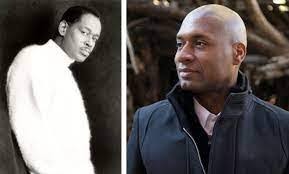
In the luminous world of rhythm and blues, some stars shine so brightly they become constellations, guiding generations with their light. Luther Vandross is undoubtedly one of those celestial bodies—a voice so smooth and soulful it defined an era of romance. But every great star exists within a galaxy of support, shaped by gravitational pulls of love, family, and quiet influence. This is the story of Charles Anthony Vandross, the older brother who stood firmly in that foundational orbit. While Luther’s name echoes through concert halls and wedding receptions worldwide, Charles Anthony Vandross chose a path of profound privacy, his life a testament to the quiet strength that often nurtures public genius. His story is not one of platinum records or Grammy speeches, but of familial loyalty, early artistic collaboration, and the immeasurable impact of a steady presence behind the scenes.
To understand the full tapestry of Luther Vandross’s journey, one must recognize the threads woven by his family, particularly his eldest sibling. Charles Anthony Vandross was born into the heart of New York City on February 7, 1947, a full four years before his legendary brother. He was the firstborn of Luther Vandross Sr. and Mary Ida Shields Vandross, growing up in a Manhattan home where music was not just entertainment but a vital, daily language. This environment, rich with gospel, soul, and the bustling cultural energy of 1950s New York, formed the crucible in which both brothers’ artistic sensibilities were first forged. Charles’s role, however, was destined to be that of a cornerstone rather than a crown—a stabilizing force whose support was integral to the family’s resilience and, ultimately, to Luther’s fearless pursuit of music.
The Vandross Family Foundation
The early life of the Vandross children was a blend of creative abundance and profound challenge. Their father, Luther Vandross Sr., was a singer who embedded a deep appreciation for melody and performance in the household. His untimely death from diabetes in 1959, when Charles was just 12 years old, marked a devastating turning point. The loss created an emotional and financial void that reshaped the family’s dynamics overnight. In the wake of this tragedy, Mary Ida Vandross, their mother, became the unwavering pillar of strength, raising her four children—Charles, Patricia, Ann, and young Luther—as a licensed practical nurse, instilling in them the values of discipline, faith, and resilience.
As the eldest son, Charles Anthony Vandross instinctively assumed a protective, supportive role. The responsibility of helping to guide his younger siblings through their grief and navigate their childhood fell partly on his shoulders. This was especially significant for Luther, who was only eight when their father passed. Charles became more than just a brother; he was a secondary figure of stability, a calm presence in a world that had suddenly become uncertain. This formative period solidified a bond between the brothers that was rooted in mutual reliance and deep affection. The family’s shared solace was found in the very thing their father loved: music. Their home in the Alfred E. Smith Houses on Manhattan’s Lower East Side was filled with sounds—from gospel hymns to the emerging soul and R&B that permeated the city. It was in this environment, sustained by their mother’s fortitude and their collective closeness, that the seeds of a legendary career were planted and tended.
Early Musical Collaborations and “Listen, My Brother”
Long before the world knew the name Luther Vandross, he and his older brother were exploring their voices together in the most organic of ways. The Vandross household was a natural rehearsal space, with informal singing sessions that helped Luther develop his incredible vocal talent from a remarkably young age. Charles Anthony Vandross was often a part of these early musical explorations, not as a formal teacher, but as a participating partner in creativity. This shared passion soon extended beyond their living room into the wider community of New York City’s vibrant arts scene.
A pivotal chapter in this early journey was their involvement with a theater workshop group known as Listen, My Brother. This ensemble, based at the famed Apollo Theater, was a collective of young Black artists performing songs and sketches that reflected their experiences. Both Charles and Luther were members, using the platform to hone their performance skills in front of live audiences. The group’s significance was underscored when they performed at the Harlem Cultural Festival in the summer of 1969 and, even more notably, secured a recurring spot on the brand-new children’s television show, Sesame Street, during its inaugural 1969-1970 season. For a brief period, a national audience could see the Vandross brothers sharing a stage, a rare public glimpse of their collaborative spirit.
Table: Key Early Milestones for Charles & Luther Vandross
| Year | Milestone | Significance |
|---|---|---|
| 1959 | Death of Luther Vandross Sr. | Charles assumes a greater protective role for his younger siblings, including 8-year-old Luther. |
| Late 1960s | Membership in “Listen, My Brother” | Brothers perform together in the Apollo Theater workshop, building stage experience. |
| 1969 | Performance at Harlem Cultural Festival | The ensemble performs before a massive crowd, a major early platform. |
| 1969-1970 | Appearances on Sesame Street | Charles and Luther appear on national TV with the group, a unique shared public moment. |
This period with Listen, My Brother was foundational. For Luther, it was an invaluable apprenticeship in performance and showmanship. For Charles Anthony Vandross, it represented a time of active participation in his brother’s nascent dream. While Luther’s extraordinary talent was already beginning to distinguish him, Charles’s presence provided a layer of comfort and familial solidarity. He was there not to compete for the spotlight, but to stand beside his brother as he first stepped into it. The encouragement and implicit belief from an older sibling during these formative years cannot be overstated; it helps build the confidence necessary to transform talent into a career.
https://headlinenest.com/stefon-diggs-net-worth/
The Path of Privacy: Charles’s Life Away from the Spotlight
As Luther Vandross’s star began its meteoric rise in the late 1970s and early 1980s—transitioning from sought-after session singer for icons like David Bowie and Chaka Khan to a solo superstar with the 1981 debut Never Too Much—Charles Anthony Vandross consciously charted a different course. He stepped away from any pursuit of a public music career and embraced a life of deliberate and unwavering privacy. This choice stands as one of the most defining aspects of his character. In an era where association with fame is often leveraged for personal gain, Charles remained an anchor of normalcy and discretion.
Details about his adult life are intentionally scarce, a testament to his success in living outside the media’s gaze. Unlike his brother, who became a global icon celebrated for his voice and persona, Charles’s story is not recorded in interviews, photo spreads, or professional biographies. What is known suggests he focused on building a stable, grounded life through more traditional lines of work. He prioritized the intimate, private sphere of family and close relationships over public recognition. This profound separation from the celebrity world allowed him to maintain an authentic relationship with Luther, one that was not complicated by the pressures of fame, media, or industry expectations.
“While Luther became known for his smooth voice and heartfelt ballads, Charles played a behind-the-scenes role, offering guidance, love, and unwavering support throughout his brother’s rise to fame.”
This privacy extended to his personal relationships. Public records do not confirm whether Charles Anthony Vandross ever married or had children, as he kept such matters firmly within the circle of family and trusted friends. His legacy, therefore, is not one documented in official records or fan magazines, but one etched into the personal history of the Vandross family. He is remembered by those who knew him as a man of principle, humility, and quiet strength—the steady older brother who provided a sanctuary of normalcy away from the roaring crowds and studio lights that defined Luther’s world.
The Bond of Brothers and Its Lasting Impact
The relationship between Charles and Luther Vandross transcended the typical sibling connection, deepened by shared childhood trauma, a mutual love of music, and the extraordinary circumstances of Luther’s career. Even as Luther ascended to become one of the most beloved R&B singers of all time, selling over 40 million records and winning eight Grammy Awards, the foundational bond with his older brother remained a crucial touchstone. Luther, who was known for being deeply affected by the loss of his father and later, other family members, often spoke about the importance of his family’s support. While he publicly credited his mother Mary Ida as his rock, the constant, grounding presence of Charles Anthony Vandross provided a different but equally vital form of stability.
Charles’s role was that of a confidant and a reality check—a connection to the world before fame. He represented a piece of home, a living memory of their shared past in New York. In the high-pressure environment of the music industry, where yes-men and sycophants often surround successful artists, having a sibling who cared for Luther the person, not Luther the superstar, was an invaluable safeguard for his emotional well-being. Charles offered loyalty that was unconditional and advice that was untainted by any desire for personal advancement. This allowed Luther to navigate the complexities of fame with a somewhat more anchored sense of self, a reminder of where he came from even as he reached unimaginable heights.
Tragically, the Vandross family was marked by profound loss. Charles Anthony Vandross passed away on April 30, 1991, at the age of 44. His death, like his life, was a private family matter, with the cause not publicly disclosed. This loss came just as Luther was entering one of the most commercially and critically successful phases of his career, with albums like Power of Love (1991) earning more Grammys. The passing of his older brother, his early collaborator and private supporter, was a devastating blow. This personal grief was compounded just two years later by the death of their sister Patricia in 1993, and their sister Ann in 1999. These cumulative losses plunged Luther into a period of deep sorrow, emotions that he would channel directly into his most poignant and personal work.
Legacy: The Quiet Force in a Loud World
The story of Charles Anthony Vandross is a powerful narrative that runs counter to our culture’s obsession with celebrity and individual accolade. His legacy is not etched on awards or memorialized in record sales, but it is woven inextricably into the fabric of one of music’s most enduring legends. He embodies the concept of the “unsung hero”—the figure whose contributions are essential to a story’s success but who remains contentedly in the background. In doing so, Charles Anthony Vandross teaches a quiet lesson about the different forms value and impact can take.
His influence on Luther Vandross can be heard in the emotional depth and familial longing that characterized Luther’s later work, most notably in the 2003 Grammy-winning song “Dance with My Father”. While the song is a direct tribute to their father, its themes of love, memory, and loss were undoubtedly filtered through Luther’s experiences of losing his siblings, including Charles. The stability and love Charles provided in their youth became part of the emotional reservoir from which Luther drew to create music that resonated with universal feeling. In this way, Charles’s legacy echoes through Luther’s voice, reaching millions who never knew his name.
In a broader sense, the life of Charles Anthony Vandross serves as an important reminder. It reminds us that behind most great artists, athletes, and leaders, there is a network of support—parents, siblings, mentors, and friends—who provide the encouragement, critique, and love that make excellence possible. His choice of privacy over publicity, of substance over showmanship, offers a compelling model of integrity. He supported a dream without needing to share its spotlight, finding fulfillment in the success and well-being of his family. In celebrating Luther Vandross, we indirectly honor the quiet, steadfast presence of his older brother, Charles Anthony Vandross, whose story completes the portrait of the artist and affirms that some of the strongest foundations are those the world never sees.
Conclusion
The narrative of popular music is often written in headlines, chart positions, and glittering award shows. But the truer, richer story exists in the quieter spaces between those flashes of brilliance—in the homes, the early struggles, and the familial bonds that shape an artist’s soul. The life of Charles Anthony Vandross is a profound chapter in that deeper story. As the older brother of Luther Vandross, he was present at the very beginning, sharing in the early musical experiments, offering stability after a father’s death, and standing beside Luther on humble stages long before the arena lights shone. His conscious decision to live a life of dignified privacy, away from the relentless glare of fame, allowed him to remain a pure source of support and grounding for his superstar brother.
Charles Anthony Vandross passed away too young, but his influence did not fade. It lived on in Luther’s music, in the family’s memory, and in the example he set of loyalty and humility. His story challenges us to broaden our definition of legacy. A legacy is not only what you build for yourself in the public eye; it is also what you build in others through love, support, and unwavering belief. The magnificent career of Luther Vandross stands as a monument to incredible talent and hard work. But its foundation, often unseen and unsung, was strengthened by the quiet force of his brother, Charles Anthony Vandross. In remembering him, we honor the essential truth that no one, not even a legend, becomes great alone.
Frequently Asked Questions About Charles Anthony Vandross
Who was Charles Anthony Vandross?
Charles Anthony Vandross was the eldest sibling of the legendary R&B singer Luther Vandross. Born in 1947 in Manhattan, New York, he played a significant but private role in Luther’s early life and musical development, choosing to live away from the public spotlight.
What was Charles Anthony Vandross’s involvement in music?
He was musically active in his youth, participating with his brother Luther in the Apollo Theater workshop group “Listen, My Brother.” The group performed locally and even appeared on early episodes of Sesame Street. However, unlike Luther, Charles did not pursue a professional public music career.
How did Charles Anthony Vandross influence Luther Vandross’s career?
His influence was foundational and personal. As the older brother, he provided stability and encouragement after their father’s death. His participation in early musical activities gave Luther a collaborative partner and boosted his confidence. Throughout Luther’s rise to fame, Charles remained a private source of emotional support and grounding.
What is known about Charles Anthony Vandross’s personal life?
Very little is publicly known, as he valued his privacy intensely. Details about his profession, marital status, or children have not been publicly shared. This discretion was a conscious choice to live a normal life separate from his brother’s celebrity.
When did Charles Anthony Vandross pass away?
Most sources indicate he died on April 30, 1991, at the age of 44. His passing was a profound loss for the Vandross family, coming years before Luther’s own health struggles and death in 2005.