The buzz cut stands as one of the most iconic and enduring hairstyles in the world of men’s grooming. At its core, it is a short haircut achieved by using electric clippers with a single guard to trim the hair to a uniform, consistent length all over the head. While often associated with military precision and utilitarian simplicity, the buzz cut lengths has evolved into a powerful fashion statement, embraced by everyone from elite athletes and Hollywood celebrities to busy professionals and creative individuals. Its appeal is universal, transcending age and background to offer a look that is simultaneously clean, confident, and refreshingly low-maintenance. The signature “buzz” sound of the clippers gives the style its name, but its true power lies in its transformative simplicity.
Contrary to popular belief, a buzz cut is not a one-style-fits-all proposition. The magic—and the potential for personalization—lies in the subtle yet significant variations between buzz cut lengths. These lengths are standardized across the barbering world using a numbered clipper guard system, typically ranging from #0 to #8, with each number corresponding to a specific hair length left on the scalp. Choosing the right guard number is the single most important decision you’ll make, as it dictates the final look, feel, and maintenance routine of your cut. This guide will take you through every nuance, from the stark, skin-tight induction cut to the fuller, more textured longer buzz styles, empowering you to select the perfect buzz cut length for your face, lifestyle, and personal aesthetic.
Understanding the Clipper Guard System
Before you can confidently choose a buzz cut lengths, you must speak the language. The clipper guard system is the universal metric for short haircuts. These plastic attachments fit over the blades of hair clippers, ensuring the blades cut the hair to a precise, predetermined distance from the scalp. The system is logically ordered: the lower the guard number, the shorter the hair will be. A #0 guard (or using clippers with no guard at all) will leave hair barely visible, at about 1/16 of an inch, while a #8 guard will leave a full inch of length.
This numbering isn’t arbitrary; it creates a clear and consistent framework for both barbers and clients. When you walk into a barbershop anywhere and ask for a “number 4 buzz cut,” the professional knows exactly what tool to use and what outcome to deliver. This eliminates the guesswork and miscommunication that can lead to haircut regrets. It’s worth noting that while the system is standardized, there can be minute variations between clipper brands. A high-quality, professional-grade clipper will provide the most accurate and even cut, which is one reason a barber’s finish often looks superior to a home haircut. The guards work by setting a space between the oscillating blades and your scalp, so the hair that passes through this space is trimmed, and the rest remains untouched.
Understanding this system also helps you grasp the visual and practical differences between lengths. The jump from a #1 to a #2 guard represents a doubling of hair length, from 1/8 inch to 1/4 inch, which is a dramatically different look. However, the difference between a #6 (3/4 inch) and a #8 (1 inch) is less visually stark, though it may offer more styling flexibility. This knowledge allows you to make incremental decisions. If you’re nervous about going too short, you can start with a higher guard number and work your way down in subsequent cuts. As one grooming expert notes, communicating clearly with your barber using these guard numbers is the best way to ensure you get the haircut you’ve actually envisioned.
A Detailed Breakdown of Buzz Cut Lengths (#0 to #8)
Each buzz cut lengths has its own personality, advantages, and ideal candidate. Let’s explore the spectrum from the shortest to the longest.
The Induction Cut (#0) and Shadow Buzz (#1)
At the extreme end of the spectrum lies the Induction Cut, achieved with a #0 guard or no guard at all. This is the haircut famously given to military recruits, leaving hair at about 1/16 of an inch—so short it appears as mere shadow or stubble on the scalp. The look is undeniably bold, severe, and maximal in its minimalism. It exposes the full shape of your head and places all emphasis on your facial features and bone structure. This cut is the ultimate in low-maintenance; there is zero styling involved, and it feels incredibly cool and clean. It’s a popular choice for athletes, men living in hot climates, or those with extensively receding hairlines who want to eliminate the contrast between hair and scalp entirely. Maintenance requires a trim every one to two weeks, and daily scalp moisturizer and sunscreen are non-negotiable to protect the exposed skin.
A single step up is the #1 guard, or “Shadow Buzz.” At 1/8 of an inch (3mm), this length offers a whisper of more coverage than the induction cut. The scalp is still clearly visible, but the hair has a velvety, uniform texture that softens the look slightly. It’s an excellent gateway for men who are intrigued by the extreme shortness of the #0 but want a marginally less drastic appearance. The #1 buzz cut maintains nearly all the easy-care benefits of its shorter sibling—it’s still a true “wake up and go” style—but provides a tiny buffer that can be more forgiving for first-timers. It pairs powerfully with facial hair, as a well-groomed beard creates a strong and intentional contrast with the closely cropped head.
The Classic Military Range (#2 and #3)
Many consider the #2 guard (1/4 inch or 6mm) to be the sweet spot for a classic, clean buzz cut. This is the quintessential “military buzz” length. At this buzz cut lengths, the scalp becomes slightly obscured, yet the haircut remains unmistakably short and neat. It provides a perfect balance: it’s short enough to be supremely low-maintenance and project a crisp, disciplined image, but long enough to show some hair texture and color, avoiding the “just shaved” look. It’s incredibly versatile, suitable for the boardroom, the gym, and everywhere in between. For men with a slightly receding hairline, the #2 offers enough coverage to minimize the appearance of thinning without looking like you’re trying to hide it. A trim every two to three weeks will keep it looking fresh.
The #3 guard (3/8 inch or 10mm) marks the beginning of a fuller, softer silhouette. This is where the natural texture and wave of your hair start to become more apparent, lending a more relaxed and casual vibe to the style. While still deeply rooted in military tradition, the #3 buzz cut has a touch of approachability that makes it a fantastic choice for professional settings where a slightly less severe look is desired. It’s an outstanding option for a man getting his first buzz cut, as it delivers the short, easy-care experience while leaving enough hair to feel like a traditional haircut. This length is also particularly flattering for men with square or oblong face shapes, as the added softness can help balance strong angular features. Maintenance is a breeze, requiring a visit to the barber only every four to five weeks.
The Versatile Middle Ground (#4 and #5)
The #4 guard (1/2 inch or 13mm) is often dubbed the “business buzz” or “soft buzz”. This length firmly occupies the middle ground between a classic buzz cut and a conventional short haircut. The scalp is fully covered, and the hair has enough body to show its true texture and even allow for a hint of styling—think a subtle push forward or a side part. It’s arguably the most popular and universally flattering buzz cut lengths, recommended by barbers for first-timers because it’s “safe” yet stylish. It works for every face shape and hair type, from straight and fine to thick and wavy. The #4 is long enough to provide a bit of insulation in cooler weather but short enough to remain cool in the summer, making it a perfect year-round choice.
Stepping into the #5 guard (5/8 inch or 16mm), the hair begins to have noticeable presence and fullness. This length fully covers the scalp and showcases your hair’s natural texture, creating a look that is both sharp and soft. It’s an ideal choice for men with thinner hair who want to create the illusion of more density and volume, as the uniform length can make hair appear thicker. While still requiring virtually no daily styling, the #5 offers the option to use a small amount of product, like a light pomade or texturizing clay, to define the hair’s pattern for a more polished look. This length is where you can start to play with subtle variations, perhaps by keeping the top at a #5 while fading the sides with a #3 or #4 guard for added dimension. A trim every five to six weeks will maintain its shape.
The Longer Buzz Cuts (#6, #7, and #8)
The #6 guard (3/4 inch or 19mm) is a transitional buzz cut lengths. It borders the territory between a true buzz cut and a short, textured crop. The hair has significant body, stands up freely, and for men with wavy or curly hair, their natural pattern will be clearly expressed. This length is excellent for softening a round face shape and is often perceived as a “tidy” or “mid-crew” cut, suitable for colleges, offices, and social settings where a sharp but not overly edgy look is desired. Maintenance stretches to six to eight weeks, and while heavy styling isn’t required, a light product can help manage and define the added texture.
The #7 (7/8 inch) and #8 (1 inch) guards represent the longest standard buzz cut lengths. At a full inch, the #8 provides what’s called “full coverage”. This style is a perfect compromise for the man who wants the minimalist ethos of a buzz cut but isn’t ready to part with all his length. It allows for light styling—you can comb it, add a side part, or create a bit of lift on top. It’s an ideal choice for conservative professionals or anyone making the gradual transition from longer hair to a shorter style. As one guide notes, the debate may rage on about whether the #8 truly qualifies as a buzz cut, but it remains the perfect way to keep hair short while retaining tangible volume and styling options. These longer lengths grow out the most gracefully, seamlessly evolving into a short hairstyle rather than looking unkempt.
Table: Buzz Cut Lengths & Specifications
| Guard Number | Hair Length (Inches) | Hair Length (Millimeters) | Common Style Name | Best For |
|---|---|---|---|---|
| #0 | 1/16″ | 1.5 mm | Induction/Bald Buzz | Bold statement, maximum low-maintenance, hot climates |
| #1 | 1/8″ | 3 mm | Shadow/Stubble Cut | Low-maintenance with slight softness, pairs well with beard |
| #2 | 1/4″ | 6 mm | Military Buzz | Classic, balanced look; most popular starting point |
| #3 | 3/8″ | 10 mm | Classic Buzz | First-time buzz cuts, professional settings, shows texture |
| #4 | 1/2″ | 13 mm | Soft/Business Buzz | Universal fit, business-friendly, ideal for thinning hair |
| #5 | 5/8″ | 16 mm | Light Crew | Adding volume to fine hair, slight styling potential |
| #6 | 3/4″ | 19 mm | Tidy Buzz/Mid Crew | Softening round faces, wavy/curly hair textures |
| #7 | 7/8″ | 22 mm | Crew Transition | Longer look while keeping buzzed sides |
| #8 | 1″ | 25 mm | Full Coverage Buzz | Maximum length & styling options within buzz cut realm |
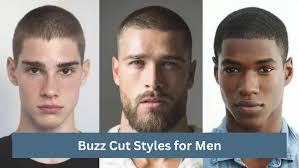
Choosing the Right Buzz Cut Length for You
Selecting your ideal buzz cut length is a personal decision that blends art and science. It’s not just about picking a number you like; it’s about finding the number that likes you back—complementing your features and fitting seamlessly into your life.
Face Shape: The Foundation of Your Choice
Your face shape is the most critical factor in determining a flattering buzz cut length. The goal is to choose a length that creates balance and harmony with your natural bone structure.
- Oval Faces: Consider yourself lucky. The balanced proportions of an oval face can successfully carry any buzz cut length, from #0 to #8. You have the freedom to choose based purely on personal style preference.
- Round Faces: The objective is to add definition and create the illusion of length. Shorter sides paired with slightly longer hair on top is a winning strategy. A #1 or #2 on the sides faded up into a #3 or #4 on top can help sharpen the jawline and elongate the face. Avoid very round, uniform lengths that mirror the face’s shape.
- Square Faces: With a strong jaw and broad forehead, your aim is to soften the angles. Buzz cut lengths in the #3 to #6 range work well, as they provide enough softness and texture to counterbalance angular features. Adding a subtle fade on the sides can also prevent a blocky appearance.
- Heart-Shaped Faces (wide forehead, narrow chin): The goal is to minimize the forehead width and add fullness around the jaw. Opt for buzz cut lengths that maintain some volume on the sides and back, such as a #3, #4, or #5, and avoid clearing out the hair at the temples. A slight fade can help soften a broad forehead.
- Oblong/Long Faces: The challenge is to avoid exaggerating facial length. Steer clear of the very short #0 and #1 cuts, which can make the face appear longer. Instead, choose buzz cut lengths that keep some weight on the sides, like a #3 or #4, and avoid overly tall styles on top.
Hair Type and Texture: Working With What You Have
Your hair’s natural behavior should guide your length selection, as different textures react uniquely to being buzzed short.
- Straight & Fine Hair: Buzz cuts are a gift for fine hair. The uniform length eliminates limpness and can make hair appear thicker and more substantial. Almost any length works, but the #2 through #5 range is particularly effective at creating the illusion of density.
- Thick & Coarse Hair: You can carry shorter lengths with ease. A #1 or #2 will look clean and sharp, and the inherent thickness of your hair will prevent it from looking wispy. Be mindful that very thick hair may require your barber to use a slightly larger guard to achieve an even cut.
- Wavy & Curly Hair: A buzz cut beautifully simplifies curly hair care. At shorter lengths (#0-#3), curls are eliminated, offering a predictable, uniform look. At longer buzz cut lengths (#4+), your natural wave or curl pattern will begin to emerge, adding welcome texture and body. This can be a stylish way to wear curly hair with zero frizz.
- Thinning/Receding Hair: A buzz cut is often the most confident and stylish solution. Shorter lengths (#1-#4) reduce the contrast between thinning areas and the scalp, making hair loss far less noticeable. It transforms a potential source of anxiety into a clean, intentional style. As the team at Capello Barbers notes, “A buzz cut can be a flattering option for those with receding hairlines”.
Lifestyle and Personal Style: The Practical Decision
Finally, your choice must align with how you live and how you want to present yourself to the world.
- The Athlete or Active Individual: If you’re constantly on the move, sweating, or wearing helmets/hats, shorter buzz cut lengths (#0-#3) are incredibly practical. They’re easy to clean, dry instantly, and never get in the way.
- The Busy Professional: For the man who values efficiency, any buzz cut saves precious morning time. The #3-#5 range offers a perfect balance—it’s polished and appropriate for any corporate environment while requiring literally zero daily styling effort.
- The Style Innovator: If you enjoy playing with your look, don’t think a buzz cut limits you. Longer lengths (#5-#8) accept product for texture, and all lengths can be elevated with fades, sharp line-ups, or even shaved designs (hair tattoos) for a personalized twist.
- Climate Considerations: Your local weather matters. In hot, humid climates, shorter cuts (#0-#2) are cooling and comfortable. In colder regions, a #4 or longer can provide a slight bit of insulation.
Advanced Buzz Cut Styles and Variations
Once you’ve mastered the basic buzz cut lengths, a world of refined styles opens up. These variations add artistry and dimension to the foundational uniform cut.
Incorporating Fades
A fade is a technique where hair gradually transitions from very short (often down to the skin) to longer as it moves up the head. Adding a fade to a buzz cut creates contrast, shape, and a modern, barber-shop-fresh look.
- Taper Fade: The most subtle fade. The hair gets gradually shorter toward the neck and ears but doesn’t go all the way to the skin. It’s a clean, professional look that adds shape without high contrast.
- Skin Fade: The hair fades all the way down to bare skin. This creates a sharp, high-contrast look that is very contemporary and striking. It requires more frequent maintenance (weekly touch-ups) to keep the skin portion clean-looking.
- High, Mid, and Low Fades: These terms refer to where the fade begins. A high fade starts near the parietal ridge (creating maximum contrast), a mid fade starts at the temples (balanced), and a low fade begins just above the ears (subtle). Pairing a high fade with a #3 or #4 on top is a quintessentially modern masculine style.
The Power of the Line-Up
Also called an edge-up, this is the process of using a trimmer to create crisp, clean lines along the hairline, sideburns, and neck. A sharp line-up transforms a simple buzz cut from a home haircut into a precision barbershop masterpiece. It frames the face, enhances sharpness, and shows that your cut is intentional and well-maintained. This detail is especially important for shorter buzz cut lengths, where the hairline is prominently displayed.
Butch Cuts, Burr Cuts, and Crew Cuts
These are traditional names for specific expressions of the buzz cut, often tied to particular buzz cut lengths.
- Butch Cut: Typically refers to a uniform cut using a #3 or #4 guard all over. It’s the classic, full, and soft buzz—the “Goldilocks zone” for many men.
- Burr Cut: Usually a #1 or #2 guard uniform cut. It’s shorter than a butch cut, offering a velvety, textured feel while remaining extremely low-maintenance.
- Crew Cut: While sometimes used interchangeably with “buzz cut,” a traditional crew cut is characterized by slightly longer hair on top that tapers down to shorter sides and back. It’s a close cousin, often using a #5 or #6 on top faded down to a #2 or #3 on the sides.
Buzz Cuts for Women: A Bold Statement of Confidence
The buzz cut is a powerfully liberating and stylish choice for women, symbolizing confidence, self-expression, and a break from conventional beauty standards. Female celebrities like Zendaya, Kristen Stewart, and Cara Delevingne have all championed the look, proving its versatility and high-fashion appeal.
The process and buzz cut lengths are fundamentally the same as for men. Women can choose any guard from #0 up, depending on their desired look. A #1 or #2 creates a super-soft, velvety chop, while a #4 or #5 leaves enough length for subtle texture and a more gradual transition from longer hair. For women not ready to commit fully, styles like the undercut or side shave offer a compromise, shaving a section of hair while leaving the rest long.
A buzz cut shifts the focus. It becomes a canvas for bold makeup, statement earrings, and elegant necklines, allowing other features to shine. It’s also an act of simplicity, freeing up immense time and energy previously spent on hair care. For women with natural curly or coily hair, a buzz cut can be a reset button, allowing hair to grow back healthily without the stress of chemicals or heat styling. The key to pulling it off is the same as for men: owning it with confidence. As All Things Hair suggests, it’s a style that “works on all hair textures and it’s also great if you have a receding hairline, or need to fix a bad haircut”.
Maintenance and Care for Your Buzz Cut
A buzz cut is low-maintenance, but it is not no-maintenance. Proper care keeps it looking sharp and your scalp healthy.
- Trimming Schedule: Your maintenance frequency depends on your chosen buzz cut length. For very short cuts (#0-#2), you’ll need a trim every 1-3 weeks to maintain the crisp look. For medium lengths (#3-#5), every 3-5 weeks is sufficient. Longer buzz cuts (#6-#8) can go 4-8 weeks between cuts. Investing in a quality set of clippers allows for easy at-home touch-ups between barber visits.
- Scalp Care is Paramount: With less hair covering it, your scalp requires direct attention. Wash it regularly with a gentle shampoo to remove oil and sweat. Most importantly, moisturize daily with a lightweight, non-greasy lotion or a dedicated scalp serum to prevent dryness and flakiness.
- Sun Protection is Non-Negotiable: Your scalp has likely never been so exposed to UV rays. A sunburn on the head is painful and damaging. Apply sunscreen whenever you’re outdoors, or wear a hat. This is crucial for the shortest buzz cut lengths.
- The Role of Products: For lengths #5 and above, a small amount of product can enhance your look. A matte styling clay or paste can add definition and texture to longer buzz cuts. Even for shorter cuts, a light, nourishing hair oil can add shine and keep the hair healthy-looking.
How to Ask Your Barber for a Buzz Cut
Clear communication is the key to walking out of the barbershop with the exact cut you want. Here’s how to ask like a pro:
- Know Your Number: Decide on your preferred buzz cut length guard number before you go in.
- Specify the Details: Walk in and say, “I’d like a buzz cut, please. A number [your number] all over.”
- Clarify Variations: If you want something more advanced, specify: “A number 4 on top with a taper fade to a number 2 on the sides, please.” or “A number 2 buzz cut with a clean line-up.”
- Use Visual Aids: If you’re unsure of the terminology, a picture is worth a thousand words. Show your barber a photo of the style you’re aiming for.
Barber’s Insight: “The buzz cut looks simple—but the shape makes all the difference. We contour the cut to your crown, forehead, and head shape to avoid dents, shadows, or uneven patches. It’s the cleanest short cut you can get when done right.” – 007 Barbershop
Remember, a good barber is your ally. You can also simply say, “Give me the buzz cut you think suits my head shape best,” and trust their professional expertise.
Conclusion
The journey through the world of buzz cut lengths reveals a hairstyle of remarkable depth and versatility. Far from being a single, monolithic look, the buzz cut is a spectrum of expression, ranging from the stark, commanding presence of the #0 induction cut to the soft, textured versatility of the #8 full-coverage style. Choosing the right length is a personal equation that balances your face shape, hair texture, lifestyle demands, and innate sense of style. It is a haircut that demands confidence but repays that confidence tenfold in simplicity, ease, and a timeless, sharp aesthetic.
Ultimately, a buzz cut is more than just a way to wear your hair; it’s a statement. It speaks of practicality, of confidence, and of a willingness to redefine conventional standards of grooming. Whether you’re seeking the ultimate low-maintenance routine, a solution for thinning hair, a cool comfort for an active life, or simply a bold new look, there is a buzz cut length perfectly suited to you. Armed with the knowledge of guards, shapes, and styles, you can now approach your barber—or your own clippers—with the confidence to choose a length that doesn’t just cut your hair, but elevates your entire look.
Frequently Asked Questions (FAQ)
What is the most popular buzz cut length?
The most popular and universally recommended buzz cut length for first-timers and everyday wear is the #2 guard (1/4 inch) and the #3/#4 guard range. The #2 offers a classic, clean, military-inspired look that is balanced and not too extreme. The #3 and #4, often called the “butch cut,” represent a sweet spot—they are short enough to be very low-maintenance but long enough to show some texture and look intentional in both casual and professional settings.
Will a buzz cut suit my round face?
Absolutely. A buzz cut can be very flattering for a round face when the correct buzz cut length and style are chosen. The goal is to create angles and add length. Opt for a style that incorporates a fade on the sides, keeping them short (using a #1 or #2 guard), while leaving a bit more length on top (a #3 or #4). This contrast helps to elongate the face and sharpen the jawline, counteracting the roundness.
How often do I need to trim a buzz cut?
The maintenance schedule for your buzz cut depends directly on the buzz cut length you choose and how crisp you want to keep it. For the shortest styles (#0, #1, #2), you’ll likely need a trim every 1-3 weeks. For medium lengths (#3, #4, #5), every 3-5 weeks is standard. For the longest buzz cuts (#6, #7, #8), you can stretch the time between cuts to 4-8 weeks. A fade, especially a skin fade, will require more frequent touch-ups (often weekly) to maintain its sharp appearance.
Can I cut my own buzz cut at home?
Yes, cutting a basic, uniform buzz cut at home is one of the more achievable DIY haircuts. You will need a good quality pair of hair clippers with the appropriate guard attachments. Key tips are to start with clean, dry hair; begin with a longer guard than you think you might want; and always cut against the direction of hair growth for an even result. It is highly recommended to have a friend help with the back of your head to ensure it’s even. For more complex styles involving fades or sharp line-ups, visiting a professional barber is advisable.
Does a buzz cut make thinning hair look better?
In most cases, yes. A buzz cut is widely considered one of the best hairstyles for men with thinning hair or a receding hairline. Shorter buzz cut lengths (from #1 to #4) dramatically reduce the contrast between the thinner areas of your hair and your scalp. This creates a uniform, consistent look that makes thinning far less noticeable. Instead of trying to comb over or mask sparse areas, the buzz cut embraces a clean, confident aesthetic that often makes men look younger and more self-assured.