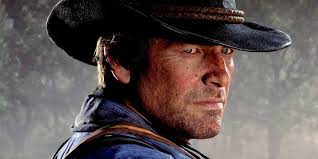
In the vast, breathtaking landscape of Red Dead Redemption 2, you don’t just control Arthur Morgan—you live alongside him. You feel the weight of his loyalty, the sting of his regrets, and the quiet desperation of a man watching his world vanish. Arthur Morgan is more than a video game protagonist; he is a profound exploration of morality forged in the fires of a dying era. His journey from a hardened enforcer to a man desperately seeking meaning before his time runs out stands as one of the most human and impactful narratives ever crafted in interactive storytelling. Through Arthur’s eyes, players don’t just witness the end of the Wild West—they experience the painful, beautiful struggle for redemption against impossible odds.
The genius of Arthur Morgan lies in his devastating relatability. He is not a superhero or a chosen one; he is a profoundly flawed man shaped by loss, bound by a misplaced sense of duty, and ultimately awakened by his own mortality. His story resonates because it mirrors our own deepest conflicts: the tension between who we are and who we wish to be, the chains of past mistakes, and the universal yearning to leave something good behind. As the central pillar of Rockstar Games’ epic, Arthur Morgan doesn’t just carry the story—he elevates it into a timeless tragedy about the cost of freedom and the fragile hope for grace.
The Making of an Outlaw: From Orphaned Boy to Dutch’s Right Hand
To understand the man Arthur Morgan becomes, you must first understand the boy he was. His life was fractured from the beginning, marked by a series of abandonments that would define his core need for belonging. Arthur was born in 1863 to Beatrice and Lyle Morgan. His mother died when he was young, and his father was a petty criminal—a “no good bastard,” as Arthur later recalled—who was arrested for larceny when Arthur was just eleven years old. The young boy witnessed his father’s death, an event that left him alone in the world with only his father’s hat and a photograph of his mother as meager keepsakes. This foundational trauma of being orphaned created a void, a desperate need for a family and a purpose, that would make him uniquely vulnerable to a certain kind of salvation.
That salvation arrived in the form of Dutch van der Linde and Hosea Matthews. They found a fourteen-year-old Arthur, a “wild delinquent” on the streets, and took him in. To Arthur, they were more than rescuers; they were surrogate fathers who offered a new family and a powerful ideology. Dutch, with his silver tongue and anarchist charm, preached a life free from the tyranny of government and civilization. He and Hosea taught Arthur everything—how to read, write, hunt, shoot, and ride. Arthur became Dutch’s first protégé and a founding member of the Van der Linde gang, absorbing a worldview that painted their criminality as a noble rebellion. His loyalty was born in this moment, a fierce, unwavering devotion to the man and the dream that saved him from oblivion. This loyalty would become both his defining trait and his greatest shackle.
Before the game’s events, Arthur’s life was already a tapestry of love, loss, and violence that hardened his exterior. He fell deeply in love with Mary Gillis and even became engaged, but their relationship shattered under the pressures of his outlaw life and her family’s disapproval. Later, in a brief relationship with a waitress named Eliza, Arthur fathered a son, Isaac. He supported them from afar, visiting when he could, clinging to this secret thread of a normal life. That thread was severed brutally when, arriving for a visit, he found two crosses outside their home. Isaac and Eliza had been murdered by robbers for a mere ten dollars. This tragedy cemented a bleak philosophy in Arthur: “You don’t get to live a bad life and have good things happen to you”. It was a lesson that told him happiness was not for men like him, pushing him further into the only identity he had left—the dependable enforcer for Dutch’s gang.
The Psychology of a Gunslinger: Unpacking Arthur Morgan’s Complex Mind
Arthur Morgan’s enduring appeal isn’t just in his actions, but in the rich, contradictory psychological landscape that drives them. He is a walking paradox, a case study in how environment and innate character wage war within a single person. Using the framework of the Big Five personality traits, we can see this conflict clearly. Arthur scores high in conscientiousness—he is disciplined, responsible, and relentlessly dutiful, often taking on the burdens of the entire gang. His agreeableness is conditional, manifesting as deep compassion and loyalty to his “family,” yet it can vanish in the face of threats or moral disgust. Perhaps most telling is his elevated neuroticism. Beneath the stoic facade lies a man prone to anxiety, guilt, and profound emotional turmoil, especially as his world begins to collapse.
Table: The Duality of Arthur Morgan’s Core Drives
| Core Drive | Early-Game Manifestation (Loyalty) | Late-Game Manifestation (Redemption) |
|---|---|---|
| Primary Motivation | Protect the Van der Linde gang at all costs. | Secure a better future for John Marston’s family. |
| Guiding Principle | Obedience to Dutch’s vision and orders. | A personal, internal moral code. |
| View of Violence | A necessary tool for survival and protecting the gang. | A tragic last resort, often regretted. |
| Coping Mechanism | Stoicism, humor, burying emotions in work. | Introspection, journaling, making amends. |
This internal structure explains Arthur’s behavioral patterns. His primary motivation, for most of his life, was belonging. The gang was his fortress against the loneliness of his orphaned childhood. This aligns with psychological attachment theory; Dutch became a foundational attachment figure, making dissent feel like a betrayal of the self. Arthur’s decision-making often followed a distorted utilitarian logic: what serves the gang’s survival is right, even if it conflicts with a broader morality. This allowed him to rationalize robbery, intimidation, and violence as necessary evils in an unjust world.
From an archetypal perspective, Arthur embodies the Hero’s journey, but one that begins in medias res. He is already the hardened veteran when we meet him. His quest is not to gain strength, but to reclaim his humanity. This journey forces him to confront his Shadow—the violent, cynical, and fatalistic parts of himself forged by a life of crime. His tuberculosis diagnosis acts as the ultimate “call to adventure,” an undeniable catalyst that shatters his denial and forces this confrontation. While not a clinical diagnosis, Arthur exhibits signs consistent with complex post-traumatic stress, stemming from a lifetime of violence, loss, and betrayal. His growth is the process of integrating these shadow aspects, not by erasing them, but by understanding them and choosing to act from a place of compassion instead of fear. As Roger Clark, the actor behind Arthur, noted, the character’s vulnerability is his strength, giving players “permission… to address their own fear”.
A Brotherhood Fractured: Arthur, Dutch, and the Poison of Micah Bell
The heart of Red Dead Redemption 2‘s tragedy is the slow, agonizing dissolution of a family, centered on the relationship between Arthur Morgan and Dutch van der Linde. For decades, this dynamic was simple: Dutch was the visionary father, and Arthur was the loyal son, the strong right arm who executed the vision without question. Dutch’s philosophy of resisting civilization and living free was Arthur’s religion. Their bond was the bedrock of the gang, with the wise Hosea Matthews often acting as the balancing, moderating force between Dutch’s fervor and Arthur’s brute-force pragmatism. In the game’s early chapters, we see remnants of this unit, with Arthur still referring to Dutch with respect and hoping the “old Dutch” will return after the Blackwater disaster.
The crack in this foundation is personified by Micah Bell. Micah is everything Arthur is not: a selfish, opportunistic, and sadistic killer who lacks any code beyond his own survival. Where Arthur’s violence is often transactional or defensive, Micah’s is recreational. Dutch, increasingly paranoid and desperate after the botched Blackwater ferry heist, begins to see Micah’s sycophantic aggression as decisiveness, and Arthur’s cautious loyalty as weakness or doubt. This creates a toxic triangulation. Arthur, representing the gang’s old guard and its communal spirit, is pitted against Micah, who represents a new, ruthless individualism. Each successful manipulation by Micah drives Dutch further from Arthur’s counsel.
Key moments chart this heartbreaking fracture. After the gang’s botched bank robbery in Saint Denis, where Hosea is killed, Dutch’s descent accelerates. Hosea was the gang’s conscience and Dutch’s oldest friend; without him, Dutch’s worst impulses go unchecked. Arthur witnesses Dutch’s uncharacteristic brutality, like the cold drowning of Angelo Bronte, and his willingness to abandon members in need. The final betrayal occurs on a mountain ridge. After Arthur exposes Micah as the Pinkerton informant, Dutch is faced with a choice between his oldest son and the serpent poisoning his mind. In a moment that kills Arthur’s last hope, Dutch chooses Micah, turns his back, and walks away, leaving Arthur to die. This moment is more than a plot point; it’s the shattering of an identity Arthur has held since he was a boy. The father has abandoned the son, and the dream was always a lie.
“You know, all that ever mattered to me was loyalty. It was all I knew. It was all I ever believed in…” — Arthur Morgan to John Marston.
This quote, uttered in a moment of exhausted honesty, encapsulates the tragedy. Arthur’s greatest strength—his unwavering loyalty—was exploited until it became the instrument of his suffering. His redemption begins only when he transfers that loyalty from a flawed idol to a tangible, worthy cause: saving John Marston’s family.
The Cough That Changed Everything: Mortality as a Catalyst
Arthur Morgan’s transformation is not sparked by a sudden moral epiphany, but by a biological death sentence: tuberculosis. Contracted during a grim mission to beat a sick, indebted miner named Thomas Downes for the gang’s vile accountant, Leopold Strauss, the disease becomes the central metaphor for Arthur’s journey. Initially just a cough, it progresses relentlessly throughout the game’s later chapters, a physical manifestation of the “sickness” of his lifestyle catching up to him. As Arthur wheezes, coughs up blood, and loses strength, his imposing physical presence—the tool of his enforcement—fades away, forcing a different kind of strength to emerge.
This confrontation with mortality strips away all pretense. The future vanishes, leaving only the present and the past. Arthur is haunted not just by his own impending death, but by the legacy he will leave. In one of the game’s most powerful moments, Arthur confesses his fear to a nun at a train station: “I’m afraid”. For a man who built his identity on toughness and control, this admission of vulnerability is his most courageous act. It unlocks his capacity for genuine reflection. He starts to use his journal not just to log events, but to sketch, ponder, and express regrets, revealing the sensitive soul that always existed beneath the hardened exterior.
The disease reframes his entire world. The gang’s endless scheming for “one more score” seems increasingly petty and futile against the vast, final truth of his condition. He begins to see the people he’s hurt not as obstacles or targets, but as human beings with families. He returns to the widow of Thomas Downes—the man whose illness he now carries—to give her money and help, a direct attempt to atone for the specific sin that doomed him. His mission shifts from acquiring money for a doomed paradise to protecting what little good remains. He helps the Native American leader Rains Fall, not as a “white savior,” but as a fellow man witnessing the destruction of his way of life. Most importantly, he focuses on saving John Marston, Abigail, and Jack, seeing in them the chance for a normal life his own son was denied. His goal is no longer to escape with the gang, but to help the right people escape from it.
The Art of Bringing a Legend to Life: Roger Clark’s Performance
The Arthur Morgan who has left an indelible mark on millions of players is the miraculous fusion of impeccable writing and a legendary performance by actor Roger Clark. Clark didn’t just voice Arthur; he became him through years of performance capture, embodying his walk, his weariness, and his wit. The process was shrouded in the infamous Rockstar secrecy, with Clark working for years under strict NDAs, often receiving lines minutes before performing them. This “tunnel vision” environment, while challenging, allowed the cast to focus deeply without external noise, ultimately contributing to the performance’s raw authenticity.
Clark’s approach was intentionally distinct. He knew he couldn’t “out-Marston” the iconic John Marston from the first game, so he focused on crafting Arthur’s unique vulnerability. His inspirations were eclectic: not just classic Western stoics like John Wayne, but the dynamic, emotionally volatile power of Japanese actor Toshiro Mifune, who could shift from humor to fury in an instant. Clark understood that Arthur had to be a coherent character whether the player chose a path of high honor or low honor. He found the through-line in Arthur’s core loyalty, arguing that even a “dishonourable Arthur” expresses a twisted version of this trait.
The result is a performance of breathtaking subtlety and power. Clark masterfully charts Arthur’s physical and spiritual decline—the gradual weakening of his body, the deepening rasp in his voice, the shift from cynical detachment to weary wisdom. He makes Arthur’s rare moments of laughter feel earned and his moments of despair utterly devastating. Critics and awards bodies took note: Roger Clark won Best Performance at The Game Awards 2018, and the character is consistently ranked among the greatest in video game history. Clark himself has reflected on the impact, noting how players have told him that Arthur’s vulnerability gave them permission to explore their own emotions, and how the game bridged generational gaps between fathers and sons. In Roger Clark’s hands, Arthur Morgan ceased to be a digital creation and became a mirror for our own struggles, fears, and hopes for redemption.
https://headlinenest.com/chappell-roan-age/
Legacy of the Fallen: How Arthur Morgan Redefined Video Game Storytelling
The impact of Arthur Morgan transcends the boundaries of Red Dead Redemption 2. He has set a new benchmark for character depth in video games, proving that interactive protagonists can be as complex, flawed, and profoundly human as any in literature or film. Before Arthur, many video game heroes were power fantasies—blank slates or unstoppable forces. Arthur is the opposite: a deconstruction of power. His journey is not about becoming stronger, but about becoming wiser and kinder as his physical strength fails him. He demonstrated that a character’s greatest moment can be one of surrender and sacrifice, not victory.
Arthur’s relationship with the player is revolutionary. Through his journal, his quiet comments to his horse, and his reactions to the world, he possesses an inner life that feels independent of player control. He isn’t a puppet; he’s a partner in the narrative. As The New York Times noted, players connect with Arthur “because his choices are, in fact, your own”. This fusion of player agency and a strong, pre-defined character arc created a new paradigm for storytelling. The game’s honor system isn’t about “good” or “evil” endings; it’s about measuring the alignment between Arthur’s actions and his awakening conscience. The most “rewarding narrative journey,” as Clark suggested, is the one where Arthur finds redemption.
Culturally, Arthur Morgan has become a timeless icon. He is regularly placed in debates about the greatest fictional characters of all time, not just in gaming. Analyses of his psychology, his moral philosophy, and his tragic arc abound in essays, videos, and discussions. He represents a maturation of the medium, a sign that games can tackle themes of mortality, guilt, and legacy with a seriousness and artistry that resonates for years after the controller is put down. His story is a poignant reminder of the dying West, but his legacy is the vibrant, living proof of video games’ capacity for true emotional art. As one analysis put it, his death marked “the twilight of an era,” but his character illuminated a new dawn for storytelling potential in the medium.
Conclusion: The Last Ride of Arthur Morgan
Arthur Morgan’s story ends on a windswept mountaintop, a final, fragile moment between violence and peace. His last act is not one of conquest, but of assurance—ensuring his brother, John Marston, escapes to have the life Arthur never could. Whether he dies by Micah’s bullet or succumbs to his disease while watching the sunrise, his end is defined by a hard-won peace. He lived a bad life, but in the end, he did a few good things. He was, as he feared, not a good man. But he proved that even a man steeped in sin could choose to do good, that redemption is not about erasing the past, but about making the right choice when it matters most.
The enduring power of Arthur Morgan is that he makes us believe in the possibility of our own redemption. He shows us that it’s never too late to question the loyalties that bind us, to face our fears with honesty, and to use whatever time we have left to protect what is good. He is a testament to the idea that our final legacy is not defined by our worst mistakes, but by our last, best actions. In guiding Arthur through his final ride, we don’t just witness a character’s conclusion; we participate in a fundamental human ritual—the search for meaning at the end of the road. And that is why, long after the game is over, Arthur Morgan continues to ride, unchallenged, in the hearts and minds of players, a permanent and poignant fixture in the landscape of great storytelling.
Frequently Asked Questions About Arthur Morgan
How did Arthur Morgan get tuberculosis?
Arthur Morgan contracted tuberculosis during a mission in Chapter 2. At the behest of the gang’s accountant, Leopold Strauss, Arthur was sent to collect a debt from Thomas Downes, a sick farmer in the Valentine area. During a violent confrontation, Downes, who was in the late stages of tuberculosis, coughed blood directly into Arthur’s face and mouth, transmitting the bacterial infection. This moment is often cited as the tragic, poetic turning point where Arthur’s physical decline begins, directly linked to one of his more morally reprehensible acts for the gang.
Was Arthur Morgan always meant to die?
Yes, the tragic arc of Arthur Morgan was a foundational part of Red Dead Redemption 2‘s narrative from the beginning. The game’s writers, led by Dan Houser, wanted to subvert the common trope of a protagonist growing physically stronger. Instead, they crafted a story where a strong man is broken down and taken on an “intellectual roller coaster” as his worldview falls apart. His death is the necessary conclusion to his redemption arc, serving as the catalyst that allows John Marston to escape and ultimately sets the stage for the events of the first Red Dead Redemption game.
What is the significance of Arthur Morgan’s journal?
Arthur’s journal is a critical window into his inner life and a masterful storytelling device. Initially containing mostly pragmatic notes and sketches, it evolves into a place of deep introspection, poetry, and regret as the story progresses. It reveals the sensitive, observant, and artistic man hidden beneath the gruff enforcer exterior. The journal makes Arthur feel like “a real person with his own inner life” and is pivotal in building player connection, showing his transformation in his own words and drawings long before he may openly express it.
How does the honor system affect Arthur Morgan’s story?
The honor system directly shapes Arthur Morgan’s demeanor, how NPCs react to him, certain mission outcomes, and, most importantly, the nature of his final moments. A high-honor Arthur becomes more polite, helpful, and racked with guilt, actively seeking to make amends. A low-honor Arthur remains cynical, brutal, and self-serving. In the ending, a high-honor Arthur succumbs to his injuries and disease while watching a final sunrise, achieving a measure of peace. A low-honor Arthur is typically executed by Micah Bell. The system allows the player to explore different facets of the same core character, with the narrative steering toward redemption as the most thematically fulfilling path.
What was Arthur Morgan’s relationship with John Marston?
Arthur and John had a complex, brotherly relationship fraught with rivalry, resentment, and deep, unshakeable love. They were both raised as “Dutch’s favorite sons” within the gang. Arthur resented John for abandoning the gang and his family (Abigail and Jack) for a year, seeing it as a betrayal of the loyalty Arthur held sacred. However, as Arthur’s perspective changed, he came to see John’s desire for a stable family life as the right path. Arthur’s final mission became saving John, and his ultimate redemption was securing John’s escape. His dying wish for John to “be a man” and leave the outlaw life behind is the direct passing of the torch that defines John’s own journey in the epilogue and the first game.