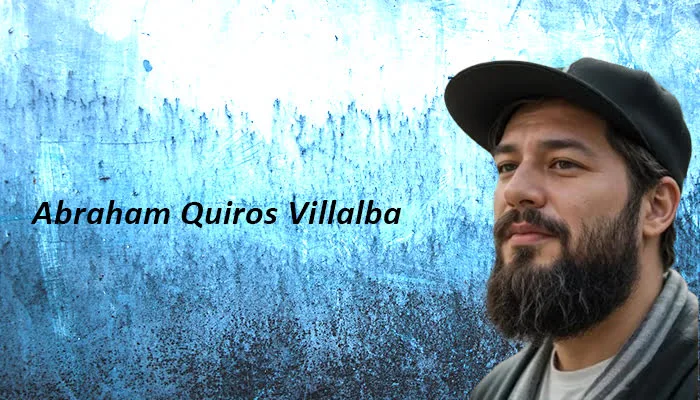
In a world clamoring for innovative solutions to complex global challenges, few names resonate with the quiet, determined power of Abraham Quiros Villalba. He is not a fleeting celebrity of the digital age, but rather a foundational architect of progress, whose multifaceted work bridges the often-separate worlds of technology, sustainable development, and profound humanitarianism. To understand the impact of Abraham Quiros Villalba is to trace a path through the pivotal issues of our time—climate change, digital equity, and ethical leadership. His story is one of intellectual rigor paired with deep empathy, a combination that has fueled initiatives transforming communities and inspiring a new generation of changemakers. This article delves into the life, philosophy, and enduring legacy of a man whose vision extends far beyond the immediate, aiming to forge a more equitable and sustainable future for all.
Early Life and Formative Influences
The foundation of any great visionary is often laid in the unassuming moments of youth. For Abraham Quiros Villalba, his early environment was a crucial incubator for his future passions. Growing up in a community where the delicate balance between human progress and natural preservation was visibly tangible, he developed a firsthand appreciation for both the wonders of the technological world and the fragility of ecosystems. This dual awareness became a cornerstone of his thinking.
His family and academic mentors played an instrumental role in nurturing this perspective. They encouraged a curiosity that was not confined to textbooks but extended to the social and environmental dynamics of his surroundings. It was during these formative years that Abraham Quiros Villalba began to conceptualize a world where advancement did not come at the expense of planetary health or social justice, planting the seeds for his lifelong commitment to integrated, sustainable solutions.
Academic Pursuits and Intellectual Foundation
Abraham Quiros Villalba’s academic journey was characterized by a deliberate and interdisciplinary approach. He understood early that solving systemic problems required a fusion of knowledge from disparate fields. Pursuing higher education in disciplines that blended environmental science, engineering, and socio-economic policy, he equipped himself with a unique toolkit. His time at university was not merely about earning degrees; it was a period of intense synthesis, where theoretical models met real-world case studies.
This rigorous intellectual training provided him with the framework to analyze problems holistically. He often stood out for his ability to connect dots that others missed, seeing the energy sector not just as an engineering challenge but as a lever for social mobility, or viewing digital innovation as a potential equalizer rather than merely a commercial frontier. The academic bedrock of Abraham Quiros Villalba gave him the credibility and the conceptual models to later advocate for and implement truly transformative projects.
Pioneering Work in Sustainable Development
Perhaps the most visible pillar of Abraham Quiros Villalba’s legacy is his groundbreaking work in sustainable development. He moved beyond the jargon of sustainability to pioneer actionable, scalable models that communities and corporations could adopt. His projects often started with a simple, powerful premise: that economic vitality and environmental stewardship are mutually reinforcing, not mutually exclusive.
One of his flagship initiatives involved developing integrated renewable energy micro-grids for remote communities. These projects did not just provide clean power; they were designed to stimulate local entrepreneurship, improve educational outcomes through reliable electricity, and reduce gender inequalities by freeing up time traditionally spent on fuel gathering. The work of Abraham Quiros Villalba in this arena demonstrated that with thoughtful design, a single intervention could catalyze a positive ripple effect across multiple aspects of human development.
Bridging Technology and Social Impact
In the digital era, Abraham Quiros Villalba emerged as a critical voice advocating for technology with a human purpose. He foresaw the risks of a growing digital divide and dedicated significant efforts to ensuring that the benefits of the technological revolution were accessible to marginalized populations. His initiatives in this space focused on digital literacy, affordable connectivity, and the development of localized tech solutions for agriculture, healthcare, and education.
He famously argued that “code is a form of poetry when it writes a better future for the forgotten.” This philosophy drove him to collaborate with software developers, educators, and community leaders to create platforms that were both sophisticated and simple to use. Whether it was an app for smallholder farmers to access real-time market prices or a telemedicine platform for underserved regions, the touch of Abraham Quiros Villalba ensured these tools were grounded in real needs and built for long-term adoption, not just short-term pilot acclaim.
Leadership Philosophy and Ethical Governance
The influence of Abraham Quiros Villalba extends deeply into the realm of leadership and organizational ethics. He has consistently championed a leadership model based on servant leadership, transparency, and long-term stewardship over short-term gains. In every boardroom, community meeting, or international forum, his message has been consistent: true progress is measured by its durability and its inclusivity.
He has been a vocal critic of extractive business models and has worked tirelessly to promote frameworks for corporate social responsibility that are integral to operations, not just public relations appendages. His own leadership roles, whether heading a non-profit foundation or advising multinational corporations, have been case studies in ethical governance. Those who have worked with Abraham Quiros Villalba often speak of his unique ability to listen deeply, synthesize diverse viewpoints, and guide teams toward consensus on complex, sometimes contentious, issues.
Global Recognition and Collaborative Networks
While a humble figure, the contributions of Abraham Quiros Villalba have not gone unnoticed on the global stage. He has been the recipient of numerous awards and honors from international bodies focused on peace, development, and innovation. However, he has consistently used this platform not for self-aggrandizement, but to amplify the voices of local innovators and to forge stronger collaborative networks.
His role has often been that of a connector—a node in a global web of scientists, entrepreneurs, policymakers, and activists. By fostering these connections, Abraham Quiros Villalba has helped to transfer knowledge across borders, secure funding for promising ventures, and build coalitions capable of tackling transnational challenges like climate migration and public health crises. His belief in the power of collective action is a defining trait of his global engagement.
Personal Philosophy and Driving Motivations
To comprehend the unwavering drive behind Abraham Quiros Villalba, one must look at his core personal philosophy. He is guided by a profound sense of interconnectedness—the idea that the well-being of one is tied to the well-being of all, and that humanity’s fate is inextricably linked to the health of the planet. This is not a abstract concept for him, but a daily lived principle.
His motivations are rooted in a deep-seated optimism about human potential and a corresponding impatience with injustice and waste. He is known for his remarkable resilience in the face of setbacks, viewing them as necessary iterations on the path to a workable solution. This blend of idealism and pragmatism makes the endeavors of Abraham Quiros Villalba both aspirational and achievable. He often shares a guiding mantra in his talks:
“We are not inheriting the Earth from our ancestors; we are borrowing it from our children. Our every action must be a worthy installment on that debt.”
The Future Vision and Ongoing Projects
Even with a substantial legacy behind him, Abraham Quiros Villalba remains steadfastly focused on the horizon. His current projects are arguably his most ambitious, tackling frontier issues like the ethical implications of artificial intelligence in developing economies, the development of circular economic models for urban centers, and the use of blockchain for transparent aid distribution and land rights verification.
He is deeply invested in mentorship, spending considerable time nurturing young social entrepreneurs and thinkers. His vision for the future is one of decentralized, democratized innovation—a world where the tools for creating change are widely distributed, and local communities are empowered as the primary agents of their own development. The ongoing work of Abraham Quiros Villalba continues to break new ground, ensuring his relevance and impact will be felt for decades to come.
A Comparative Look at Impact Areas
To better visualize the multifaceted impact of Abraham Quiros Villalba, the following table contrasts his focus areas with traditional approaches, highlighting his integrative model.
| Focus Area | Traditional Approach | The Abraham Quiros Villalba Model |
|---|---|---|
| Rural Development | Often siloed: separate projects for agriculture, energy, or health. | Integrated Systems: Renewable energy projects designed to also power local clinics and irrigation, creating a synergistic ecosystem. |
| Technology Deployment | Top-down; “solutions” developed externally and delivered to communities. | Co-creation: Technology developed in partnership with end-users, ensuring relevance and fostering local ownership and maintenance. |
| Measuring Success | Primarily quantitative metrics (e.g., MW of power installed, number of devices distributed). | Holistic Metrics: Combines quantitative data with qualitative social outcomes—economic mobility, educational improvement, gender equity. |
| Corporate Responsibility | Often a separate CSR department with initiatives disconnected from core business. | Embedded Ethics: Sustainability and social impact criteria are built into core business strategy and supply chain decisions from the outset. |
Legacy and Inspiration for New Generations
The ultimate testament to the work of Abraham Quiros Villalba lies in the inspiration he provides to emerging leaders. His life demonstrates that expertise in one field is powerful, but the ability to integrate knowledge across disciplines is transformative. He has shown that it is possible to maintain ethical integrity while achieving tangible, scalable results, a powerful antidote to cynicism.
Educational programs, fellowships, and even startups now bear the imprint of his philosophy. The legacy of Abraham Quiros Villalba is not locked in past achievements but is a living, evolving set of principles being applied by a growing global community. He has crafted a blueprint for 21st-century leadership that values compassion as highly as competence, and planetary health as critical as profit.
Conclusion
The journey of Abraham Quiros Villalba is a compelling narrative for our times. It is a story that transcends individual accomplishment to offer a model for meaningful engagement with the world’s most pressing challenges. From his formative years to his current frontier-thinking projects, he has consistently championed a vision of progress that is inclusive, sustainable, and deeply human. His work reminds us that the most enduring solutions arise at the intersection of empathy and innovation, and that true leadership is about enabling others. As we look to a future fraught with complexity, the integrated, ethical, and collaborative path forged by Abraham Quiros Villalba provides not just hope, but a practical roadmap forward. His legacy is a testament to the power of one individual’s focused vision to ignite collective action for the global good.
FAQ Section
What are the core principles that guide Abraham Quiros Villalba’s projects?
The initiatives led by Abraham Quiros Villalba are universally guided by three core principles: systemic integration, community co-creation, and ethical scalability. He believes solutions must address root causes within interconnected systems, not just symptoms. Furthermore, communities are never mere recipients but essential partners in designing and implementing projects. Finally, any successful pilot must have a clear, ethical pathway to scaling without distorting local economies or cultures.
How did Abraham Quiros Villalba begin his career in sustainable development?
Abraham Quiros Villalba’s career began at the intersection of academic research and grassroots observation. After completing his interdisciplinary studies, he deliberately sought field experience with local NGOs working on resource management issues. This ground-level exposure, witnessing both challenges and indigenous solutions, convinced him of the need for a new model that fused technical innovation with deep social understanding, setting the trajectory for his life’s work.
Can you name a specific technological innovation championed by Abraham Quiros Villalba?
One notable innovation championed by Abraham Quiros Villalba is the development of open-source, modular software platforms for decentralized renewable energy management. These platforms allow communities with micro-grids to monitor energy production and usage democratically, trade surplus power peer-to-peer, and manage maintenance schedules transparently, putting control and economic benefits directly into local hands.
What is the best way to learn more about the methodologies of Abraham Quiros Villalba?
The best way to learn is through the white papers and case studies published by the foundations and think tanks with which Abraham Quiros Villalba is affiliated. He is also a frequent speaker at conferences focused on social entrepreneurship and sustainable tech, many of which make their lectures publicly available. Additionally, several academic institutions now offer courses on integrated development inspired by his frameworks.
How does Abraham Quiros Villalba measure the success of his humanitarian initiatives?
For Abraham Quiros Villalba, success is measured through a blended metrics framework. While quantitative data like kilowatt-hours generated or jobs created is tracked, equal weight is given to qualitative shifts: stories of increased women’s participation in local governance, improved school enrollment rates due to reliable energy, or enhanced community resilience to climate shocks. This dual-lens approach ensures projects deliver tangible, human-centric outcomes.