Chappell Roan age is more than just a number on a birth certificate; it is the definitive lens through which to understand one of pop music’s most spectacular and resonant breakthroughs. Born Kayleigh Rose Amstutz on February 19, 1998, the artist who would become Chappell Roan entered the world in Willard, Missouri, a small town where her journey seemed almost preordained to be quiet and conventional. Today, as a 27-year-old Grammy Award winner, her story defies that expectation entirely, representing a perfect collision of personal timing, cultural shift, and raw talent. Her age places her squarely within a generation that came of age amidst rapid social change, the omnipresence of the internet, and a hunger for authentic, unfiltered expression. This is not merely the tale of a singer getting her big break; it is the chronicle of how a specific person, at a specific point in her life, created art that gave voice to the unspoken feelings of millions. From uploading songs to YouTube as a teenager to holding the Grammy for Best New Artist at 27, every step of Chappell Roan’s path is inextricably linked to her age and the experiences it encompassed. To examine Chappell Roan age is to map the blueprint of a modern icon, revealing how the constraints of a conservative childhood, the struggle of early adulthood, and the ultimate embrace of queer identity fueled a creative revolution that has redefined pop’s boundaries.
The Formative Years: Childhood and Adolescence in Missouri
The foundation of Chappell Roan’s artistry was poured in the heartland of America, within a context that initially seemed designed to suppress the very identity she would later celebrate. Growing up as the eldest of four children in a devoutly Christian household, her childhood in Willard, Missouri, was structured and conservative. The routine involved church three times a week and summers spent at Christian camps, creating an environment where she often felt like an outsider struggling with her own thoughts and burgeoning identity. She has since spoken openly about the depression she experienced and the profound feeling of being different, a sentiment rooted in both her mental health and her sexuality. This internal conflict, a hallmark of her adolescent years, became the bedrock of the empathetic and yearning songwriting that defines her music. Yet, within this structured world, the seeds of her future were planted. She began playing piano around age 10 or 11, and by 12, she was taking formal lessons. A pivotal moment arrived at age 13 when she performed “The Christmas Song” at a school talent show, an act that surprised her family and, more importantly, unlocked a powerful new form of expression and connection.Chappell Roan age
The digital age became her escape and her proving ground. By 14 or 15, she was uploading cover songs to YouTube, a platform that offered a window to a world beyond Missouri and, crucially, caught the attention of music industry scouts. This period highlights a key aspect of Chappell Roan age: she is a true digital native. Her career was incubated online, allowing her to bypass traditional local pathways and connect directly with a global audience and industry gatekeepers. At 17, she uploaded an original song titled “Die Young,” written at the transformative Interlochen Center for the Arts summer camp. This bold move led directly to showcases in New York City and, shortly after, a life-changing record deal with Atlantic Records. However, this early success came at a cost familiar to many prodigies; she graduated high school a year early, missing formative experiences like prom and traditional graduation ceremonies, trading a typical teenage timeline for the “messy” beginning of a professional music career. The tension between her conservative roots and her explosive creative ambition defined these years, setting the stage for the profound personal and artistic evolution to come.
The Stage Name and Early Career: Honoring Heritage Amidst Struggle
The adoption of the name “Chappell Roan” at age 18 was far more than a marketing decision; it was a foundational act of self-definition and tribute that anchored her artistic persona in personal history. The name honors her maternal grandfather, Dennis K. Chappell, who passed away from brain cancer in 2016. The “Roan” portion is a poignant nod to his favorite song, “The Strawberry Roan” by Curley Fletcher. In choosing this name, she shed her birth name, Kayleigh Rose Amstutz, which she has expressed a dislike for, and consciously built her artistic identity upon a legacy of familial love and personal nostalgia. This act signaled a move away from the girl she was expected to be and toward the artist she needed to become. At 19, she released her debut EP, School Nights, with Atlantic and spent the following year on tour supporting acts like Vance Joy and Declan McKenna. Yet, despite these early markers of success, she was living a dual life, still residing with her parents in Missouri and flying to Los Angeles or New York for work, a arrangement that underscored the transitional nature of this period in her life.Chappell Roan age
The true turning point arrived with her move to Los Angeles at age 20 in 2018. She describes this relocation as the moment she could finally breathe, the first time she felt able to live openly as a queer woman. The sensation was one of being “overwhelmed with complete love and acceptance,” which directly unlocked her ability to write songs “as the real me”. It was here she began her fateful collaboration with producer Dan Nigro. This era birthed “Pink Pony Club,” a song inspired by a visit to a West Hollywood gay bar and released when she was 22. The track was a defiant, synth-pop declaration of queer joy and aspiration, a “hard left turn” from her earlier work that truly announced her authentic voice. Ironically, this creative triumph coincided with professional devastation. In 2020, Atlantic Records dropped her, deeming her music not commercially viable. Coupled with a painful personal breakup, this rejection sent the young artist, now in her early twenties, into a tailspin. She returned to Missouri, working drive-through jobs and grappling with a stalled dream, a period that deeply informed the resilient, underdog spirit that would later endear her to fans. Chappell Roan age during these years—her early twenties—was defined by this brutal push-and-pull between self-discovery and industry rejection, a struggle that would make her eventual triumph all the more meaningful.
The Breakthrough Era: Crafting a Masterpiece in Her Mid-Twenties
The years between ages 24 and 26 represent the most intense and transformative period of Chappell Roan’s career, a testament to the creative fertility of one’s mid-twenties. After the setback of being dropped, she secured a publishing deal with Sony in early 2022, which allowed her to reunite with Dan Nigro and return to creating music on her own terms. The first fruit of this independence was “Naked in Manhattan,” released when she was 24, a track NPR hailed as a “queer girl bop” with “tender, nostalgic” lyrics. This was followed by the audacious “Femininomenon,” a song she described as an attempt to “get away with being as ridiculous as I possibly can”. These singles laid the groundwork for a new, uncompromising artistic identity. This period also saw her selected as an opening act for Olivia Rodrigo’s Sour Tour, a slot that exposed her music to massive, passionate audiences and solidified her connection to a new wave of pop. At age 25, she embarked on her first headlining tour, the “Naked in North America Tour,” which became a phenomenon in its own right. She infused it with a camp, drag-inspired aesthetic, booking local drag queens as openers and creating themed costume nights for her fans, consciously building a community rather than just performing for an audience.Chappell Roan age
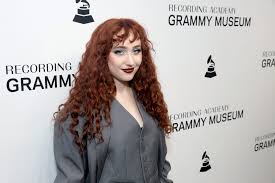
Then, in September 2023, at the age of 25, she released her debut album, The Rise and Fall of a Midwest Princess. The title itself is a direct reference to her journey and her age—the “Midwest Princess” is the girl she was, and the “Rise and Fall” is the tumultuous process of becoming the woman she is. The album was an instant critical darling, landing on year-end best lists from Rolling Stone, Billboard, Time, and Vogue for its exuberant synth-pop and unabashed queer storytelling. It transformed her from a promising artist into the leader of a cultural movement. The accompanying “Midwest Princess Tour” saw her donating $1 from every ticket to the transgender support non-profit For The Gworls, explicitly tying her success to community support. The following year, at age 26, her momentum became a landslide. Her single “Good Luck, Babe!” became a global smash, peaking at number four on the Billboard Hot 100 and catalyzing a chart resurgence for her album. Her career-defining Coachella performance in a pink butterfly costume cemented her status as a must-see live act and a social media fixture. By the time she arrived at the 67th Grammy Awards in 2025, 27-year-old Chappell Roan had not only been nominated for the “Big Four” awards (Album, Record, and Song of the Year, and Best New Artist) but took home the trophy for Best New Artist. This award, won a full eight years after her first EP, underscores a powerful truth about her path: her breakthrough was not a sudden discovery, but the hard-earned culmination of a decade of work, perfectly timed to her artistic maturity.
https://headlinenest.com/patrick-graham/
Cultural Impact and Persona: The Voice of a Generation at Twenty-Seven
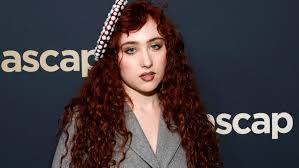
At 27 years old, Chappell Roan has transcended the role of a pop star to become a defining cultural figure for her generation, wielding her influence with a sense of purpose that reflects the maturity of her age. Her aesthetic, a direct reflection of her persona, is a meticulously crafted universe of camp and drag queen inspiration, a deliberate rejection of the subdued minimalism that dominated much of the previous decade. This is not mere costuming; it is a political and personal statement. As detailed in Allure, even her award-show manicures—like the jewel-encrusted, gothic-glam cat-eye nails she wore to the Resonator Awards—are integral to her storytelling, creating a “dark romance vibe” that complements her lyrical themes. Her entire visual language screams authenticity in a world of filters, offering a permission slip for her fans to embrace their own extravagance. Furthermore, she has been remarkably open about her mental health journey, revealing she was diagnosed with bipolar disorder in her early twenties and discussing the ongoing challenge of managing her condition in the public eye. This vulnerability about struggles that often peak in young adulthood creates a profound bond with an audience navigating similar issues, making her success story feel not just aspirational but attainable and real.Chappell Roan age
Her advocacy extends powerfully into the LGBTQ+ community, from which she draws direct inspiration and to which she offers unwavering support. Her performances are safe, celebratory spaces that often begin with drag shows. In her acceptance speeches, she consistently dedicates her platform to queer and transgender youth. At the 2024 MTV VMAs, she declared, “For all the queer kids in the Midwest watching right now, I see you, I understand you, because I’m one of you”. She has also used her voice to set boundaries, calling out fans for invasive behavior and sparking important conversations about parasocial relationships and the price of fame. This multifaceted persona—the glamorous diva, the mental health advocate, the community protector—is what makes Chappell Roan age so significant. A 27-year-old possesses the life experience to speak with authority on these complex issues, yet remains close enough to the pain and joy of adolescence and early adulthood that her empathy is visceral and immediate. She is not looking back from a distance; she is articulating the present moment for herself and her peers. The following table summarizes key milestones that highlight the direct connection between her age and her evolving impact:
| Age | Year | Key Milestone | Cultural & Personal Significance |
|---|---|---|---|
| 13 | 2011 | First public performance (won talent show) | Discovery of performing as powerful self-expression. |
| 17 | 2015 | Signed to Atlantic Records after “Die Young” | Professional validation, beginning of industry journey. |
| 20 | 2018 | Moved to Los Angeles | Lifelong moment of queer liberation and authentic living. |
| 22 | 2020 | Released “Pink Pony Club”; dropped by label | Artistic breakthrough met with professional failure, a defining test. |
| 25 | 2023 | Released The Rise and Fall of a Midwest Princess | Culmination of her journey into a critically adored, cohesive artistic statement. |
| 26 | 2024 | “Good Luck, Babe!” hits top 5; viral Coachella set | Transition from cult favorite to mainstream pop powerhouse. |
| 27 | 2025 | Wins Grammy Award for Best New Artist | Ultimate industry recognition, arriving at peak of artistic maturity. |
Her lyrics, celebrated for their candidness and wit, are the script for this generational voice. As noted in a collection of her best lines, she captures the specific angst and desire of young adulthood with phrases like “I’m too scared to say half of the things I do when I picture you” (“Picture You”) and the defiant, upbeat liberation of “Oh mama, I’m just having fun on the stage in my heels” (“Pink Pony Club”). She distills complex emotions into unforgettable, shareable moments, making her music the soundtrack and caption for her fans’ lives. In doing so, Chappell Roan age has built something rare: a pop persona that feels both larger than life and intimately, undeniably real, a reflection of where she—and an entire generation—are right now.
Conclusion: The Timeless Resonance of a Moment in Time
Chappell Roan’s story powerfully illustrates that an artist’s age is not a sidebar to their biography, but the very framework of their artistry. From the constrained teenager in Missouri sneaking moments of creative freedom to the 27-year-old Grammy winner commanding global stages, each chapter of her life has been metabolized into her music, her aesthetic, and her message. Her journey validates the often messy, non-linear path to self-discovery, proving that breakthrough is not always a matter of youthful precocity but can be the glorious result of accumulated experience, resilience, and the courage to embrace one’s truth at the right moment. The “Midwest Princess” did not fall; she evolved, and in doing so, she gave a voice to the quiet rebellions, the heartfelt longings, and the exuberant joys of countless others on a similar path. Chappell Roan age is the heartbeat of her narrative—a reminder that our most defining periods of growth often come after the world has first counted us out, and that sometimes, the most powerful art is born not from knowing who you are, but from the relentless, beautiful pursuit of finding out.
Frequently Asked Questions About Chappell Roan
Here are answers to some of the most common questions about the singer’s journey and identity.
How old was Chappell Roan when she started her music career?
Chappell Roan began her professional career very young. At age 17, she uploaded her original song “Die Young” to YouTube, which led to her being discovered and signing a record deal with Atlantic Records. Her first public performance, however, was even earlier, at age 13, when she sang at a school talent show.
What is the significance of Chappell Roan’s stage name?
Her stage name is a heartfelt tribute to her family. She adopted it at age 18 in honor of her maternal grandfather, Dennis K. Chappell, who passed away in 2016. “Roan” is taken from his favorite song, “The Strawberry Roan” by Curley Fletcher. She has also expressed that she never liked her birth name, Kayleigh Rose Amstutz, making the change a key part of crafting her own identity.
How did Chappell Roan age and background influence her album The Rise and Fall of a Midwest Princess?
The album is a direct reflection of her experiences growing up and coming of age. It chronicles her journey from a conservative Christian childhood in Missouri through her move to Los Angeles and her embrace of her queer identity in her early twenties. Released when she was 25, the album synthesizes the confusion, desire, and liberation of her young adulthood into a cohesive and critically acclaimed pop masterpiece.
What major award did Chappell Roan win recently and at what age?
At the age of 27, Chappell Roan won the Grammy Award for Best New Artist in 2025. This award was particularly significant as it came after nearly a decade of work in the industry, highlighting her perseverance and late-blooming, yet meteoric, rise to the top of her field.Chappell Roan age
Why is Chappell Roan considered an important voice for her generation?
Chappell Roan’s importance stems from her authentic fusion of personal narrative with broader cultural themes. As a young woman in her mid-to-late twenties, she speaks candidly about mental health, queer identity, and the struggle for self-acceptance in a way that resonates deeply with her peers. Her camp, drag-inspired aesthetic and commitment to LGBTQ+ advocacy provide a vibrant, inclusive vision of pop culture that empowers her fans to embrace their own uniqueness.Chappell Roan age