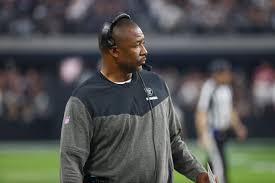
Patrick Graham represents the quiet evolution happening in NFL coaching. His journey is not one of overnight fame or loud declarations, but a steady, studious climb from the Ivy League to the professional sidelines, driven by a relentless commitment to adaptability and teaching. In a league where defensive coordinators are often defined by rigid schemes, Graham stands apart. His philosophy is fluid, rooted in the belief that a coach’s job is to mold a system around his players’ unique talents, not the other way around. This intellectual, player-first approach has transformed struggling defenses into formidable units, making Patrick Graham one of the most respected—and often overlooked—defensive minds in football today. His story is a testament to the power of versatility, resilience, and quiet confidence in a sport dominated by sound bites and rigid systems.
Graham’s path is a unique blend of elite academics and hard-nosed football. He honed his mind at Yale University, playing defensive line for a team that shared an Ivy League championship in 1999. While his playing career was more about grit than glory, the experience instilled foundational lessons in accountability and teamwork. More importantly, his sociology degree, with concentrations in economics and African-American studies, provided a critical framework for his future career. As he puts it, the academic rigor at Yale taught him how to think, analyze, and solve complex problems—skills directly transferable to dissecting NFL offenses. This academic background was the first hint of a different kind of coach in the making. After graduation, he didn’t rush for a big-time job; instead, he started from the very bottom as a graduate assistant at Wagner College, juggling coaching duties with earning an MBA in finance. This unassuming, detail-oriented beginning set the stage for a coaching career that would span multiple prestigious colleges and NFL franchises, all built on a bedrock of intellect and hard work.
The Making of a Coach: From Yale to the NFL’s School of Hard Knocks
Patrick Graham’s coaching career began in the trenches of college football, where he learned the value of wearing multiple hats and doing the unseen work. His first role at Wagner College was a true immersion, serving not only as a graduate assistant but also as a strength and conditioning coach and academic coordinator. This multifaceted experience taught him that coaching extends far beyond X’s and O’s; it’s about developing the complete person. He moved on to the University of Richmond, where he demonstrated early versatility by switching from defensive line coach to tight ends coach—a move that broadened his understanding of offensive concepts and made him a more well-rounded defensive thinker. His next step took him to the national stage at the University of Notre Dame as a defensive graduate assistant under Charlie Weis. Here, Graham was exposed to high-stakes Division I football, spending countless hours on film breakdown and scouting reports. It was a grueling but essential apprenticeship that sharpened his analytical skills and prepared him for the precision demanded in the NFL.
The leap to the professional ranks came in 2009, though it wasn’t straightforward. Graham initially accepted a job as the defensive line coach at the University of Toledo. However, after just one month, a call from the New England Patriots presented an opportunity he couldn’t refuse, and he resigned to join Bill Belichick’s staff as a defensive coaching assistant. This bold move, giving up a secure position for a low-level NFL role, demonstrated his ambition and belief in his path. His arrival in New England marked the beginning of a transformative seven-year education. The Patriots organization, known for its culture of detail, accountability, and situational football, was the perfect laboratory for a cerebral coach like Graham. He started at the very bottom, doing the grunt work, but his intellect and work ethic led to rapid promotions. Over his tenure, he coached both linebackers and the defensive line, contributing to a unit that led the NFL in takeaways over a five-year span and, most memorably, won Super Bowl XLIX. This period under Belichick was Graham’s graduate school, where he absorbed a foundational philosophy that emphasized adaptability, game-plan specificity, and putting players in the best position to succeed.
Philosophy and Scheme: The “No Pat Graham Playbook”
What truly sets Patrick Graham apart in the modern NFL is his rejection of a static defensive identity. While many coordinators are known for a specific, unwavering system—a heavy blitz scheme or a strict cover-two zone—Graham’s approach is fundamentally different. He famously stated, “There’s no Pat Graham playbook”. This isn’t a lack of philosophy; it’s the core of it. His system is a flexible framework built each week from the ground up, tailored to counter the specific threats of the upcoming opponent and maximize the unique talents of his own players. He has drawn from a wide array of influences, including Belichick’s situational genius, Steve Spagnuolo’s pressure packages, and Mike Pettine’s run-stopping principles, synthesizing them into a cohesive yet ever-changing plan. This intellectual flexibility means that from week to week, the Raiders’ defense under Graham might look completely different in its alignments and pressure packages, keeping offenses perpetually off-balance.
This player-centric methodology requires exceptional teaching and communication skills. Graham, described by former players as a “stickler” who “over-coaches,” is deeply invested in ensuring every player understands not just their assignment, but the why behind it. His ability to connect with and develop talent is a hallmark of his career. For example, in his first stint with the New York Giants in 2016, he helped transform the defensive line into a powerhouse. Under his guidance, defensive tackle Damon “Snacks” Harrison earned first-team All-Pro honors, and the Giants vaulted to become the third-best run defense in the league, a key factor in their playoff run. Later, with the Las Vegas Raiders, Graham’s adaptable system unlocked the full potential of superstar edge rusher Maxx Crosby. Crosby flourished, registering career highs and earning multiple Pro Bowl selections under Graham’s tutelage, crediting the coach for putting players in “great positions”. The table below illustrates the tangible defensive improvements Graham has orchestrated at key stops in his career:
Table: Defensive Improvements Under Patrick Graham’s Guidance
| Team & Season | Key Role | Notable Improvement |
|---|---|---|
| NY Giants, 2016 | Defensive Line Coach | Defense allowed 158 fewer points than 2015; Run defense ranked 3rd in NFL (88.6 yds/game). |
| LV Raiders, 2023 | Defensive Coordinator | Scoring defense improved from 28th (24.6 ppg) in 2022 to 9th (19.5 ppg) in 2023. |
| LV Raiders, 2024 | Defensive Coordinator | Defense ranked 8th in first downs allowed/game; 7th in early-down success rate vs. run. |
The Head Coach Prospect: Strengths and Lingering Questions
As Patrick Graham’s reputation has grown, so has his candidacy for a top job. In the 2025 hiring cycle, he interviewed for the Jacksonville Jaguars’ head coach position, a sign that his work is gaining serious league-wide recognition. The appeal to a team like the Jaguars is clear: they possess a talented but underperforming roster, particularly on defense, and are in dire need of a strong, clear cultural identity. Graham’s profile presents compelling arguments for such a role. His most significant strength is his proven adaptability. Unlike many Belichick disciples who struggled to replicate success by rigidly imposing the “Patriot Way,” Graham has shown a rare ability to evolve. He doesn’t force a square peg into a round hole; he reshapes the hole. This skill is invaluable for a head coach who must manage an entire roster, not just one side of the ball. Furthermore, his journey through multiple organizations (Patriots, Giants, Packers, Dolphins, Raiders) has exposed him to various leadership styles and operational methods, giving him a broader perspective than a coach who has spent his entire career in one system.
However, the leap from coordinator to head coach is monumental, and it brings with it legitimate questions. The primary unknown is whether Graham’s quiet, cerebral, and detail-oriented style can scale to the monumental leadership task of running an entire organization. Being a head coach requires managing the media, overseeing a large staff, making crucial in-game decisions on all phases, and being the ultimate CEO and motivator. As analysts have noted, “Some coaches are simply better suited as coordinators”. There is no public evidence to suggest Graham can’t handle these tasks, but he has yet to be tested in that arena. Additionally, a major decision for any defensive-minded head coach is the hiring of an offensive coordinator, especially for a team with a franchise quarterback like Trevor Lawrence. Graham’s choice for that role would be arguably his most critical staffing decision and a significant indicator of his potential success. His ability to attract top offensive talent to his staff remains an open question that only an opportunity can answer.
https://headlinenest.com/pulsamento/
Beyond Football: Other Prominent Figures Named Patrick Graham
It is important to acknowledge that the name “Patrick Graham” is associated with accomplished individuals in fields beyond professional football. In the world of commercial real estate, a Houston-based leader named Patrick Graham has built a distinguished career over two decades. His journey offers a fascinating parallel in professional philosophy. After years as a generalist, he realized the power of specialization, advising others: “Don’t try to be a broker, developer, contractor, and investor all at once. Pick a lane, and be great at one thing”. This focus allowed him to build deep, lasting client relationships—one of which spawned from a single cold call into a 20-year partnership generating hundreds of transactions. His current mission is mentoring the next generation of agents, emphasizing qualities like competitiveness, conscientiousness, and self-awareness.
In the nonprofit and recruitment sectors, other Patrick Grahams have also made their mark. A former CEO of Charlotte Works, a workforce development nonprofit, shared the name. In the UK, a Patrick Graham involved with Big Issue Recruit has spoken on the transformative impact of AI in the recruitment industry, noting how it can free up professionals to focus on the human element of their work. There is also a UK-based advocate by the same name who has publicly spoken about the severe personal impact of false allegations, highlighting a very different and challenging personal struggle. These individuals, each successful in their own right, illustrate that the name carries a theme of leadership, mentorship, and navigating complex professional landscapes, albeit in vastly different contexts from the NFL sidelines.
The Future of Patrick Graham
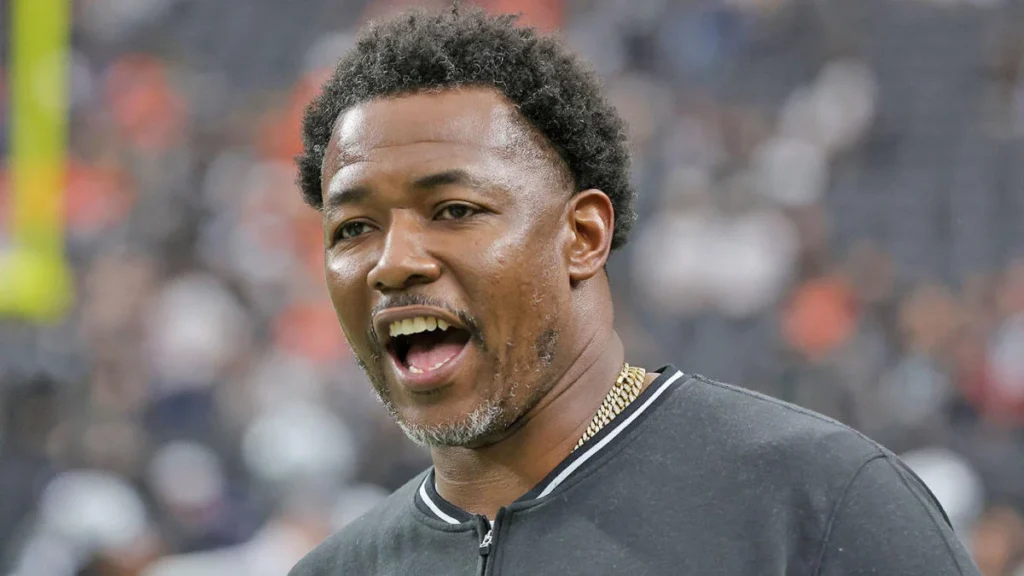
As the NFL continues to evolve, valuing intellectual flexibility and player development over rigid schematic dogma, Patrick Graham’s stock is poised to rise. He has successfully rehabilitated his candidacy after a challenging stint as the Miami Dolphins’ defensive coordinator in 2019, a season marred by a roster tear-down and significant injuries. His subsequent work with the Giants and Raiders has reaffirmed his core competency: making the most of the talent he is given. Whether he remains the orchestrator of the Raiders’ defense or ascends to a head coaching role elsewhere, his influence is already being felt. He represents a new wave of coaches—analytical, adaptable, and profoundly committed to teaching. His career is a blueprint for sustained success built not on a single brilliant idea, but on a foundational commitment to solving the unique puzzle presented each week. The future for Patrick Graham is not about finding a perfect system, but about continuing to apply his unique, fluid intelligence to the ever-changing game of football.
Conclusion
Patrick Graham’s journey from an Ivy League defensive lineman to a revered NFL defensive coordinator is a compelling narrative of intellect, adaptability, and quiet leadership. His career defies the typical football archetype, proving that a deep understanding of systems, a commitment to teaching, and the flexibility to adapt are among the most valuable assets in modern coaching. The so-called “Pat Graham playbook” is, in fact, a philosophy: a belief that success is found in tailoring a strategy to the people you have and the problem in front of you, not in adhering dogmatically to a single scheme. As the NFL’s coaching carousel continues to spin, Graham’s name will undoubtedly surface for top jobs. Whether he becomes a head coach or remains one of the league’s premier defensive minds, his impact is clear. He has transformed units, developed stars, and demonstrated that in a copycat league, the most original thing a coach can do is to have no single identity—to be, instead, a master of adaptation.
Frequently Asked Questions About Patrick Graham
Who is Patrick Graham in the NFL?
Patrick Graham is the current defensive coordinator for the Las Vegas Raiders and a highly respected NFL coach. A former Yale University defensive lineman, he has built a 16-year coaching career known for intellectual flexibility, player development, and adaptable defensive schemes. He has previously served as defensive coordinator for the Miami Dolphins and New York Giants, and was a key assistant coach for the New England Patriots, with whom he won Super Bowl XLIX.
What is Patrick Graham’s coaching philosophy?
Patrick Graham’s coaching philosophy is centered on adaptability and player-centric design. He famously stated there is no set “Pat Graham playbook.” Instead, he believes in building weekly game plans that specifically target an opponent’s strengths while maximizing the unique talents of his own players. This approach requires exceptional teaching skills and draws from a diverse set of influences, including Bill Belichick, Steve Spagnuolo, and Mike Pettine.
Has Patrick Graham been a candidate for NFL head coaching jobs?
Yes, Patrick Graham has emerged as a candidate for NFL head coaching positions. Most recently, he interviewed for the Jacksonville Jaguars’ head coach vacancy in the 2025 hiring cycle. His proven ability to improve defenses and his adaptable, intelligent approach make him an attractive option for teams seeking a strong leader and culture builder.
What are Patrick Graham’s most notable career achievements?
Patrick Graham’s notable achievements include winning Super Bowl XLIX as the linebackers coach for the New England Patriots. As a coordinator, he has engineered significant defensive turnarounds, such as helping the 2016 New York Giants become the league’s most improved defense and leading the 2023 Las Vegas Raiders to a top-10 ranking in scoring defense for the first time in over two decades.
Are there other well-known people named Patrick Graham?
Yes. Beyond the NFL coach, other prominent individuals named Patrick Graham include a successful commercial real estate leader and mentor in Houston, a former nonprofit CEO in Charlotte, and a recruitment industry professional in the UK who focuses on social impact hiring. These are distinct individuals who have achieved recognition in their respective fields.