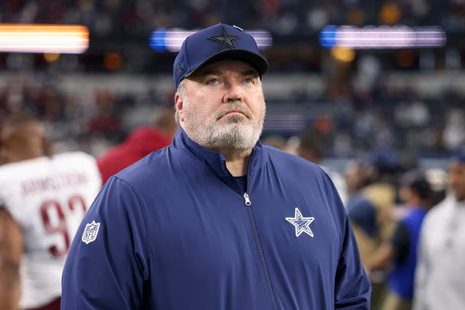
Mike McCarthy, a name synonymous with both Super Bowl glory and postseason frustration, is embarking on the most personal challenge of his storied NFL career. After building a .608 winning percentage over 18 seasons, leading the Green Bay Packers to a championship and reviving the Dallas Cowboys, McCarthy has accepted the mantle of head coach for his hometown Pittsburgh Steelers. This move is not just another coaching change; it’s a homecoming story layered with immense pressure, high expectations, and the weight of a proud franchise’s history. The Steelers, a model of stability with only three head coaches since 1969, are betting that McCarthy’s offensive acumen and championship pedigree can break a cycle of regular-season consistency marred by playoff disappointment.
The journey from the blue-collar Greenfield neighborhood of Pittsburgh to the sidelines of Acrisure Stadium is a full-circle moment for McCarthy. His football life began not as a star player, but as a grinding student of the game—a graduate assistant reviewing playbooks while working the night shift as a Pennsylvania Turnpike toll collector. This tireless work ethic fueled a steady climb through the coaching ranks, from offensive quality control with the Kansas City Chiefs to orchestrating offenses for the New Orleans Saints and San Francisco 49ers. His big break came in 2006 with the Green Bay Packers, where he would eventually hoist the Lombardi Trophy in Super Bowl XLV—a victory poignantly achieved against the very Steelers he now leads. As he takes the reins in Pittsburgh, the central question is whether this proven winner, with his complex legacy, can successfully author a triumphant final chapter where it all began.
The Pittsburgh Crucible: Coaching Under the Steel Standard
Stepping into the head coaching office for the Pittsburgh Steelers is an undertaking unlike any other in professional football. This is a franchise defined by an almost mythical standard of excellence, set by a lineage of iconic leaders. Since 1969, the Steelers have employed just three head coaches: the foundational Chuck Noll (23 seasons, 4 Super Bowls), the fiery Bill Cowher (15 seasons, 1 Super Bowl), and the unflappably consistent Mike Tomlin (19 seasons, 1 Super Bowl, zero losing records). McCarthy is now the fourth man in this exclusive fraternity, a marked departure as the first hire with prior NFL head coaching experience since 1965. He inherits not just a team, but a legacy.
The immediate mandate from team president Art Rooney II is clear: return to true championship contention. While Tomlin’s tenure was remarkable for its unwavering competitiveness, it ended with a sour note—seven consecutive playoff appearances ending in one-and-done exits, the last six by double-digit margins. The Steelers have not won a playoff game since the 2016 season, a drought that sits uncomfortably with the “Standard is the Standard” ethos of the organization. Rooney has dismissed the notion of a rebuild, signaling an expectation to “compete day one”. This places McCarthy in the hot seat immediately; he was not hired for a patient, multi-year teardown but to maximize a roster that possesses elite, if aging, defensive talent like T.J. Watt, Cam Heyward, and Jalen Ramsey. The pressure is amplified by the fact that he is a native son; failing in Pittsburgh would carry a unique sting, while succeeding would cement a legacy in the city where his football passion was born.
A Coaching Odyssey: From Tollbooths to the Lombardi Trophy
To understand the coach Pittsburgh is getting, one must look at the long and grinding path Mike McCarthy took to the NFL’s summit. His story is not one of anointed genius but of relentless accumulation of knowledge. After a modest playing career as a tight end at Baker University, McCarthy broke into coaching as a defensive graduate assistant at Fort Hays State. His big move was a testament to sheer hustle: after being told to mail his resume to the University of Pittsburgh, he showed up unannounced at head coach Mike Gottfried’s office to introduce himself. He landed a volunteer coaching role and famously supplemented his income by working overnight shifts collecting tolls, using the quiet hours to study his playbook.
This foundational period of grit shaped his coaching philosophy. His NFL break came with the Kansas City Chiefs under Marty Schottenheimer, where he evolved from an offensive quality control coach to quarterbacks coach, working with veterans like Joe Montana and Rich Gannon. His reputation as a quarterback developer was cemented during a 1999 stint with the Green Bay Packers, where he helped Brett Favre throw for over 4,000 yards. As an offensive coordinator for the New Orleans Saints (2000-2004) and San Francisco 49ers (2005), he oversaw units that set records and developed stars, from receiver Joe Horn to a rookie Frank Gore, despite often lacking elite quarterback play. This diverse apprenticeship, spanning both sides of the ball and various coaching trees, prepared him for the top job. In 2006, Green Bay Packers general manager Ted Thompson saw beyond McCarthy’s challenging single season in San Francisco—where his offense ranked last in the league—and hired him to lead one of the league’s flagship franchises. It was a risk that would soon deliver the ultimate reward.
The Green Bay Glory Years: Building a Championship Offense
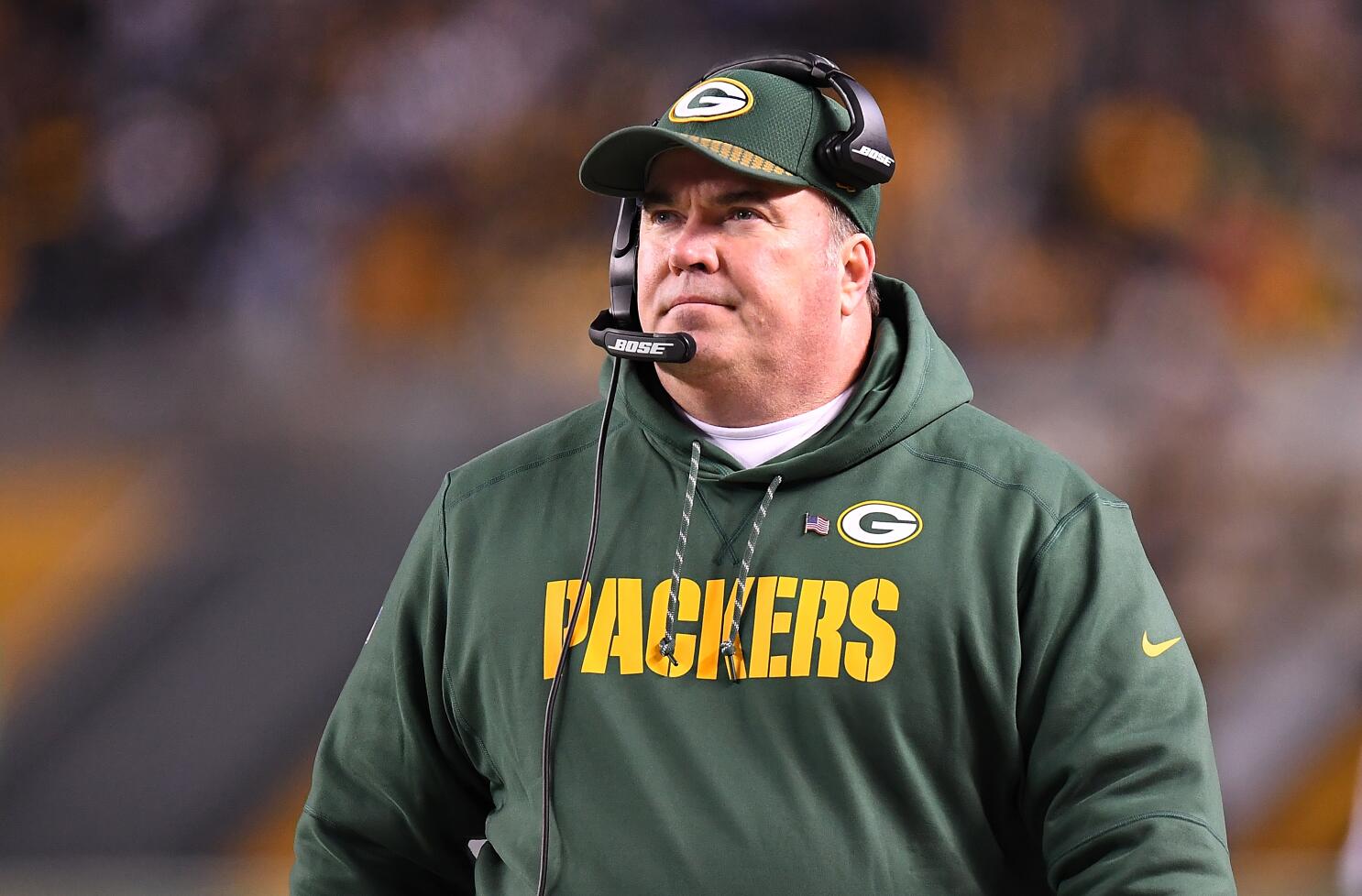
Mike McCarthy tenure with the Green Bay Packers, spanning from 2006 to 2018, is the defining era of his career and the core of his resume. He compiled a 125-77-2 regular-season record in Green Bay, leading the team to nine playoff appearances and eight consecutive postseason berths from 2009 to 2016—a feat matched by only a handful of coaches in NFL history. His hallmark was offensive innovation and quarterback mastery. Under his guidance, the Packers’ offense finished in the top 10 in scoring nine times, leading the NFL in points in both 2011 and 2014.
The crown jewel of this period was, without question, the 2010 season and the run to Super Bowl XLV. That year, the Packers finished 10-6, securing a wild-card berth. With a young Aaron Rodgers at the helm, they caught fire in the playoffs, winning three road games before defeating the Pittsburgh Steelers 31-25 at AT&T Stadium. This victory was the culmination of McCarthy’s system and his partnership with Rodgers, delivering the franchise its first championship in 14 years and McCarthy’s permanent place in Packers lore.
The following 2011 season showcased the peak of McCarthy’s offensive machine. The Packers stormed to a 15-1 regular-season record, with Rodgers putting together an MVP season. While playoff disappointment followed, the stretch from 2010-2016 demonstrated a model of sustained excellence. McCarthy’s Packers were a quarterback factory and an offensive juggernaut, a testament to his play-calling and developmental skills. However, the latter years saw a gradual decline. After a 7-9 season in 2017 and a 4-7-1 start in 2018, the organization moved on, firing McCarthy in December of that year. The end in Green Bay was abrupt, but the body of work—a Super Bowl title, multiple NFC Championship appearances, and the successful transition from Brett Favre to Aaron Rodgers—remains profoundly impressive.
The Dallas Chapter: Revival and Reassessment
After a year away from the sidelines—a period briefly marred by a controversy over berating officials at his stepson’s high school basketball game—McCarthy returned to the NFL in 2020 with the Dallas Cowboys. His task was to bring discipline and structure to a talented but underachieving franchise. The results were a mixed bag that ultimately defines the “good but not great” perception of his post-Green Bay career. His five-year record in Dallas was 49-35, highlighted by three consecutive 12-5 seasons from 2021 to 2023.
McCarthy’s impact on the Cowboys’ offense was immediately evident. After a rocky first season, his units became consistently elite. In 2021 and 2023, Dallas fielded the NFL’s highest-scoring offense. He helped quarterback Dak Prescott to some of the most efficient football of his career; in the 58 games Prescott started under McCarthy, he threw for 15,659 yards with a 116:46 touchdown-to-interception ratio. The table below illustrates the dramatic turnaround in key offensive metrics during McCarthy’s Dallas tenure:
| Season | Record | Points Per Game Rank | Yards Per Game Rank | Point Differential | Turnover Differential |
|---|---|---|---|---|---|
| 2020 | 6-10 | 17th | 14th | -78 | -3 |
| 2021 | 12-5 | 1st | 1st | +172 (2nd) | +14 (1st) |
| 2022 | 12-5 | 4th | 11th | +125 (5th) | +10 (2nd) |
| 2023 | 12-5 | 1st | 5th | +194 (2nd) | +10 (5th) |
| 2024 | 7-10 | 21st | 17th | – | -6 |
Data compiled from team statistics.
Despite this regular-season success, the postseason failures that began to surface in Green Bay followed him to Dallas. The Cowboys went 1-3 in the playoffs under McCarthy, with all three losses coming at home. These painful exits, combined with a 7-10 season in 2024 largely attributable to a Prescott injury, led owner Jerry Jones to make a change. The Dallas chapter reinforced McCarthy’s ability to build a prolific, modern offense and win consistently in the regular season but left unresolved the nagging questions about his ability to navigate a team through the heightened pressure of the playoffs.
The Challenge Ahead: Remaking the Steelers in His Image
As Mike McCarthy takes over the Pittsburgh Steelers, he faces a multifaceted challenge that will test every ounce of his experience. The most glaring issue is the quarterback position, a revolving door since the retirement of Ben Roethlisberger. Pittsburgh has started a different quarterback in Week 1 for five consecutive years, a instability that cripples offensive continuity. McCarthy’s history as a quarterback developer is arguably his greatest asset here. His success with Brett Favre, Aaron Rodgers, and Dak Prescott provides a blueprint. An immediate subplot is the potential reunion with Aaron Rodgers, who is a free agent and has only won a Super Bowl under McCarthy’s guidance. Whether it’s mentoring a veteran, reviving a young player, or grooming a rookie, solving the quarterback puzzle is job one.
Beyond quarterback, McCarthy must modernize an offense that has often looked stuck in the past. The Steelers have been mired in a “transition period on offense for a solid half-decade”. McCarthy’s offensive philosophy, which has evolved from a traditional West Coast system to incorporate more pre-snap motion and Air Raid concepts (a system he dubbed the “Texas Coast” offense in Dallas), is expected to bring a needed jolt of creativity. His mandate is to build an offense that can support a championship-caliber defense, not merely avoid mistakes.
However, the task isn’t solely offensive. He must also manage a veteran-laden defense that, while still featuring elite players, is aging and carries a significant salary cap footprint. Furthermore, he steps into a locker room accustomed to the unique leadership style of Mike Tomlin. Winning over players and establishing his own culture, while respecting the revered “Steeler Way,” will be a delicate balancing act. As one former Steeler, Le’Veon Bell, publicly criticized the hire, predicting a dismal 4-13 season, highlighting that McCarthy will have to win over skeptics both inside and outside the building.
https://headlinenest.com/marc-chalamet/
The Legacy in the Balance: Can the Homecoming Succeed?
The hiring of Mike McCarthy by the Pittsburgh Steelers is a fascinating gamble with high stakes for both the franchise and the coach’s enduring legacy. For the Steelers, they have chosen proven experience and offensive expertise over an unproven coordinator, betting that McCarthy’s schematic mind and playoff-hardened demeanor can provide the final piece to return to the Super Bowl. For McCarthy, this is a chance to complete a storybook narrative: to win a championship for the hometown team he cheered for as a child, and in doing so, silence the critics who focus on his recent postseason record.
The potential rewards are immense. If he succeeds, Mike McCarthy could join the pantheon of Steelers legends, achieving a legacy-defining victory that would separate him from many of his contemporaries. He would be the architect who solved Pittsburgh’s offensive woes and returned the Lombardi Trophy to the Steel City. However, the risks are equally stark. If the team struggles, especially offensively, or if the playoff disappointments continue, the narrative will harden: that he is a coach who can win in the regular season but cannot win the biggest games, and that the Steelers erred by breaking their tradition of hiring rising assistants.
In the end, this homecoming is about more than nostalgia. It is a rigorous test of adaptation, leadership, and strategic evolution. The resources are there: a proud organization, a passionate fanbase, and defensive cornerstones. The question McCarthy must answer is whether he can impart the offensive identity and clutch postseason performance that has been missing. The journey from the Greenfield neighborhood to the pinnacle of football in Pittsburgh is now one final drive away from completion.
Frequently Asked Questions About Mike McCarthy and the Steelers
What is Mike McCarthy’s overall career win-loss record as an NFL head coach?
Mike McCarthy has a highly respected career regular-season record of 174 wins, 112 losses, and 2 ties, which computes to a .608 winning percentage. When including playoff games, his overall career record stands at 185-123-2, a .600 winning percentage. This places him among the most successful active coaches in terms of total victories.
What did Mike McCarthy accomplish with the Green Bay Packers?
McCarthy’s tenure with the Packers from 2006 to 2018 was the most successful period of his career. He led the team to a Super Bowl XLV victory over the Pittsburgh Steelers following the 2010 season. Under his guidance, the Packers made the playoffs nine times, including eight consecutive appearances from 2009 to 2016. He also helped oversee the transition from future Hall of Fame quarterback Brett Favre to Aaron Rodgers, who won his only Super Bowl and first MVP under McCarthy’s coaching.
Why was Mike McCarthy fired by the Dallas Cowboys?
Despite leading the Cowboys to three straight 12-win seasons from 2021-2023 and fielding top-ranked offenses, McCarthy was let go after the 2024 season. The primary reasons were a lack of playoff success (a 1-3 postseason record in Dallas) and a step back in 2024 to a 7-10 record, largely due to an injury to quarterback Dak Prescott that limited him to just eight games. The organization’s high expectations and history of postseason frustration ultimately led to the change.
What are the biggest challenges Mike McCarthy faces with the Pittsburgh Steelers?
McCarthy faces several immediate and significant challenges: First, solving the long-term quarterback situation, which has been in flux for years. Second, modernizing and energizing an offense that has been inconsistent and lacks identity. Third, meeting the incredibly high standard set by his predecessors (Noll, Cowher, Tomlin) and ending the team’s playoff victory drought, which dates back to the 2016 season. Finally, he must manage an aging but expensive defense while installing his own culture in a stable franchise.
Could Aaron Rodgers follow Mike McCarthy to Pittsburgh?
The possibility has been widely discussed. Aaron Rodgers, who is a free agent, has a long and successful history with McCarthy, winning his sole Super Bowl under his guidance in Green Bay. Rodgers has stated he would consider playing another season if the situation were right. While far from a certainty, McCarthy’s hiring in Pittsburgh certainly makes the Steelers a more plausible and intriguing destination for Rodgers if he decides to continue his playing career.
Conclusion
The return of Mike McCarthy to Pittsburgh is more than a sentimental story; it is a high-stakes football experiment that will define the final chapter of his coaching career. He arrives with a resume that few can match: a Super Bowl ring, a track record of offensive innovation, and the proven ability to win consistently over nearly two decades. Yet, he also carries the burden of recent postseason shortcomings and the monumental task of following a legend. For the Steelers, the hire represents a bold shift in philosophy, a move away from their traditional model in pursuit of immediate offensive competence and championship experience. The success of this union will hinge on McCarthy’s ability to transplant his offensive genius, make the right call at quarterback, and finally translate regular-season prowess into January and February glory. The Steel City is watching, waiting to see if the hometown coach can bring home one more Lombardi Trophy.