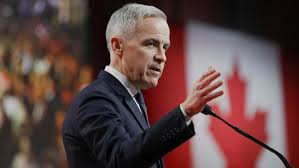
Mark Carney stands as a unique figure in modern global finance and politics. A career that has spanned the high-octane trading floors of Goldman Sachs, the sober responsibility of leading two of the world’s most important central banks, and now, the ultimate political office in Canada as Prime Minister, inevitably draws intense public curiosity. Central to that curiosity is a single, compelling question: what is Mark Carney net worth? This article delves deep into the financial journey of one of Canada’s most influential sons, moving beyond the headline figure to explore the origins, composition, and implications of his wealth. We will dissect the estimated $6.97 million fortune he has built, a sum that reflects a lifetime of elite economic stewardship but also positions him intriguingly between the worlds of high finance and public service. This exploration is not just about numbers; it is a window into the values, trade-offs, and evolving definition of success for a leader whose career has been anything but conventional.
The story of Mark Carney net worth is, in essence, the story of his professional life. It is a narrative that begins in Canada’s Northwest Territories, accelerates through global financial capitals, peaks in the hallowed halls of central banking, and finds a new purpose in the political arena. His financial standing offers a tangible measure of his market success but also highlights the significant monetary sacrifice inherent in his shift to public life. As we unpack the sources of his wealth—from lucrative private-sector bonuses to the fixed salaries of public office—we gain a clearer understanding of the man steering Canada through a complex era of trade wars and energy transitions. This analysis provides crucial context for voters and observers seeking to reconcile the profile of a wealthy, globally connected economist with the demands of representing everyday Canadians.
The Foundation of a Fortune: Carney’s Early Career and Financial Ascent
Mark Carney’s path to building his personal net worth was paved with academic excellence and a strategic entry into the epicenter of global finance. Born in 1965 in Fort Smith, Northwest Territories, and raised in Edmonton, Alberta, Carney was the son of teachers, an upbringing that instilled a strong sense of community and hard work but was not one of inherited wealth or privilege. His intellectual prowess carried him to Harvard University for a bachelor’s degree in Economics and then to Oxford, where he earned both a master’s and a doctorate in the same field. This elite academic pedigree was his ticket to the big leagues of international finance. In the early 1990s, he joined Goldman Sachs, embarking on a thirteen-year career that would form the critical, high-earning foundation of his future wealth.
His tenure at Goldman Sachs was not a static period but a dynamic global apprenticeship. Carney worked across the firm’s offices in London, Tokyo, New York, and Toronto, gaining invaluable experience in sovereign risk and investment banking. This era, encompassing the Asian financial crisis and the dot-com bubble, provided a baptism by fire in managing financial turbulence. The compensation structure at a firm like Goldman Sachs for someone in Carney’s rising position—eventually serving as a managing director and co-head of sovereign risk—is performance-based and substantial. It typically includes a high base salary, a significant annual bonus (often multiples of the salary), and long-term incentive plans. It was during these years that Carney accumulated the capital that would form the core of his investment portfolio and personal Mark Carney Net Worth, allowing for future wealth growth through assets and investments. This phase established him not just as a skilled economist, but as a financially successful individual with a deep, practical understanding of global capital markets.
The skills and reputation forged at Goldman Sachs proved directly transferable to public service. In 2003, Carney made a pivotal career shift, leaving the private sector to become Deputy Governor of the Bank of Canada. This move, while likely involving a substantial cut in immediate take-home pay, represented a strategic transition towards influence and stability. It positioned him at the heart of Canadian monetary policy and set the stage for his defining moment: his appointment as Governor of the Bank of Canada in 2008, just as the global financial storm was breaking. Leading Canada’s central bank through this crisis and earning praise for the country’s resilient recovery cemented his reputation as a premier crisis manager. The salary for a central bank governor is publicly disclosed and respectable—comfortably in the high six figures—but its true value lies in its stability and the unparalleled platform it provides. This role marked the beginning of Carney’s wealth accumulation from high-profile public service, a stream of income that is reliable and prestigious but deliberately detached from the sky-high, deal-based rewards of Wall Street.
Deconstructing the $6.97 Million: Sources and Sectors
The most consistent and credible estimate of Mark Carney’s personal net worth as of 2025-2026 is approximately $6.97 million USD. This figure, while seemingly a precise number, is best understood as a composite snapshot of assets accumulated across diverse career phases. It is not the product of a single windfall or inheritance, but the result of steady, high-level earnings from finance, public service, and corporate advisory roles. To put this Mark Carney Net Worth in perspective, it places Carney firmly within the top tier of wealthy professionals and is substantially above the average Canadian household wealth. However, within the rarefied circles of global finance he once inhabited and among the world’s ultra-wealthy elite, it is a relatively modest sum. This distinction is crucial for an accurate understanding of his financial standing.
The architecture of Carney’s wealth can be broken down into four primary pillars, each corresponding to a distinct chapter of his career. The first and likely most substantial pillar is his thirteen-year tenure at Goldman Sachs. The compensation from this period, including salaries, bonuses, and likely early investment returns, provided the initial capital base. The second pillar comprises his salaries from leading major central banks. As Governor of the Bank of Canada (2008-2013) and later as the first non-British Governor of the Bank of England (2013-2020), Carney earned significant, publicly funded salaries. While these did not match private-sector pay, they provided high, stable income during years when he was also likely benefiting from his earlier investments appreciating.
The third pillar involves his post-governorship corporate roles. After leaving the Bank of England, Carney did not return to a traditional banking role but took on strategic positions that blended finance with his growing focus on climate policy. He served as Vice Chairman of Brookfield Asset Management, focusing on ESG (Environmental, Social, and Governance) investing, and as Chair of the board at Bloomberg LP. These roles undoubtedly came with handsome compensation packages, potentially including equity stakes, director’s fees, and performance incentives, providing a late-career boost to Mark Carney Net Worth. The fourth and current pillar is his salary as Prime Minister of Canada, which is around CAD $379,000 annually. While a fraction of his previous earnings, this salary represents his full-time commitment and symbolizes the transition from wealth accumulation to public service. The table below summarizes these key wealth pillars:
Table: The Pillars of Mark Carney Net Worth
| Wealth Pillar | Key Roles & Period | Nature of Contribution to Net Worth |
|---|---|---|
| Investment Banking | Goldman Sachs (1990s-2003) | High-performance bonuses & salary forming initial capital base. |
| Central Banking | Governor, Bank of Canada & Bank of England (2008-2020) | High, stable public-sector salaries during peak career years. |
| Corporate Advisory | Brookfield Asset Management, Bloomberg LP (2020-2025) | Strategic roles with compensation packages, likely including equity/fees. |
| Public Service | Prime Minister of Canada (2025-Present) | Fixed government salary; represents shift away from wealth accumulation. |
A critical aspect of understanding any high-profile individual’s Mark Carney Net Worth is separating verified estimates from speculation. In Carney’s case, online forums and social media have occasionally buzzed with wild claims of hidden wealth reaching tens or even hundreds of millions of dollars. A particularly egregious example from a Facebook group even absurdly claimed he was worth “96 Billion”. These assertions are not supported by any credible financial reporting or official disclosure. The consistent reporting of the ~$7 million figure by multiple outlets suggests it is based on reliable assessments of his known career earnings and roles. Upon entering public office, Carney, like most senior officials, placed his assets into a blind trust. This legal mechanism is designed to prevent conflicts of interest by isolating a leader’s investments from their policy decisions, but it also means the full, detailed breakdown of his portfolio is not publicly available, which can sometimes fuel unfounded speculation.

Carney in Context: Net Worth Comparisons and Public Perception
To truly grasp what Mark Carney net worth signifies, it must be evaluated through different comparative lenses. Within the realm of global politics and national leadership, his estimated $6.97 million places him on the higher end of the spectrum but far from the top. Many career politicians accumulate wealth primarily through their public salaries and book deals, often resulting in more modest portfolios. In contrast, some leaders come from immense family wealth or successful business ventures prior to office. Carney’s profile is distinct: he is a self-made professional whose wealth was earned through a specialized, high-demand skill set (economics and finance) applied in both private and public sectors. This positions him as financially successful but not part of a hereditary elite, a nuance that shapes public perception.
The contrast becomes starker when Mark Carney Net Worth is viewed through the prism of global finance. The figure that seems substantial in political terms is almost commonplace among the senior ranks of major investment banks, hedge funds, or private equity firms, where total compensation (including stock awards) can reach tens or hundreds of millions annually. As a former Goldman Sachs managing director, Carney’s former peers who remained in the private sector have likely seen their wealth soar far past his current level. This highlights a key trade-off in his career trajectory: the choice to move into public service and central banking, while prestigious and influential, came at a significant opportunity cost in terms of forgone private-sector earnings. His wealth is thus a testament to his early success at Goldman Sachs and his later high-profile roles, but it also clearly reflects his voluntary departure from the most lucrative lanes of finance.
Public perception of a leader’s wealth is never just about the number; it’s about the narrative. For supporters, Carney’s net worth is a badge of competence and real-world expertise. It underscores his deep, practical understanding of the economic forces that shape jobs, investments, and national prosperity. In an era of complex trade wars and financial uncertainty, his financial acumen is seen as a critical asset for Canada. As one analyst noted, his experience “guiding our country through one of the most turbulent economic periods in modern history” is directly linked to the expertise built during his wealth-accumulating career. However, critics can frame the same figure as a point of detachment, questioning whether someone with a multi-million dollar portfolio can genuinely relate to the financial anxieties of ordinary Canadians. This is a classic tension in democratic politics, and Carney’s background makes him a particularly clear vessel for this debate. His commitment to placing assets in a blind trust is a direct response to these concerns, aiming to ensure his policy decisions are made for the public good, not personal portfolio performance.
https://headlinenest.com/william-shatner-warning/
The Prime Minister’s Agenda: Policy, Trade, and the Wealth of a Nation
Since becoming Prime Minister in March 2025, Mark Carney has pivoted sharply from managing his personal portfolio to stewarding Canada’s entire economy, a role where his concept of “value” has expanded exponentially. His policy agenda directly reflects the macroeconomic philosophy honed over decades, now applied to national-scale projects. A cornerstone of this agenda is the push for major, nation-building infrastructure investments designed to create what his government calls “high-paying careers” and grow the economic pie for everyone. For instance, in October 2025, he announced a historic $2 billion investment from the Canada Growth Fund into the Darlington New Nuclear Project, aiming to make Canada the first G7 country to deploy grid-scale small modular reactors (SMRs). This project alone is expected to sustain thousands of jobs and power hundreds of thousands of homes with clean energy.
This focus on large-scale economic development is driven by immediate external pressures. The administration of U.S. President Donald Trump has imposed steep tariffs on Canadian goods, creating what Carney has described as “$50bn” in economic uncertainty for Canada. In response, a central theme of his prime ministership has been a relentless global travel schedule to secure new trade partnerships and diversify Canada’s exports away from overwhelming reliance on the U.S. market. Throughout 2026, his diplomatic calendar is packed with potential trips to key economies like India, Brazil, Japan, and across Southeast Asia, all with the goal of “doubl[ing] non-U.S. exports in the next decade”. This external pressure has also influenced domestic energy policy, leading to a controversial agreement with Alberta to roll back certain climate regulations, such as a proposed emissions cap on the oil and gas sector, in exchange for provincial commitments to carbon pricing and support for new energy infrastructure. The rationale is pragmatic: to spur investment in a key sector and fund the transition to a cleaner future.
Carney’s signature financial concept—that the transition to a net-zero economy is “the greatest commercial opportunity of our time”—now frames his government’s approach. He argues that massive private capital is needed and is increasingly aligned with climate goals, and that government’s role is to de-risk and catalyze these investments. The Darlington nuclear investment is a prime example, blending public capital with private-sector operation to build competitive, clean infrastructure. His philosophy, as stated in a UN interview, is that “companies, and those who invest in them and lend to them, and who are part of the solution, will be rewarded”. This is the mindset of a financier-Prime Minister: viewing national challenges through the lens of risk, opportunity, and scalable investment. His personal net worth, built by identifying and managing financial value, is now conceptually paralleled by his mission to identify and unlock value for the entire Canadian economy through strategic public investment and international deal-making.
The Moral Balance: Wealth, Public Service, and Legacy
The journey of Mark Carney net worth is inextricably linked to a deeper moral and professional calculation: the balance between private gain and public good. His career arc demonstrates a conscious recalibration of this balance over time. The early years at Goldman Sachs were squarely in the realm of private gain, building personal capital and expertise. The shift to central banking marked a move toward public stewardship, where the measure of success was national economic stability and growth, not personal bonus size. His role as UN Special Envoy for Climate Action and Finance further expanded this canvas to the global good. Now, as Prime Minister, he occupies the ultimate seat of public service, where his compensation is fixed, transparent, and a fraction of his market value, symbolizing a full commitment to the national interest.
This trajectory prompts reflection on what a figure like Carney is ultimately “worth.” His personal net worth of nearly $7 million quantifies his market-valued skill and lifelong earning power. However, his worth to Canada and the global community is measured in vastly different currency: the stability provided during the 2008 crisis, the leadership on climate finance that has mobilized trillions of dollars in commitments, and now, the strategic direction he sets for a nation facing profound economic challenges. In his own words on climate action, he realized “I was part of ‘they’, and it wasn’t being taken care of”. This sense of personal responsibility for systemic problems now defines his phase of life. The financial security afforded by his personal wealth arguably grants him the independence to make politically difficult, long-term decisions for the country, free from immediate personal financial concern.
Therefore, while the question “What is Mark Carney net worth?” yields a numerical answer, the more profound inquiry is about the relationship between wealth, expertise, and leadership in a democracy. Carney embodies a model where significant private-sector success is leveraged as a credential for public trust. His financial story is not one of excess or secrecy, but of earned success followed by a gradual channeling of that acumen toward broader goals. It remains a potent narrative that will be tested daily in the political arena. As he navigates trade wars, energy transitions, and domestic politics, his personal financial history will continue to be both an asset his supporters point to and a line of attack for his critics. His legacy will ultimately be determined not by the figure in his blind trust, but by the economic strength, security, and opportunity he helps build for the 40 million Canadians whose collective wealth he has been chosen to guide.
Conclusion
In examining Mark Carney net worth, we have traversed more than just a balance sheet; we have traced the financial footprint of a remarkable career at the intersection of global finance and national sovereignty. The credible estimate of approximately $6.97 million USD paints a picture of substantial, earned success—a fortune built from the lucrative fields of investment banking, amplified by the prestigious salaries of central banking, and supplemented by strategic corporate roles. This net worth securely places him among the world’s financial elite by most standards, yet it also clearly reflects the choices that diverted him from the path to ultra-wealth, most notably his decisions to serve the public in roles where influence outweighs income.
The true significance of Carney’s personal wealth, however, lies in its contrast with his current mission. As Prime Minister of Canada, his focus has shifted from growing his own net worth to enhancing the economic well-being and sovereignty of an entire nation. His policies on massive clean energy projects, aggressive trade diversification, and strategic economic investments are the macroeconomic expressions of the financial principles he practiced on a personal and institutional level. The man who once managed currency risk and bank stability now manages the risks and opportunities facing a G7 economy in a volatile world. In this light, his personal financial success becomes a foundational element of his credibility, a testament to the expertise he now applies on a grand scale. Mark Carney’s story demonstrates that in the modern world, a leader’s understanding of value—how it is created, measured, and sustained—may be one of the most critical assets a nation can possess.
Frequently Asked Questions About Mark Carney Net Worth
What is the most accurate estimate of Mark Carney net worth?
The most consistent and widely cited estimate from credible financial and news reporting places Mark Carney net worth at approximately $6.97 million USD as of 2025-2026. This figure is based on assessments of his known career earnings from Goldman Sachs, his salaries as Governor of the Bank of Canada and the Bank of England, and his compensation from post-governorship corporate roles.
How did Mark Carney build his net worth before entering politics?
Carney built his net worth through a multi-stage career. The foundation was laid during his thirteen years as an investment banker at Goldman Sachs, where he earned a high salary and performance bonuses. This was significantly augmented by his salaries as a central bank governor in Canada and the UK. After leaving the Bank of England, corporate advisory roles at firms like Brookfield Asset Management and Bloomberg LP provided another substantial boost to his wealth through compensation packages that likely included equity and director’s fees.
Is Mark Carney a billionaire?
No, Mark Carney is not a billionaire. All credible reporting contradicts wild online speculation and confirms his net worth is in the multi-million dollar range, specifically around $7 million. An extreme and clearly erroneous social media post claiming he is worth “96 Billion” is not based in reality. His wealth is substantial for a public figure but orders of magnitude below billionaire status.
Does Mark Carney net worth create a conflict of interest as Prime Minister?
To proactively prevent any conflict of interest, Mark Carney has placed his assets and investments into a blind trust upon assuming public office. This is a standard and legally binding practice for senior officials in many democracies, including Canada. It ensures that his personal portfolio is managed by independent trustees without his knowledge or direction, thereby separating his personal financial interests from his policy-making decisions as Prime Minister.
How does Mark Carney net worth compare to other global leaders and financiers?
Mark Carney net worth occupies a unique middle ground. Compared to many career politicians, his wealth is higher, reflecting his lucrative private-sector background. However, compared to top executives in global finance (like his former peers at Goldman Sachs who remained in banking), his $7 million fortune is considered relatively modest, highlighting the significant income he forfeited by choosing a career in public service and central banking. This places him in the category of a highly successful professional rather than an ultra-wealthy magnate.