In the history of human achievement, certain feats stand apart, redefining our understanding of physical and mental possibility. Among these is the act of ascending a vertical wall of rock thousands of feet tall with nothing but climbing shoes, chalk, and the absolute focus of one’s own mind. At the center of this unimaginable pursuit is Alex Honnold, an American rock climber whose name has become synonymous with the ultimate expression of risk, preparation, and mastery. While the world first learned of him through his unprecedented free solo ascent of Yosemite’s El Capitan, a climb so audacious it was called “one of the great athletic feats of any kind, ever,” his story is a far richer tapestry of dedication, calculated risk, and an evolving purpose that extends far beyond the cliff face. Alex Honnold is not merely a daredevil; he is a meticulous planner, a groundbreaking athlete, and a thoughtful individual whose journey forces us to examine the very boundaries of human potential and responsibility.
This deep dive explores the anatomy of the climber who has captivated millions. We will trace his path from a quiet kid in Sacramento to the most recognized figure in climbing, examine the neuroscience and psychology that may underpin his abilities, and confront the complex ethical questions his latest exploits raise. From the silent, personal world of early free soloing to the global, live-streamed spectacle of scaling skyscrapers, the story of Alex Honnold is a compelling lens through which to view courage, consequence, and what it means to truly live at the edge.
The Making of a Legend: From Gym Rat to Van Life
Long before the cameras rolled on El Capitan, Alex Honnold was building the foundation for an extraordinary life, one pedal stroke and chalky handhold at a time. Born in 1985 in Sacramento, California, he discovered climbing at a local gym at age five. He was not an instant prodigy. In his own words, “I was never, like, a bad climber… but I had never been a great climber, either… I just loved climbing, and I’ve been climbing all the time ever since”. This love manifested as a fierce, self-directed discipline. As a teenager, he would bike over 110 kilometers a week to train at the gym, often riding home in the pitch dark, confronting not just exhaustion but a very real fear of mountain lions on the lonely path. This early routine forged more than physical endurance; it built a profound psychological independence and a comfort with solitude that would become hallmarks of his career.
His path took a decisive turn during his brief enrollment at the University of California, Berkeley. Amidst his parents’ divorce and the tragic death of his father, Honnold found solace not in lecture halls but on the boulders of Indian Rock. He made the pivotal decision to drop out, embracing the classic “dirtbag climber” lifestyle. He moved into his mother’s old minivan, which he quickly “destroyed,” and for a time lived out of a tent and on a bicycle, following the weather and his passion across California. In 2007, he upgraded to a Ford Econoline van, a custom-outfitted mobile home that would become iconic, allowing him to live simply and climb endlessly. This choice was never about romanticizing “van life,” but about pure pragmatism and freedom. As he famously quipped, when staying in a luxurious hotel room, he’d find himself missing the efficiency of his van, where everything, including his “pee bottle,” was within a six-foot radius. This period of stripped-down, focused living was the incubator for the climber the world would soon come to know.
Redefining the Possible: A Cascade of Groundbreaking Ascents
The climbing world first took serious notice of Alex Honnold in 2007, when he achieved a feat that had gathered mythic status over two decades. He free soloed Yosemite’s Astroman and the Rostrum in a single day, matching a legendary 1987 link-up by Peter Croft. This was not a reckless stunt but a studied homage, an announcement that a new generation had arrived. The following year, he irrevocably changed the game. His free solo of the 2,000-foot Regular Northwest Face of Half Dome was unprecedented for its sheer scale and difficulty. Notably, he attempted it with minimal rehearsal, wanting to preserve a sense of “bold” adventure, a decision that led to moments of terrifying uncertainty, including getting lost on an unfamiliar variation and a famous “freeze” on a committing slab move. Peter Croft himself called it “the most impressive ropeless ascent ever done”.
Table: Evolution of Alex Honnold’s Major Free Solos
| Year | Climb | Significance |
|---|---|---|
| 2007 | Astroman & The Rostrum (Yosemite) | First repeat of Peter Croft’s legendary 1987 link-up; announced his arrival. |
| 2008 | Moonlight Buttress (Zion) | A 1,200-foot 5.12d finger crack; the report was initially believed to be an April Fool’s joke. |
| 2008 | Regular Northwest Face of Half Dome (Yosemite) | First free solo of a Grade VI big wall; considered a paradigm-shifting leap in the sport. |
| 2014 | El Sendero Luminoso (Mexico) | A steep, pumpy 5.12d limestone route, expanding his free-solo repertoire beyond Yosemite granite. |
| 2017 | Freerider on El Capitan (Yosemite) | The first and only free solo of El Capitan; described as perhaps “the greatest feat of pure rock climbing in history”. |
His accomplishments were not confined to soloing. With partners, he achieved landmark expeditions that showcased his all-around mountaineering prowess. In 2014, with Tommy Caldwell, he completed the grueling Fitz Traverse in Patagonia—a five-day enchainment of the Cerro Chaltén Group—for which they won a Piolet d’Or, alpine climbing’s highest honor. In 2018, again with Caldwell, he broke the fabled two-hour barrier on the Nose of El Capitan, setting a speed record of 1:58:07. These feats painted a picture of a complete climber: one capable of slow, suffering endurance, lightning-fast efficiency, and, most famously, unparalleled solitary focus.
The Ultimate Test: Free Solo and the Ascent of El Capitan
The culmination of this trajectory was a goal that existed in the realm of fantasy for every other climber: free soloing El Capitan. The 3,000-foot granite monolith in Yosemite Valley is the centerpiece of the big-wall climbing world. For Alex Honnold, the Freerider route (5.13a) became an eight-year obsession. The 2018 documentary Free Solo, directed by Jimmy Chin and Chai Vasarhelyi, provided an intimate, nerve-wracking window into this process. The film masterfully juxtaposes the clinical, step-by-step preparation—the countless rehearsed laps on rope, the meticulous mapping of every hand and foot sequence—with the profound emotional and ethical stakes. It highlights his relationship with his then-girlfriend, Sanni McCandless, who grapples with the reality of his pursuit, and offers glimpses of the unique neurology that may enable it: brain scans revealed his amygdala, the brain’s fear center, shows remarkably low activation in response to disturbing imagery.
“I try to expand my comfort zone by practicing the moves over and over again. I work through the fear, until it’s just not scary anymore.” — Alex Honnold, in Free Solo
On June 3, 2017, he executed the plan. In just under four hours, he moved steadily up the vast wall, his body a tiny, deliberate speck against the immense granite face. The film captures the almost unbearable tension of the climb’s hardest moves, like the precariously sloping “Boulder Problem” pitch. His success was a seismic event, transcending the climbing world to become a global story of human achievement. The Oscar-winning documentary cemented his fame, but it also completed what he saw as three distinct chapters: the years of preparation, the filming, and the lengthy, demanding “aftermath” of global publicity.
https://headlinenest.com/rachel-mcadams-husband/
Life on the Sharp End: Psychology, Family, and Evolving Risk
Who is the man behind these superhuman accomplishments? Portrayals often focus on his preternatural calm, but friends and profiles describe an authentic, blunt, and oddly pragmatic individual. His approach to risk is not fueled by adrenaline but managed through exhaustive preparation and a rational calculus. He has stated plainly, “I never wanted to die. Which is why I put so much effort into the preparation and training”. This mindset was tested early. In 2004, he was blown off a mountain by strong winds, breaking his wrist and suffering facial injuries. His reaction? After being rescued via helicopter, he reflected, “That didn’t change me… The takeaway was that I should remain calm”.
His personal life has visibly evolved. He married Sanni McCandless in 2020, and they now have two young daughters. This has introduced a new, powerful dimension to the risk calculus. In Free Solo, McCandless’s anxiety was a central theme, and that dynamic continues. Honnold acknowledges they now discuss the risks of his climbs less “because obviously it’s upsetting for her,” though they occasionally engage in “gallows humor” about the subject. McCandless has reportedly become more concerned with the “spectacle” surrounding his climbs than the climbing itself, a significant nuance in their ongoing navigation of his career. Despite these profound life changes, Honnold insists his fundamental drive and approach haven’t shifted, because the goal has always been the same: to not die.
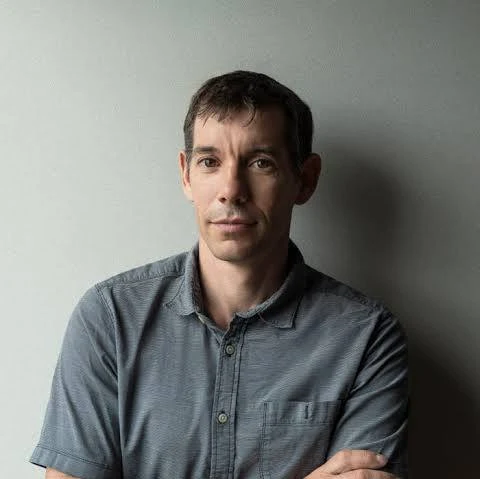
The Honnold Foundation: A Legacy of Light
Perhaps the most compelling counterpoint to the narrative of solitary risk is Alex Honnold‘s deep commitment to collective good. In 2012, long before his global fame, he founded the Honnold Foundation, an environmental non-profit with a clear mission: to reduce environmental impact and improve lives by increasing equitable access to solar power worldwide. This is not a peripheral sponsorship activity but a core part of his identity and a primary outlet for his influence. The foundation moves beyond mere charity, focusing on community-centered projects that provide sustainable energy independence.
The success of Free Solo turbocharged this endeavor, transforming it from a passion project into a robust organization. In 2021 alone, the Honnold Foundation supported 44 communities across 17 countries. He considers the foundation’s growth and impact “the best and most successful thing since Free Solo“. This work demonstrates a powerful duality: the same individual who seeks the most personal, starkly consequential challenges on earth also dedicates himself to systemic, long-term, life-improving projects for marginalized communities. It completes the portrait of Alex Honnold, showing that his focus extends far beyond the next hold to the broader horizon of human welfare.
The Urban Frontier: Skyscrapers, Spectacle, and Ethical Lines
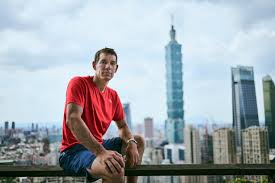
Having reached what many considered the pinnacle of his sport, Alex Honnold has sought new challenges and expressions. In 2022, he completed the “Honnold Ultimate Red Rock Traverse” (HURT), a 32-hour, 35-mile link-up of 18 peaks in Nevada, involving 13,000 feet of technical climbing. He has also ventured into the world of “buildering”—climbing human-made structures. However, his announced project to free solo the 101-story Taipei 101 skyscraper in Taiwan, scheduled for a live Netflix broadcast, has ignited the most significant controversy of his career.
The climb itself is a formidable physical and mental challenge. Honnold has scouted the building, describing it as “built like a bamboo stalk” with challenging overhangs. He draws a distinction between the organic, unpredictable nature of rock and the engineered surface of a building, but the consequence of a mistake remains absolute. The core of the ethical debate is not the climb itself, but its presentation as a live, global television event. Critics argue that “live” fundamentally changes the nature of the act. Free soloing, they contend, has historically been an internal, personal pursuit—”the antithesis of spectacle”. A live broadcast commodifies the suspense and, implicitly, the potential for tragedy. As one commentator starkly put it, “The hook isn’t the climb — it’s the chance we might watch him die”.
Proponents, and Honnold himself, see it as a legitimate new arena and a unique professional opportunity. He frames it with his “James Bond principle”—when an extraordinary life experience presents itself, you say yes. He also notes practical benefits: a single live event requires less ongoing publicity labor than a traditional film campaign. Furthermore, the substantial financial reward (reportedly in the mid-six figures) supports his family and foundation work. This evolution from the silent, anonymous solos of climbing’s past—where feats might go unrecorded for a decade—to a primetime global livestream marks a dramatic cultural shift. It forces a conversation about the responsibilities of the athlete, the platform, and the audience in an era where attention is the ultimate currency.
Conclusion: The Quiet Man at the Edge of Everything
The story of Alex Honnold is a profound study in contrasts. He is the ultimate individualist, performing feats that hinge entirely on self-reliance, yet he is building a legacy focused on community and global interdependence. He is a man of few words and preternatural calm, whose actions speak with a volume that has reshaped a sport and inspired millions. He engages in the most personally consequential of acts, yet is driven by a rational, almost clinical, methodology that seeks to eliminate chance. From the lonely bike rides of a Sacramento teenager to the dizzying ledges of El Capitan and now the glass curtain walls of global skyscrapers, his journey traces the expansion of a human comfort zone to its outermost limits.
His upcoming climb of Taipei 101, live-streamed to the world, is more than just another ascent. It is a cultural moment that sits at the intersection of supreme athleticism, personal ambition, media economics, and ethical philosophy. It asks us what we are willing to watch, what we celebrate, and where the line lies between documenting human potential and consuming mortal risk as entertainment. Regardless of where one stands on that question, Alex Honnold continues to move forward, a quiet figure forever testing the boundaries—of rock, of mind, and of the world’s expectations. His legacy, already secured on the granite of Yosemite, is now being written in the dual ledgers of daring achievement and the weight of the spectacle it creates.
Frequently Asked Questions About Alex Honnold
What is Alex Honnold most famous for?
Alex Honnold is most famous for being the first and only person to free solo climb El Capitan in Yosemite National Park. On June 3, 2017, he ascended the nearly 3,000-foot Freerider route (5.13a) without ropes, harnesses, or any protective gear, a feat documented in the Academy Award-winning film Free Solo. This achievement is widely regarded as one of the greatest in the history of athletic endeavor.
How does Alex Honnold deal with fear?
Alex Honnold manages fear through exhaustive preparation and systematic desensitization. He rehearses climbs on rope countless times, memorizing every move until they become routine. Neuroscientific studies have also shown that his amygdala—the brain’s fear center—exhibits unusually low activation in response to frightening stimuli. He has described his process as expanding his comfort zone through practice “until it’s just not scary anymore”.
Is free solo climbing the same as free climbing?
No, they are fundamentally different. Free climbing uses ropes and protective gear as safety backups in case of a fall, but climbers do not pull on the gear to ascend. Free soloing is a subset of free climbing where the climber uses no ropes or protective gear whatsoever. A mistake in free soloing has no margin for error, making it the most dangerous form of the sport.
What is the Honnold Foundation?
Founded by Alex Honnold in 2012, the Honnold Foundation is a non-profit organization dedicated to promoting solar energy equity and combating climate change. It provides grants to community-based projects around the world that increase access to clean, renewable solar power for underserved populations. Honnold views this work as a core part of his legacy and a positive use of his platform.
How has becoming a husband and father affected Alex Honnold’s climbing?
Becoming a family man has added a profound new layer of responsibility for Alex Honnold. He acknowledges he has “more to live for,” and his wife, Sanni, understandably experiences stress related to his climbs. They reportedly discuss the risks less now to avoid upset. However, Honnold states that his fundamental calculus hasn’t changed, as he has always placed supreme importance on preparation to avoid fatal consequences. His projects may be chosen with more selectivity, but the drive to pursue them remains.