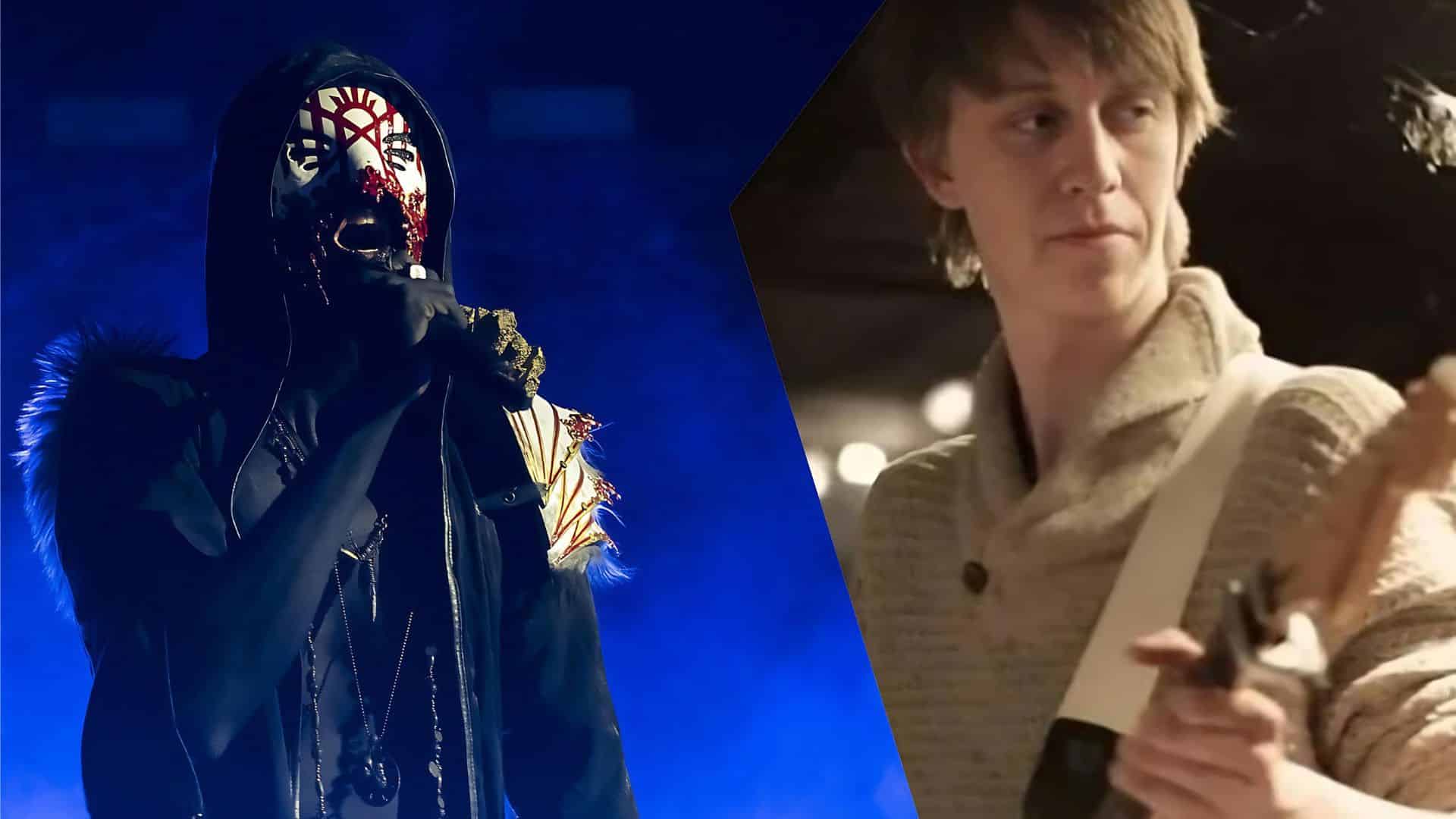
In the sprawling, ever-churning universe of the internet, where fame is often a fleeting flare and identity can be as fluid as a username, certain figures emerge that defy easy categorization. They are not traditional celebrities, nor are they anonymous trolls. They exist in a fascinating liminal space—profoundly public yet essentially unknown, deeply influential yet intentionally obscure. Leo George Faulkner is one such figure. To encounter the name is to step into a labyrinth of curated aesthetic, philosophical musings, and deliberate ambiguity. Is he a artist? A philosopher? A social experiment? A brand? The compelling truth is that Leo George Faulkner is likely all of these and none of them, a digital persona crafted to challenge our very understanding of online authenticity and creative expression. His story is not one of linear biography, but of emerging resonance; a study in how mystery, in an age of radical transparency, can become the most valuable currency of all. Exploring the phenomenon of Leo George Faulkner is less about uncovering a definitive truth and more about mapping the contours of a modern myth, understanding why this particular enigma has captured the imagination of a dispersed online community seeking depth amidst the digital noise.
The origins of Leo George Faulkner are, unsurprisingly, shrouded in deliberate vagueness. He surfaced not with a splashy debut but through a gradual, almost osmotic presence across platforms like Instagram, archived blogs, and niche forums. The aesthetic was immediately distinctive: a blend of European romanticism and digital melancholy. Imagery featured rain-streaked windows in unnamed cities, sprawling libraries, desolate coastal landscapes, and carefully composed still-lifes of vintage typewriters, half-empty coffee cups, and well-worn books. The text accompanying these visuals was never mere captioning; it was aphoristic, lyrical, and introspective. Leo George Faulkner wrote of solitude not as loneliness, but as a necessary condition for creation. He mused on time, memory, and the quiet struggle of the artistic process. This was not the polished, aspirational content of a lifestyle influencer, but the curated output of a seemingly old soul navigating the modern world. The persona felt anachronistic—a 19th-century flâneur or a postmodern poet somehow equipped with a smartphone and a mastery of social media algorithms. This deliberate anachronism is central to his appeal, offering a refuge from the frantic, self-promotional pace of typical online content.
The Aesthetic Universe: Crafting a World in Pixels and Prose
To engage with Leo George Faulkner is to immerse oneself in a meticulously constructed aesthetic universe. This universe is the primary language through which the persona communicates, a cohesive visual and textual lexicon that followers learn to decode. The aesthetic is not merely decorative; it is the substance itself, a narrative told through palette, composition, and fragment. The dominant tones are melancholic and muted: shades of grey, washed-out blues, deep greens, and the warm, faint glow of artificial light in darkness. There is a pervasive sense of weather—rain, fog, the soft decay of autumn—that externalizes an internal mood. This is a world viewed from the inside of a cafe, the quiet corner of a library, or the solitary window of a train carriage. It is a world in motion yet perpetually still, a series of captured moments heavy with unspoken narrative. This visual language creates an immediate emotional signature, attracting those who find beauty in contemplation and a certain dignified sadness. It’s a direct rejection of the hyper-saturated, high-energy visuals that dominate social feeds, instead offering a space for slow looking and feeling.
The prose of Leo George Faulkner is the perfect complement to this visual world. It exists in fragments: short, potent paragraphs or single sentences that function as modern-day epigrams. The writing style is concise yet evocative, often walking the fine line between profound insight and poetic pretension—a tension that his audience seems to willingly embrace. He writes about the creative block as a “silent companion,” about cities as “layers of forgotten conversations,” about love as “a language you study forever but never fully pronounce.” This content never offers tutorials, life hacks, or direct advice. Instead, it offers validation. It says, Your quiet longing, your feeling of being out of step, your artistic frustration—these are not failures, but the raw materials of a meaningful inner life. The power lies in this act of reflective mirroring. Followers don’t look to Leo George Faulkner to learn how to do something; they look to him to feel seen in a specific, complex emotional state. The persona becomes a focal point for a community of introverts, writers, artists, and dreamers who may never comment or interact, but who collectively recognize themselves in the shared ambiance he curates.
“We are not lost, merely between maps. The most important terrain has never been charted.” — A signature phrase often attributed to the persona of Leo George Faulkner.
This quote exemplifies the core message. It reframes uncertainty not as a problem to be solved, but as a noble, necessary state of being. It is a comforting philosophy for a generation navigating precarious careers, ambiguous identities, and a future that feels increasingly uncharted.
Between Persona and Person: The Paradox of Authenticity
The central paradox of Leo George Faulkner is the question of authenticity. In an online culture that increasingly demands “realness”—raw vlogs, vulnerable confessionals, and the performative dismantling of the “highlight reel”—what does it mean when a persona is openly, beautifully artificial? This is where the phenomenon becomes philosophically interesting. Leo George Faulkner does not pretend to be an unfiltered window into a person’s life. He is presented, from the outset, as a creation. The name itself has a novelistic quality; it feels chosen, not given. The consistency of the aesthetic is too perfect, the prose too polished, the mystery too complete. This, arguably, is its own form of radical honesty. It bypasses the exhausting dance of pretending to be authentic while carefully curating that authenticity. Instead, it states: This is a construction. This is art. Engage with it on those terms. This approach liberates both the creator and the audience from the burdens of parasocial expectation. Followers are not investing in the biographical details of a man named Leo George Faulkner; they are investing in the mood, the ideas, and the aesthetic point of view he represents.
This deliberate blurring of lines places Leo George Faulkner within a long artistic tradition, from the literary personas of Fernando Pessoa and his heteronyms to the conceptual characters of musicians like David Bowie or Sade. It raises fascinating questions about identity in the digital age. If a persona consistently produces work that moves, inspires, and creates community, does it matter if there is a “real” person fully aligned with it? The output exists. Its impact on its audience is real. In this sense, Leo George Faulkner functions as a collaborative fiction. The creator provides the text and images; the audience provides the interpretation, the emotional resonance, and the desire to believe in the world being presented. The mystery is not a flaw to be solved, but an essential feature—an empty space into which the follower can project their own search for meaning and beauty. It turns consumption into a creative act. This is a sophisticated, meta-level engagement with internet culture, one that critiques the very demand for transparency it simultaneously utilizes to generate intrigue.
The Mechanics of Mystery: Building a Following Without a Face
From an analytical perspective, the growth of Leo George Faulkner’s presence is a case study in anti-traditional community building. There are no face-to-camera videos, no podcasts explaining his process, no interviews demystifying his intentions. The growth is organic, driven by the powerful, shareable nature of the content itself. A beautifully composed image paired with a resonant fragment of text is perfectly suited for platforms like Instagram and Tumblr, where mood and aesthetic travel faster than facts. The lack of a clear origin story or explicit biography fuels speculation and investigation, creating a grassroots, word-of-mythology effect. Is he based in Lisbon? Is he a published author under another name? Is he a collective? Online forums and comment sections become extensions of the artwork itself, filled with theories, shared sightings of his “style” in the wild, and personal stories of how a particular post provided solace on a difficult day. The community coheres around the shared act of interpretation.
This strategy is incredibly resilient to the typical crises that befall online personalities. There is no personal scandal to uncover because there is no “personal” on offer. There is no risk of inconsistency or “selling out” because the persona is defined by its aesthetic and philosophical consistency. Any shift in tone or content can be framed as an evolution of the artistic project, not a betrayal of a personal brand. Furthermore, the ambiguity allows for a form of creative longevity. The persona of Leo George Faulkner could theoretically be a vehicle for a wide range of future projects—a published collection of writings, a curated photography book, a line of stationery, a soundtrack—all under the same enigmatic banner. The mystery becomes a scalable container. It also represents a savvy understanding of the “attention economy.” In a landscape screaming for a few seconds of your time, the quiet, demanding presence of Leo George Faulkner commands a different kind of attention: slower, more deliberate, and ultimately more immersive. It’s the digital equivalent of a whisper in a crowded room—often more powerful than the shout.
Table: The Duality of the Leo George Faulkner Phenomenon
| The Persona (The Art) | The Implied Creator (The Artist) |
|---|---|
| Defined by aesthetic cohesion and philosophical fragments. | Defined by anonymity and deliberate absence. |
| Offers emotional validation and a curated mood. | Relinquishes biographical connection and parasocial intimacy. |
| Community gathers to interpret and share resonance. | Community cannot gather around a known individual. |
| Strength lies in symbolic consistency and mystery. | Strength lies in creative freedom and protection from scrutiny. |
| Engages the audience’s imagination and introspection. | Operates with strategic control over the narrative frame. |
Cultural Context: Why This Enigma, Why Now?
The rise of a figure like Leo George Faulkner is not a random cultural event; it is a telling symptom of our specific digital moment. We live in an era of radical oversharing, where the boundaries between public and private have all but dissolved. The personal brand is the dominant mode of professional and social life. In this context, the exhausting pressure to be oneself publicly and perpetually can generate a powerful counter-desire: for obscurity, for privacy, for a self that is not a commodity. Leo George Faulkner offers a fantasy of escape. He represents the possibility of having an impact—a voice, an aesthetic influence—without having to sacrifice one’s inner life on the altar of public consumption. For the audience, it provides a form of relief. Following him is a pact: I will not demand your biography, and you will not demand my active engagement beyond appreciation. It’s a clean, artistic transaction.
Furthermore, the content of Leo George Faulkner speaks directly to the anxieties of contemporary creative and professional life. The gig economy, the pressure to constantly self-promote, and the algorithmic tyranny of visibility create a widespread sense of being adrift, of working without a map. The persona’s central themes—solitude as sanctity, process over product, embracing the uncharted—provide a comforting, almost romantic counter-narrative. It reframes the precarity of modern life as the raw material for art and deep thought. In a world shouting “hustle,” Leo George Faulkner whispers “wander.” This resonance is particularly strong among millennials and Gen Z, who are navigating these realities most directly. The persona also taps into a broader nostalgia for a pre-digital, analog depth of feeling, albeit expressed through digital means. It’s a remediation of romanticism for the internet age, proving that the yearning for beauty and meaning is not only persistent but highly marketable in its most elusive form.
The Legacy of an Ambiguity: Impact and Imitation
Measuring the legacy of something as intentionally amorphous as Leo George Faulkner is a unique challenge. Impact is not quantified in traditional celebrity metrics, but in cultural seepage. His most significant contribution may be in demonstrating the viability and power of the “strong persona” model online. He has proven that you can build a dedicated, engaged following by offering a consistent point of view and aesthetic worldbuilding, without ever revealing the wizard behind the curtain. This has paved the way for, and is part of, a broader movement of anonymous or pseudonymous creators across platforms like Substack (where writers build newsletters under pen names), music (like the masked band Heilung), and even finance (Crypto Twitter’s anonymous analysts). Leo George Faulkner stands as a sophisticated, literary-minded precursor to this trend.
The aesthetic itself has been widely imitated. The moody, filmic photography style, the fragmented, philosophical captioning, and the overall aura of literate melancholy have become a recognizable sub-genre within digital content creation. You can find countless accounts that borrow the tonal and visual vocabulary pioneered by this persona. However, what most imitators miss is the cohesive philosophical underpinning and the commitment to the mystery. They often apply the aesthetic as a filter to a conventional influencer lifestyle, thereby breaking the spell. The true legacy of Leo George Faulkner is the blueprint: a reminder that in a world saturated with content, a well-crafted, consistent, and enigmatic point of view can cut deeper than the most exhaustive personal vlog. It challenges future creators to think not in terms of documenting a life, but of authoring a world.
Frequently Asked Questions About Leo George Faulkner
Who really is Leo George Faulkner?
This is the fundamental question with no official answer. Leo George Faulkner is best understood as a digital persona or an artistic pseudonym. The individual(s) behind it have chosen to remain anonymous, separating the biographical person from the creative output. The focus is intentionally on the work—the photographs, the text, the curated mood—rather than on the personal identity of its creator, allowing the audience to engage directly with the ideas and aesthetics presented.
What does Leo George Faulkner do?
Leo George Faulkner creates and curates a specific aesthetic and philosophical universe primarily through social media and archived blogs. The “work” involves producing moody, cinematic photography often featuring urban landscapes, interior scenes, and natural environments, paired with short, aphoristic, and introspective texts. He doesn’t offer traditional services or products but builds an audience around a shared sensibility and a reflective, often melancholic, worldview centered on creativity, solitude, and the passage of time.
Is Leo George Faulkner an author or a photographer?
He operates in the space between both, and beyond. While the output includes photographic and written elements, labeling him solely as an author or photographer feels limiting. He is more accurately described as a digital auteur or a creator of a total aesthetic environment. The photographs serve the narrative mood, and the text gives voice to the imagery; together, they form a cohesive artistic whole that is greater than the sum of its individual parts.
Why is Leo George Faulkner so popular?
The popularity of Leo George Faulkner stems from a powerful counter-cultural appeal. In an online world demanding hyper-transparency and constant personal revelation, his enigmatic persona offers a refuge of mystery and quiet contemplation. The content validates complex, introspective emotions that are often absent from mainstream, positivity-focused social media, creating a deep sense of community among those who feel similarly. The consistent, high-quality aesthetic provides a reliable source of beauty and thoughtful engagement.
Can the style of Leo George Faulkner be copied or learned?
The superficial aesthetic—muted tones, rain-soaked windows, lyrical captions—can certainly be emulated. However, the enduring appeal of Leo George Faulkner lies in the perceived authenticity of the point of view and the unwavering commitment to the enigmatic frame. To truly capture a similar resonance, a creator would need to develop a coherent, unique philosophical perspective and have the discipline to maintain the mystery, letting the work itself be the sole focus rather than leveraging it to build a traditional, personality-driven brand.
Conclusion
The story of Leo George Faulkner is ultimately not a story about a man, but about an idea. It is about the potent allure of the unanswered question in an era that purports to have all answers at its fingertips. He represents a successful rebellion against the exhausting mandates of online authenticity, proving that a carefully constructed fiction can foster a more genuine community of feeling than the most detailed reality show of a life. The phenomenon reminds us that human connection in the digital age can be forged not only through shared experience but through shared sensibility—a mutual recognition of a certain light, a certain shadow, a certain quiet yearning. Leo George Faulkner has built a cathedral of mood in the middle of the digital marketplace, and his followers enter not to worship a person, but to experience a particular quality of silence and thought. His legacy is a roadmap for a different kind of influence: one based on art, ambiguity, and the enduring power of a beautiful, unsolved mystery. As long as there is a need for spaces that honor depth over data, introspection over interaction, and the romance of the unknown, the enigmatic world of Leo George Faulkner will continue to find its audience, one perfect, melancholic pixel at a time.