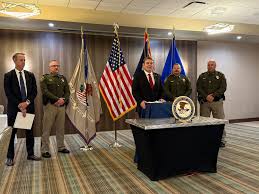
Nestled against the majestic backdrop of the Rocky Mountains, Fremont County, Wyoming, is a place of profound natural beauty and resilient communities. It’s a region where outdoor recreation is a way of life, and the trails—both literal and metaphorical—connect towns, people, and traditions. Yet, like many rural areas across the nation, this idyllic setting faces a formidable challenge: the insidious reach of illegal narcotics and the associated crime that threatens community well-being. Standing as a dedicated shield against this threat is a unique and powerful coalition known as the Safe Trails Task Force Fremont County. This isn’t just another law enforcement unit; it is a sophisticated, collaborative force that represents a paradigm shift in how rural America confronts complex criminal enterprises. By fusing local expertise with federal resources, the task force operates with a precision and reach that no single agency could achieve alone, ensuring the pathways of this beloved county remain secure for residents and visitors alike.
The very name, “Safe Trails,” evokes a dual mission. It speaks to the physical safety of the countless recreational paths that crisscross the region—from the Wind River Range to the Red Desert. More broadly, it symbolizes the safeguarding of the life paths of Fremont County citizens, especially its youth, from the derailment caused by substance abuse and trafficking. The formation of the Safe Trails Task Force Fremont County is a proactive declaration that the community’s peace and safety are non-negotiable. This article delves deep into the genesis, operations, impact, and future of this critical initiative, exploring how a multi-jurisdictional approach is making a tangible difference in the heart of Wyoming.
The Genesis and Mandate of the Safe Trails Task Force
The creation of the Safe Trails Task Force Fremont County was not born from a single incident, but from a growing recognition of a pervasive pattern. Rural counties often grapple with limited law enforcement resources stretched thin over vast geographical areas. Drug trafficking organizations, aware of these challenges, began to exploit the extensive highway systems and relative isolation of regions like Fremont County. Major interstates, such as I-80 and I-25, which skirt or traverse the county, became conduits for the distribution of methamphetamine, fentanyl, heroin, and other illicit substances. Local agencies, though skilled and dedicated, sometimes lacked the specialized tools, jurisdictional reach, and investigative bandwidth to dismantle the networks behind these operations.
In response to this escalating threat, the concept of a unified task force took shape. The model is part of a national strategy spearheaded by the Drug Enforcement Administration (DEA), which establishes Safe Trails Task Forces in critical regions across the United States. The Fremont County iteration is a prime example of this federal-local partnership in action. Its core mandate is unequivocal: to identify, investigate, and disrupt mid- to high-level drug trafficking organizations operating within and through Fremont County. This goes beyond low-level street arrests; the task force aims for the top, targeting the supply chain, the financial underpinnings, and the leadership of these criminal groups. By doing so, it seeks to reduce the availability of drugs, decrease drug-related violent crime, and improve the overall quality of life for county residents.
The task force’s mandate is inherently proactive and intelligence-driven. It operates on the understanding that drug trafficking is a complex web that often intersects with other crimes, including weapons offenses, money laundering, and even human trafficking. Therefore, its investigative scope is broad yet focused. Agents and officers work to connect disparate pieces of information—a traffic stop in Shoshoni, a tip from a Riverton neighborhood, financial records from a Lander business—to build comprehensive cases. This intelligence-led policing model allows the Safe Trails Task Force Fremont County to allocate resources strategically, predict criminal trends, and strike at the most impactful moments. It’s a shift from merely responding to crime to actively preventing its proliferation, a crucial evolution for safeguarding a rural community.
The Power of Partnership: A Multi-Agency Coalition
What truly sets the Safe Trails Task Force Fremont County apart is its composition. It is a tapestry woven from the threads of numerous agencies, each bringing unique strengths, authorities, and local knowledge to the table. This collaborative engine is the task force’s greatest asset, breaking down the historic “silos” that can hinder law enforcement efforts. At its core, the partnership is a fusion of federal authority and local grounding, creating an entity that is both nimble and powerful.
The DEA provides the federal nexus, offering access to national intelligence databases, sophisticated surveillance technology, specialized financial investigative skills, and, crucially, jurisdictional reach that extends far beyond county lines. This is vital for tracking drugs and money that flow across state and even international borders. Alongside the DEA, other federal partners like the Bureau of Indian Affairs (BIA) and the U.S. Attorney’s Office play pivotal roles. The BIA’s involvement is particularly critical given that a significant portion of Fremont County lies within the Wind River Indian Reservation, home to the Eastern Shoshone and Northern Arapaho Tribes. Their officers provide essential cultural and jurisdictional expertise.
However, the heartbeat of the task force is local. The Fremont County Sheriff’s Office, the Riverton Police Department, the Lander Police Department, and the Wyoming Division of Criminal Investigation (DCI) are integral members. These officers and deputies contribute an irreplaceable understanding of the community’s rhythms, geography, and people. They know the backroads, the local histories, and the neighborhood dynamics that a federal agent might miss. This seamless integration ensures that operations are not only effective but also conducted with a deep respect for the community being served. The district and county prosecutors are also embedded in this process from an early stage, ensuring that cases are built to the highest legal standards for successful prosecution.
A veteran Fremont County Sheriff’s deputy once remarked: “Before the task force, we’d often feel like we were just chipping away at a mountain. Now, with our federal partners and their tools, we’re not just chipping—we’re drilling into the foundation and bringing the whole structure down. It’s a game-changer for rural law enforcement.”
This table illustrates the synergistic roles within the coalition:
| Agency Type | Key Agencies Involved | Primary Contribution to the Task Force |
|---|---|---|
| Federal | DEA, BIA, U.S. Attorney’s Office | National intelligence, cross-jurisdictional authority, major case resources, federal prosecution. |
| State | Wyoming DCI, Wyoming Highway Patrol | Statewide criminal intelligence, forensic support, traffic interdiction expertise. |
| Local | Fremont County Sheriff, Riverton PD, Lander PD | Deep community knowledge, immediate response capability, local investigative relationships. |
Operational Strategies: How the Task Force Gets Results
The daily work of the Safe Trails Task Force Fremont County is a blend of high-tech investigation, old-fashioned police work, and strategic patience. Operations are multifaceted, designed to attack the drug trade from every conceivable angle. One of the most visible aspects is highway interdiction. Given the county’s position along major drug transit corridors, task force members, often in conjunction with the Wyoming Highway Patrol, conduct proactive patrols and intelligence-based traffic stops. These are not random checks; they are informed by specific indicators and criminal intelligence, leading to significant seizures of narcotics and cash, and the arrest of key couriers.
Beyond the highways, the task force engages in long-term, complex conspiracy investigations. These can span months or even years. Agents utilize undercover operations, controlled purchases, electronic surveillance (with court authorization), and financial forensic analysis to map entire trafficking networks. By following the money—tracking wire transfers, cryptocurrency transactions, and cash spending patterns—they can identify ringleaders and the infrastructure that supports them. This methodical approach is what leads to the large-scale operations that make headlines: multi-defendant indictments that dismantle an entire organization in one fell swoop. The Safe Trails Task Force Fremont County understands that arresting a street-level dealer only creates a vacancy; their goal is to eliminate the entire business entity.
Community intelligence is another cornerstone of their strategy. Tips from concerned citizens, information from parole and probation officers, and collaboration with social service agencies provide a constant stream of actionable leads. The task force fosters these relationships, knowing that those who live and work in the community are its eyes and ears. Furthermore, they work closely with the Wind River Inter-Tribal Council and tribal law enforcement to address the specific challenges on the reservation, ensuring a culturally sensitive and effective approach. This holistic view acknowledges that enforcement alone is not a permanent solution; it must be part of a broader ecosystem of community health and resilience.
Measuring Impact: Cases, Seizures, and Community Effect
The success of the Safe Trails Task Force Fremont County is not measured solely in statistics, though the numbers are indeed compelling. Quantifiable metrics provide a clear snapshot of the task force’s disruptive power. Since its inception, the unit has been responsible for the seizure of hundreds of pounds of illegal narcotics, including particularly dangerous substances like fentanyl, which is responsible for a soaring number of overdose deaths nationwide. They have confiscated millions of dollars in drug proceeds and illicit assets, striking at the profit motive that fuels the trade. Perhaps most importantly, they have secured the arrests and convictions of hundreds of individuals involved in mid- to high-level trafficking, effectively decapitating numerous criminal operations that targeted Fremont County.
One illustrative case involved a multi-year investigation that unraveled a poly-drug network bringing methamphetamine, cocaine, and heroin from source cities into central Wyoming. Through coordinated arrests across multiple states, the Safe Trails Task Force Fremont County dismantled the cell, seizing large quantities of drugs, firearms, and over a million dollars in cash. This operation, like many others, demonstrated the task force’s ability to connect local activity to broader criminal conspiracies. Another significant focus has been on the rise of fentanyl, a synthetic opioid up to 50 times stronger than heroin. The task force’s interdiction efforts have directly prevented countless potential overdose deaths by intercepting shipments of counterfeit pills and powdered fentanyl before they could hit the streets.
Beyond the statistics, the qualitative impact on Fremont County is profound. Residents and business owners in communities from Dubois to Atlantic City report a greater sense of security. There is a palpable sentiment that the county is a harder target for traffickers than it once was. This deterrent effect is invaluable. By creating a high-risk environment for criminal enterprises, the task force not only cleans up existing problems but also prevents new ones from taking root. This fosters a more stable environment for economic development, tourism, and family life. The collaborative model also builds institutional capacity, as local officers gain training and experience in complex investigations, elevating the overall skill level of law enforcement in the region.
Challenges and Considerations in Rural Enforcement
Despite its successes, the Safe Trails Task Force Fremont County operates within a challenging landscape. The vast, open geography of Fremont County is both a blessing and a hurdle for law enforcement. Remote areas, rugged terrain, and limited cellular service can complicate surveillance and communication during operations. The sheer number of miles of unpaved roads and isolated properties provides traffickers with potential hiding spots and transfer points. Covering this expansive territory with a finite number of personnel requires exceptional planning and the efficient use of technology, such as aerial surveillance and specialized tracking.
Resource allocation is a perpetual challenge. While the task force model pools resources, the participating agencies themselves often operate with tight budgets. Balancing the demands of the task force’s long-term investigations with the day-to-day patrol and call-response duties of local deputies and officers requires careful management and constant communication. There is also the challenge of maintaining operational security in close-knit rural communities where anonymity is difficult. The task force must navigate the delicate balance of being visible enough to act as a deterrent and gather community trust, while remaining covert enough to protect the integrity of sensitive investigations.
Beyond Enforcement: The Role in Prevention and Outreach
The leaders of the Safe Trails Task Force Fremont County recognize that law enforcement is just one pillar in the fight for a drug-free community. A purely punitive approach is unsustainable. Therefore, the task force actively engages in prevention and educational outreach, aiming to stop drug abuse before it starts and to connect those struggling with addiction to pathways of recovery. This community engagement component is vital for building long-term resilience and addressing the root causes of demand.
Task force members regularly participate in school presentations, community forums, and events like National Night Out. They speak candidly with students about the dangers of modern drugs, particularly the lethal threat of fentanyl-laced counterfeit pills. This education is evidence-based and designed to be relatable, moving beyond scare tactics to provide factual information that empowers young people to make healthy choices. Officers also train community members, including educators and business owners, on recognizing signs of trafficking and substance abuse, turning the public into informed partners.
Crucially, the task force collaborates with public health agencies, treatment providers, and recovery organizations. They understand that individuals with substance use disorders need help, not just handcuffs. While they vigorously pursue traffickers, they often support initiatives that offer diversion programs or treatment-oriented responses for users. By sharing non-operational intelligence about trends in drug use with health officials, they help those agencies tailor their prevention and treatment resources effectively. This “enforcement + help” philosophy embodies a more modern and holistic approach to the drug crisis, positioning the Safe Trails Task Force Fremont County as a guardian of public health as well as public safety.
The Future of Safe Trails in Fremont County
Looking ahead, the Safe Trails Task Force Fremont County is poised to adapt and evolve in response to emerging threats. The drug trade is dynamic; as one method is disrupted, traffickers innovate new ones. The future will likely see an increased focus on cyber-investigations, tracing dark web purchases and cryptocurrency payments used to facilitate drug sales. The proliferation of synthetic drugs, which can be manufactured with constantly changing chemical formulas, will demand continued forensic and scientific adaptation from law enforcement.
The task force also aims to deepen its community integration. Plans may include expanding youth mentorship programs, strengthening partnerships with tribal wellness programs, and enhancing re-entry support for formerly incarcerated individuals to reduce recidivism. Sustainability of funding and personnel is always a focus, with task force leadership continually advocating for the resources needed to maintain their critical mission. The goal is to institutionalize the collaborative model so that it remains a permanent, agile fixture in Fremont County’s public safety infrastructure.
The enduring vision is a Fremont County where the trails—whether for hiking, biking, or simply walking through life—are truly safe for everyone. It is a vision of a community where economic opportunity flourishes unhindered by crime, where families are not torn apart by addiction, and where the natural beauty of the region is matched by the security and health of its inhabitants. The Safe Trails Task Force Fremont County is more than a law enforcement unit; it is a commitment to that future, a promise upheld daily through partnership, perseverance, and an unwavering dedication to the people it serves.
Conclusion
The story of the Safe Trails Task Force Fremont County is a powerful testament to what is possible when community resolve meets strategic collaboration. In the face of a complex and pervasive challenge like drug trafficking, Fremont County chose not to retreat but to innovate, forging a coalition that leverages the best of local knowledge and federal capability. This task force has proven that rural communities are not helpless in the face of transnational criminal trends; they can be formidable opponents. By targeting the infrastructure of the drug trade, making massive seizures, and securing impactful prosecutions, the task force has tangibly reduced the flow of poison into the county and elevated the risk for those who would seek to profit from it. More than that, through its outreach and prevention efforts, it is actively participating in healing and fortifying the community for generations to come. The trails of Fremont County, in every sense of the word, are safer because of this dedicated, unified force standing guard.
FAQ Section
What is the primary goal of the Safe Trails Task Force Fremont County?
The primary goal of the Safe Trails Task Force Fremont County is to identify, investigate, and disrupt mid- to high-level drug trafficking organizations operating within and through Fremont County. Its mission extends beyond making street-level arrests; it focuses on dismantling the entire supply chain, including targeting the financial networks and leadership of these criminal groups to create a lasting reduction in drug availability and associated violent crime.
Which agencies are involved in this task force?
The Safe Trails Task Force Fremont County is a multi-agency coalition. It is led in partnership with the federal Drug Enforcement Administration (DEA) and includes critical participation from the Bureau of Indian Affairs (BIA), the Fremont County Sheriff’s Office, the Riverton Police Department, the Lander Police Department, the Wyoming Division of Criminal Investigation (DCI), and the U.S. Attorney’s Office. This blend of federal, state, tribal, and local agencies is the key to its effectiveness.
Does the task force only focus on drug crimes, or does it handle other types of investigations?
While the core mandate is combating drug trafficking, the work of the Safe Trails Task Force Fremont County often leads to investigations into related criminal activities. Drug networks frequently engage in overlapping crimes such as weapons offenses, money laundering, identity theft, and violent crime. The task force’s investigative authority allows it to pursue these connected offenses to fully dismantle criminal enterprises and enhance community safety.
What has been a major success story for the task force?
A major success involved a long-term investigation that culminated in a coordinated takedown of a significant poly-drug network. The Safe Trails Task Force Fremont County, through sustained investigative work, was able to dismantle an organization importing methamphetamine, heroin, and cocaine into the region. The operation resulted in multiple arrests across several states, the seizure of large quantities of drugs and firearms, and the forfeiture of over a million dollars in illicit assets, striking a substantial blow to drug distribution in central Wyoming.