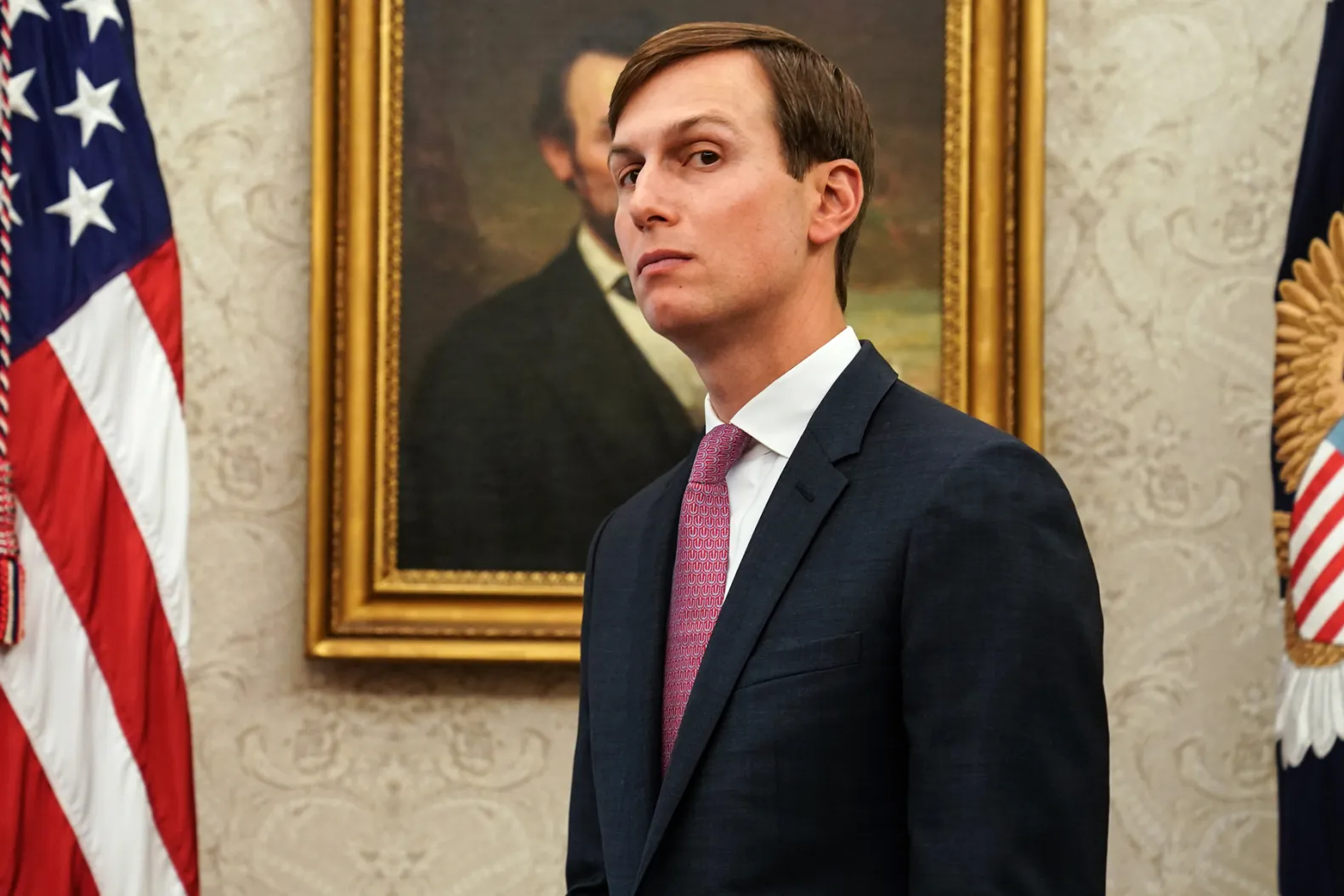
Jared Kushner is a name that evokes a potent mix of reactions—political insider, savvy businessman, presidential son-in-law, and a perpetual subject of intense scrutiny. His journey from a New Jersey real estate scion to one of the most influential, yet unofficial, advisors in the highest echelons of American power is a modern saga of ambition, controversy, and transformation. To understand the political and economic landscapes of the late 2010s is to grapple with the role of Jared Kushner. His narrative is inextricably woven with themes of family legacy, the blurring of lines between public service and private interest, and the unprecedented nature of the Trump administration. This article delves beyond the headlines to explore the multifaceted dimensions of his career, his polarizing time in the White House, his ambitious post-administration ventures, and the enduring questions about his influence and legacy.
Early Life and the Weight of a Real Estate Dynasty
Jared Kushner was born into a world of concrete and capital. His grandfather, Joseph Kushner, was a Holocaust survivor who built a modest construction and development company. It was Jared’s father, Charles Kushner, who dramatically expanded the family empire, transforming Kushner Companies into a formidable force in the New Jersey and New York real estate markets. From a young age, Jared was immersed in this world, learning the intricacies of deals and developments at the dinner table.
However, this gilded upbringing was shattered by a profound family scandal. In 2005, Charles Kushner was convicted of illegal campaign donations, tax evasion, and witness tampering—the latter charge stemming from a bizarre attempt to silence his brother-in-law with a prostitute. He served fourteen months in federal prison. This event had a seismic impact on the young Jared Kushner, who was then a student at Harvard University. It instilled in him a fierce sense of loyalty to his family and a hardened, discreet demeanor. He took the reins of the family business sooner than anticipated, navigating its challenges while shouldering the burden of restoring its name.
Building an Empire and a Media Foray
After graduating from Harvard and obtaining dual law and business degrees from New York University, Jared Kushner plunged fully into the family business. His most audacious move came in 2006 when, at just 25 years old, he orchestrated the purchase of 666 Fifth Avenue in Manhattan for a then-record $1.8 billion. The deal was hailed as a masterstroke but would later become a symbol of over-leverage and financial peril, especially as the 2008 financial crisis cratered commercial real estate values. The staggering debt on the property would loom over Kushner Companies for a decade, influencing perceptions of Jared Kushner’s business judgment and later, his potential conflicts of interest.
Seeking to diversify his portfolio and influence, Jared Kushner ventured into media. In 2006, he purchased the New York Observer, a venerable but struggling New York City weekly. His ownership was marked by editorial turbulence and a sometimes awkward fit between a young, politically conservative owner and a traditionally liberal-leaning newsroom. Yet, it was through the Observer that he first met a figure who would change the trajectory of his life: a real estate magnate and reality TV star named Donald Trump. The paper’s coverage of Trump was notably friendly, foreshadowing the deep alliance to come.
A Fateful Marriage and Entry into the Trump Orbit
The relationship between Jared Kushner and Ivanka Trump began as a New York society story but quickly evolved into a powerful partnership. Their courtship and 2009 marriage fused two prominent real estate families, creating a new power couple. Ivanka, converting to Judaism, integrated into the Kushner family, while Jared became a trusted confidant to his father-in-law. As Donald Trump’s political ambitions simmered and then exploded onto the national stage with his 2016 presidential campaign, Jared Kushner’s role expanded exponentially.
Initially seen as a moderating influence, Jared Kushner became the campaign’s de facto chief multitasker. With no prior political experience, he took on roles ranging from digital strategy—where he oversaw a data-driven, micro-targeted online operation—to serving as a key liaison and negotiator. His calm, collected demeanor provided a stark contrast to the campaign’s often chaotic public face. He was instrumental in pivotal moments, such as orchestrating Trump’s crucial meeting with Republican leaders in Congress and helping to prepare him for debates. When Trump won the election, Jared Kushner was poised for a level of White House access rarely afforded to a family member.
The Senior Advisor: A Portfolio of “Impossible” Files
Despite concerns over nepotism laws and his lack of government or foreign policy experience, Jared Kushner was appointed Senior Advisor to the President. His portfolio was breathtakingly broad, a testament to Trump’s trust in him. He was tasked with brokering peace in the Middle East, reforming the federal government via the “Office of American Innovation,” leading U.S. relations with China and Mexico, and overseeing a sweeping criminal justice reform initiative.
The First Step Act, passed in 2018, stands as the most broadly bipartisan achievement of the Trump administration and a personal victory for Jared Kushner. He worked closely with a diverse coalition, from Koch Industries to progressive activists, to craft legislation that reduced mandatory minimum sentences and expanded rehabilitation programs. On this file, his persistence and behind-the-scenes deal-making earned him rare praise from across the political spectrum.
His Middle East work, however, was far more controversial. Operating outside traditional diplomatic channels, Jared Kushner cultivated close relationships with leaders like Saudi Arabia’s Crown Prince Mohammed bin Salman and Israel’s Benjamin Netanyahu. His approach, encapsulated in the “Peace to Prosperity” plan unveiled in 2020, heavily favored Israeli positions and was rejected outright by Palestinian leaders, who accused him of being irredeemably biased. Critics argued his inexperience and personal business interests in the region fatally compromised his efforts.
“We don’t want a history book. We want a book that, 50 years from now, people will pick it up and go, ‘Wow, this was a great plan.'” — Jared Kushner on his approach to the Middle East peace plan.
The Unending Web of Conflicts and Scrutiny
From his first day in the White House, Jared Kushner was shadowed by allegations of conflicts of interest. His vast, complex financial holdings and the ongoing struggles of Kushner Companies, particularly the albatross of 666 Fifth Avenue, raised persistent questions. The ethics concerns were multifaceted: foreign governments might seek to influence policy by doing business with his family’s company; his security clearance process was unusually troubled; and his use of private email for official business drew accusations of hypocrisy.
A pivotal moment came in 2018, when Brookfield Asset Management, a Canadian company whose largest investor is the sovereign wealth fund of Qatar, bailed out the troubled 666 Fifth Avenue with a 99-year lease. At the time, Jared Kushner was intimately involved in U.S. foreign policy toward the Gulf, including a blockade against Qatar led by Saudi Arabia and the UAE. While no wrongdoing was proven, the timing and parties involved fueled perceptions of potential pay-for-play. These ethical clouds were a constant feature of his tenure, detailed in-depth by government watchdogs and investigative journalists.
The Post-White House Chapter: Finance, Funds, and Foreign Deals
After leaving Washington in January 2021, Jared Kushner moved swiftly into the private sector. He founded Affinity Partners, a Miami-based private equity firm, with startling speed. The fund’s successful $2 billion raise was notably backed by a $2 billion investment from Saudi Arabia’s Public Investment Fund (PIF), the same sovereign wealth fund led by his close ally Crown Prince Mohammed bin Salman. This investment, overseen by the Saudi board despite concerns about the firm’s inexperience and fees, drew immediate criticism from ethics experts and lawmakers.
The following table outlines key aspects of his post-White House ventures:
| Venture | Key Detail | Controversy / Note |
|---|---|---|
| Affinity Partners | Private equity firm launched in 2021. | $2 billion anchor investment from Saudi PIF. Scrutiny over link to his official actions. |
| 666 Fifth Ave Exit | Kushner Cos. fully divested from property in 2023. | Finalized after Saudi-backed lease, closing a long, debt-ridden chapter. |
| Memoir | “Breaking History: A White House Memoir” (2022). | Defended Trump admin policies; criticized by historians for its perspective. |
| Serbian Project | Proposed $500M resort project on site of former Serbian army HQ. | Concerns over partnering with a government accused of corruption. |
These deals have cemented a narrative of Jared Kushner capitalizing on the relationships built in government with autocratic nations, raising profound questions about the modern intersection of public service and private enrichment. His defenders argue he is simply leveraging his experience in a lawful manner, while critics see a glaring example of the “revolving door” at its most ethically problematic.
The Kushner Legacy: Impact and Interpretation
Assessing the legacy of Jared Kushner is an exercise in starkly contrasting perspectives. Supporters view him as a pragmatic problem-solver who delivered on criminal justice reform, helped normalize relations between Israel and Arab states through the Abraham Accords, and brought a CEO’s mindset to a bloated federal government. They see his post-government success as a reward for accomplishment and a testament to his strategic vision.
Detractors, however, paint a portrait of an unqualified individual who used familial access to wield enormous, unaccountable power. They argue his Middle East efforts undermined the Palestinian cause and U.S. credibility, his government reform efforts yielded little, and his tenure was fundamentally marred by pervasive ethical failures. His post-administration financial dealings are viewed not as a reward for success, but as the culmination of years of mixing policy with personal business interests.
Ultimately, the story of Jared Kushner is a defining narrative of its era. It speaks to the rise of family dynasties in politics, the erosion of traditional barriers between public office and private gain, and the outsized influence of unelected advisors. Whether seen as a savvy operator or a symbol of systemic corrosion, his impact on American political and commercial life is undeniable and will be debated for years to come.
Conclusion
Jared Kushner’s trajectory from a real estate boardroom to the corridors of the West Wing and into the realm of global finance is a uniquely American saga of ambition, access, and controversy. He operated at the nerve center of one of the most unconventional presidencies, tasked with mission-impossible challenges and navigating a perpetual storm of ethical questions. His legacy is a fractured mirror, reflecting either innovative breakthroughs or profound conflicts depending on the angle of view. What remains clear is that Jared Kushner leveraged his position, relationships, and discretional influence to shape policy and, subsequently, a highly lucrative private sector career. His story underscores enduring questions about meritocracy, accountability, and the price of power in the 21st century, ensuring that the name Jared Kushner will remain a subject of fascination and debate long after the headlines fade.
Frequently Asked Questions About Jared Kushner
What was Jared Kushner’s official role in the Trump White House?
Jared Kushner served as a Senior Advisor to President Donald Trump, an unusually broad and powerful position for a family member. Despite having no prior government experience, he was given a sprawling portfolio that included brokering Middle East peace, leading diplomatic efforts with China and Mexico, overseeing criminal justice reform, and heading a government efficiency initiative called the Office of American Innovation.
How did Jared Kushner’s background in real estate influence his time in government?
His real estate background profoundly shaped his approach. He often described his role as that of a deal-maker, applying a private-sector, transactional mindset to complex policy issues like Middle East peace, which he framed as an “economic-driven” opportunity. However, this background also created relentless conflict-of-interest concerns, as his family’s company, Kushner Companies, had significant debt and sought foreign investment throughout his tenure, particularly for the troubled 666 Fifth Avenue property.
What is the controversy surrounding Jared Kushner and Saudi Arabia?
The controversy operates on two connected levels. First, as a senior advisor, Jared Kushner developed an exceptionally close relationship with Saudi Crown Prince Mohammed bin Salman, backing him strongly despite international outrage over the murder of journalist Jamal Khashoggi. Second, after leaving office, his new private equity firm, Affinity Partners, received a $2 billion investment from the Saudi sovereign wealth fund chaired by the same Crown Prince. Critics allege this creates a perception that his favorable policy decisions were later rewarded with lucrative private investment.
What was Jared Kushner’s involvement in the First Step Act?
Jared Kushner was a primary architect and champion of the First Step Act, a bipartisan criminal justice reform bill signed in 2018. Driven in part by his father’s experience in prison, he worked for nearly two years to build a coalition spanning conservative and liberal groups. He lobbied lawmakers, negotiated details, and helped persuade a skeptical President Trump to support it. This is widely regarded as his most concrete and bipartisan policy achievement.
What is Jared Kushner doing now after the White House?
Jared Kushner returned to the private sector, establishing Affinity Partners, a private equity firm based in Miami. The firm focuses on investments across sectors and geographies, with its anchor investment coming from Saudi Arabia. He has also written a memoir, “Breaking History,” and is pursuing international real estate projects, including a major proposed development in Serbia. His post-administration activities have kept him in the public eye and continued to generate scrutiny regarding the interplay between his past official role and current business dealings.