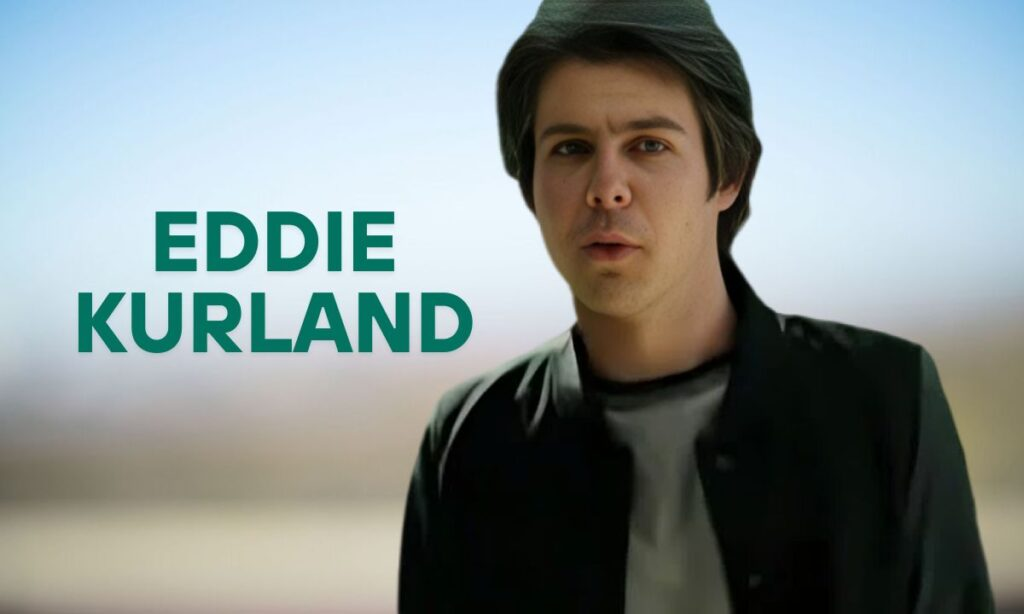
Imagine the most iconic moments in modern cinema. Tom Hanks as Forrest Gump, sitting on that bench in Savannah. Will Smith as Ali, shadowboxing with intensity in the ring. Brad Pitt as Billy Beane, radiating frustrated genius in Moneyball. Now, imagine that for every one of those moments, there was another man on set, standing in the exact same spot, under the same lights, holding the same posture, for hours on end. A man whose face you’ve likely never noticed, but whose work is etched into the very fabric of these films. That man is Eddie Kurland.
Eddie Kurland is not a household name, and in the context of his profession, that is the ultimate compliment. He is a premier stand-in and photo double, a master of a craft that is fundamentally about self-effacement. While the glamour of Hollywood shines on the A-list actors, it is professionals like Kurland who form the bedrock of the filmmaking process, ensuring that the technical machinery of cinema—lighting, framing, and focus—operates with flawless precision. His career is a testament to the idea that greatness in film is not always about being in the spotlight; sometimes, it’s about holding the light steady for someone else. To understand the story of Eddie Kurland is to pull back the curtain on one of the most crucial, yet underappreciated, roles in the entire industry. He is the invisible architect, the consistent presence that allows magic to happen, one perfectly lit scene at a time.
The Unsung Craft: What Does a Stand-In Actually Do?
To the uninitiated, the role of a stand-in might seem simple: just stand there. In reality, it is a job that demands a rare combination of physical endurance, acute observation, technical understanding, and profound patience. A stand-in is not a stunt double who performs dangerous actions, nor are they necessarily an extra who appears in the background of a shot. Their primary function is to be a human placeholder for the lead actor during the extensive and often tedious technical setup of a shot. When the director of photography and the gaffer are designing the lighting scheme, when the camera operator is blocking out the movements, and when the focus puller is marking their distances, it is the stand-in who occupies the actor’s position.
This is far more complex than it sounds. A skilled stand-in like Eddie Kurland doesn’t just stand in a general area. He must replicate the actor’s exact stance, height, and even their subtle body language. He must know the scene intimately, understanding where the actor will pause, which way they will turn, and how they will move throughout the space. This allows the camera crew to set their focus marks with precision and the lighting team to see how shadows and highlights will fall on the actor’s face and body in real-time. It’s a role that requires hyper-awareness and the ability to remain perfectly still and consistent for what can be hours of repetitive adjustments. The entire crew relies on the stand-in’s consistency to do their jobs efficiently; a good stand-in can save a production invaluable time and money.
The distinction between a stand-in and a photo double is also crucial, though the roles are often filled by the same person. A stand-in is primarily for the setup, while a photo double may be used for shots where the actor’s back is to the camera, their hands are performing an action, or they are in a wide shot where their specific features aren’t discernible. For instance, if a scene requires a shot of an actor’s hands typing on a keyboard, and the principal actor is unavailable, a photo double with similar hands would step in. Eddie Kurland has excelled in both capacities, building a reputation for being a reliable and exacting presence who can seamlessly blend into the requirements of the shot. His work ensures that the lead actor can be in their trailer, resting or preparing for the emotional demands of the scene, while the technical groundwork is laid with absolute confidence.
The relationship between a stand-in and the actor is built on a foundation of trust. An actor must have faith that their stand-in will accurately represent their physicality so that when they arrive on set, everything is ready for them to perform. This trust is earned over time, which is why long-term partnerships, like the one Kurland has with Tom Hanks, are so valuable. It’s a symbiotic relationship; the actor’s performance is enhanced by a seamless technical process, and that process is enabled by the skill of the stand-in. In this way, Eddie Kurland is more than just a placeholder; he is a key collaborator in the creative process, even if his contribution remains unseen by the audience.
The Making of a Master: Eddie Kurland’s Journey to the Set
Every legendary career has a beginning, and Eddie Kurland’s entry into the film industry is a story of being in the right place with the right attitude. Unlike many who move to Los Angeles with dreams of becoming a star, Kurland’s path was more organic. His foray into the world of filmmaking began not with a burning ambition to be in front of the camera, but with a willingness to work hard and an openness to opportunity. He started in the industry in various peripheral roles, learning the rhythms of a set and understanding the complex hierarchy of a film crew. This foundational experience was invaluable, as it gave him a holistic view of how every department interlocks to create a final product.
His big break, the one that would define the trajectory of his entire professional life, came when he was asked to stand in for an actor on a project. It was here that his natural aptitude for the role became apparent. He possessed the right physical build, the patience for repetitive work, and, most importantly, a keen eye for detail. He understood that his job was not to act, but to replicate. This mindset is what separates a good stand-in from a great one. Directors of photography and camera operators quickly took note of this reliable, consistent professional who made their jobs easier. Word began to spread through the industry that if you needed a dependable stand-in, Eddie Kurland was your man.
The pivotal moment in Kurland’s career was undoubtedly when he began working with Tom Hanks. The physical resemblance in terms of height, build, and posture was a natural fit. But it was Kurland’s professional demeanor and meticulous approach that cemented the partnership. In the high-stakes, fast-paced environment of a major motion picture, reliability is currency. Kurland proved himself to be an invaluable asset on films like Forrest Gump, Apollo 13, and The Green Mile. He wasn’t just a body on a mark; he was a problem-solver, a calm presence, and a part of the crew that the director and cinematographer could rely on without a second thought.
This long-standing collaboration with one of Hollywood’s most beloved actors provided Kurland with a stability that is rare in the freelance world of film production. It allowed him to become an expert in the specific nuances of Hanks’s physicality. He knows how Hanks holds his shoulders, the tilt of his head when he listens, and his typical walking pace. This deep, almost intuitive understanding is what makes him so effective. His journey from a general crew member to the go-to stand-in for an A-list actor is a masterclass in building a career on competence, professionalism, and the quiet mastery of a specific craft. It’s a testament to the idea that success isn’t always about seeking the spotlight; sometimes, it finds you when you excel in the shadows.
A Filmography of the Unseen: Iconic Movies Shaped by Eddie Kurland
To look at Eddie Kurland’s filmography is to take a tour through some of the most acclaimed and popular films of the last three decades. His presence on these sets, though invisible on screen, was a constant and critical factor in their creation. Let’s explore a few key examples that highlight the scope and impact of his work.
In Robert Zemeckis’s Forrest Gump, Kurland’s role was particularly demanding. The film spans decades and features a vast array of lighting conditions and camera setups, from the sunny benches of Savannah to the humid jungles of Vietnam. For every scene where Tom Hanks delivered his Oscar-winning performance, Kurland was there first, standing on the marks, allowing the legendary cinematographer Don Burgess to craft the film’s iconic look. The famous bench scenes, which involved lengthy monologues, required precise lighting and focus that could only be achieved with a stand-in of Kurland’s caliber and consistency. He was the foundation upon which Gump’s simple, profound presence was built.
Moving from historical fiction to gripping realism, Kurland’s work on Apollo 13 presented a different set of challenges. Directed by Ron Howard, the film is a masterpiece of technical filmmaking, much of it taking place within the claustrophobic confines of a spacecraft simulator. Lighting these tight spaces for film was an immense challenge for cinematographer Dean Cundey. Kurland, as Hanks’s stand-in, would have been crammed into these modules for hours, holding position so the lighting could be meticulously adjusted to create the dramatic, authentic feel the film is known for. His endurance and precision directly contributed to the film’s immersive and realistic tension.
The partnership continued with films like The Green Mile, where the somber tone and prison setting required a specific, often low-light, visual palette. For Cast Away, a film where Hanks is in nearly every frame, the demand on the stand-in would have been immense. While Hanks underwent his famous physical transformation, the crew still needed to prepare shots, both on the island and in the early office scenes. Kurland was the constant, the reliable reference point that allowed director of photography Don Burgess to maintain visual continuity throughout the film’s arduous shoot. His work ensured that the technical execution matched the powerful rawness of Hanks’s performance.
His collaborations extend far beyond Tom Hanks. Standing in for Will Smith in Ali and The Pursuit of Happyness required Kurland to adapt to a different physicality and rhythm. For Ali, he would have had to replicate Smith’s boxer’s stance and movements during the intricate lighting setups for the fight scenes. For The Pursuit of Happyness, it was about capturing the posture of a struggling but determined father. In Moneyball, he worked as a stand-in for Brad Pitt, requiring yet another adjustment to capture Pitt’s specific mannerisms. This versatility is the mark of a true master of his craft, able to embody the physical essence of diverse actors to serve the needs of the film.
The Art of Disappearing: The Skills and Mindset of a Top-Tier Stand-In
What does it take to be as successful and sought-after as Eddie Kurland? The skill set is both broad and deeply specific. First and foremost is the power of observation. A stand-in must be a student of human behavior, specifically the behavior of the actor they are representing. They need to notice the small, almost imperceptible tics: Does the actor tend to put their weight on one hip? Do they gesture with their left hand when making a point? Do they have a habit of slightly nodding after they deliver a line? These micro-behaviors are what the stand-in must replicate during setup so that the lighting and focus are perfect for the moment the actor actually performs.
Physical endurance is another non-negotiable trait. A typical shooting day can last 12 to 14 hours, and a significant portion of that time is spent on technical setups. The stand-in is on their feet, often holding static positions under hot lights, for the majority of that time. It is physically grueling work that requires a robust constitution and a high level of patience. There is no room for fidgeting or losing focus; consistency is the entire purpose of the role. This demands a mental fortitude to match the physical demands—the ability to stay engaged and precise through repetition and long periods of waiting.
Perhaps the most important psychological aspect of the job is the complete lack of ego. Eddie Kurland chose a career where success is measured by his absence from the final product. He must derive satisfaction not from applause or recognition, but from the smooth functioning of the set and the quality of the final film. He is a team player in the purest sense, whose personal achievement is inextricably linked to the success of the collective. This mindset is rare in an industry often associated with vanity. It requires a genuine love for the process of filmmaking itself, a passion for the collaborative magic that happens behind the scenes.
Furthermore, a stand-in must have a solid technical understanding of filmmaking. They need to know the language of the set. When a director of photography says, “Let’s add a half CTO gel to that key light and flag the back,” the stand-in needs to understand that this will affect the warmth and shape of the light on him, and he must therefore be even more precise in holding his position so the crew can accurately assess the change. This knowledge allows for effective communication and collaboration with the camera and lighting departments, making the stand-in an integrated and respected member of the technical team.
Beyond Tom Hanks: The Versatility of Eddie Kurland
While the long-standing partnership with Tom Hanks is a central pillar of Eddie Kurland’s career, it is a mistake to define him solely by that relationship. His professional portfolio is a testament to his remarkable versatility and the high regard in which he is held across the industry. His ability to seamlessly integrate into different productions and adapt to the unique physicality of various A-list actors is what truly sets him apart. He is not a specialist for a single actor, but a master of the craft itself, applicable to any leading man.
His work with Will Smith, for example, showcases this adaptability. For Michael Mann’s Ali, Smith underwent a significant physical transformation to portray the legendary boxer. Kurland, as his stand-in, had to embody that same powerful, athletic posture. The film’s visual style, characterized by Mann’s signature gritty realism, required precise and often complex lighting setups. Kurland’s role was crucial in achieving the film’s immersive and visceral look, particularly in the boxing sequences where lighting and camera movement were highly choreographed.
Similarly, in The Pursuit of Happyness, the requirement was different. Here, the physicality was not about power and swagger, but about the slumped shoulders of a man burdened by life’s struggles and the determined posture of a father fighting for his son’s future. Kurland’s skill in capturing this more nuanced, emotionally-driven physical state was essential for the crew to light and frame Will Smith in a way that supported the film’s powerful emotional core. This demonstrates that Kurland’s talent lies in his ability to translate character, not just likeness.
His work with Brad Pitt on Moneyball is another prime example. Pitt’s character, Billy Beane, is a maverick filled with a restless, contained energy. Pitt’s performance is full of specific, subtle mannerisms—a certain way of leaning, a particular gait, a thoughtful stare. As his stand-in, Kurland would have had to study and replicate these behaviors to ensure that the technical setups, particularly for the many office-based scenes, were perfectly aligned with Pitt’s performance. This ability to shift from the everyman quality of Tom Hanks to the cool intensity of Brad Pitt is what makes Eddie Kurland a truly exceptional figure in his field.
The Invisible Network: The Ecosystem of Stand-Ins and Doubles
Eddie Kurland operates within a small, specialized, and essential ecosystem in Hollywood. The world of stand-ins, photo doubles, stunt doubles, and body doubles is a tightly-knit community where reputation is everything. While Kurland is among the most elite in his niche, his work highlights the existence of an entire support system dedicated to making movie stars look their best and enabling directors and cinematographers to work efficiently. This network is a crucial, though often overlooked, component of the film industry’s machinery.
Stand-ins often develop a niche. Some, like Kurland, have the build and professionalism to work with leading men. Others specialize in working with leading actresses, requiring a different set of physical attributes and, often, a deep understanding of how to work with lighting designed for more delicate features and complex makeup and hair styles. There are stand-ins for child actors, who require a special patience and rapport, and there are those who specialize in specific genres, like period pieces or science fiction, where the technical demands can be unique. Eddie Kurland’s career demonstrates the potential for longevity and stability within this niche.
The relationship between a principal actor and their primary stand-in is often one of the most consistent on a film set. While the actor interacts with dozens of crew members, their stand-in is a fixed point. This can foster a relationship of mutual respect and even friendship. For an actor, knowing that a professional like Eddie Kurland is handling the tedious preparatory work allows them to conserve their mental and emotional energy for the performance itself. It removes a layer of stress and uncertainty, creating a safer creative environment. This symbiotic dynamic is a key reason why the best stand-ins are so highly valued.
This ecosystem also functions as a de facto training ground for other film industry careers. Many aspiring directors, cinematographers, and producers have worked as stand-ins to learn the ropes, to observe master filmmakers at work, and to understand the language and rhythm of a set from the inside. While Eddie Kurland has made stand-in work his career mastery, for others, it is a stepping stone. In both cases, the role provides an unparalleled education in the practical, on-the-ground reality of filmmaking, far beyond what any film school can teach.
The Legacy of a Legend: What Eddie Kurland Teaches Us About Film
The enduring career of Eddie Kurland offers profound lessons about the nature of cinema, collaboration, and success. In a culture obsessed with fame and celebrity, his story is a powerful reminder that meaningful, masterful work often happens away from the glare of the spotlight. The magic of the movies is a collective illusion, painstakingly built by hundreds of dedicated craftspeople, each an expert in their own domain. Eddie Kurland is a master of his domain, and his legacy is woven into the visual DNA of countless classic films.
His career challenges our very definition of what it means to be part of a film. We tend to think of a movie as the vision of a director and the performance of its stars. But without the technical excellence provided by people like Kurland, that vision would be poorly lit, that performance would be out of focus, and the entire illusion would shatter. He represents the thousands of below-the-line workers whose names fly by in the end credits, but whose expertise is the foundation upon which the entire industry rests. To appreciate his work is to develop a deeper, more nuanced appreciation for film as a collaborative art form.
Furthermore, Eddie Kurland embodies the virtues of consistency, professionalism, and quiet dedication. In an industry known for its volatility and ego, his three-decade-long career, built on reliability and a lack of drama, is truly remarkable. He shows that there is a path to lasting success that isn’t dependent on red carpets or magazine covers. It is a path built on showing up, doing your job exceptionally well, earning the trust of your colleagues, and taking pride in the invisible contribution you make to a larger whole.
His story is also one of adaptation and resilience. The film industry has undergone massive technological shifts since he began—the move from film to digital, the evolution of lighting from traditional fixtures to LEDs, changes in visual effects. A stand-in’s role has had to evolve with these technologies. For example, the prevalence of green screen work requires a stand-in to imagine environments that aren’t there, while high-resolution digital cameras demand even more precision from focus pullers, making the stand-in’s marks more critical than ever. Kurland’s ability to remain a top-tier professional through all these changes speaks to his deep understanding of the core, unchanging principles of his craft.
A Glimpse at the Man Behind the Marks
While the professional details of Eddie Kurland’s life are a matter of public record due to his extensive filmography, he has masterfully maintained a private personal life, which is entirely consistent with his chosen profession. He is known to be an avid sports fan, particularly of baseball, and his work on Moneyball must have been a particular pleasure for him. This glimpse into his personality reminds us that the highly skilled professionals on a film set are whole people with their own passions and interests outside of their work.
His longevity in Hollywood also suggests a individual who is well-liked and respected by his peers. The film set is a high-pressure environment, and those who thrive over the long term are typically those who are not only good at their job but are also easy to work with—collaborative, calm under pressure, and positive. The fact that he has been invited back to set after set, by some of the biggest names in the business, is a strong indicator that Eddie Kurland is as respected as a person as he is as a professional.
The Future of the Craft: Will Stand-Ins Like Eddie Kurland Become Obsolete?
In an age of rapidly advancing technology, it’s a valid question to ask whether the role of the stand-in will be rendered obsolete by digital tools. Could a light-emitting drone or a simple mannequin replace the need for a human like Eddie Kurland? The short answer, for the foreseeable future, is a resounding no. While technology can augment the process, it cannot replicate the nuanced, adaptive, and collaborative nature of a skilled human stand-in.
Filmmaking is an art form that relies on human intuition and real-time collaboration. A director of photography doesn’t just set lights according to a formula; they make artistic judgments based on what they see in the moment. They might notice how the light catches the stand-in’s shoulder in a way that inspires a last-minute adjustment, or how a shadow falls in a more dramatic pattern than planned. This kind of spontaneous, creative discovery is only possible with a living, breathing human in the frame. A drone or a dummy cannot provide the subtle feedback of a real body interacting with light and space.
Furthermore, the stand-in’s role is not purely physical. As discussed, a significant part of the job is understanding the scene’s blocking and the actor’s specific movements. A skilled stand-in like Kurland anticipates shifts in weight, turns of the head, and gestures. He works in dialogue with the director and the camera operator, able to take direction and adjust his performance on the fly. This level of interactive and intelligent participation is far beyond the capability of any current technology. The stand-in is an active participant in the creative and technical conversation of the set.
That said, technology is changing the tools of the trade. Pre-visualization software allows directors to plan shots in advance, and LED walls (as used in productions like The Mandalorian) create dynamic backgrounds in-camera. However, these technologies still require human stand-ins for the same fundamental reason: to calibrate the technology to the human form. The light from an LED volume must be tested on a person, and the camera’s interaction with that environment must be framed around a person. Eddie Kurland’s craft may incorporate new tools, but the core of his profession—being a human reference point—remains as vital as ever. The future of filmmaking will still rely on the invisible architecture provided by masters like him.
Conclusion
Eddie Kurland’s name may not be known to the millions who have enjoyed the films he helped create, but his influence is present in every perfectly lit close-up, every sharply focused walking shot, and every consistently framed scene in a decades-spanning career of cinematic giants. He is the ultimate professional, a master of a craft defined by its invisibility. His story pulls back the curtain on the collaborative heart of filmmaking, revealing that the glitz and glamour of Hollywood are supported by a foundation of unshakable competence and quiet dedication.
To learn about Eddie Kurland is to learn a new way of seeing movies. It’s to understand that for every face you recognize on screen, there is a dedicated professional off-screen ensuring that face is presented with the utmost care and technical skill. His legacy is not one of fame, but of respect—the respect of the most powerful actors, directors, and cinematographers in the world. He represents the triumph of substance over style, of contribution over credit. In a world that often shouts for attention, the enduring career of Eddie Kurland is a powerful testament to the profound impact of a job well done, even when no one is watching.
Frequently Asked Questions About Eddie Kurland
What is Eddie Kurland best known for?
Eddie Kurland is best known as a highly sought-after stand-in and photo double in Hollywood, with a career spanning over three decades. He is most famous for his long-standing collaboration with Tom Hanks, having worked on iconic films like Forrest Gump, Apollo 13, and Cast Away. His expertise lies in replicating an actor’s physicality during technical setups, allowing the camera and lighting crews to prepare the shot with precision before the principal actor arrives on set.
How did Eddie Kurland get his start in the film industry?
Eddie Kurland began his career in various general crew roles, learning the intricacies of film production from the ground up. His break into stand-in work came organically when he was asked to fill in for an actor on a project. His natural aptitude for the job—his patience, physical consistency, and keen eye for detail—quickly became apparent. His reputation for reliability and professionalism grew, leading to more significant opportunities and, ultimately, his pivotal partnership with Tom Hanks that launched him into the top tier of his field.
What is the difference between a stand-in and a stunt double?
A stand-in and a stunt double serve entirely different purposes. A stand-in like Eddie Kurland is used during the technical preparation of a shot. They stand in the actor’s position for lighting, framing, and focus, but they do not appear in the final film. A stunt double, on the other hand, is a specialized performer who replaces the actor for scenes involving dangerous physical action or complex stunts. They are often filmed and do appear in the final cut, though their face may not be clearly visible.
Has Eddie Kurland ever appeared on camera in a speaking role?
While the primary focus of Eddie Kurland’s career has been his work as a stand-in behind the camera, it is not uncommon for stand-ins and other crew members to occasionally appear in the background of scenes as extras. However, he is not known for any significant on-camera speaking roles. His professional mastery and legacy are built entirely on his off-camera work, which is the hallmark of his success.
Why is the work of a stand-in so important for filmmaking?
The work of a stand-in is critically important for both efficiency and quality. By using a dedicated professional like Eddie Kurland to hold an actor’s position, the director of photography and camera crew can spend hours perfecting the lighting and camera setup without requiring the presence of the high-paid lead actor. This saves the production a significant amount of time and money and allows the actor to conserve their energy for performing. A skilled stand-in ensures that when the actor does step onto the set, everything is technically perfect, enabling them to deliver their best performance.