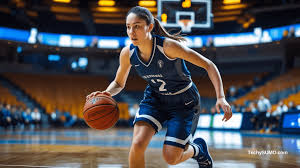
In the world of international sports, certain surnames carry the weight of expectation and legacy. Hachimura is one such name, synonymous with basketball excellence following Rui Hachimura’s groundbreaking journey to the NBA. But behind the spotlight shining on one of Japan’s most famous athletes stands another talented individual, diligently crafting her own narrative of success. Amina Hachimura is not just “Rui’s sister”; she is a formidable basketball player in her own right, a key contributor to Japan’s national women’s team, and a rising star whose story is one of dedication, skill, and quiet determination. While the world knows her brother’s story, the journey of Amina Hachimura offers a fascinating and inspiring parallel, showcasing a different path to excellence within the same family.
The narrative of Amina Hachimura is compelling because it intersects with themes of family, national pride, and the unique challenges and opportunities faced by female athletes in a global sporting landscape. Her career, though often viewed through the lens of her famous sibling, stands on a foundation of individual merit and hard work. From her early days playing in Japan to her collegiate career in the United States and her integral role with the Akatsuki Five, Japan’s women’s national team, Amina Hachimura has consistently demonstrated that talent runs deep in the Hachimura family. This article delves into her life, exploring her development as a player, her achievements on the court, her relationship with her brother, and the distinct identity she has built as a professional athlete representing Japan on the world’s biggest stages.Headline
The Hachimura Family: A Foundation of Athleticism and Cross-Cultural Heritage
To understand Amina Hachimura, one must first appreciate the unique family environment from which she emerged. The Hachimura children were raised in a multicultural household, with a Japanese father, Zakari Jabil, and a Beninese mother, Makiko. This blend of West African and East Asian heritage has been a defining characteristic of the family’s public identity, contributing to their physical stature and global perspective. Growing up in Toyama, Japan, Amina Hachimura and her two older brothers, Rui and Allen, were immersed in a world where sports were a central focus. The competitive spirit was nurtured from a young age, with all three siblings showing a natural aptitude for athletics.
The influence of her older brothers, particularly Rui, on Amina Hachimura‘s early interest in basketball cannot be overstated. With Rui’s burgeoning talent drawing attention, the basketball court became a familiar playground for the Hachimura siblings. This environment provided Amina Hachimura with both inspiration and built-in competition. She didn’t just watch the game; she was an active participant from her earliest years, learning the fundamentals and developing a passion for basketball within the crucible of family rivalry and support. This foundation was crucial, instilling in her a work ethic and a deep understanding of the game that would later become the hallmarks of her own playing style. The Hachimura household was a training ground, and Amina Hachimura was a eager and talented student from the very beginning.

Early Life and Forging a Basketball Identity in Japan
Long before she became a national team player, Amina Hachimura was a young girl in Toyama navigating the path of a student-athlete. Her early life was a balance of academics and an intensifying commitment to basketball. She attended Kinjō Gakuin High School, a period that marked her first major steps in forging an identity separate from her famous brother. During these formative high school years, Amina Hachimura began to make a name for herself within Japanese women’s basketball circles. Her performance on the court demonstrated not just the height and athleticism often associated with her family, but also a refined skill set and a high basketball IQ.
Her talent did not go unnoticed. Amina Hachimura‘s prowess at the high school level earned her a coveted spot on Japan’s national team for the 2017 FIBA Under-19 Women’s Basketball World Cup held in Italy. This was a significant milestone, representing her first major international competition. Competing against the world’s best young talents provided invaluable experience and placed her on a trajectory toward the senior national team. This period was essential for Amina Hachimura as it allowed her to step out of her brother’s shadow on a defined and respected platform. She was no longer just a relative of an NBA player; she was a representative of her country, a status she earned through her own dedication and performance on the hardwood.
The American Collegiate Experience: Studying and Playing at UCLA
Following in her brother’s footsteps, but very much on her own terms, Amina Hachimura made the significant decision to continue her education and basketball career in the United States. She enrolled at the University of California, Los Angeles (UCLA), joining the prestigious UCLA Bruins women’s basketball team. This move was a testament to her ambition and her desire to test her skills in the highly competitive landscape of NCAA Division I basketball. The transition from the Japanese system to the American collegiate game is a challenging one, requiring adjustments to a different style of play, a faster pace, and a new cultural and academic environment.
During her time with the UCLA Bruins from 2019 to 2023, Amina Hachimura served as a valuable member of the team. While her statistical minutes were modest, her role should not be underestimated. Being part of a top-tier program like UCLA provided her with access to world-class coaching, training facilities, and competition. Practicing daily against some of the best collegiate players in the United States undoubtedly accelerated her development. This experience honed her skills, increased her physical and mental toughness, and broadened her understanding of the game. The UCLA chapter in the life of Amina Hachimura was not about becoming a star, but about growth, resilience, and preparation for the professional career that lay ahead, all while earning a degree from a world-renowned university.
The Akatsuki Five: A Pillar of Japan’s Women’s National Team
The pinnacle of Amina Hachimura‘s basketball career to date is her role with the Japanese women’s national basketball team, affectionately known as the Akatsuki Five. Earning a spot on this team is a remarkable achievement, given Japan’s status as a world power in women’s basketball. Amina Hachimura has been a part of the senior national team setup, contributing to their continued success on the international stage. Her inclusion in squads for major tournaments, including FIBA Women’s Asia Cup competitions and other international windows, underscores the trust that the coaching staff has in her abilities.
Her role with the national team often leverages her specific physical attributes. Standing tall, she provides Japan with size and strength in the frontcourt, complementing the team’s famously fast, guard-oriented, and high-IQ style of play. Amina Hachimura‘s presence offers a different look, capable of rebounding, defending in the post, and finishing around the basket. She was part of the squad that competed in the 2021 FIBA Women’s Asia Cup, where Japan secured a silver medal, and has been a consistent contributor in subsequent campaigns. Being teammates with Japanese legends and WNBA players like Himawari Akaho and Monica Okoye has provided an incredible learning environment, allowing Amina Hachimura to absorb knowledge and further refine her game at the highest level.
Playing Style and On-Court Strengths
Analyzing the game of Amina Hachimura reveals a player whose strengths are well-suited to the modern international game. While she possesses the height and frame that are immediately noticeable, her game is built on more than just physical gifts. Her style is a blend of traditional post play and the versatility demanded of today’s forwards. One of her primary strengths is her work on the boards. She is a diligent rebounder, using her size and positioning effectively to secure possessions for her team on both ends of the floor. This is a critical skill for Japan, ensuring that their defensive efforts are rewarded and creating second-chance opportunities on offense.
Defensively, Amina Hachimura is a reliable presence in the paint. She understands help-side principles and uses her length to contest shots and disrupt passing lanes. Offensively, she has developed a capable scoring touch around the basket, with a soft finishing hand and a growing array of post moves. Furthermore, she has shown the ability to step out and hit the mid-range jumper, a skill that makes her a more versatile and unpredictable offensive threat. As she continues her professional career, the evolution of Amina Hachimura‘s game will likely involve extending her range to the three-point line and improving her ball-handling, which would make her an even more potent weapon in Japan’s dynamic offensive system.
The Sibling Dynamic: Amina and Rui Hachimura
The relationship between Amina Hachimura and her brother Rui is a source of great public fascination. It is a dynamic built on mutual support, shared experience, and a deep understanding of the sacrifices required to reach the pinnacle of the sport. Rui has often spoken publicly about his pride in his sister’s accomplishments, cheering her on from afar and offering advice when needed. For Amina Hachimura, having a brother who has navigated the path from Japan to the NCAA and onto the professional stage provides an invaluable resource and a source of inspiration.
However, it is crucial to recognize that Amina Hachimura is not walking an identical path. Her journey through the UCLA system and onto the Japanese women’s national team is distinct from Rui’s path to Gonzaga and the NBA. This distinction is important for understanding her identity. She faces a different set of challenges and opportunities within the ecosystem of women’s basketball. The support they offer each other is not that of a mentor and protégé, but rather of two equals who happen to be siblings, each battling for success in their respective arenas. Their relationship exemplifies how family can provide a foundation of strength without defining the individual’s journey. As one sports journalist noted:
“The Hachimura story is not a solo act; it’s a duet. While Rui’s notes are played in the bright lights of the NBA, Amina’s melody is just as compelling, a testament to skill and determination on the global stage of women’s basketball.”
Professional Career and Club Allegiances
After concluding her collegiate career at UCLA, Amina Hachimura transitioned to the professional ranks, returning to Japan to continue her development. She joined the Toyota Antelopes, a top-tier team in the prestigious Women’s Japan Basketball League (WJBL). This move was a strategic step in her career, allowing her to play significant minutes in a highly competitive domestic league while remaining visible to the national team selectors. Playing for a professional club like the Toyota Antelopes provides Amina Hachimura with a structured environment to hone her skills, compete for championships, and grow as a player.
Her professional career is still in its early stages, but it represents the next crucial phase of her development. Competing in the WJBL week in and week out against other elite Japanese players, including many of her national team teammates, pushes her to improve consistently. The experience gained from professional practices, game strategies, and the pressure of winning is invaluable. This domestic foundation is essential for her continued contributions to the Akatsuki Five. The table below outlines the key stages in her basketball journey so far:
| Stage | Team / Context | Time Period | Key Significance |
|---|---|---|---|
| Early Development | Family & Kinjō Gakuin High School | Until 2019 | Learned fundamentals, built identity within Japan, first national team exposure at U19 level. |
| Collegiate (USA) | UCLA Bruins | 2019-2023 | Developed skills in a top NCAA program, adapted to US style of play, earned a degree. |
| National Team | Japan Akatsuki Five | 2017-Present | Represented Japan at senior level in FIBA competitions, contributed to team success (e.g., Asia Cup silver). |
| Professional | Toyota Antelopes (WJBL) | 2023-Present | Playing professionally in Japan’s top league, continuing development, competing for domestic titles. |
The Future of Amina Hachimura: Potential and Aspirations
Looking ahead, the future appears bright for Amina Hachimura. Her career trajectory points toward a long and successful tenure as a mainstay of the Japanese women’s national team. With major international events like the FIBA Women’s Basketball World Cup and the Olympic Games always on the horizon, her role is likely to expand. As she gains more experience and continues to refine her game, Amina Hachimura could evolve into a leadership figure within the Akatsuki Five, guiding the next generation of Japanese players.
In terms of her professional club career, there are multiple potential pathways. She may choose to become a dominant force within the WJBL, helping the Toyota Antelopes secure league championships. Alternatively, her talents could attract interest from professional leagues in Europe or other parts of Asia, offering her a new set of challenges and the opportunity to experience a different style of basketball. While the WNBA remains the ultimate goal for many, the path is incredibly competitive. However, given her physical tools, her growing experience, and her work ethic, it is a possibility that cannot be ruled out for Amina Hachimura. Regardless of the specific league, her focus will be on continuous improvement and contributing to winning basketball.
The Significance of Her Story: Inspiration and Representation
The story of Amina Hachimura holds significant cultural and social weight, particularly in Japan. She represents a new archetype of the Japanese female athlete: tall, powerful, and competing with confidence on the world stage. In a society where traditional gender roles can still be prevalent, Amina Hachimura serves as a powerful role model for young girls, demonstrating that they can aspire to athletic greatness, pursue higher education abroad, and build a career based on their passions and talents.
Furthermore, as a biracial Japanese individual, her success contributes to the ongoing and important conversation about diversity and representation in Japan. Alongside her brother Rui, Amina Hachimura is helping to redefine what it means to look Japanese in the 21st century. Her presence in the national team jersey sends a message of inclusion, showing that Japanese identity is broad and multifaceted. Her journey inspires not only aspiring basketball players but also anyone who has ever felt different, proving that unique backgrounds can be a source of strength and that with hard work, you can earn the right to represent your country with pride.
Frequently Asked Questions
How is Amina Hachimura related to Rui Hachimura?
Amina Hachimura is the younger sister of NBA player Rui Hachimura. They are two of three siblings, with an older brother named Allen, and were raised in Toyama, Japan, by their Japanese father and Beninese mother.
What team does Amina Hachimura play for?
Professionally, Amina Hachimura plays for the Toyota Antelopes in the Women’s Japan Basketball League (WJBL). She is also a member of Japan’s senior women’s national basketball team, the Akatsuki Five.
Did Amina Hachimura play college basketball in the USA?
Yes, Amina Hachimura played NCAA Division I basketball for the UCLA Bruins from 2019 to 2023, following her graduation from Kinjō Gakuin High School in Japan.
What is Amina Hachimura’s role on the Japanese national team?
On the Japanese national team, Amina Hachimura typically plays as a forward. She provides the team with valuable size, rebounding, and interior defense, complementing the squad’s fast-paced and perimeter-oriented style of play.
What are Amina Hachimura’s future prospects in basketball?
The future for Amina Hachimura looks promising. She is expected to be a long-term contributor for the Japanese national team and could potentially explore professional opportunities in leagues outside of Japan, such as in Europe, as she continues to develop her game.
Conclusion
Amina Hachimura is far more than a footnote in her brother’s celebrated story. She is a accomplished athlete who has diligently carved her own path to the highest levels of basketball. From her early days in Toyama to the courts of UCLA and onto the international stage with the Akatsuki Five, her journey is a powerful narrative of perseverance, skill, and self-definition. While the Hachimura name carries weight, Amina Hachimura has proven she has the talent and tenacity to carry it with distinction. Her continued growth as a professional and a national team player will be a captivating story to follow, inspiring a new generation in Japan and beyond. She stands as a testament to the fact that true legacy is not about living in another’s shadow, but about stepping into your own light .